
Tag: society

  • Front tier journeys

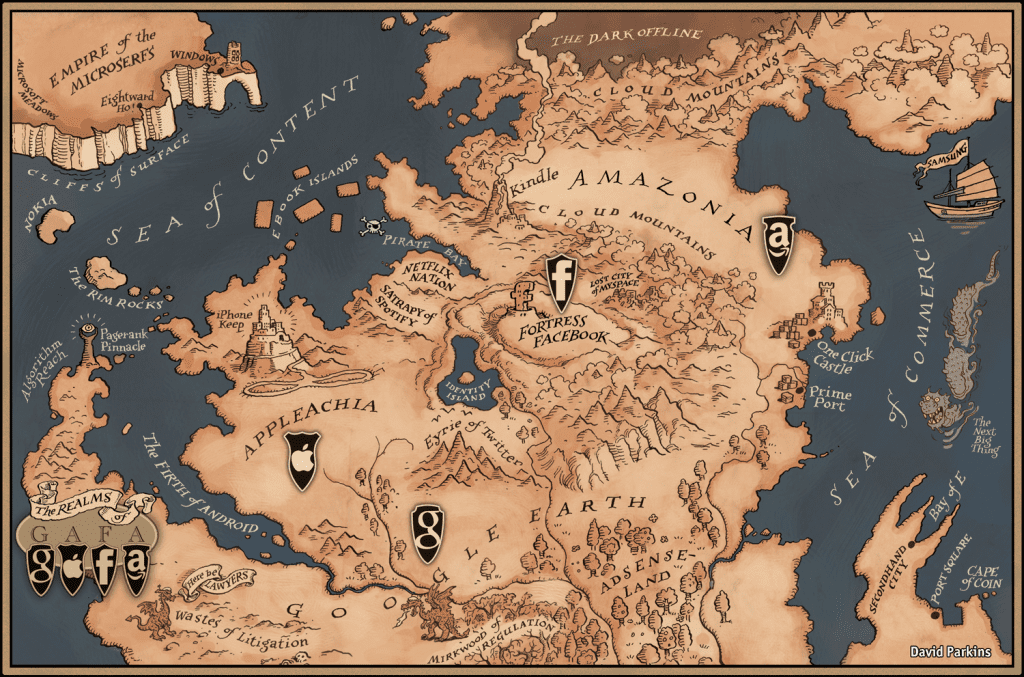
    Remember the early days of the pandemic, when we played alphabet soup with economic recovery? One has to be extremely optimistic to consider the much-touted “V” now, and there’s increasing consensus around “K”. There’s something subliminal about the former sounding like “we”, and the latter sounding like, well, K, signalling that we don’t care. And that’s why I began thinking of how those in the upper part of “K” are utilising their wealth. In addition to using it to create more wealth, that is.

    I think there are at least two expansion narratives at play. One is seeking new “real” frontiers. This is a centuries-old pattern – the Americas, Silicon Valley – until geography has been tamed. We’re now on to “colonising” Mars. The metaphor is clear. The other is digital frontiers, where our time and mind space is being increasingly spent. Both are about escaping the confines of reality as we know it now.

    (more…)
  • The bang & the buck

    A decade ago, while working with a newspaper group where our small team managed three brands, we had an interesting situation. One of the brands, a vernacular broadsheet, was at an advanced stage in its lifecycle where it had to be made relevant and exciting for a newer set of readers who were native to the region. Another brand, an English compact daily (we didn’t like to be called a tabloid!), was an absolute newbie aimed at what could broadly be called an ‘immigrant’ audience. This was made interesting because research showed that the ‘triggers’ for the two sets of readers were quite at odds with each other. To elaborate, but without nuances, the positioning of the vernacular brand would be around showcasing pride in local language and culture, laced with jingoism, and that of the English brand would be around a cosmopolitan outlook. Holding both these diametrically different ideologies and doing justice to both was quite an exciting experience.

    That nostalgia bout was triggered because I’m increasingly seeing this friction between different parts of the population escalate. A certain angst that seems to flare up on various seemingly unconnected issues. So here’s a thought. I am not really a Javed Akhtar fan, and a lot of people dissed him when he connected the Bangalore New Year molestation incident to social segregation and economic divide, but I strongly believe that many of the horrors we witness today – from terrorism to road rage – have economic disparity at its heart. I had written about this in the context of our convenience attitude towards injustice during the Nirbhaya incident. To note, this is not a right-wrong commentary, because I also strongly believe that moral objectivity is an oxymoron. (more…)

  • The Kabali Experience

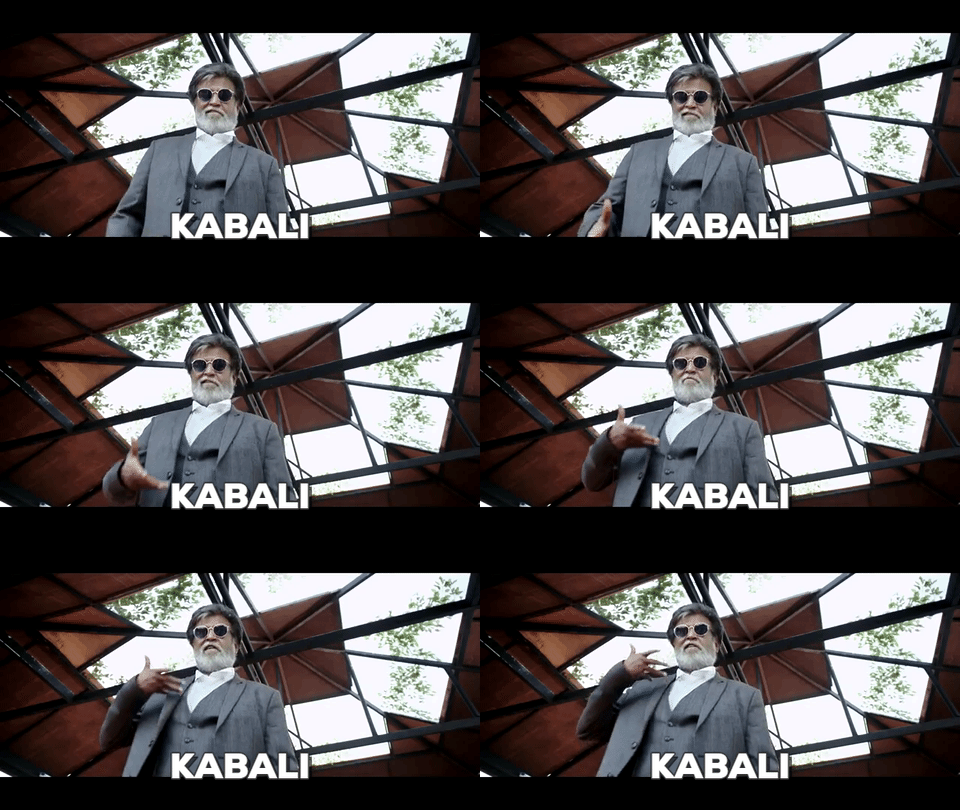
    Kabali had to be watched in the movie hall, I had decided as soon as I saw the first trailer. The hype that followed all but ensured that polarisation would happen, but I honestly didn’t care what the reviews said. Rajini’s “Kabali daa” in the trailer, to me, felt like a guarantee.

    jLIKGAvjm04lq

    (via)

    It isn’t a typical Rajini film, most people seem to agree on that. For instance, here I was, ready to jump up, whoop in joy, and throw a coin during the entry scene, and in an underwhelming introductory shot, he appears, the embodiment of calm in what’s touted as a gangster movie! And yet, in a few seconds, the movie started delivering on what I’d come for – the spellbinding swag that only Rajinikanth can pull off on screen! (“Koodave poranthathu, ennikkum pogadhu” 😀 #youremember) There are enough of those scenes in the movie to have kept the fan in me very contented. (more…)

  • A shift in the world order

    20121201_FBD000 (1)

    (via)

    It has been a while since I wrote about nation states, or notion states as I call them. Now is not really a good time to bring this up in India, but hey, it’s a free country. Oh, wait! Therefore, let’s talk about Apple vs the FBI on where digital security ends and national security begins. (via The GuardianWashington-Silicon Valley shadowboxing as the publication puts it, and Apple has the support of Google, Facebook and Twitter. [If this were happening in India, by now Tim Cook would have probably been lynched by a mob, and charged for sedition – now a very loose word that can be applied to even things such as sneezing while watching the Republic Day parade on TV]

    This battle is interesting as it is because it will set a precedent for an individual’s privacy rights, and is being fought between the world’s most valuable corporation and the world’s biggest (one might even say only) superpower. On one side, we have and entity whose decisions affect billions of lives around the world, and on the other, a country marked by boundaries but influencing policies that affect an equal number. Phenomenally intriguing and layered as this is, I actually find it riveting because I see a couple of my favourite narratives coming to a boil. (more…)

  • Artificial Humanity

    In Natural Law, I had touched upon the idea that we will have to make choices as a species in the context of the role of artificial intelligence in our lives, and how/if compassion towards each other would play a part in these decisions. As I watch thoughts and events unfolding around me, I am beginning to think that it will most likely not be one crucial decision later in time, but a lot of smaller choices, made at individual and regional levels now, that will shape our society in terms of acceptability, morality etc. And so, just as I wrote in a post around five years ago, that we might not be able to recognise the final step we make in our integration with AI, there might be an increasing inevitability about our choices as we move forward in time.

    What sparked this line of thought? On one hand, I read a New Yorker post titled “Better All the Time” which begins with how a focus on performance came to athletics and has now moved on to many other spheres of our life. On the other hand, I read this very scary post in The Telegraph “The Dark Side of Silicon Valley” and a bus that’s named Hotel 22 because it serves as an unofficial home for the homeless. It shows one of the first manifestations of an extreme scenario (the nation’s highest percentage of homeless and highest average household income are in the same area!) that could soon become common. The connection I made between these two posts is that increasingly, there will be one set of humans who have the will and the means to be economically viable and another much larger set that doesn’t have one, or both. This disparity is going to become even more stark as we move forward in time. I think, before we reach the golden age of abundance, (if we do) there will be a near and medium term of scarcity for the majority.

    (more…)