
Tag: social commerce

  • Revisiting Social Commerce

    It’s been more than 2 years since I wrote about social commerce on afaqs, and since then, there have been massive changes right from the definitions to the operations of social commerce. Karthik’s recent post on the subject led me to think about it again.

    I’ve always felt that most of the popular definitions of social commerce have constrained its actual scope. Back in 2011, facebook stores accounted for most of the social commerce discussions. These days, it is mostly referral traffic and sales from social, and that too, in terms of last-touch attribution, as the Ecommerce quarterly (that Karthik cites) would suggest. While I’d not contest EQ’s methodology or assessment, I think it’s only fair to point out that there have been a great number of exceptions. (read; Disclosure: that list includes Myntra where I work) I’m not a fan of how Facebook has throttled what we used to call organic reach, but if you want to read about how Facebook helps target users at different levels of the funnel, Zappos serves as a good example. Facebook’s Custom Audiences and FB Exchange products allow different ways of targeting consumers. Twitter is a bit late to the party, but their products also have excellent potential from what I’ve seen, and they’re moving quickly! (already into retargeting)  YouTube is already a big bet for advertisers, and Pinterest is already being used by scores of Etsy users! (read) From small experiments, I also suspect that Google+ is a potential top rung player. Even if you’d like to leave the $ out and consider (for example) only organic (eg. Open Graph actions) there are case studies evolving. (example)
    tumblr_lteusu0d0K1r54seio1_500

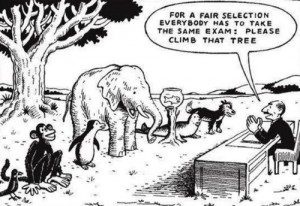
    So, can commerce be driven through social channels – advertising as well as organic? An emphatic yes would be my answer. Yes, it might score low if one considers only last-touch attribution, but hey, many of Facebook’s strategic PMDs are getting a handle on multi-touch attribution. (Kenshoo is an example) One should also consider that other traffic channels like search, affiliates etc have been around for longer and have tried and tested models. The point is rather simple – if we judge social’s contribution on the basis of models created for an earlier version of the web, it would not measure up. We’re at a stage where both technology and tools are still evolving to help measure social on terms that balance its uniqueness with the needs of the business. The good news is that the little that I have seen of Facebook’s strategic PMDs has been inspiring!

    (Image via)

    But I think using social channels as sources of traffic/revenue for commerce is still not capturing ‘social commerce’ in its entirety. Though arguable and reducing in favour, I’d still label many group buying options as social commerce. (example) But to me, the elephant in the room is  p2p commerce. Though the collaborative economy is more vast in scope, I’d put it in the same bucket in this context. (do read Jeremiah Owyang on the subject) From Airbnb to RelayRides to Loosecubes to TaskRabbit to even KickStarter, commerce is now happening between individuals with everyone playing creator, buyer and seller as per context. While the $ is inevitable, trust and one’s network itself are becoming currencies. Yes, these also use social platforms for extended reach, but this is inherently more social than the pure commerce play of brands.

    It is interesting to see social platforms working on these lines as well. Facebook’s Marketplace was probably a bit ahead of its time, but nothing stops them from bringing it back. I read recently that Google is planning to release Mine – a service integrated with G+ that allows users to keep track of “belongings” and then share those with friends in different circles. (via) Yes, there will obviously an Android App. It’s not just these platforms, I’d think that Amazon is slowly approaching it from a different direction as well. (read)

    To sum it up, commerce has always been social, it’s only the dynamics that keep changing.

    until next time, commercial breaks
  • Social + e-commerce ≠ Social Commerce

    The last 2 editions of Kuliza’s Social Technology quarterly impressed me with the breadth of perspectives as well as the understanding of the subject that the authors displayed. So when I was asked if I could contribute to the third edition, it was a pleasure.. and a challenge. The result is on Page 25, but if you are interested in social platforms, I’d advise you to sink into your chair and start from Page 1 🙂

    until next time, get social?

  • Social’s Next Frontier – $ocial Commerce

    1970 words is long even by my copious post standards, and that is the size of my article on afaqs, on social commerce. That, and a fortnight trip to Kerala meant that I was too lazy to write up something new here. I have shared the article on all the networks, but in case you haven't read it yet, now is a good time. Click right here.

    Apparently, there is another reason to click it too, go

    ing by the response to this tweet 🙂

    But since the face isn't much to look at, I'm hoping you'll focus on the article 🙂

    zp8497586rq
  • Social Shops

    One of the trends I think will catch on in the next few years is social commerce, despite the buzz. 🙂 Though word-of-mouth has always been around, newer technologies provide scope for newer manifestations. At this point, social commerce is seen as many things – from f-commerce to group buying/daily deals to virtual merchandise to social + affiliate marketing to social media reviews to shop-together applications, and so on. In essence, any usage of social platforms/applications/media for commerce, and  brands are using/creating these basis their objectives and understanding of the space.

    The buzz has been there for quite a while now. To take a few recent examples, JWT’s 100 things to watch in 2011 had at least a couple of obvious manifestations – F-commerce (35), Group Manipulated Pricing (4) and more in terms of enablers and related items. (come to that in a bit) Trendwatching’s May 2011 trend is The F-Factor – “that’s F for friends, fans, followers who influence consumers’ purchasing decisions in ever more sophisticated ways”, in which they classify this further into discovery, rating, feedback, together, and ‘me’, the last one about curation itself becoming a product/service.

    There are several technologies that will aid this trend in various capacities. Again, to refer to JWT’s deck everything from Automated Checkins (6) to Micro Businesses (51) NFC (56) to Personal Taste Graphs (67) to Tap To Pay (88) can play a direct or indirect part. Add to this increasing smartphone penetration and its impact on purchasing behaviour (check out a study by Google) and interesting services like Localmind, which uses 4sq check ins and location to help users engage in Q&A, or LocalResponse, that uses tweets and check-in data to create a marketing platform for brands to target consumers in real time. and this is sure to be an interesting space with plenty of $$ involved.

    That (obviously) explains why the usual suspects are making strides – Facebook with its check-in deals and Social deals and more importantly increasing the scope and penetration of Connect, Open Graph, Instant Personalisation (though), Google with its Latitude, Offers, expansion of Product Search to more countries (via) and even its fashion shop, Amazon with its new membership-only fashion sales site and so on.

    But more than these services, the applications that interest me are from the ‘real’ products that I come across. Levi’s remains one of my favourites. And the one that excited me much was Pepsi’s Social Vending Machine. It allows a user to buy a drink for your friend and add a personal video message while at it. After you provide the friend’s name and number, he receives a text message with a code which he can redeem at the nearest vending machine and watch that video you made. (via) Probably a gawky start, some would say, but think of the potential applications.

    httpv://www.youtube.com/watch?v=wJaEVEoEETA

    It’s not that there won’t be challenges – privacy is the obvious one. Brands will also have to be careful about their natural tendency for broadcasting and aim to be relevant in time and other contexts. They will also have to integrate offline and online well. But despite these and more that might crop up, I think this will be fun with its synergy with Social CRM and its perspective on the answer to that omnipresent social media ROI question. 🙂

    Bonus read: Paul Adams on How your customers’ social circles influence what they buy, what they do and where they go

    until next time, social bill sharing? 😉

    PS: Interestingly, Coke had a friendship machine of its own too

    httpv://www.youtube.com/watch?v=Bj3QLLTFDX8