Tag: Scott Adams

  • Re-framing employment

    For untold generations work was simply a matter of maintaining the status quo.

    Across the world, the debates on productivity, reduced work hours, 4 day work weeks, DND after work hours etc are intensifying. Add to this the narratives of “the end of employment” and the “gig economy”, (and therefore the case against full time employment) and the signs of an upheaval of our concept of work seems imminent. I can vouch for that from my own experience as well – expressed to a certain extent in earlier posts –  The Entrepreneur & the Professional, and Re-skill. My posts on AI and its impact on employment are also related to this in a “bigger picture” way.

    It is personal in a different way too, because it’s increasingly an application of a broader life framework and worldview. In fact, I was accusing myself of over thinking this, until I read this fantastic piece – How Not to Let Work Explode Your Life. That’s where the quote at the start has been taken from. It traces the origin of the clashes we are facing in our work-life environments now to trends that have been forming for centuries. Long, fascinating read, and a confirmation of many of my complicated thoughts! (more…)

  • Dignity Gritty

    Amongst stories of soaring e-commerce valuations, this Mint story on Indiaplaza, and how it ran out of cash, was quite a sobering read. But it wasn’t the business angle that stuck with me long after I finished reading it. I somehow felt that all Mr.Vaitheeswaran was seeking, was a little dignity. I have no idea of what really happened, so I cannot comment on whether that is deserved or not.

    A few weekends ago, we were visited by someone who is a consultant for some work we needed done at home. She charged us Rs.2000 for a couple of hours, and after business was concluded, she spoke about how, a few years ago,  she had been a VP at a well known consultancy firm. Her current business, born out of her passion, was not doing well. She wanted to get back to work but was finding it extremely difficult to land a job. After she left, I wondered aloud to D, how she must feel, having to go to strangers’ houses on Sundays, and working for a compensation far below what she might have been earning. What would this experience be doing to her sense of dignity? (more…)

  • PhilosoRapture

    In one of the slides in the presentation I shared last week, I had touched upon institutional realignment, and ‘health’ as one of the drivers. But the origins of this thought go back at least 4 years to The Man..the machine, and  Life…streamers, and the subject of immortality and the path to it – the augmented human – have since then made several appearances here – ‘The Immortal’s Reality‘, ‘Back to Eternity‘,  ‘Your Next Avatar‘, and Remember the Feeling to name a few. As I read these posts recently, I realised (again) that the possibility of the current version of the human being just another step in evolution is a humbling one.

    On one hand, I remembered the story of Yudhishtira and the Yaksha, and the answer to a part of Question 9. The Yaksha asks, ‘What is the greatest wonder?‘ and Yudhishtira answers “Day after day countless people die. Yet the living wish to/think they will live forever. O Lord, what can be a greater wonder?” On the other hand, I also read that Google (which shares its first two letters with God) has invested in a company that will work on combating aging and disease. Google is not the first company to attempt this, and scientists are already figuring out how to reverse ageing, but it does have the Ray Kurzweil advantage. (also read) This is promising to be a fight to the death! 🙂

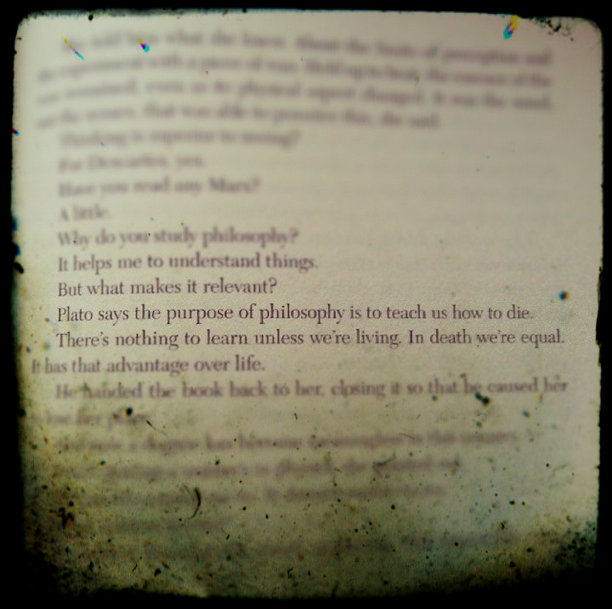
    On the same day that the Google article was published, my favourite thinker on the subject – Scott Adams – posted an article on our ‘choice’ of immortality- one was the Google way of doing away with aging, the second was we would be able to transfer our mind to robots, and the last was transferring our minds into virtual worlds. I am inclined towards the augmented human route – body parts getting replaced one by one, until we become a ‘Ship of Theseus‘ and a perfect example of the paradox. But one way or the other, it seems as though we’re destined to be immortal. The funny thing is that despite that, the question would remain – ‘what is life and why do we exist?’ I wonder if an eternity would be enough to answer it. Or probably, our state of consciousness would be such that we wouldn’t feel this urge for an answer. After all, according to my 500th photo on Instagram,

    Clipboard02

    The end of death is probably the end of philosophical questions as well. Whether that is a good thing is an open question. Or not. After all, Carl Sagan did say “I think if we ever reach the point where we think we thoroughly understand who we are and where we came from, we will have failed.” 🙂

    until next time, cogito ergo hmm

    P.S. Not a big fan of donuts, but a fantastic take on the subject of life and its context – http://imgur.com/K6EKeRW

  • Emotion as a Service

    More than a year back, I had written about institutional realignment and had briefly mentioned the institutions of marriage and parenting. ‘The currency of relationships‘ made me think of this, and family – immediate and extended – as a societal construct/contract/ institution, and probably even as a tradition. Where we are born, and whom we are born to, are apparently out of control, but we do have an illusion of control courtesy the choices we make as we go along. Thanks to these choices, our lifestyle and our perspectives may follow a trajectory that is totally different from the circumstances and people we grew up with/in. This is not just about the people from our childhood/youth, but is a continuous process through life. Each of us find our own ways to deal with the constant flow of people through our lives. These are again choices, and like most choices involves some amount of sacrifice and bring with them their own set of consequences.

    Clipboard02

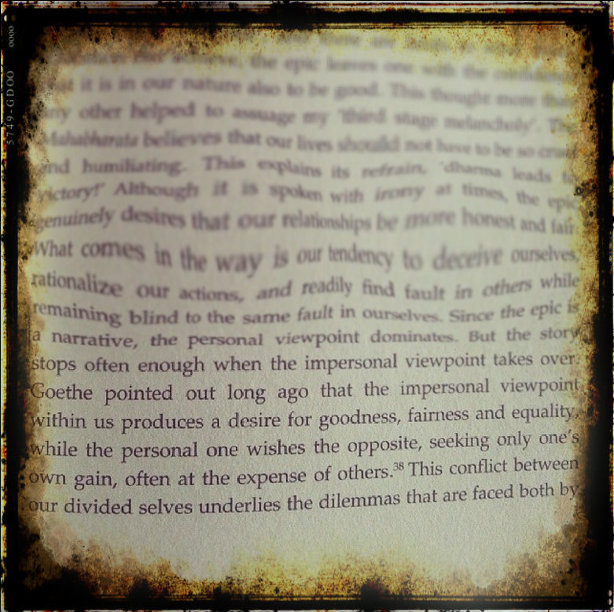
    I loved that Goethe paraphrase, because I think it sums up our relationships very well. At the risk of sounding cynical, (or receiving a ‘speak for yourself’ comment) I’d say that we’re increasingly becoming selfish as a species. I have always had the notion that most relationships are contextual, and it would be difficult to scale our emotions/feelings for others for an indefinite time frame. Yes, I do acknowledge there are exceptions, but that’s what they are – exceptions. Do a quick test and find out how many people across your life you’re still in touch with – bouts of nostalgia not included?

    It is with all this as the backdrop that I read Scott Adams’ “The Future of Marriage“. It articulates very well a thought that had crossed my mind earlier. (Of course, he obviously explores it way better than I could have) He deconstructs the institution of marriage and argues that marriage made sense “when the world was inefficient. You married a person nearby who could provide most of your important needs while hoping your lesser needs could also somehow be met.” Now, he says, the internet has allowed us to have a barter economy of relationships. In other words, a virtual spouse comprised of a dozen separate relationships. He tempers everything by saying that in the future, marriage may be one of the many options available. By sheer coincidence, and in a different context, I came across this quote attributed to Steve Macone “A tradition is a habit whose logic has faded“.

    I thought about this in the context of the expectations I had mentioned in the ‘currency of relationships’ post. If the institution of marriage can have a barter economy, why not other relationships? After all, isn’t every relationship a barter at its core? It’s just that we are rarely comfortable with voicing our expectations in the case of an emotional ‘transaction’, quantitatively or qualitatively. (generalising) Parents expect their children to look after them when they are old, in return for bringing you up; relatives expect you to return the favours they once did for you, and so on.

    So who knows, maybe our pace of life and our need to be (seen as) fair in all our relationships will conspire to form a barter ecosystem that offers emotion as a service. It is possible that an alternate path to prosperity might take us in a different direction, but in the era of the quantified self and the augmented human, when we slowly transition our selves into the cloud, maybe ‘Emotion as a Service’ (like)  is not an impossibility. What do you think?

    until next time, a qualified self

  • ..the question remains

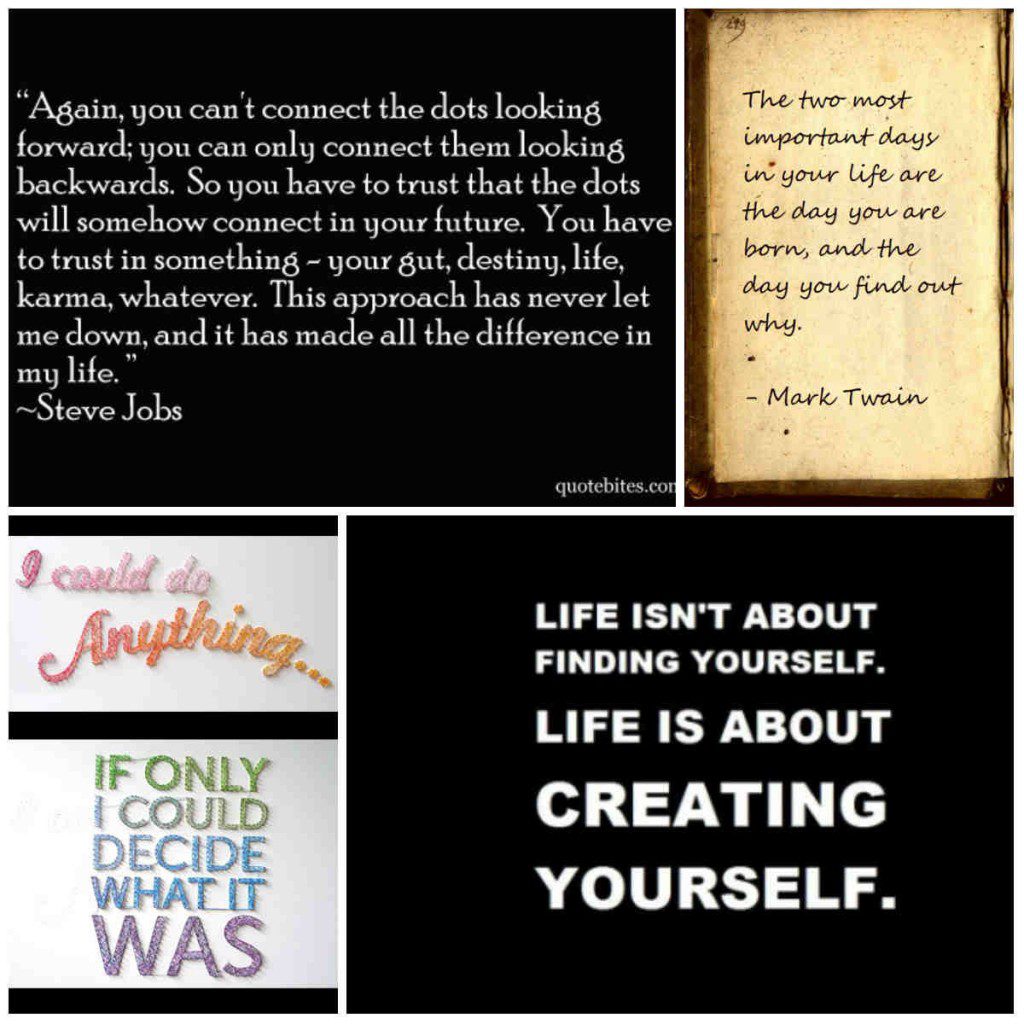
    It has been more than a couple of years since I wrote on the subject of planning – the acceptance of destiny vs free will in The Uncertainty Principles and the balance between change and stasis in its follow up. In my mind, the debate continues to rage, with flash points on a regular basis, thanks to various life scenarios and the things I read. I also realised that the recent narrative posts (1,2) are also a different way of framing this debate. Like I wrote in the posts, some narratives are already chosen for us, and some we choose, but these are all our attempts to fulfill our sense of belonging. In other words, our endeavour to find the reason for our existence – our purpose. Does one find it by working towards something or by dealing with life on a real time basis?

    A few days back, I read an article in HBR titled “It takes purpose to be a billionaire“, in which the author classifies ‘purpose’ into three buckets. Not that everyone’s idea of ‘purpose’ is to become a billionaire, but this is very clearly a planned path to achieve something that contributes to the sense of purpose. While the article does not mention it, the category I have always wondered about consists of people who have followed their passion – sports people, artists etc who have worked on a skill and honed it to near perfection. A very interesting perspective I read on that premise is the Scott Adams’ “Practice and Genes“, which takes a look at the theories on the subject and finally states that the critical element is luck. The most important skill involved in success is knowing how and when to switch to a game with better odds for you.

    Which brings me back to purpose and how we find it, and my introspection. “Who looks outside, dreams; who looks inside, awakes” ~ Carl Jung. (via) I thought about the ‘living in the moment’ perspective that finds a place in Buddhism texts and several other works of wisdom. At first, I thought it supported the destiny and real time approach, specially because it is difficult not to have baggage associated with the plans one makes. (literally and otherwise!) But then I realised that it was less to do with the planning aspect and more to do with how we deal with scenarios. Even if one works on a plan, how one deals with a setback to it is where the advice has value. In essence, that won’t help solve the debate.

    collage

    There are profound statements that support both ways of looking at it. I continue to rack my brains to find the path that will fit me, or make it. I think there is an element of subjectivity involved. That does not make the job easier, in fact, it probably makes it tougher. After all, “He who knows others is wise. He who knows himself is enlightened.” Lao Tzu

    until next time, the clock ticks away in real time