
Tag: scale

  • Agile @ Scale

    Prelude

    I think I used ‘dis-aggregated social network‘ on this blog for the first time in 2009, referring to Google’s basket of services that were connected relatively flimsily then. IMO, Google has always been that way, even including Google+. (read) I remembered it when I tweeted this about Facebook – around the time news of their Fan Audience Network started trickling in.

    It got me thinking (again) on ‘scale’, a recurring theme here. In a less complicated world, where the trends in the business landscape were significantly more linear, (growth, competition, consumption, economy) scale was a powerful weapon to wield. But it’s a different world now. Artificial Intelligence, 3D Printing, Internet of Things, Wearables  and a hundred other things might completely disrupt the status quo and the need an incumbent brand satisfies. These are the known ones, and then there are the conceptually invisible (at this point) ones. Surviving (let alone thriving) in this shifting scenario requires agility, and it is difficult (though not impossible) to see scale and agility together. I looked to Google and Facebook for an approach towards this because not only are they surviving, they seem to be thriving. Yes, we’ll get to Amazon in a while.

    What does it take to be agile at scale? I can think of four ingredients, the last three repurposed from the title of this post by JP Rangaswami.

    Purpose

    I remember talking about re-defining of scale at the Dachis Social Business Summit. The thrust of the presentation was that brands could engage consumers at scale only if they use currencies that create value for the user in the context of a shared purpose. I have elaborated it in this post at Medianama. Recently, I saw that Hugh MacLeod has brought it out beautifully here. Simply put
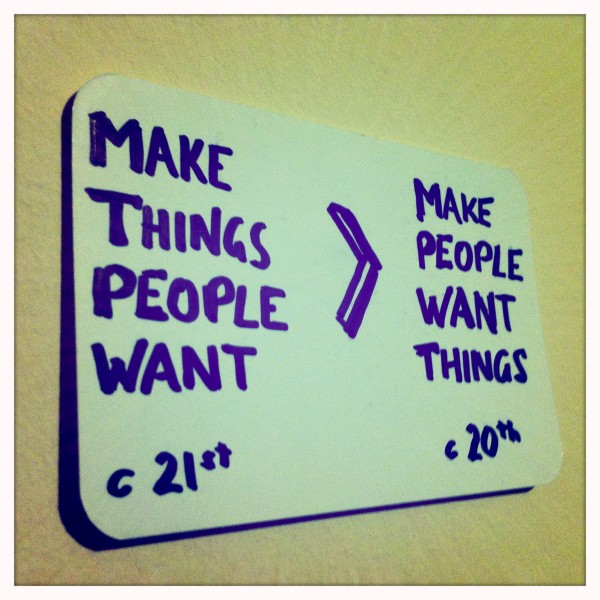
    Make-Things-People-Want-600x600

    (via)

    Possibilities

    The purpose need not have one constant rendition. As the landscape changes, a business will need to adapt it to suit changing circumstances. For that, a business needs to understand the possibilities. I saw a very good line in this post about being a maker – the more you work in the future, the less competition you will have. How much into the future a business needs to be working is subjective and depends on its dynamics, but if it doesn’t disrupt itself, someone else will gladly do it for them. (“The Jeff Bezos School of Long-Term Thinking” is a good read in this context)

    Platforms

    While purpose and possibilities are all good at high altitudes, a business also needs strong operational  platforms to back it up. As organisations scale, I have seen two things that affect agility. One, the processes that are introduced to create efficiency @ scale more often than not, become the goal instead of a means, slowing things down and taking away from actual goals. Two, as processes and manpower increase, silos are created. The good news is that it is easy to see technology platforms bringing more efficiency into processes as well as an iterative way of thinking in the near future. It is already happening in marketing. This, and many other factors are also dictating a consumer experience driven approach and are forcing organisations to break silos. As the entire brand/organisation becomes a platform (read) that regularly revisits its context and purpose in the life of a consumer, ‘everything becomes a node on the network

    People

    HuffPo had a post sometime back, citing Zappos, calling 2014 the year of workplace reinvention. It is interesting to note that parent company Amazon has apparently aped Zappos’ ‘pay to quit’ policy, even as more and more stories about working there being a ‘soul crushing experience‘ are coming out. Meanwhile, the two points it mentioned for this to happen are purpose and trust. These I’d say are the bedrock of culture. It’s intuitive that a workforce mindful of the organisation’s purpose and their role in it would keep an eye out for the business’ possibilities, be ready to work beyond silos towards a great consumer experience, and bring in others who would help the business scale. This, along with purpose, has to be the glue that holds it all together, enabling the organisation to move fast without cracking.

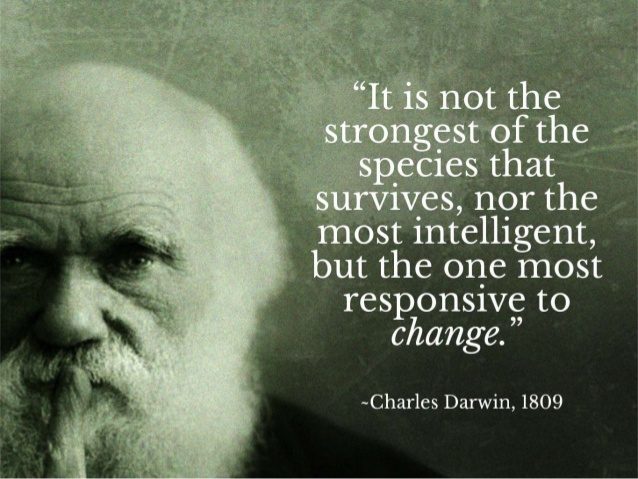
    While different sectors are at disparate distances from a radical shift necessitated by technological developments, it is, I think, inevitable. In this fantastic post titled ‘Knowledge is faster than mortar‘, which looks at scale through a different lens, the author makes the point that ‘the old mechanisms don’t fit the new social structure.Old mechanisms were built to scale stability, new ones will have to be built to scale despite instability. Anti-fragile, so to speak. Indeed, we will see many manifestations as existing structures try to adapt – internal mechanisms like Amazon’s 2 pizza rule, consumer facing disaggregation like Facebook that have a corresponding internal wiring, or brands tweaking their 4Ps even further for different contexts. But whatever paths businesses choose, this will hold true
    responsive-to-change

    until next time, the fast and the curious
  • That’s the plan for now

    This ‘what could have been’ post on FB Platform and the broader theme of ‘move fast, break things’ made me think about planning – brand as well as business, how technology is reshaping it, and the fine balance that is required to ensure business growth goes hand in hand with retaining the trust of the ecosystem.

    Brand planning has always been an interest area, and I’ve had the good fortune of knowing a few brilliant planners, and learning what I could from them. Still continue to. A simple search would throw up a number of planning frameworks, and many of the fundamentals would still hold.  However, technology is throwing open more options in terms of manifestation/output. I found some good perspectives in this article which is about that CMOs can learn from technologists. The fundamental theme is dynamism. But such are the challenges that they remind me of We are trapped in our inadequate mental models ~ John Edwarrd Huth (via)

    I’d think that brand narratives are (also) shaped by the story telling devices at their disposal. As Mitch Joel points out here, the nuances of marketing vs advertising need to be understood as brands struggle to transition from the mass advertising era. One-way media allowed a linear flow, but current platforms demand flexibility, and customised rendition across contexts and platforms. If consumers are the new media, the stories should be ones that they can identify with, fit into their personal narratives, and therefore inclined to share.

    Many of the familiar narrative devices have focused on getting attention, but that is increasingly difficult. It’s not that ‘awareness’ can be ignored, but not only is it not enough, but attention for the sake of itself cannot work. I really liked this post (again by Paul Isakson) where he encapsulates the thought in the title itself Adding Value > Getting Attention. The > works not just as ‘greater than’ but also as ‘leads to’. Or, in other words, Be the Company Customers can’t Live Without.

    In a highly fragmented media and consumption scenario, how does a brand/business know what to focus on and when to shift from it?A wonderful blog I have discovered recently is that of Paul Isakson. This post, for instance, throws light on the need for the brand to stay true to its own story, and therefore focus on specific audiences. Another of my favourite posts focuses on something that I have always believed in and liked – the back story, and its relevance for brands. What we are today comes from our thoughts of yesterday, and our present thoughts build our life of tomorrow ~ Buddha

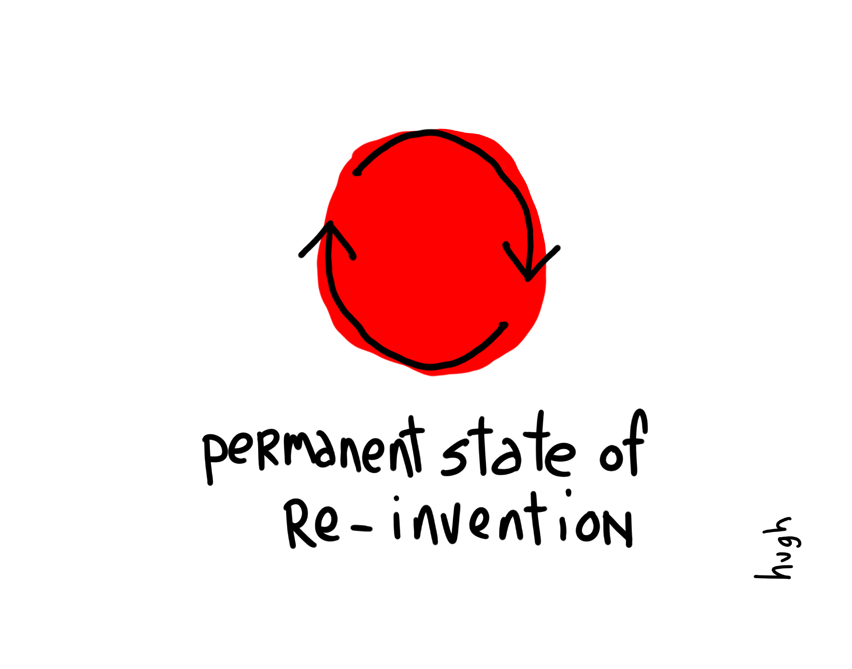
    To get there involves a cultural change, and tectonic shifts. I also think that this will force brands to think about scale. In a mass media world, a brand could get ‘reach’ by throwing money. That can still be done, even on social platforms, but when attention is not the only thing that matters, the challenge is to build relevancy and scale it – across time. That requires new planning frameworks, and possibly means a

    permanent_state

    (via)

    We started with FB, so let’s go full circle. Even as late as last year, there was massive skepticism around Facebook’s ability to adapt and thrive in the mobile space. In the last earnings call, they reported that mobile had contributed 41% to revenue. (read) It would seem that Facebook knew its story, what to focus on,  and stuck to it.

    until next time, refresh

  • Agility and Scale

    One of the things I'm trying to understand is how a rapidly growing organisation achieves scale and retains (or develops) agility simultaneously. When there's not much money in the bank/ revenue being generated, the organisation is forced to focus, and even if it does scale, it would do so in a particular domain in a given time frame, before moving on to another.

    But what happens when there's no dearth of financial resources and/or the organisation is in a business environment that demands scale for survival? One way I've seen organisations do it is to go on a hiring spree and get as many people on the floor as possible. But I've also seen it being counter productive, as either people lose clarity (of their role) in the medium term and quit or they get frustrated with organisational will getting in the way.

    To elaborate, in the first case, the organisation is not able to define roles, let alone c

    areer paths beyond basics, because the business domain/environment is still nascent. The employee may not be able to cope with it after a while. Also, rampant hiring many a time leads to massive role overlapping. In the second case, the number of decision makers and dependency across the system increases so much with scale that things do not move as fast as the employee would desire.

    To me, a good senior management team that is able to articulate the changing dynamics, lay out rules on what decisions should involve whom,  and align middle management and further so everyone pulls with the same end goal (need not be in the same direction, but that's a different debate 🙂 ) in mind is probably what can help help achieve/retain agility with scale. In all of this, communication is key, but that's easier said than done.

    Anything you'd like to share from your experiences?

    until next time, weighing scales

    zp8497586rq
  • Social + Scale = #fail ?

    Remember the post on Social Media Explorer titled ‘Is Content Marketing the new Advertising?’ I had linked to earlier, while on the subject of content, media and distribution?

    To me, content marketing will indeed be a key player in a brand’s strategy – communication and otherwise, because with the explosion of content across various internet and even other delivery platforms, and the increasing number of stimuli that the typical consumer is subject to, sheer volume might be needed, in addition to context, and relevance.

    So, the thought then moved on to the creation of content. There are constraints to what UGC can achieve, and all brands may not have that luxury. So, what would be a good way to generate this in-house?  That’s when I looked at it from the perspective of last week’s post – on the evolution of ‘social’ as a concept and the software it entails, and the subject of how social media will scale?

    And not surprisingly, I arrived at culture. And a rewiring that will include changing roles in the various functions of the organisation. The two that come prominently to mind? HR, to not just use the tools at their disposal and hire people who have innate passion for the organisation’s domain, but also in being the torchbearer of the organisation’s new culture. Marketing, to harness this in-house talent, surface their creations – product or content or service processes, and see how it can be scaled and communicated. This would not only connect people with a common interest  internally but also empower them, make them feel responsible and enable them to communicate this to an external crowd using their own networks.

    These are only a couple of thoughts in a couple of functions, but even getting the rest of the organisation aligned around these might be a good start. More importantly, when this happens, the organisation might be then better equipped to engage with the crowd, culturally and operationally. ‘Social’ could then aim to scale.

    until next time, multiply and rule 🙂

    For those interested in the subject

    Gautham’s post on social and scale

    Social Induction, my post last week on social software and the larger purpose.

    My last few posts on social and scale – 1, 2, 3, 4, 5

  • Social Scalability

    When I see brands and organisations take a piecemeal approach towards social media – either the token presence or the department focus-based approach, I sense that the need for a cultural shift is ignored by many. Cultural shifts are a difficult proposition (good post by David Armano) and need a buy in from all parts of the organisation before even starting out. I have really begun to wonder if the scale of global corporations have made this impossible, and whether splitting up the usage of social platforms as per functional areas is this is their way of keeping the scale under control.

    The scalability of social media has always been a topic of interest to me. The link that I had ended last week’ s post with mentions that ‘socialising cannot scale’, although that is in the context of individuals. But I read this line – “Once a group reaches a certain size, each participant starts to feel anonymous again, and the person they’re following — who once seemed proximal, like a friend — now seems larger than life and remote…..It becomes old-fashioned broadcasting.” and wondered if that would apply to brands too.

    I’d discussed this topic here earlier – whether smaller organisations are better suited to social media and more recently, the possibility of a Dunbar’s number for brands. Last week’s post  – on the preferential approach by brands towards customers with more social influence also creates a context. A smaller scale and lesser number of consumers would mean all the conversations could be treated the same, and the business/brand could remain true to its soul. (good post by Chris Brogan) Again, is it possible for a large organisation to go back to the basics outlined in the post and if necessary re-define itself? What about all the investments made and the processes sculpted over a period of time? Simplistically put, will a Starbucks, for example, ever consider doing this counter intuitive yet brilliant ‘Disloyalty Card‘? (for a moment, forget relative positions in the marketplace)

    So I still believe that unless large organisations go through fundamental cultural shifts, small brands have a better chance of using social platforms to their full potential. Is it possible that the spread and dominance of social interactions will force businesses to scale down? Unlikely, even I have to admit, and its more likely that small and big businesses will co-exist in social platforms as they have so far in the real world. Their treatment of consumers will differ because large brands most often appeal to a mass audience. They have to tread many middle paths and rely on solutions that are a compromise. Smaller brands can perhaps be truer to their soul and will attract audiences simply because of the customised tone and attitude. (a great product is taken as hygiene here) So how will consumers react to the different way they’re treated by these brands of different scale?  Will they have expectations according to categories too – product vs service, considered purchase vs commodity? I doubt that. So, shouldn’t brands develop their social media plans only after understanding the specific expectations of the crowd from their category, rather than generic category case studies?

    until next time, weighing scales 🙂