
Tag: Ray Kurzweil

  • Time, Chaos, and Organisational Change

    The first chapter of The Age of Spiritual Machines, by Ray Kurzweil, is titled The Law of Time and Chaos. The law has two strands- The Law of Increasing Chaos and The Law of Increasing Returns, and together they dictate that in a process, the time interval between salient events (i.e. events that change the nature of the process, or significantly affect the future of the process) expands or contracts along with the amount of chaos.  In the book, this is used to explain evolution. Evolution draws upon the chaos in the larger system in which it takes place for its options for diversity, and evolution builds on its own increasing order. Therefore, in an evolutionary process, order increases exponentially, time speeds up, and the returns accelerate.

    It becomes very interesting when I put this in the context of organisations and the business environment they operate in. The business environment consists of various other organisations (exactly like life forms in evolution) and therefore the time interval between salient events (a new ‘disruption’) is becoming shorter. On the flip side, the organisation (akin to evolution of a single organism) is becoming more complex, and thus the time interval between salient events (their own breakthrough developments/innovations) increases. (more…)
  • The path to immortality

    I’d written earlier on how brands could use an individual’s data (the personal API) to fit themselves into his/her narrative and had used Nike as an example.  But this data could also be used by fitness and health companies to discover ‘fault lines’, gradually delay wear and tear, and one day, totally prevent a machine shutdown. This video – A Day in the life of Tim Ferriss (watch for a minute from 3:25) – gave me an idea of how we might be moving faster in that direction because of  data collection.

    Back in 2011, in ‘God in the details‘, I’d opined that over a period of time, when our data capture capabilities were evolved enough, and we had a lot of data on people on a lot of their behaviour, consumption etc, we would potentially be able to answer the most profound questions about our existence, purpose etc, and unlock further dimensions. I was extremely happy to read the same thought in this (long, but) amazing read called ‘Navigating Stuckness‘. “I could sit safely at my desk and write computer programs to gather vast amounts of Internet data, which I thought could finally answer timeless questions like “what is love?” and “what is faith?” with precision and clarity.

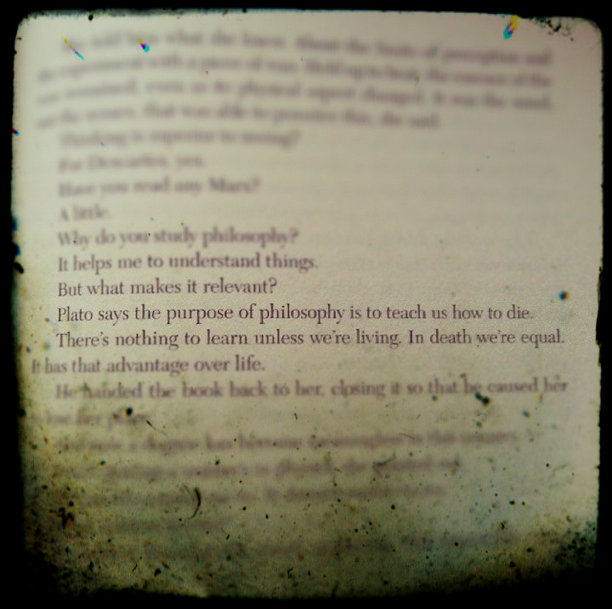
    On one hand, data could help us in our path to immortality, and on the other, it could provide us the answers to fundamental existential questions. I wonder what would happen first, because, as I wrote in PhilosoRapture, I also wonder if those questions would remain relevant once we became immortal.

    Meanwhile, the other track to immortality that is rapidly developing is that of the augmented human, where human parts (including the brain) will be replaced by mechanical replicas. We’re only a part of evolution, as this wonderful, humbling video would show, and it is probably only our ego that makes us believe (if we do) that we’re the endpoint. Maybe, there will be a species later, of whom we’d be probably be creators, for whom our questions will seem irrelevant and who will have their own sets of answers to seek.

    cs

    (quote via, image via)

    So it would seem that whichever way we approach immortality, by the time we get there, chances are, it may not be that significant.

    The year we conquer morality, by the way, is 2040, as per Ray Kurzweil. I’ll be 62 then, or maybe not, or maybe it won’t matter, or maybe…  🙂

    until next time, live long and proper 🙂

  • PhilosoRapture

    In one of the slides in the presentation I shared last week, I had touched upon institutional realignment, and ‘health’ as one of the drivers. But the origins of this thought go back at least 4 years to The Man..the machine, and  Life…streamers, and the subject of immortality and the path to it – the augmented human – have since then made several appearances here – ‘The Immortal’s Reality‘, ‘Back to Eternity‘,  ‘Your Next Avatar‘, and Remember the Feeling to name a few. As I read these posts recently, I realised (again) that the possibility of the current version of the human being just another step in evolution is a humbling one.

    On one hand, I remembered the story of Yudhishtira and the Yaksha, and the answer to a part of Question 9. The Yaksha asks, ‘What is the greatest wonder?‘ and Yudhishtira answers “Day after day countless people die. Yet the living wish to/think they will live forever. O Lord, what can be a greater wonder?” On the other hand, I also read that Google (which shares its first two letters with God) has invested in a company that will work on combating aging and disease. Google is not the first company to attempt this, and scientists are already figuring out how to reverse ageing, but it does have the Ray Kurzweil advantage. (also read) This is promising to be a fight to the death! 🙂

    On the same day that the Google article was published, my favourite thinker on the subject – Scott Adams – posted an article on our ‘choice’ of immortality- one was the Google way of doing away with aging, the second was we would be able to transfer our mind to robots, and the last was transferring our minds into virtual worlds. I am inclined towards the augmented human route – body parts getting replaced one by one, until we become a ‘Ship of Theseus‘ and a perfect example of the paradox. But one way or the other, it seems as though we’re destined to be immortal. The funny thing is that despite that, the question would remain – ‘what is life and why do we exist?’ I wonder if an eternity would be enough to answer it. Or probably, our state of consciousness would be such that we wouldn’t feel this urge for an answer. After all, according to my 500th photo on Instagram,

    Clipboard02

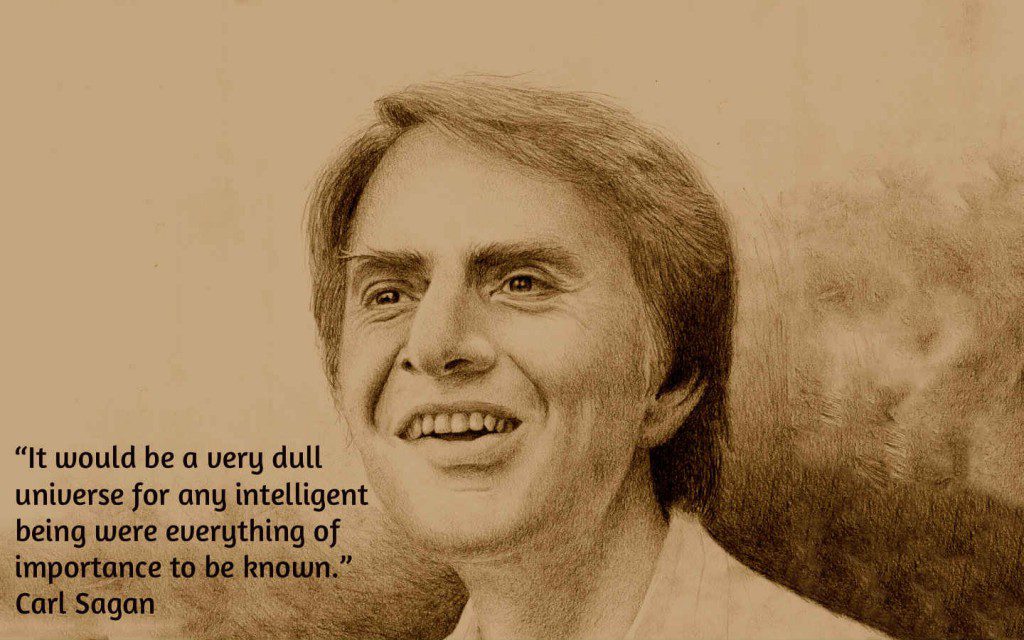
    The end of death is probably the end of philosophical questions as well. Whether that is a good thing is an open question. Or not. After all, Carl Sagan did say “I think if we ever reach the point where we think we thoroughly understand who we are and where we came from, we will have failed.” 🙂

    until next time, cogito ergo hmm

    P.S. Not a big fan of donuts, but a fantastic take on the subject of life and its context – http://imgur.com/K6EKeRW

  • A new era of work

    Sometime back, I had written about institutional realignment – on how the internet will slowly eliminate the middlemen across industries and disrupt every institution that we have built thus far – political, societal, economical, professional, cultural, health and so on. This would have massive impact on our sense of identity and how we live as a society.

    A couple of weeks back, I read this interesting post at Pando Daily titled “Are we becoming a world without big companies?” The post quoted AngelList founder Naval Ravikant “the world would be increasingly made up of very small startups interacting with each other through APIs. No big corporations.” The corporation, at this point in time, plays a lot of middlemen roles – from our sense of identity to global relations – and continuing from my earlier thought, I think the internet will disrupt this one too.

    Which then makes one think of the workforce currently employed in the corporations – that’s most of us. 🙂 From 3D printing which is poised to disrupt the already shaky manufacturing industry and the not-so-shaky distribution systems to singularity, which will have major implications on our health, education and employment, there are macro changes that will affect us. Even the best minds would not have a definite answer on what/ where the jobs of the future would be. As Ray Kurzweil has stated in this interesting interview, “People couldn’t answer that question in 1800 or 1900 either. ” (when asked about the scene in 2000)

    It then brings me to something I believe will be the key to survive and flourish in the coming age – the willingness and ability to live with uncertainty. In this excellent read in the WSJ titled “Learning to Love Volatility“, Nassim Nicholas Taleb argues that rather than trying to predict black swan events, we should be building institutions that are not fragile and can withstand and even benefit from disorder and unexpected events. Though an institution is the protagonist here, I think there are lessons for individuals too.

    In a way, humans could be considered open APIs that big corporations and governments used to meet their ends, it would be interesting to see a future that reverses this. 🙂

    until next time, be the change….