Continued from Part 1, Part 2.
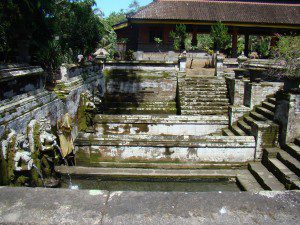
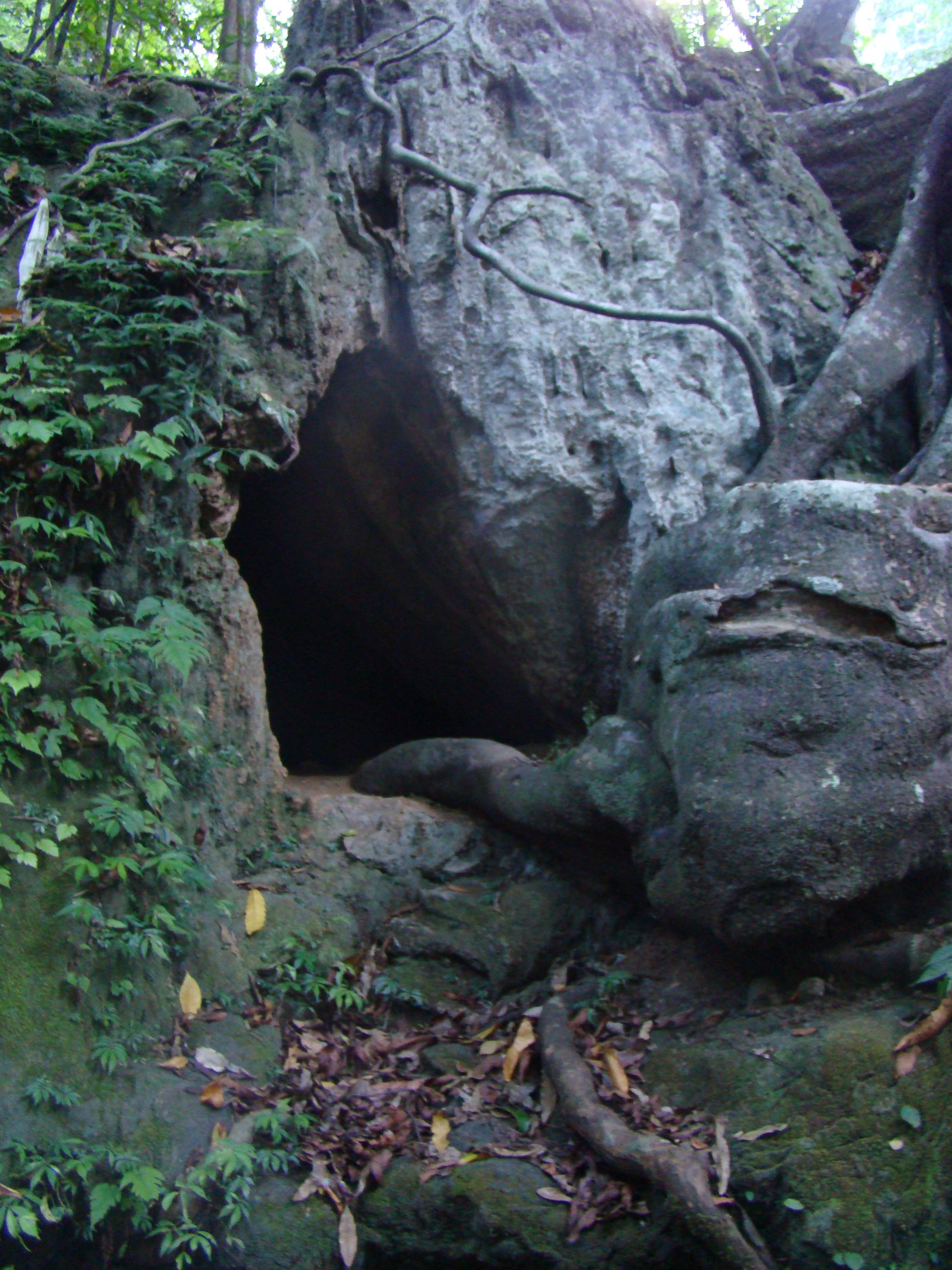
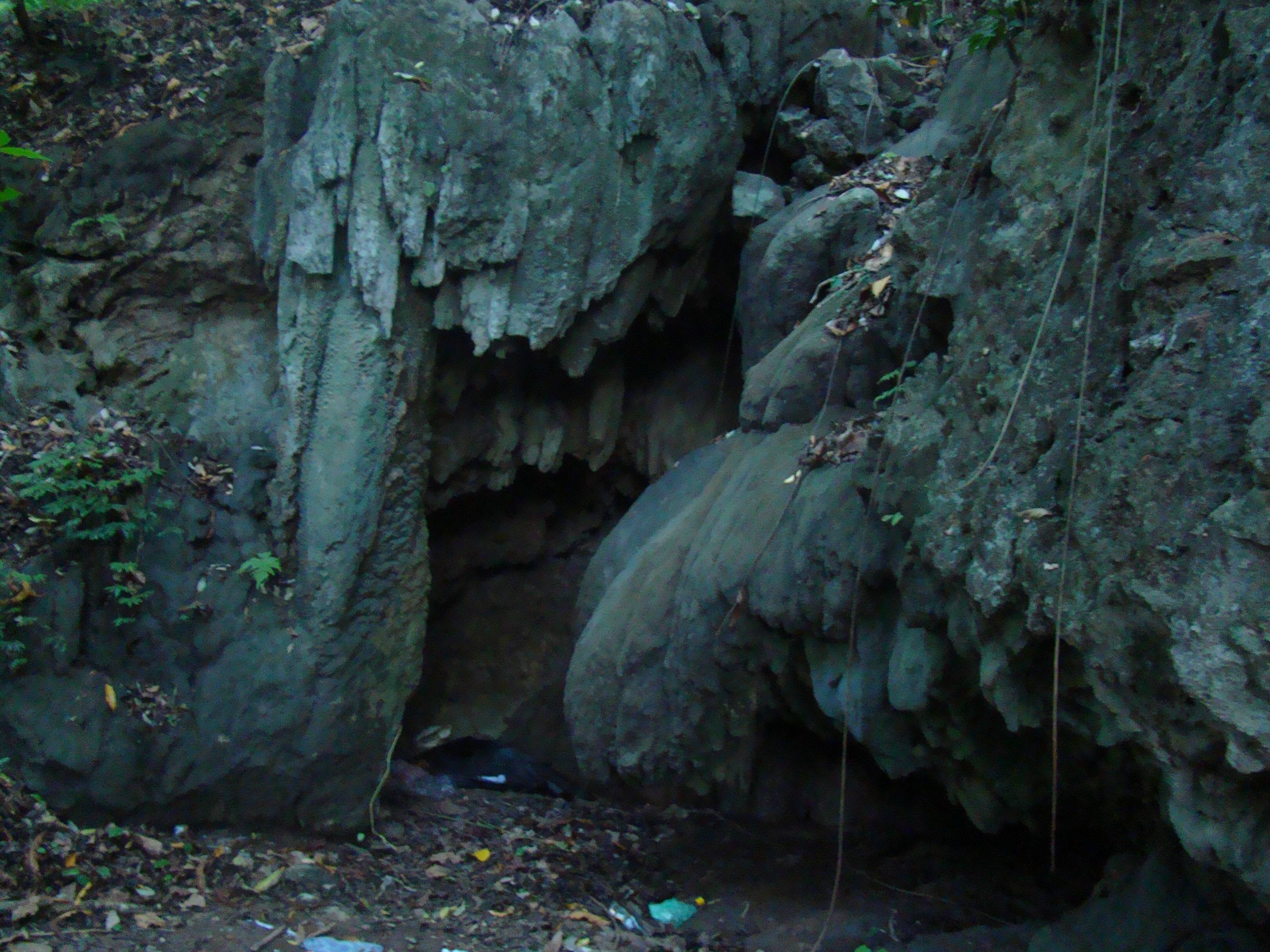
A welcome late start to the day at 10 AM to Goa Gajah – elephant caves. Unlike what the name suggests, there’s no relation. It involves some amount of climbing, and wearing a sarong that they provide, and you are rewarded with some interesting visuals including a bathing area, and what would’ve been a nice little stream if only tourists didn’t insist on leaving it dirtier than how they found it. Ganesha idols can be found in quite a few places here.
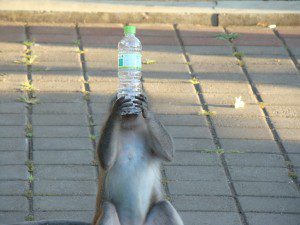
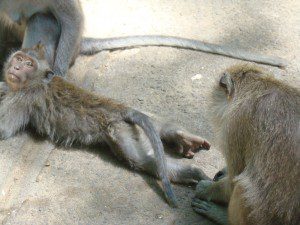
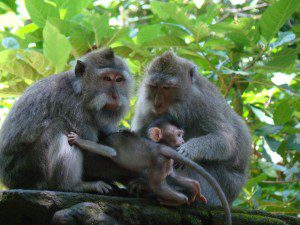
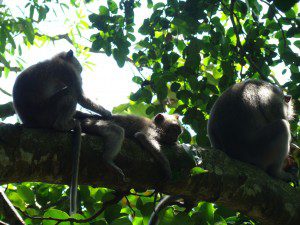
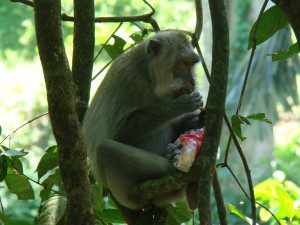
 The next destination was Ubud, which is quite a popular base for many tourists who are more inclined towards art. But we had a simian pursuit in mind and were dropped at the Monkey Forest, with oral and written warnings on taking care of hats, cameras etc and what to do if a monkey decided you were a tree. This was a photo treat as we walked around clicking monkeys in various poses – contemplation, saying no to paparazzi, relaxation, family moments, spa treatments, junk and natural food consumption etc.
Lunch had been arranged at the famous Bebek Bengil Diner (Dirty Duck restaurant) Awesome crispy duck in which we could easily crunch through bones if we so liked and with excellent sambal and other side dishes that just added flavour after flavour. My only faux pas happened when I slurped the water melon right at the end without realising that the spicy sambal had seeped in during the meal! I almost choked to death. D tried to get me killed another way by pointing me to the ladies rest room, but i saw the symbol just in time!
Ubud market was next, crowded, hot, winding mazes on two floors. Intense bargaining is a must and you can pick up knickknacks of all sorts, including Angry Birds paintings! We bought some gifts but mostly roamed in and out. It might be a good idea to get out of the market and explore curio shops outside as well. The next stop finally introduced us to one of Bali’s biggest attractions -a spa. (part of the package) This one was reasonably good, though it had seen better days. One of the attendants even regaled D with stories of her financial woes. I felt this was probably the invisible poverty that existed, ‘forcing’ people to spend their days massaging other people.
By this time, we had conveyed to our tour operator that we would take care of all dinners save one. We had discovered a Bali cuisine restaurant on Karthika Plaza and were dropped off there. Kunyit Bali had very friendly and helpful staff, excellent ambiance but the experience was killed by food that was an oilfield in disguise. We had ordered a 3 course set meal called Bali Megibung with chicken, fish, pork and veg appetisers, a clear soup, a main course with chicken, pork, fish, prawns and sausage. There were 4 kinds of desserts including sweets, but either we were too stuffed to enjoy it, or it was the oil, it just didn’t work. We were left Rp 341946 poorer.
We had discovered a tonga ride the previous day and decided to test it out. A small distance cost us a steep Rp 100000. This was the figure our driver had asked us to expect too, after negotiation, so we got the horse to take us back to Tanaya. We also discovered a new route, though the last part was a series of humps that almost knocked us off the cart! Most of this was thanks to Jalan Legian being a one way. The place is a mini Bangalore in that respect!
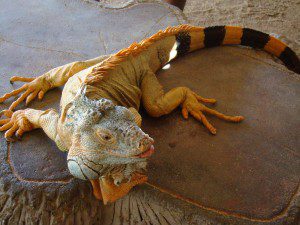
The next day, after breakfast at Tanaya, (part of the tariff) we set off for Turtle Island to see yep, turtles. We were wearing a ready-to-get-wet set of clothes and had a spare set ready. But despite the boat trip, we didn’t get wet at all. On the island, it wasn’t just turtles at various stages of the life cycle we found but iguanas, bats, a python, various kinds of birds, all of whom kindly posed with us in pics! For the umpteenth time, we heard (from the guide for the island tour this time) that he was also a Hindu. In fact, the boat operator even had the Gayatri Mantra as his ringtone!
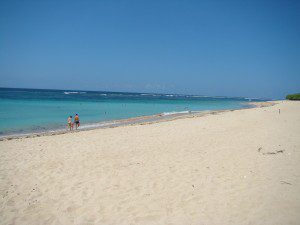
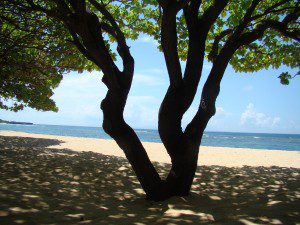
The next stop was Nusa Dua, almost a gated place that housed the Bali versions of some of the most famous hotel chains in the world. Very hi-fi place, this. The beach was quite beautiful, though the rich crowd was also obviously guilty of littering. We found a nice tree to laze under and snoozed to Mallu songs played on the mobile. 😀
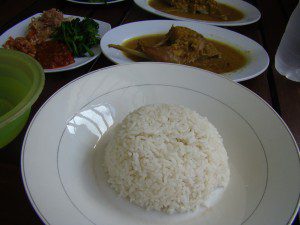
Lunch was at what seemed a branch of Ayam Betutu Khas Gilimanuk and consisted of the increasingly boring duck and side dishes combo. Immediately after that, thanks to some good advice from our guide, we visited one of the Krisna Oleh Oleh outlets which, apparently, was a regular haunt of locals, but was also the best place for souvenirs which wouldn’t force you to mortgage your house. We ended up doing a fair amount of shopping there. Later we realised that it was open 24 hours!
On the way to the Garuda Wisnu Kencana (GWK) Cultural Park, we also saw a neat rendition of Arjuna and Krishna at a highway circle. At the park, wall graphics related the story of Garuda. The Park also had a huuuge statue of Vishnu, with a very Bali kind of face. 🙂 There was also a show happening every hour, another version of the Barong dance that we had seen earlier. The unending fight of good versus evil, just like the one I was waging against a headache! We stopped at the cafe to have a milkshake, and it was only late that I realised that they had a Cendol! 😐
Dreamland beach, now known as new Kuta beach, was supposed to be next, but we ended up at Padang Padang, famous for its appearance in Eat, Pray, Love. 🙂 I did none of these, and snoozed off again to get rid of the headache, while D walked around and took some wonderful snaps! The entrance to this place is worth a mention, a tunnel like thing made of limestone that comes down from the road. It’s not a big beach and was pretty crowded, but that couldn’t take away its inherent beauty.
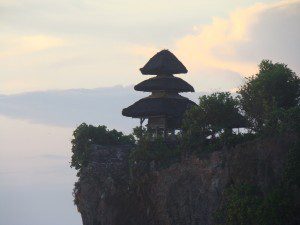
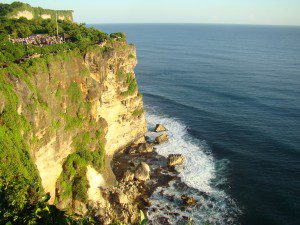
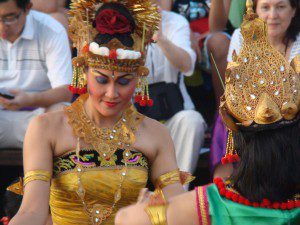
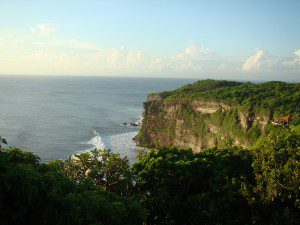
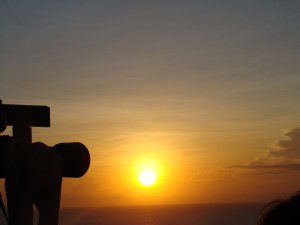
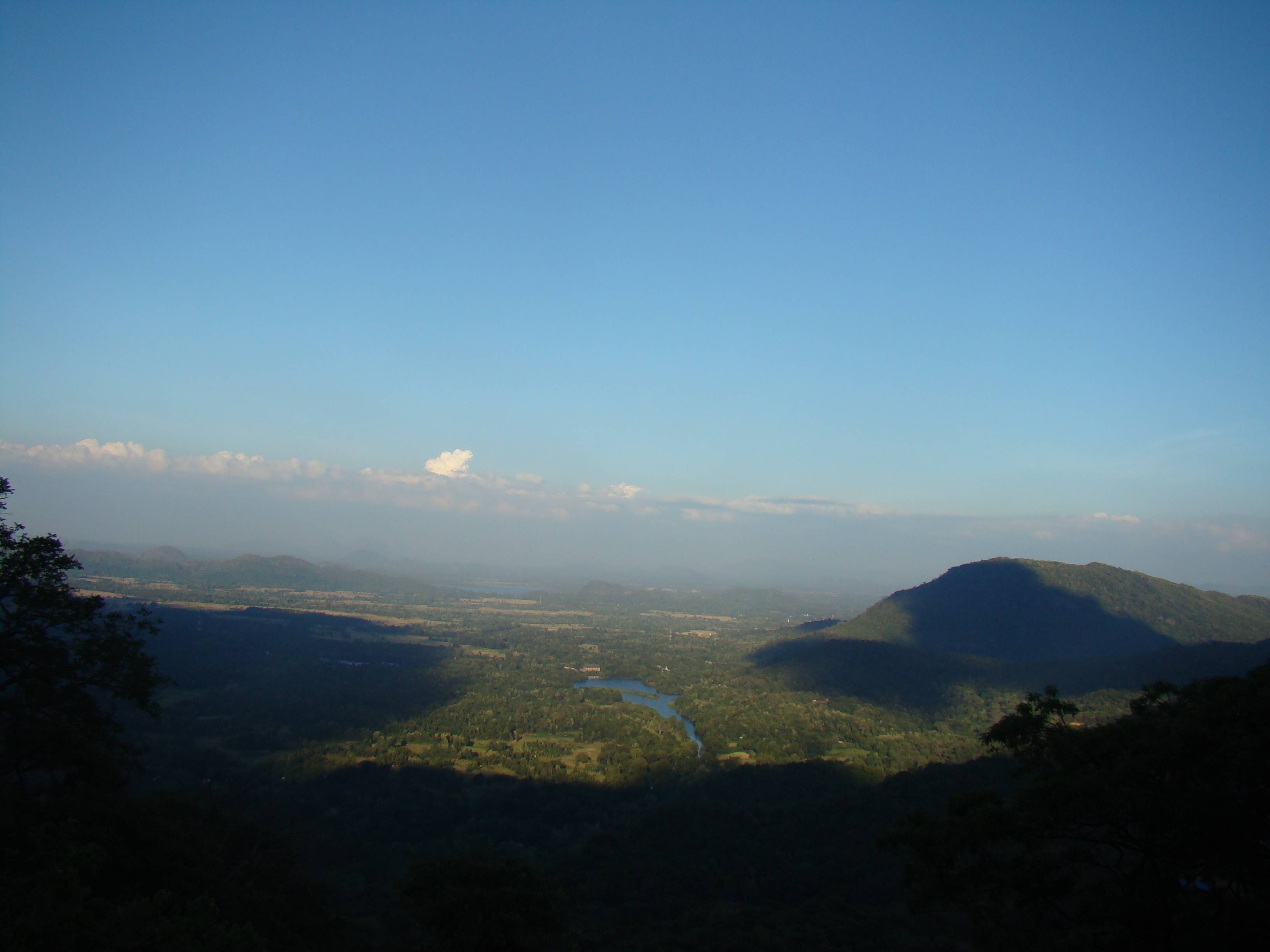
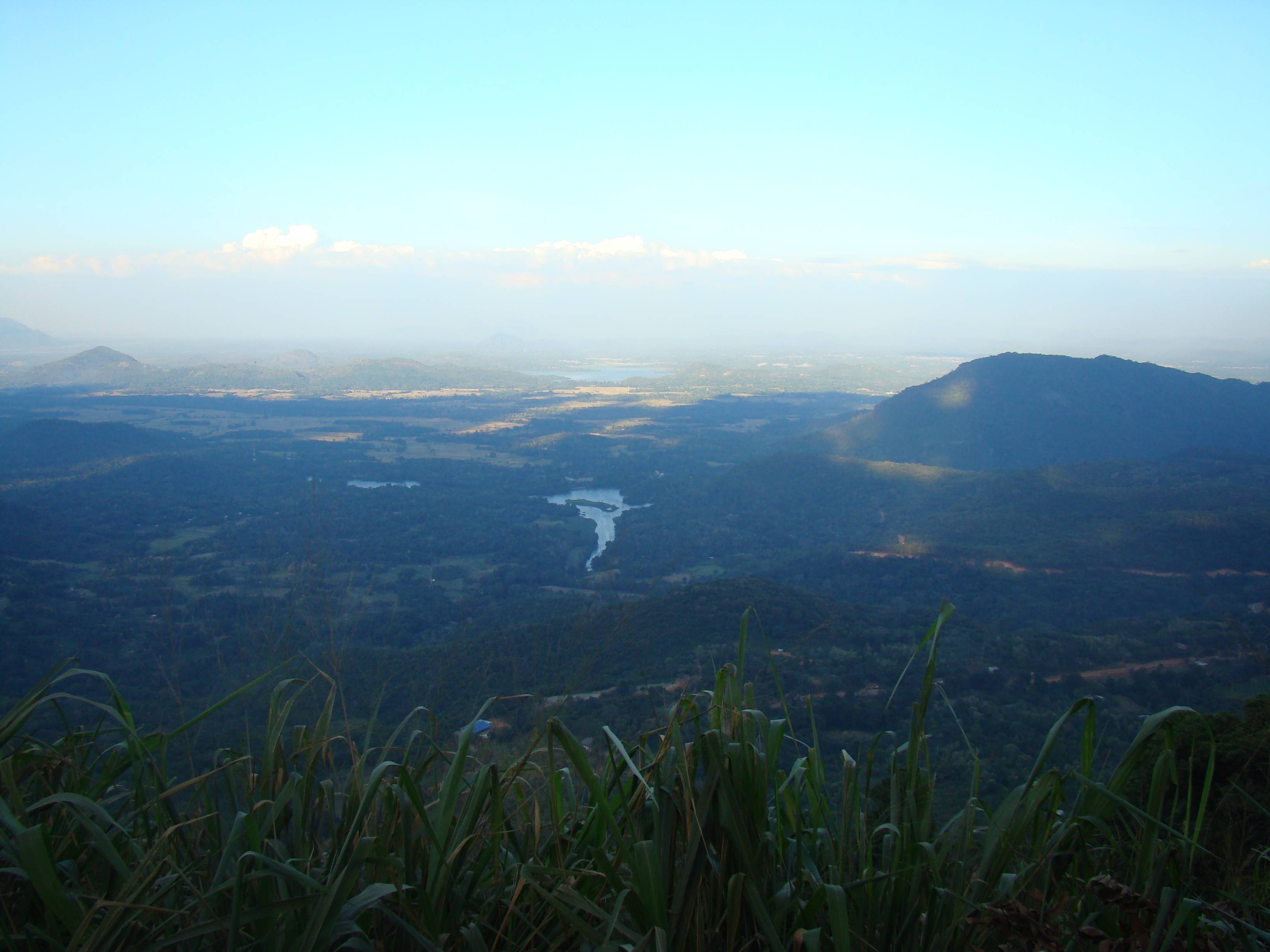
Uluwatu was up next, quite a superstar in the itinerary in its own right. Since Turtle Beach had allowed us to keep our clothes dry, we did a change of clothes routine inside the car, even as a guard suspiciously looked in the direction of the shaking car. 😀 We quickly climbed towards the temple complex, and caught some monkey acts and breathtaking views before rushing to the Kecak performance, in an amphitheatre of sorts. There was already a crowd when we got there. The storyline was a warped version of the Ramayana – the Sita kidnap episode, but for some reason Garuda replaced Jatayu! In parallel, I was also trying to capture the sunset from amidst gigantic zoom lenses. The performance itself had its moments, especially the slapstick routine and when some of the cast made it interactive by jumping into the crowd, talking in English, posing for photographs and dragging unsuspecting tourists on to the stage and making them dance. Meanwhile, the sunset was magnificent, just like the guide had predicted, when we had insisted on catching it at Tanah Lot.
Dinner, the only one we took as part of the package, was at a restaurant in Jimbaran. Seafood stuff, nothing phenomenal, with a live band which performed at each table, and then, in a very unsubtle way, left a hat on the table for a tip. The good part though, was that dinner was on a beach. Watching waves is always a calming experience for me.
We asked to be dropped off at Jalan Melasti, which ran perpendicular from Legian, because wiki said there were tons of shops there. We didn’t notice any and returned to the hotel disappointed, especially since the Starbucks closed just as we were about to go in! The next day, broad daylight showed that Melasti indeed had shops packed away in rows after rows off the road, but thankfully, it was standard fare. The next day was to be the last full day at Bali, and we were clear about our plans. 🙂

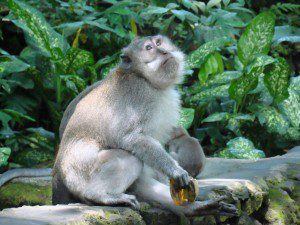 The next destination was Ubud, which is quite a popular base for many tourists who are more inclined towards art. But we had a simian pursuit in mind and were dropped at the Monkey Forest, with oral and written warnings on taking care of hats, cameras etc and what to do if a monkey decided you were a tree. This was a photo treat as we walked around clicking monkeys in various poses – contemplation, saying no to paparazzi, relaxation, family moments, spa treatments, junk and natural food consumption etc.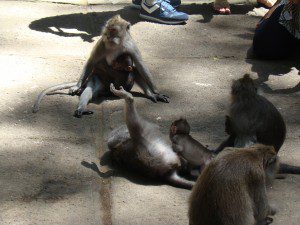

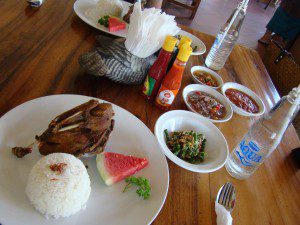 Lunch had been arranged at the famous Bebek Bengil Diner (Dirty Duck restaurant) Awesome crispy duck in which we could easily crunch through bones if we so liked and with excellent sambal and other side dishes that just added flavour after flavour. My only faux pas happened when I slurped the water melon right at the end without realising that the spicy sambal had seeped in during the meal! I almost choked to death. D tried to get me killed another way by pointing me to the ladies rest room, but i saw the symbol just in time!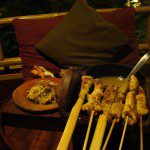
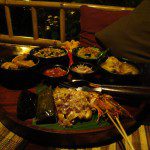
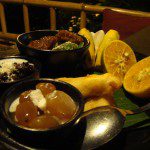 By this time, we had conveyed to our tour operator that we would take care of all dinners save one. We had discovered a Bali cuisine restaurant on Karthika Plaza and were dropped off there. Kunyit Bali had very friendly and helpful staff, excellent ambiance but the experience was killed by food that was an oilfield in disguise. We had ordered a 3 course set meal called Bali Megibung with chicken, fish, pork and veg appetisers, a clear soup, a main course with chicken, pork, fish, prawns and sausage. There were 4 kinds of desserts including sweets, but either we were too stuffed to enjoy it, or it was the oil, it just didn’t work. We were left Rp 341946 poorer.
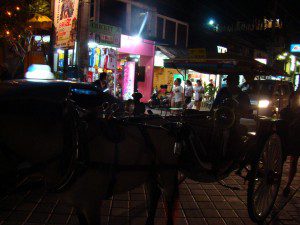 We had discovered a tonga ride the previous day and decided to test it out. A small distance cost us a steep Rp 100000. This was the figure our driver had asked us to expect too, after negotiation, so we got the horse to take us back to Tanaya. We also discovered a new route, though the last part was a series of humps that almost knocked us off the cart! Most of this was thanks to Jalan Legian being a one way. The place is a mini Bangalore in that respect!
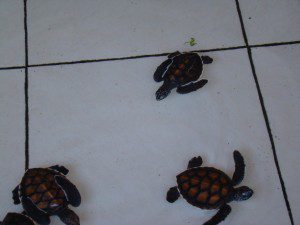 The next day, after breakfast at Tanaya, (part of the tariff) we set off for Turtle Island to see yep, turtles. We were wearing a ready-to-get-wet set of clothes and had a spare set ready. But despite the boat trip, we didn’t get wet at all. On the island, it wasn’t just turtles at various stages of the life cycle we found but iguanas, bats, a python, various kinds of birds, all of whom kindly posed with us in pics! For the umpteenth time, we heard (from the guide for the island tour this time) that he was also a Hindu. In fact, the boat operator even had the Gayatri Mantra as his ringtone!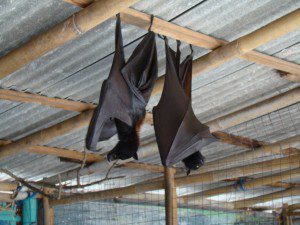
 Lunch was at what seemed a branch of Ayam Betutu Khas Gilimanuk and consisted of the increasingly boring duck and side dishes combo. Immediately after that, thanks to some good advice from our guide, we visited one of the Krisna Oleh Oleh outlets which, apparently, was a regular haunt of locals, but was also the best place for souvenirs which wouldn’t force you to mortgage your house. We ended up doing a fair amount of shopping there. Later we realised that it was open 24 hours!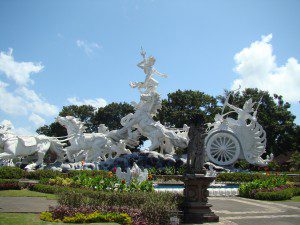
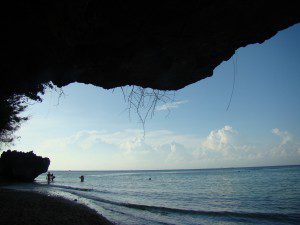 Dreamland beach, now known as new Kuta beach, was supposed to be next, but we ended up at Padang Padang, famous for its appearance in Eat, Pray, Love. 🙂 I did none of these, and snoozed off again to get rid of the headache, while D walked around and took some wonderful snaps! The entrance to this place is worth a mention, a tunnel like thing made of limestone that comes down from the road. It’s not a big beach and was pretty crowded, but that couldn’t take away its inherent beauty.