
Tag: philosophy

  • PhilosoRapture

    In one of the slides in the presentation I shared last week, I had touched upon institutional realignment, and ‘health’ as one of the drivers. But the origins of this thought go back at least 4 years to The Man..the machine, and  Life…streamers, and the subject of immortality and the path to it – the augmented human – have since then made several appearances here – ‘The Immortal’s Reality‘, ‘Back to Eternity‘,  ‘Your Next Avatar‘, and Remember the Feeling to name a few. As I read these posts recently, I realised (again) that the possibility of the current version of the human being just another step in evolution is a humbling one.

    On one hand, I remembered the story of Yudhishtira and the Yaksha, and the answer to a part of Question 9. The Yaksha asks, ‘What is the greatest wonder?‘ and Yudhishtira answers “Day after day countless people die. Yet the living wish to/think they will live forever. O Lord, what can be a greater wonder?” On the other hand, I also read that Google (which shares its first two letters with God) has invested in a company that will work on combating aging and disease. Google is not the first company to attempt this, and scientists are already figuring out how to reverse ageing, but it does have the Ray Kurzweil advantage. (also read) This is promising to be a fight to the death! 🙂

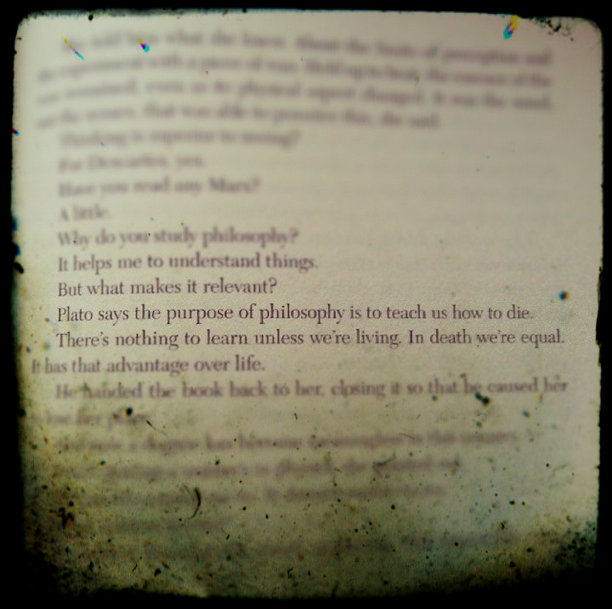
    On the same day that the Google article was published, my favourite thinker on the subject – Scott Adams – posted an article on our ‘choice’ of immortality- one was the Google way of doing away with aging, the second was we would be able to transfer our mind to robots, and the last was transferring our minds into virtual worlds. I am inclined towards the augmented human route – body parts getting replaced one by one, until we become a ‘Ship of Theseus‘ and a perfect example of the paradox. But one way or the other, it seems as though we’re destined to be immortal. The funny thing is that despite that, the question would remain – ‘what is life and why do we exist?’ I wonder if an eternity would be enough to answer it. Or probably, our state of consciousness would be such that we wouldn’t feel this urge for an answer. After all, according to my 500th photo on Instagram,
    Clipboard02

    The end of death is probably the end of philosophical questions as well. Whether that is a good thing is an open question. Or not. After all, Carl Sagan did say “I think if we ever reach the point where we think we thoroughly understand who we are and where we came from, we will have failed.” 🙂

    until next time, cogito ergo hmm

    P.S. Not a big fan of donuts, but a fantastic take on the subject of life and its context – http://imgur.com/K6EKeRW
  • Food for the soul

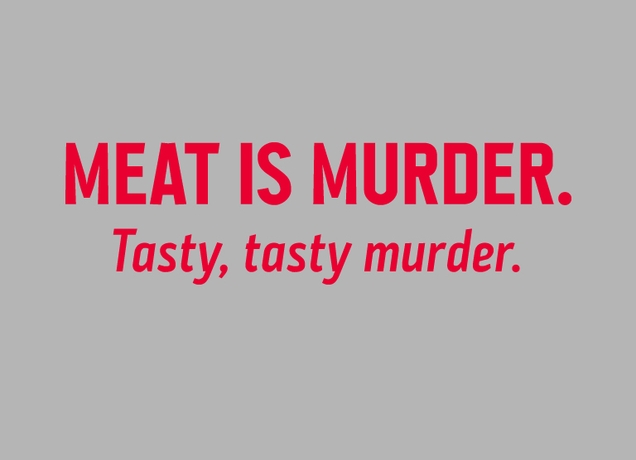
    Thanks to Zomato, I got to spend some bak bak time with Mayur back in February. Along with Rocky, this guy gets to do the two things I’d rather do always – eat and travel. While it was a fun meet up, it was impossible to agree on the subject of meat. Most of the others around were fanatical carnivores – like myself (and I was wearing a tee with the message above) – so we traded insults with him for the first few minutes before the man silenced us with “food is like religion, and you should not piss on other people’s temples”.

    After that the conversation quickly moved to life philosophy. I (along with at least one other person) was curious to know how he kept himself interested in the food + travel routine. Wouldn’t it get monotonous? We talked of retaining child-like levels of curiosity and wonder, an openness to experiences, of starting the day asking what newness can be done today and realised that as we grow older, we look for reasons not to do things, as opposed to the reverse.

    After taking my trip with a food quote, (and underlining his instant wit) he went off to talk to other folks, and the rest of discussed how this also translates to how we interact with other people. Earlier, we used to trust others until they gave us a reason not to, and these days, it’s exactly the reverse. I wondered if this is probably related to the ‘openness to experiences’ we had talked of earlier.  (more…)

  • Yourself

    The complexity of the human mind is unfathomable, and its not a new thing. While I differed with Austere, and said that its possible for one to know their self completely, I also realise that in this age, we perhaps don’t have the skills to do so. More importantly, we may not be inclined to. There are too many distractions that draw us away, in our routine life. Like I keep saying, we have forgotten the differentiation between wants and needs, and so, are too caught up in existence to live.

    From the couple of books on the Buddha I’ve read, I’ll agree to the premise that the first step in knowing the self is to be aware that its not a constant, and changes according to many things we experience – the stimuli around us, the way we react to them, what they leave behind with us, and so on, all part of the 12 point chain that the Buddha had defined.

    There’s a wonderful story in the book “An End to Suffering” by Pankaj Mishra, taken from the Chandogya Upanishad. Its a dialogue between a father and a son, an abstract speculation, on the self. The father tells the son to fetch him the fruit of a banyan tree, to break it, and tell him what he saw. The son says seeds, and the father asks him to break the seed, and tell him what he saw. The son says ‘Nothing’, and then the father says that in the ‘nothing’ he saw, was the essence of the Banyan tree. And in that essence, is the key to the self.

    With the technological advancements we have now, it is possible to go beyond the seed, and see what lies at sub cellular levels. The irony of it is that it still doesn’t take us any closer to the self. Its a snapshot of the lives we lead, proceeding with our existence at breakneck speed, trying to make our living faster but easier, but leaving some gnawing questions unanswered.

    until next time, be aware