
Tag: personality

  • Reflections on my OS – Part 1

    Alternately: Internal Pattern Recognition: IPR? 😉

    If there’s one thing that Stoicism has taught me, it is that the good fight is not with the world, but yourself. Many of the books I read and observations I try to make on family are to get a better understanding of the ‘why’ behind my thinking. Among the many things that “Behave” gave me insights on was this, and an explanation for how siblings can be very different in terms of mindset and behaviour, despite inheriting not just ‘nature’ but sharing ‘nurture’ too.

    Another dogma was that brains are pretty much wired up early in childhood – after all, by age two, brains are already about 85% of adult volume, but the development trajectory is much slower than that. …the final brain region to fully mature (in terms of synapse number, myelination, and metabolism) is the frontal cortex, not going fully online until the mid twenties.

    …the brain is heavily influenced by genes. But from birth through young adulthood, the part of the human brain that most defines us (frontal cortex) is less a product of the genes with which you started life than of what life has thrown at you. Because it is the last to mature, by definition the frontal cortex is the brain region least constrained by genes and most sculpted by experience. This must be so, to be the supremely complex social species that we are. Ironically, it seems that the genetic program of human brain development has evolved to, as much as possible, free the frontal cortex from genes.” 

    (more…)
  • “Both sides”

    A few months ago, when I wrote Hope Trope during what on hindsight seems like a particularly low phase of my mind’s wax and wane cycles, a relative wrote to me. She said the post almost made her cry, and as a person who has been reading my posts for a while, she felt that my tone was increasingly becoming personal and despondent. The first description was right, and I was conscious of it. The second I attributed to the struggle – when creating one’s own worldview and life that treads outside of the accepted standards, in things as diverse as work, progeny (or the lack of it) and faith. Teething troubles of a stoic outlook. (which I still strive for)

    I now realise that maybe she saw something I couldn’t because despite the best efforts, it is very difficult to remain objective about one’s own feelings. I cannot remember when I began to spend an inordinate amount of time on introspection. From experience, it is a double edged sword, it’s great to be conscious of one’s actions and words, but horrible when one judges the self as ruthlessly as I do, especially if the past gets dredged up. The amazing Book of Life has an excellent read on the subject using the folk tale of Androcles & the Lion as an allegory. I think I made all the mistakes the article points out – a wrong diagnosis, numbing the pain, and to a certain extent, applying the wrong medicine.  (more…)

  • The people we are….with

    After I shared the “We, the storytellers” post on Twitter, Surekha sparked off this interesting discussion on how we could persuade others to be less judgmental and more compassionate. I really didn’t have a fix-it-all answer and felt that it was more important that we simply practice this ourselves. That, however, did not stop me from thinking about it.

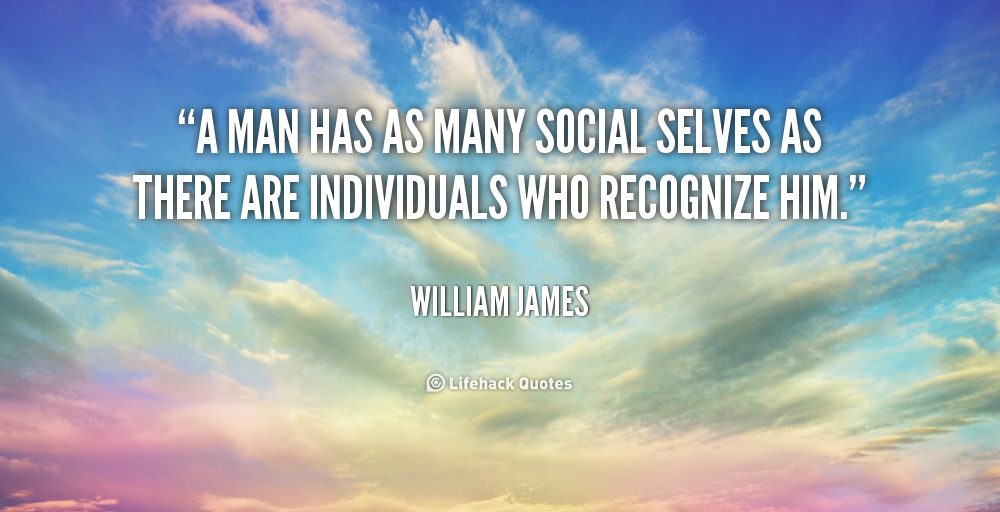
    The next day, my reading list had this post, which touched upon things that get people to change their behaviour. I remembered this William James quote used in the post from something I had seen a while back at Brain Pickings.

    Clipboard01

    (more…)

  • The masks we wear

    In TDKR, there is an interesting conversation between John Blake and Bruce Wayne, during which the former says that he knows Bruce is the Batman. He then talks of how he does not remember his mother’s death, but remembers his father’s murder well, and that the anger stayed with him. People understand, he says, but they don’t really know. They understand for a while, and they expected him to move on, to let go of the anger.  But he couldn’t do it, and when people realised that, he was sent to therapy and foster homes.

    He realised in time that for people to accept him, he would need to wear a mask that would hide his anger. He reveals that when Bruce visited the boys’ home he lived at years back, he immediately recognised that Bruce was Batman, because he himself wore a mask.

    Thanks to various experiences, I think all of us wear masks. Some of them are not because of experience, but for acceptance among others. Either ways, it works as a coping mechanism, and depending on our skills, at various levels of invisibility to those around us. Sometimes we are conscious of the mask and try to reach a place where we can live without them, by becoming strong enough to either face the past or deal with ‘acceptance’ on our own terms. Yet, despite those efforts, many a time, circumstances are such that the mask becomes the man, consciously or unconsciously. Whether or not that is a good thing is completely context dependent.

    But sometimes we are able to move on, just as Bruce was, embracing aspects of the Batman mask into his own personality. Or maybe it’s the other way – Bruce being a mask that the ‘true’ Batman personality wore. 🙂

    until next time, masker aid

  • Master Classes

    The last few episodes of Masterchef Australia Season 2, especially after it came down to the final four, were quite awesome. For me, it went beyond the cooking or even the amazing camaraderie between the participants and the judges. The final two turned out to be Adam and Callum, separated in age by more than a decade.

    Adam, I thought, (thou shalt not dare to bring up the fact that I know zilch about cooking) was quite a genius. Though he was a bit too arrogant in the mid-episodes to be my favourite, his range and the thinking and creativity he brought into his cooking were nothing short of phenomenal. Meanwhile Callum’s level of cooking sometimes made you forget the age (and experience) difference between the two.

    But something more than that made me identify with Callum. A very smart friend recently gave me a Master Class and pointed out to me a classification of personalities – askers and guessers. I belong to the latter, I do tons of calculations and thinking before I can ask something of someone, and I still wonder if I’m being presumptuous or inconveniencing them. The worse part, I’ve noticed that the shyness is mistaken for arrogance!!

    In one episode, when Callum’s dish earns special praise from an external judge, he mumbles a ‘thank you’. Matt Preston admonishes him and reminds him of what he’s supposed to say when he’s praised. Callum then asks the judge whether he can do a stage, (“Staging is when a cook or chef works briefly, for free, in another chef’s kitchen to learn and be exposed to new techniques and cuisines”), and is promptly rewarded. I wonder how much ‘asking’ has to do with confidence and passion. Callum is fortunate to have discovered a passion early in life. I’m sure that his experiences will make him more confident.

    I read this excerpt from a book, which talked about “young adults in America choosing to slow down their path to adulthood”. Probably a good move. (Generalising) By the time we go through the motions of education and work, the baggage and constraints start accumulating. The passion practically disappears, and the experience possibly does more harm than good. Rediscovering all of it is no easy process.

    Perhaps, if we had an ‘education system’ that could help identify what we wanted+were good at+ could earn money with, we’d have more askers than guessers. Because then, we’d know our passion, and with that knowing would come a direction to seek our experience, with that would come confidence, and then all the world would actually be a stage – to learn and to perform.

    until next time, youthopia indeed

    Related Read: A toast to common genius