Tag: objectivity

  • Objectivity, and the path to joy

    Sometime back, a colleague and I had a conversation on retaining objectivity during decision making. I felt that if one does not do that in life generally, it won’t happen at work either. We live in our narratives, and the brain, after all, is only so flexible.

    That led to a train of thought. Objectivity (also) comes from being able to step out and get a view of one’s self from outside. Insights into one’s self can happen all the while, if you allow it. Two recent incidents to highlight this. (more…)

  • The IP Man

    Disambiguation: This is about the Infinitely Patient Man. For the original, see Ip Man.

    In the last post, and a few before that, (Brand & ย the personal API, The path to Immortality) I’d written about our increasing ability to log and monitor our various activities (food consumption, exercise, sleep, location, to name a few) as well as apply them – for example, to measure and ย course correct – manually, machine-led or using a combination. The idea of the quantified self, I’d think, is to make a better human being at least in the physiological sense to begin with.

    In another line of thought, I’d also explored whether, as we proceed along this evolution, we could also create a more mindful version of ourselvesย – what I called a qualified self. This surfaced again a few weeks ago, as I analysed my own behaviour in a certain situation. I have been trying to be non judgmental, but it’s not easy to let go of some baggage, especially deep rooted ones that have existed for a long time. As I became grumpier (also) thanks to my irritation at not resolving my battle with inner demons and the other person’s behaviour remaining unchanged, the person at the receiving end remained his calm self. As always, I had conflicting emotions later – on one hand, guilt, for treating him thus, and on the other, a justification based on many events past and present. I also tried to put myself in his shoes and imagine how he must have felt.

    That’s when I realised that the process of creating a qualified self is much more challenging because there is no objective measure of right and wrong. i.e. one can objectively quantify the input/burning of calories based on BMI, gender, age and other factors which are subjective, but on what objective scale does one decide whether one’s action/decision/thinking is right in a particular context?

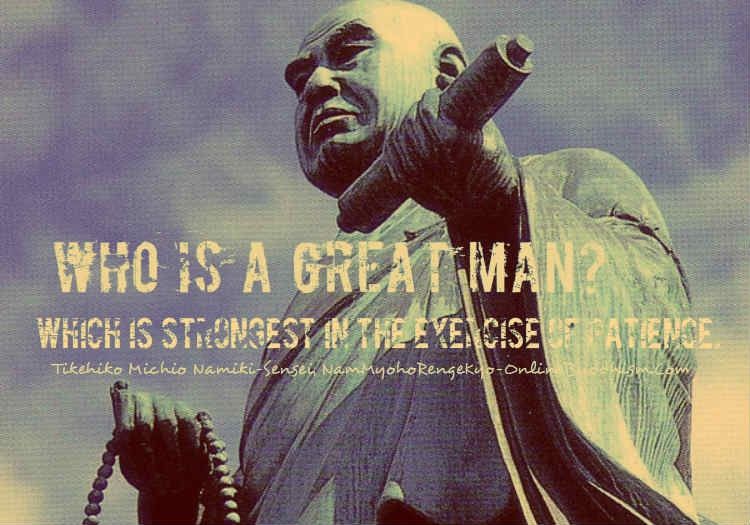
    What must have gone on in his head – did he face and win against the same struggles I had, or was he detached from it? Either way, it seemed to me that he was less anguished than I was. Is it his considerably larger experience of life that makes him so? It made me think – are such people, the infinitely patient ones, a key to cracking the qualified self?ย Is it even possible to monitor let alone apply their path? Or is it the kind of IP that refuses to bow to objectivity, and plays a part in making us what we are – human?

    until next time, intellectual propriety ๐Ÿ™‚

    Bonus read: Achieving Apatheia

    patience

    (via)


  • Social Obligations

    Sometime back, I had this conversation with Surekha. Let me give you the context. I subscribe to a lot of sites on Google Reader, and therefore find a lot of links that I want to share. I end up sharing them – on Reader itself, where i can also ‘Like’ it, on Twitter, rarely on FB, many times on delicious. I also use many of these links for the posts on my other blog. Surekha’sย  observation was that I was stingy with praise. I, as is my wont, proceeded to defend myself. I said that since my sharing had multiple layers and filters, the very fact that I shared it on Twitter was a praise in itself. She called me elitist (which, after a recent post, is almost as insulting to me as being called a vegetarian :p) ๐Ÿ˜€ From where she’s looking, she’s right, and its a valid perspective, though I wouldn’t admit it then. ๐Ÿ˜€

    It made me think about how I share links. Now, I’m not sure if this is retrofit rationalisation or an inbuilt mechanism. In my chat with Surekha I had mentioned that my varied interests meant that what I considered a ‘Good Read’ might be a lousy read for someone not interested in the subject. I wonder now, if my binary kind of approach to things (0 or 1, extremes) coupled with my objectivity fixation makes me just share something without an opinion, so that the person who reads is without the baggage of my bias, good or bad.

    Sometime back, after watching the stream for a while, and reading opinions on a subject, I asked Mo, “post this generation,do you think anyone will know there is a ‘don’t like it,don’t use it’ option? wouldn’t they feel obliged to comment? :|”.ย  I felt that, what blogging started, microblogging has accelerated. From books and places and events to personal traits – not just of celebrities, but of other users’, everything finds its way into the stream, the digital version of the collective consciousness. To corrupt the current Videocon line “We is the new me”. Our ‘stream world’ and all its inhabitants seem extensions of ourselves, a huge canvas of vicarious living. Do many of us feel obliged to share our opinion in real time, some kind of pressure to constantly contribute, and so we comment on everything we can lay hands on?

    In this sharing blitz, do we spare a thought for the object of our comment? Specifically people. With real time, opinions are being formed in minutes. Yes, everyone is entitled to one, but does it also mean we become trigger-happy? When we stick labels, when we judge, do we think of the effort/thought/perspective of the person at the other end? (those on Twitter, think #mpartha, #princesssheeba…I must say, i confess to some silly work on the latter) As we have more listeners, do we feel obliged to pass judgment and evolve into what others would be impressed with/like? Is that why people change when they become popular on say, twitter? It happens in real life too – this modeling of self based on the audience, but in real life, its difficult to enter the streams of thousands of people. With each of us getting a microphone, I wonder if we have entered ourselves unwittingly into a new form of rat race, in which the casualty is compassion and consideration for others?

    until next time, this is an opinion too ๐Ÿ™‚

  • Relative..reality

    For some strange reason, I’ve read Pankaj Mishra’s books in reverse order..well, almost. I read The Romantics first, a long time before, and it remains a book I’m very attached to. Its a good book, but I’ve never figured out the exact reason for this strange bond, in spite of making a rare exception and reading it a second time. Maybe it was the time I first read it (a stage of life) or its characters or its title, someday I hope to know, it will tell me a bit more about myself, perhaps. But meanwhile, from The Romantics, I was lured straight to ‘Temptations of the West‘. A few months later, I read ‘An End to Suffering‘, which served as a kind of introduction to Buddhism for me, as Mishra mapped it on to his own spiritual evolution. I finally completed his first book, ‘Butter Chicken in Ludhiana: Travels in small town India’ more recently. Though its title would indicate so, calling it a travelogue would be a gross injustice, as it also manages to recreate the India of the 90’s. So, yes, it is a travelogue, but like many of its ilk, it works in space and time. No, this is not really a review. ๐Ÿ™‚

    I’m quite glad that I read his books in the order I did. If I read it earlier, I might have been irritated by the cynicism in the book. But having read his later books, I felt almost as though I was with him, as his thoughts and personality evolved. The book gives you loads of nostalgia triggers – from Baba Sehgal’s ‘Main bhi Madonna’ (i still remember the Magnasound casette cover :D) to mentions of Nonie and Mamta Kulkarni, it draws upon tiny incidents of those forgotten days.

    Many of you may not be able to associate at all with those three people mentioned above, for me, they bring back an era, their importance is relative. I even wondered whether, in future, we will have nostalgia townships, like we have the amusement parks now. The 70s, 80s, 90s re-created in terms of people, music, movies, fashion and all the elements of pop culture that can be attributed to an era. So, when you have those nostalgia pangs, you can call a few friends and take a vacation to bring back a period in your life. ๐Ÿ™‚

    A common theme struck me as I ‘moved’ through the book’s pages. Mishra mentions Murshidabad looking towards Calcutta in hope, for job prospects and a better life in general. In many people’s perception, Kolkata is perhaps the worst of the metros on those terms. He writes about the ‘immense cultural vacuum of North india’, and ‘looking towards Bengal for instruction’, and the decline of Allahabad and Benaras. But I realised that for me, those two places were perhaps teeming with culture and history. Again, in Murshidabad, he talks to a person who considers the Babri Masjid as just another mosque, while a nation still burns at regular intervals – the repercussions of an act long ago. The common theme is the relative nature of these things – they means different things to different people, all relative versions of the same thing equally real, when considered from each point of view.

    I remember thinking about progress during my Andaman visit. I saw it in its current state, and can visualise it in the years to come, as tourism becomes a larger factor in the scheme of things, and the changes it will invariably bring in, into a way of life. To quote from the book we’ve been discussing

    Civilisation, however, is on the move, and as E.M.Cioran remarks, nothing more characterises the civilised man than the zeal to impose his discontents on those so far exempt from them.

    When the tourist money flows into the system, it will help the locals afford many things that they perhaps didn’t have access to. But even those who do not wish to change might be sucked into this new way of life because it would be a question of survival. Were they better off and happier before all this happens to them? I don’t know, because after all, even happiness is so relative now.

    Objectivity –ย  based on observable phenomena and uninfluenced by emotions or personal prejudices, and not the result of any judgments made by a conscious entity. But everything is relative. Things not seen from one’s own perspective don’t seem to matter, and objectivity’s definition would suggest “no one’s perspective”. Maybe that’s why we don’t care for it much anymore?

    until next time, time, space and relativism

  • Life…streamers

    Sometime back, I read an extremely interesting post by Chris Messina – how we’re now hit by a plethora of data and information on the real time web, which our brains have not adapted to, and how, in order to process this, we’d require an augmentation of our existing abilities.

    The information overload has been happening for a little while now. Between reading blogs, writing them, microblogging, Facebook and all the shiny little tools that keep coming up, it’s a constant juggling act. I’ve been on Twitter for over a couple of years now. I can see a drastic change in the relationships there already, as compared to the banter of the initial days. New people, new thoughts, old people who’re changing with time, old thoughts recycled.ย  A simple @ tag connects lives. Meanwhile, its not just relationships and thoughts that change, but also behaviour – the need to share an experience, attention deficit, and so on. These would obviously vary with an individual’s usage of Twitter, facebook etc, but I’m sure there are more like me.

    While I’ve been dimly conscious of the vastness of the Twitterverse, I had a more tangible realisation only after i came across a tool (from an article shared by Shefaly). As I sat watching the pictures streaming across the screen on Twitcaps, I felt I was somehow connected to all of them across the world sharing images – from parties to churches to landscapes to death to raunchy stuff to coffee mugs and so many many other things. There are multiple images being shared every second, and I had an acute realisation of the magnitude of change happening, in terms of connectedness and sharing. The population of the world, the population of your own city, the number of people working in your office/living in the apartment complex- as the numbers come down, the people slowly change from a blurred intangibility to a focused person. But as we get more and more networked, the number of persons who become tangible are increasing, the arguments about their relative importance to self notwithstanding. As Chris says in the article, can human beings cope after a point?

    Sometime earlier this year, I remember writing a post about speciation – the evolution of the human species, and how replacement of body parts and advancement might finally end up in a being that may not match our current concept of human, or even living, like the Cybermen in Dr.Who. In that post, I had also mentioned Homo Evolutis, one of whose characteristics was networked intelligence.

    As the information deluge gathers momentum, there may be those who choose not to be part of it, who are comfortable not being part of this vast stream of consciousness, while there may be others who use their abilities and the augmentation to embrace this. These are obviously two extremes, and its quite possible that humans would figure out a middle path. But I already see this divide happening – some leaving it by choice, some left out by circumstances. The learning curve is becoming so steep that after a few years, it might be difficult or even impossible to catch up. And that’s how I begin to wonder whether we’re rapidly approaching the point when the species will diverge. Maybe not in my lifetime, but within a couple of generations?

    There’s another aspect of all this that I wondered about. With the increasing amount of information and the speed at which we’re forced to process it, will we have time to acquire more perspectives, or continuing that cycle, accumulate more baggage? Will that change the way we behave with people, and the way we live life? Will we become more objective? Or will we become more biased, relying on notions we don’t have time to change, and behaving accordingly?

    As I write this there is a stream of thoughts running in my head – of times, friends and relationships. Poignant moment as I realise the vast yet connected nature of the universe and its inhabitants. In the miniscule amount of my lifetime that I have spent on Twitter, I realise that people and relationships have changed, perhaps irrevocably. The lifestream will be an interesting read for me later, if I do manage it. Meanwhile life flows, faster, faster, until each second and beyond is accounted for, with streamers in between, so that we might remember…just..

    until next time, you’re here..now..reading post #700..thank you ๐Ÿ™‚