Neil Gaiman
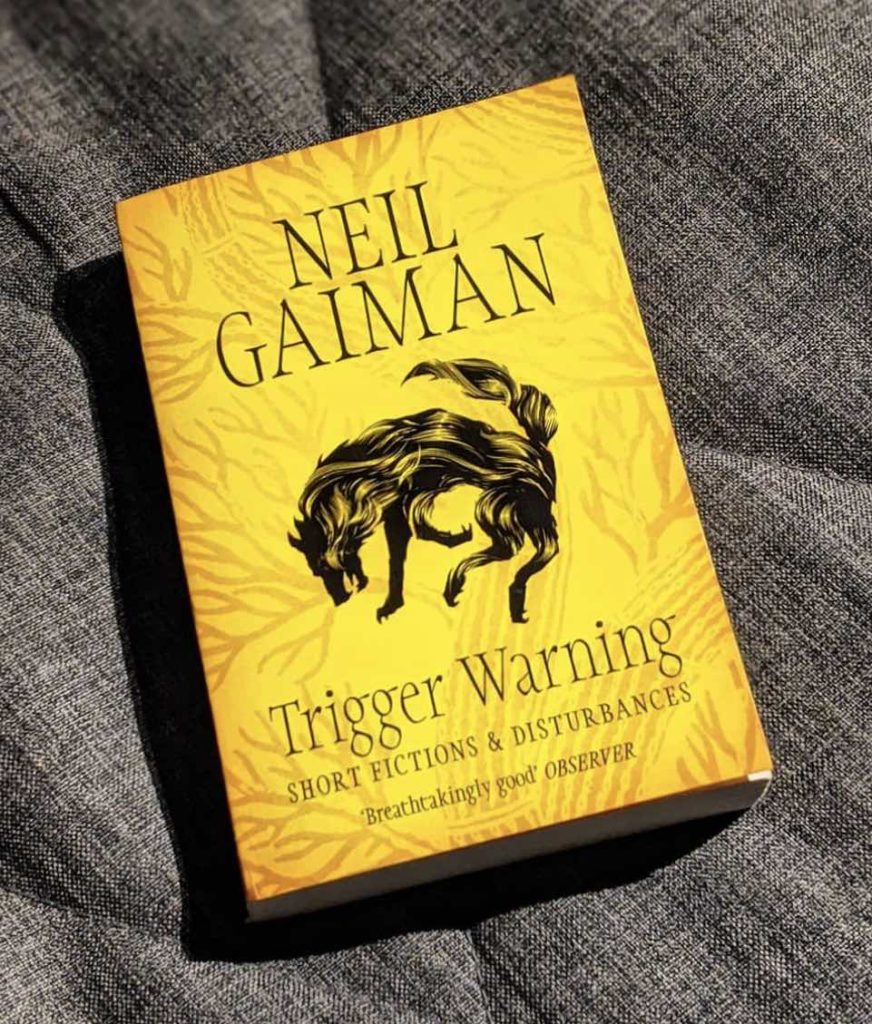
“We are all wearing masks. That is what makes us interesting. These are stories about those masks, and the people we are underneath them.” Thus reads the blurb on the back cover. It’s quite meta, because the book does have a dark theme – “Many of these stories end badly for at least one of the people in them. Consider yourself warned”- and I am reading this after Covid struck! The setting couldn’t have been worse, or better!
The book has 24 stories (including the poems) and they are of different hues. Made richer because of the long introduction, which provides the context to a lot of these stories. There’s magic, science fiction, twisty fairy tales whose characters you almost know, and yes, ghost stories too! Gaiman also gives in to self-confessed trips of silliness – “And weep, like Alexander” is one such. His own fandom can be seen in a fantastic Sherlock Holmes story, a neat tribute to Ray Bradbury, a Doctor Who tale, and a surreal and profound one for David Bowie as well. There might be more that I might have missed because of a lack of context. Gaiman ends with a story with characters from American Gods. I probably wouldn’t have gotten that if I hadn’t watched the show, I need to buy that book! In addition, there are some clever formats too – A Calendar of Tales has a story for every month, each almost a different genre. Orange is another, a subject’s responses (no questions) to an investigator’s questionnaire.
What’s common in all of these is the power of imagination, and Gaiman’s way with words. The class of a storyteller is his/her ability to transport the reader to a place and time far away, and Gaiman did that for me more than a dozen times in this book. Pick it up, I am sure you will find your own treasures.