Tag: Morgan Housel

  • Same As Ever

    Morgan Housel

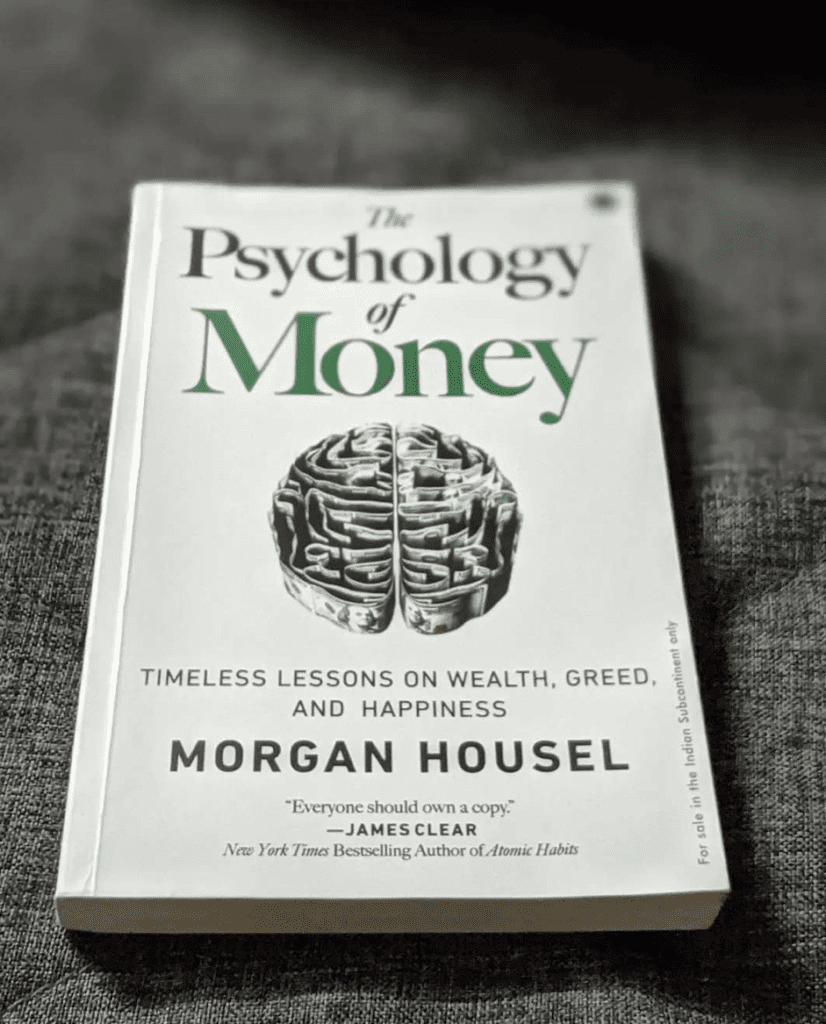
    The Psychology of Money” is acknowledged as a game changer. It gave me fresh perspectives, validation, and the confidence to continue on the path I had set out on financially. So it wasn’t surprising that I was looking forward to Same As Ever.

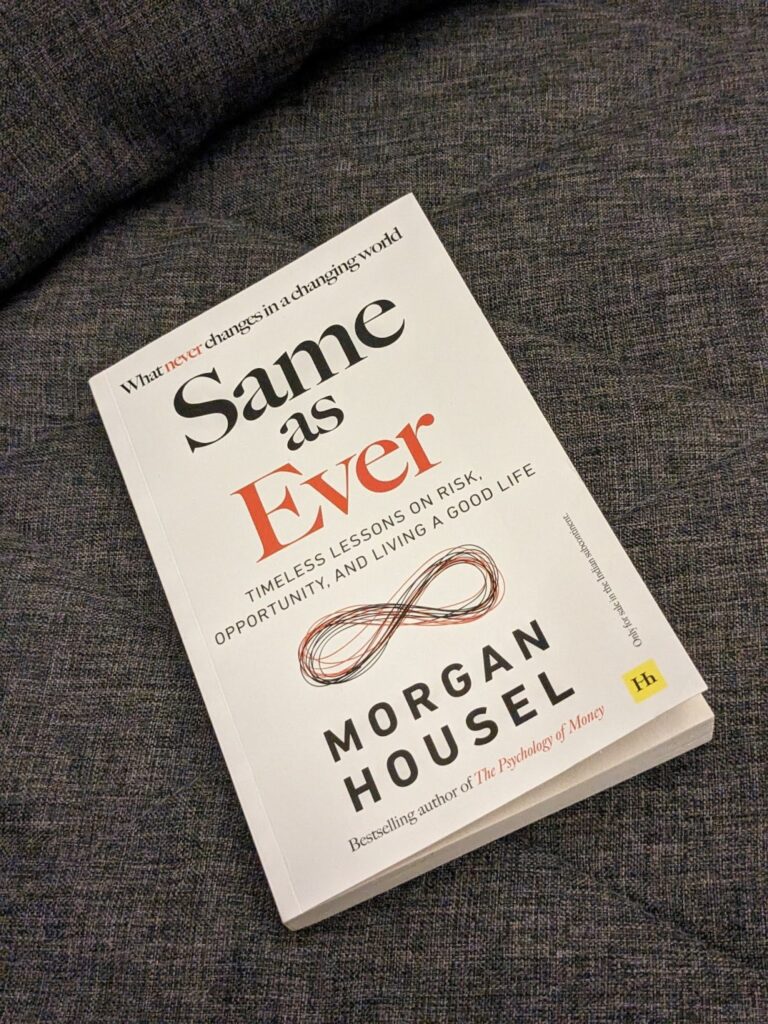
    To begin with, I think you shouldn’t expect the refreshing sense you’d get from the previous book. This is even more so if you’ve been reading the Collab Blog. The book’s cover promises ‘timeless lessons on risk, opportunity, and living a good life’ and to some extent, delivers on all. There are many extremely good insights and the pithy ways in which Housel articulates profound truths continue to be a source of ‘aha’.

    What I missed though was the smooth flow of the previous book. It doesn’t help that many of the chapters seem to be force fitted into a narrative, and many anecdotes and other content are from the blog. Housel does go for a structure but I think it might have helped if this were presented as just a series of essays. He does say that these are standalone but then also proceeds to try connections at the end of each chapter. The overall experience therefore is a little jarring.

    Having said that, Same As Ever is a useful book to read, with some great but lesser-known anecdotes, and indeed, timeless insights.

    Notes and Quotes
    “Risk is what’s left over after you think you’ve thought of everything” ~ Carl Richards
    “Invest in preparedness, not in prediction” ~ Nassim Nicholas Taleb
    Money brings happiness the same way drugs bring pleasure: incredible if done right, dangerous if used to mask a weakness, and disastrous when no amount is enough.
    “The majority of Americans were likely than their descendants to be dogged by the frightening sense of insecurity that comes from being jostled by forces – economic, political, international – beyond one’s ken. Their horizons were close to them.” ~ Frederick Lewis Allen (1900)
    People don’t want accuracy. They want certainty.
    If you have the right answer, you may or may not get ahead. If you’ve the wrong answer but you’re a good storyteller, you’ll probably get ahead (for a while). If you’ve the right answer and you’re a good storyteller you’ll most certainly get ahead.
    “Humour is a good way to show you’re smart without bragging” ~ Mark Twain
    “The higher the monkey climbs a tree, the more you can see his ass” ~ T. Boone Pickens
    “A mind that is stretched by new experience can never go back to its old dimensions” ~ Oliver Wendell Holmes
    Same As Ever
  • #Bibliofiles : 2021 favourites

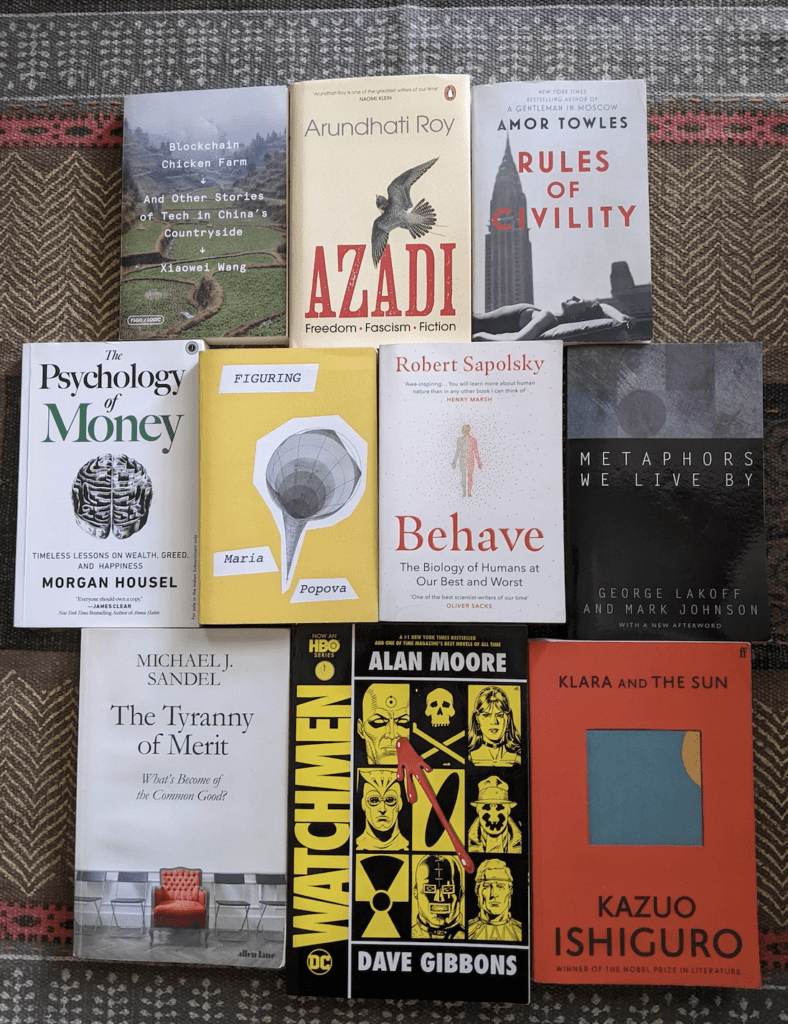
    Oh well, since Gates doesn’t have a monopoly these days, I thought I’ll continue this from last year and the year before. Actually, it’s for a couple of reasons. One, I think there are underlying themes in my reading every year, which will be interesting to examine years later. And two, if someone chances upon these, they will hopefully be able to discover new books and themes for themselves. The shortlisting was tougher this year, because the list was slightly bigger, and the quality of books was also great. My long list from the 50 books I read this year was closer to 20, and I’ll mention them in the relevant places.

    (more…)
  • The Psychology of Money

    Morgan Housel

    My job is at the intersection of marketing and personal finance, and that’s the reason why I appreciate this book even more. It is a difficult subject to communicate, but a job that needs to be done. What makes The Psychology of Money really good is that it views money not (only) through the technical lens, or the “get rich” advice, but explores the emotional aspects of personal finance, and then articulates in a way that is relatable. I might be a little biased because I subscribe to the author’s worldview, and apart from index fund investing, have exactly the same approach. But I think everyone should read this book, because, as the author quotes (Voltaire), “History never repeats itself; man always does.”

    I will try not to paraphrase the lessons because they need to be read in the author’s narrative style for them to (hopefully) sink in. He begins with calling out the fact that personal finance is well, personal, and while there are definitely rules in finance and investing might, one’s behaviour is based on one’s experiences and emotions. And some of it is very generation specific. For instance, the idea that one is entitled to a dignified retirement life took root only in the 1980s! 

    He then moves on to risk, and the role of luck, followed by the importance of knowing what you really want, and then, some excellent illustrations of the “magic pill” – compounding – at work. The next couple of chapters make some key points that are often ignored- the difference between getting wealthy and staying wealthy, and the importance of “tail events”.

    The definition of “freedom” is something I could completely relate to. I’d flip the original maxim for a quick understanding – “money is time”. The more agency over time I have, the happier I am. The next two chapters about wealth are extremely insightful – no one is as impressed as your possessions as you are, and spending money on showing others that you have money is the fastest way to lose it! Wealth is income not spent, and it increases optionality. And while, one cannot control externalities, what is possible is an efficiency in savings. “One of the most powerful ways to increase your savings isn’t to raise your income. It’s to raise your humility.” 

    The following chapters get deeper into the how emotions play a large role in financial decision making, how it is better to be reasonable than trying to be coldly rational, and also, how important it is to leave room for error. I really loved the Benjamin Graham quote – “the purpose of margin of safety is to render the forecast unnecessary.” This is also important because our own desires and notions of happiness change with time. There are also some nuanced perspectives on optimism, and my views about it have changed now! 🙂

    Another extremely important lesson is not taking financial cues from others without really understanding what game they are playing – what are they optimising for, and why. e.g. day traders vs long-term investors, at a transactional level. The author uses the final chapter to show what he is aiming for, and therefore the rationale behind his own investments. 
    As I mentioned earlier, the author’s goals resonate with me – “..you only do the work you like with people you like at the times you want for as long as you want.” But at the risk of repeating myself, I think this book will help you frame your relationship with money, irrespective of where you are in your thinking and understanding of personal finance. So I insist you read it! Now!

    P.S. The postscript is an excellent read on how the US economy and its people got to where they are, both in terms of macro economic events and trends, and expectations. It’s superbly insightful in terms of understanding consumer psyche. Wonder if someone has done this for India.

    The Psychology of Money by Morgan Housel