Tag: Money

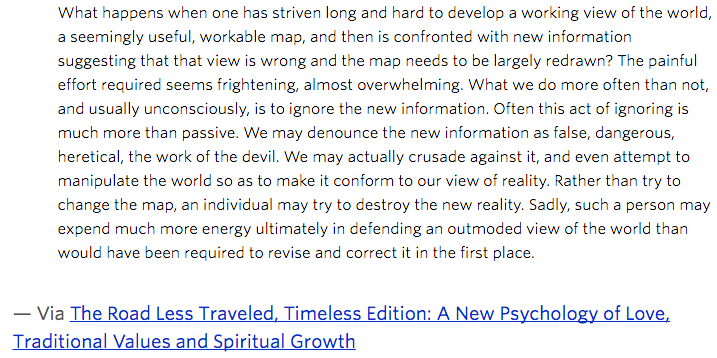
  • Map making

    Untitled

    (via)

    In “The Case Against Cosmic Justice” I’d brought up how (IMO) randomness was the key driver of the universe, and that pretty much every other concept (God, karma etc) was a narrative fallacy. I think that requires a little editing. To use a phrase from “Sapiens”, these other concepts aren’t really fallacies, they are inter-subjective realities. That means it they are belief systems that a lot of people share and agree to. e.g. money, nations. This is different from subjective reality – my personal reality as I experience it or choose to see it e.g. Salman Khan should be in jail for killing people, and objective reality – one which exists irrespective of anyone’s belief systems e.g. gravity. (more…)

  • Work, Parenting & the Monoculture

    Sunday morning gave me a fantastic read, via  multiple shares on my timeline – “Why do we work so hard?“, in which Ryan Avent traces the evolution of work (hours) from the time after the second world war, and wonders why a trend was reversed and we started working more hours. She considers her own as well as her father’s experiences, and explores whether it is the treadmill effect, the satisfaction of work, or a combination of both. She sums up one of her answers thus –

    It is a cognitive and emotional relief to immerse oneself in something all-consuming while other difficulties float by. The complexities of intellectual puzzles are nothing to those of emotional ones. Work is a wonderful refuge.

    Something about it gave me a sense of deja vu. I realised that this has also been my hypothesis about parenting! Back to that in a bit. Meanwhile, she ends the article with

    ..precisely why what I’m doing appeals to me. They are asking about a job. I am thinking about identity, community, purpose – the things that provide meaning and motivation. I am talking about my life.

    It reminded me of a short conversation with S recently, where we agreed about how (many) people follow up their introductory “Hi, I am XYZ” with their designation and/or place of work, irrespective of the meeting context.  (more…)

  • The immortality of time

    Thoughts on immortality and its implications on personal and societal aspects of life have long been a favourite subject here. It has also been an area of interest from a philosophical standpoint. For instance, if we could live forever, what would be the relevance of time? Would our current existential questions be rendered irrelevant?  There is also an understanding that it is a process – our lifespans would progressively increase – as we replace our bodies (and later, minds) with mechanisms (augmented human) even more robust than the ones nature gave us.

    I found an excellent post on Quartz which dwells on the evolution of time management and makes the point that time management is actually making our lives worse. It also brings up something I had written about recently in the context of work, money and AI – the never ending race for efficiency. The article argues that the idea that managing time would get one back in control is a fantasy that only works in a finite world and that our to-do list is actually like the mythological Hydra!  (more…)

  • Money : AI :: Present : Future

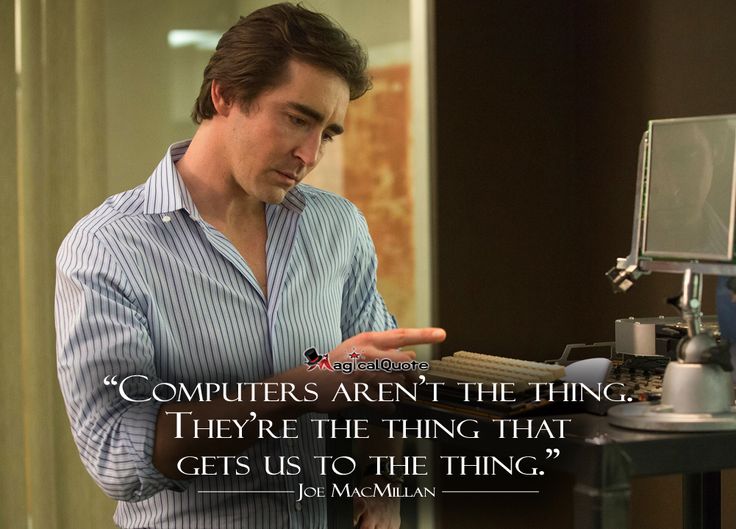
    Thing

    I might have found a remedy for the Mad Men withdrawal symptoms. “Halt and Catch Fire” – that’s where the line is from. While the show has me glued, it also made me really consider the connection between money & AI.

    A key factor that is driving the increasing adoption of AI in the work context is efficiency. Somewhere in the equation of calculating efficiency lies money, and how much of it can be saved. I am ignoring ‘time’ for now, because even that, mostly comes down to “time is money”. Jobs increasingly become task oriented and the objective is to make each task more and more efficient. If we continue that way, the pessimistic AI future is easy to imagine – it will happen in a ‘frog in boiling water’ manner, but it will happen. (more…)

  • Currencies of hope

    In The Narratives of our lives, I had written about how, thanks to the advances of civilisation, many institutional narratives like religion, nation, culture etc have assumed increasing levels of importance in our lives, and how these (and our personal) narratives are probably our way of ensuring a sense of belonging. ‘The Age of Spiritual Machines‘, criticism on the concept of singularity notwithstanding, has convinced me on the cold, sanitised nature of evolution, so these days, I try to see what evolution’s play is, in these narratives.

    Thanks to a wine-induced pop philosophy conversation, I got thinking about theism and atheism. The epiphany (for me) was that they are just two sides of the same coin, and the currency was hope. Simply put, the foundation of the theist’s hope is God, and that of the atheist’s is the ability to determine his own future. ‘Our beliefs create the world we live in’, but across belief systems, hope is a critical ingredient for man’s survival. I realised that as long as we are the dominant species, hope has to hang around, or vice versa. By virtue of providing a common imaginary friend to a sufficiently high mass, religion not only addresses our need to belong, it also gives us hope. What each of us hope for is a very subjective thing, but collectively, it makes religion a really dominant narrative in many lives. When I thought about it, I recognised an even bigger force – money. (more…)