
Tag: marriage

  • The Art of Live In

    I borrowed the title from a post I wrote nine years ago on live in relationships. We have come quite a way since then, but I am also seeing an evolution in this narrative. I call it the same narrative because fundamentally it challenges the institution of marriage as we know it. The way I see it, marriage was an evolutionary necessity – as a relatively structured process of procreation, and thereby organising society. The words below are from a work of fiction based on the life of the Buddha, it would seem that neither is it far from truth nor have things changed much.
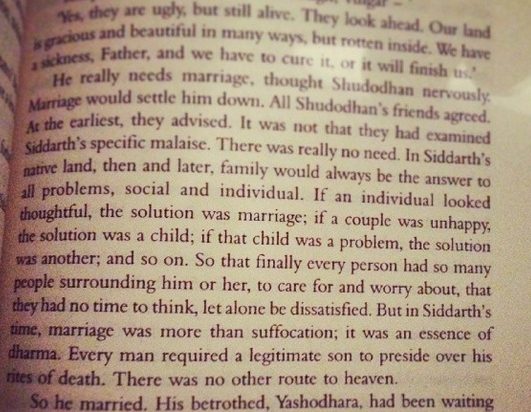
    Sid

    So why is this institution primed for ‘disruption’ now?

    Technology is one factor. The family unit made sense when younger members of the species had to be protected. As AI advances, maybe a family unit will not be necessary for safety or security. Technology also might play a hand in the physiological aspects, more on that in a bit. As I mentioned in an earlier post (Emotion As A Service) marriage is as much a transactional relationship as an emotional one. To paraphrase Scott Adams,  (fromthe internet has allowed us to have a barter economy of relationships….a virtual spouse comprised of a dozen separate relationships

    The second factor – advances in medicine and increasing lifespans. Imagine living up to 150. The ‘life partner’ that you chose when you were a carefree 20 year old may not be the one you’d want to have fireside conversations with in your middle age – 95. Interests, outlook, worldview, personality etc change with time. Maybe you’d be living in different cities at different stages. 

    Another factor I’d consider is depleting resources – these may be natural, (on a larger scale) and economic (on an individual scale) (any thing else you can think of?) These might force the species to rethink the institution, even though it seems hardwired into the brain by now. 

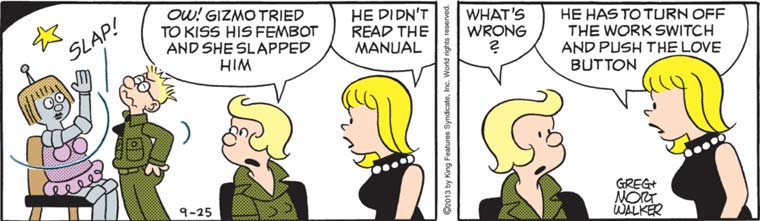
    I can already see several paths diverging from this point. Robots as companions for the aged is a fast developing area, it could be used for young ones in future. In a physiological context,  though we might not be there yet, s3x with robots is a distinct possibility by 2025. There’s bound to be a learning curve, but hey! 
    i130925bb

    (via)

    In a relationship context, The Atlantic had a long article on polyamory, including perspectives on how society sees them, and the challenges involved. I was actually more surprised when Bangalore Times carried an article on the subject on its front page recently. The point here is that it is getting mainstream attention, arguably the first step in societal acceptance of units that are radically different from the traditional family. Even children with DNA from three parents might soon overcome legal hurdles and become an accepted practice.  

    With all these paths, and many more, the institution of marriage might become one of the many options available. Some communities might hold on to it – as a tradition. But as time progresses, both individuals and society will undergo not just transformations on the outside, but in mindset as well.  After all, isn’t evolution just a logical response to a creature’s living environment? If it is, once the evolutionary necessity has passed, even this tradition might just fade away.  

    (The views expressed above are just the author’s attempts at intellectuality, and do not represent his actuality. He hopes he doesn’t have to sleep outside!) 

    until next time, along came poly! 
  • Emotion as a Service

    More than a year back, I had written about institutional realignment and had briefly mentioned the institutions of marriage and parenting. ‘The currency of relationships‘ made me think of this, and family – immediate and extended – as a societal construct/contract/ institution, and probably even as a tradition. Where we are born, and whom we are born to, are apparently out of control, but we do have an illusion of control courtesy the choices we make as we go along. Thanks to these choices, our lifestyle and our perspectives may follow a trajectory that is totally different from the circumstances and people we grew up with/in. This is not just about the people from our childhood/youth, but is a continuous process through life. Each of us find our own ways to deal with the constant flow of people through our lives. These are again choices, and like most choices involves some amount of sacrifice and bring with them their own set of consequences.

    Clipboard02

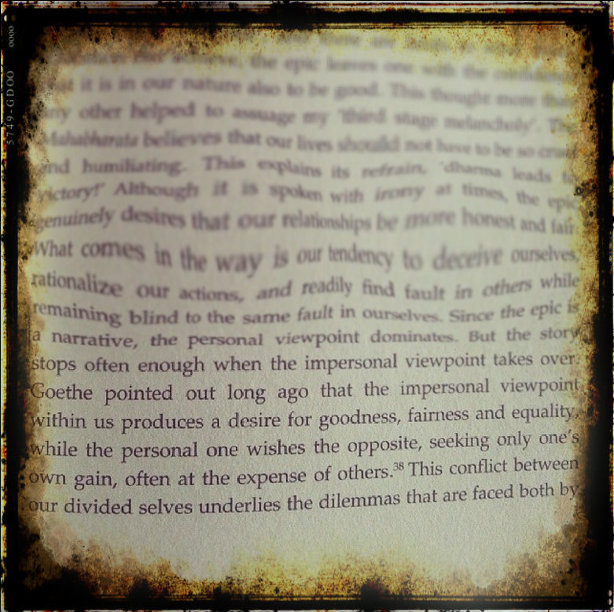
    I loved that Goethe paraphrase, because I think it sums up our relationships very well. At the risk of sounding cynical, (or receiving a ‘speak for yourself’ comment) I’d say that we’re increasingly becoming selfish as a species. I have always had the notion that most relationships are contextual, and it would be difficult to scale our emotions/feelings for others for an indefinite time frame. Yes, I do acknowledge there are exceptions, but that’s what they are – exceptions. Do a quick test and find out how many people across your life you’re still in touch with – bouts of nostalgia not included?

    It is with all this as the backdrop that I read Scott Adams’ “The Future of Marriage“. It articulates very well a thought that had crossed my mind earlier. (Of course, he obviously explores it way better than I could have) He deconstructs the institution of marriage and argues that marriage made sense “when the world was inefficient. You married a person nearby who could provide most of your important needs while hoping your lesser needs could also somehow be met.” Now, he says, the internet has allowed us to have a barter economy of relationships. In other words, a virtual spouse comprised of a dozen separate relationships. He tempers everything by saying that in the future, marriage may be one of the many options available. By sheer coincidence, and in a different context, I came across this quote attributed to Steve Macone “A tradition is a habit whose logic has faded“.

    I thought about this in the context of the expectations I had mentioned in the ‘currency of relationships’ post. If the institution of marriage can have a barter economy, why not other relationships? After all, isn’t every relationship a barter at its core? It’s just that we are rarely comfortable with voicing our expectations in the case of an emotional ‘transaction’, quantitatively or qualitatively. (generalising) Parents expect their children to look after them when they are old, in return for bringing you up; relatives expect you to return the favours they once did for you, and so on.

    So who knows, maybe our pace of life and our need to be (seen as) fair in all our relationships will conspire to form a barter ecosystem that offers emotion as a service. It is possible that an alternate path to prosperity might take us in a different direction, but in the era of the quantified self and the augmented human, when we slowly transition our selves into the cloud, maybe ‘Emotion as a Service’ (like)  is not an impossibility. What do you think?

    until next time, a qualified self

  • In the beginning…

    Over on the other blog, I had discussed one of my favourite 2012 trend decks – by Ross Dawson. Within that, my favourite trend was #4 – Institutions in question, in which he talks of political situations (Arab unrest), and the change in status of financial institutions leading to movements like Occupy Wall Street. The last slide is titled “Transformation not apocalypse”, in which he mentions the significance of 2012 for several reasons – from the Mayan calendar’s end of the word prophecy to it being hailed as the year of the Singularity – a subject that keeps popping up on this blog. 🙂

    I, for one, believe that we’re in for a transformation. But it’s not just the political, economic or even technological changes happening around us, I think we’re fundamentally going to change as individuals and how we relate to others – society. So it’s not just the economic and political institutions that will be transformed, but even social institutions – marriage, family, parenthood, friendship and so on.

    As the average human life span increases thanks to medical advances, the ‘rational’ reasons underpinning these social institutions will be under scrutiny. I have a feeling that technology will soon allow us to find surrogates for each of these, one way or the other. It isn’t as though the institutions themselves will disappear, but their importance and the solidity they had thus far enjoyed would diminish. What exactly the changes would be is something I’m still trying to imagine, but the effect of social networks on relationships is probably the beginning of this transformation, and we are likely to be known as the generation under whose watch it all began.

    until next time, a happy 2012 to you 🙂

  • The Real and the Virtual

    He got married on April 24th 2003, to the woman he had loved for six years. He noted that somehow it all seemed to add up to 6. And so, on the sixth day he created ‘manuscrypts‘. From then on he was in seventh heaven. It’s been six years.
    It would’ve ended there, but manuscrypts was tempted to finish his sixth year with sixty six words.

    until next time, six degrees of separation 🙂

    PS: Next post, in about 7 days. 🙂

  • Twins

    After putting aside concepts like love and money, perhaps the two most important things in life would be the marriage and the career… and if you put a lil bit of thought to it, there are some striking similarities..
    Both are things that you get to hear about early in life, but get to experience only at a relatively later stage.. and you get to hear about it from anyone who’s remotely elder to you.. there are so many versions… and when its happening to you, everyone has an interest in it and an advice to give on it… and anything ‘different’ from the norm is usually met with a frown…
    in both cases, there are roughly two paths you can take – one that you want to do due to your desire and aspiration, and the other thats financially and socially seen as ‘safe’..in both the cases,the exceptions are also similar… you might want to be a doctor/engineer etc and you get to do exactly that.. and you happen to love a girl/guy who meets all the conditions and succeeds in all the parameters that are set out by those who are supposed to decide your fate – parents, relatives etc, and can therefore marry him/her without a problem.. whether the path has been by choice or forced on one, both perhaps require a certain amount of compromise.. you might end up liking the career you had no specific interest initially, and you might end up liking your arranged spouse..in both the cases, you might realise after a point of time, that it is no longer what you want, and there’s something or someone else that you really want to spend your time and energy on..and yes, getting fired in both cases, is a pain….
    you want to maintain that correct balance between both, and yes, most importantly, you expect both to be some kind of anchor in your life, and to derive some joy out of the experiences..and like everything else, you know that both have to end, at some point of time..
    until next time, identical or non identical??