
Tag: Lisa Feldman Barrett

  • Designing my desires

    A world of transactional efficiency

    It was a little over 4 years ago that I first brought up the increasingly transactional nature of our interactions and even existence in general. I was reminded of it while listening to Amit Varma’s podcast with Nirupama Rao. Interestingly, they brought up contexts similar to what I had used – mails and rails. I had used birthday greetings going from long mails/cards to a ‘Like’ on someone else wishing the person a birthday. Travel was the other context, and I liked Amit’s example of train journeys being a unique experience. In contrast to say, the flight from point A to B.

    Last year, around the same time, I had framed it as An Efficient Existence, and used the example of Taylor Pearson’s 4 minute songs – the timeframe he had mentioned for songs in the context of  certain rules that creators need to follow if they want their work to be consumed and appreciated. I had brought up an earlier era of Floyd, Springsteen, Fleetwood Mac etc whose songs didn’t follow that template. Demand or supply, what happened first, I asked. Does it have to do with the abundance of choice now, and the demands of instant gratification? While templated packages for all sorts of consumption are increasingly the norm, people also want to finish and move on to the next thing on their list. Transactions. (Generalising), there seems to be very less desire to have an immersive experience. Outside the screen, that is. As the Spotify ads show (unintentionally and literally) we’re usually in a bubble, oblivious to our surroundings.

    (more…)
  • How Emotions Are Made

    Lisa Feldman Barrett

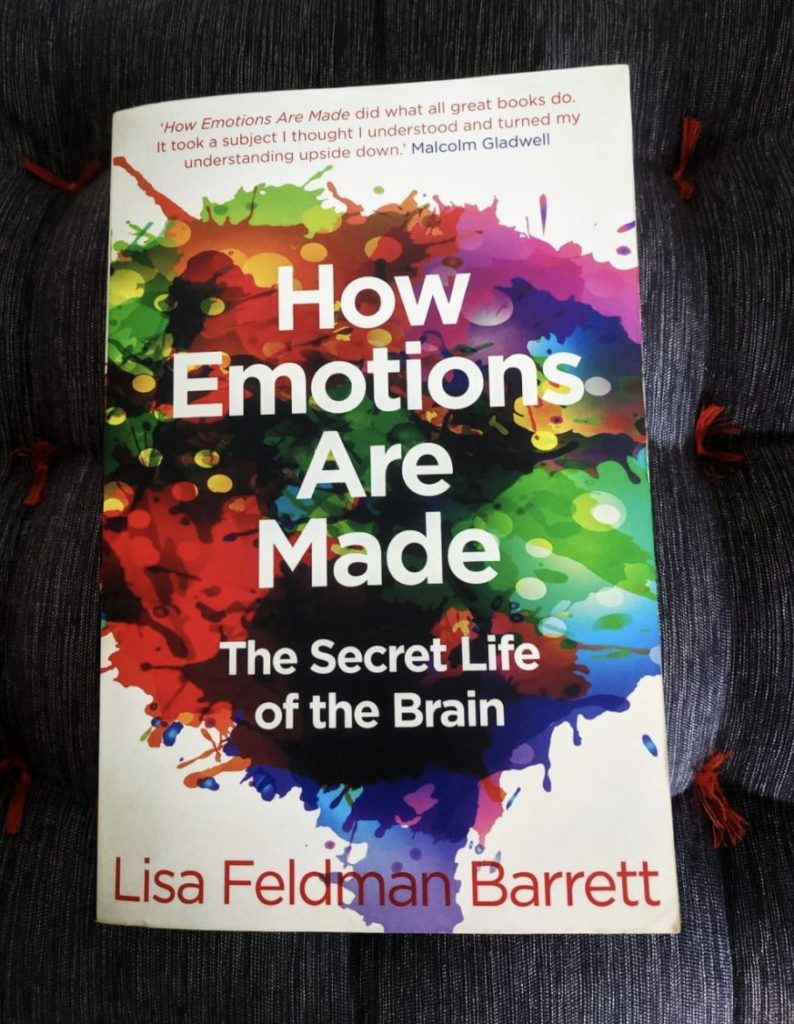
    Just when I thought I was getting some stability (in my thinking) on the free will vs determinism debate, here comes fresh food for thought. As per ‘How Emotions Are Made’, while the combination of genetic and environmental factors do determine our behaviour, free will has a definite play.

    The core theme of the book is a constructionist theory of how emotions are made, as opposed to a classic theory. The classical view assumes that each emotion has a unique ‘fingerprint’, as against the opposing view that variation is the norm. This has implications not just on how we physically manifest our emotions but on our understanding of how the nervous system operates as well. And finally, the classical view believes that emotions are inborn and universal. But the alternate view is that emotions are formed based on shared concepts, influenced by social reality and culture.

    The view of the brain as a tiered system (survival, emotion, cognition) is one of the first myths that the author breaks. Further, as opposed to being the result of a stimulus-response mechanism, emotions are a result of the brain simulating and predicting, based on a bunch of factors. What we call emotions – anger, fear, happiness etc- are concepts that get created and honed in the brain. Concepts, goals, words all help the brain frame any new stimulus it receives and then predict. By reframing concepts and looking at them more objectively, we can reshape what emotions are surfaced, and thus exercise free will.

    Towards the middle of the book, the author sets up the answer for “are emotions real” with the classic philosophical question of “If a tree falls in a forest and no one is around to hear it, does it make a sound?”. The answer is that both fall under the “perceiver-dependent” category. Emotions are thus, a social reality and become real because of collective intentionality and our ability to communicate using words.

    This understanding of emotions, and how much we control/are in control has implications on a lot of things ranging from our daily behaviour to the way the judiciary system works and how we deliver justice.

    ‘How Emotions Are Made’ is refreshing because of the alternate perspectives, all of which are backed by science. The author makes it a point to call out hypotheses where it’s not. The language is technical only when needed and explanations are lucid. In all, it is a fascinating book that has made me rethink a lot of what I thought I knew about myself and the world. Not an easy read, but absolutely worth the time. And that’s why it made it to my 2019 favourites.