Tag: Kazuo Ishiguro

  • Clarity begins at home

    Maybe it’s a 40s thing, or maybe it’s just me projecting my top-of-the-mind thought on to others, but these days, ‘the place to retire to’ is a recurring theme in many conversations with friends. Once upon a time, in line with Pico Iyer’s “Home is not just the place where you happen to be born. It’s the place where you become yourself”, Bangalore was an obvious choice. A few years ago, Cochin got back into the consideration set, as I veered more towards who I was than what my self image was. The mind and its narratives.

    During a recent trip to Cochin, when a classmate described my school-self to D, I had a moment straight out of a Kazuo Ishiguro book. He is one of my favourite writers, and at least two of his books feature narrators with flawed memory constructions. In the books, it is fascinating to watch the peeling of reality against the narrator’s reconstructions. Ishiguro is kind, and usually brings the narrator down gently. In my case, I was first shocked to realise how I was like one of his narrators, and then pleasantly surprised at how my friend remembered me. Maybe he was being kind. But this isn’t the first time. When a similar recollection about me had happened with one of our other classmates during a reunion a few years ago, I had brushed it off as his false narrative. Because my own perception of who I was then was different. But after this, I realised that this was the key to Cochin behaving like a magnet!

    In Capital, Rana Dasgupta wrote – ‘when one becomes homesick, it is not a place that one seeks, but oneself, back in time.’ Despite my conscious mind’s narrative constructions, my subconscious probably remembers it more accurately. It remembers someone whose sense of humour did not have the cynicism that an adult life gifted it. Someone whose whistling skills seemed like magic to his friends because it was not self-conscious. Maybe, by pulling me back to a place, the mind believes it can also pull me back to a time and a self that was happy with itself. That him who I was.

    And maybe it’s not just that. Before I left Cochin, I made it a point to visit an old hangout. An aunt’s home. My mother’s cousin, whose granddaughters were roughly my age, but insisted on calling me ammava (uncle) especially in public. My memories of that place and my aunt, and these I am sure of because there are physical spaces that could testify to it, are ones I cherish and am deeply grateful for. The place and the person brought a sense of warmth and security to a teen life that was troubled by loss, and a mind that did not even realise it was unmoored. I see the afternoons and evenings I have spent there as an incomparable act of kindness. A refuge from the world at large.

    So maybe what drags me back to Cochin is a little more than who I was. It is also about those around me at a certain stage of my life. The friends who made me feel special. The people who made me feel secure. And places that are so deeply etched in my memory that it would be impossible to feel lost even now. Even as I realise that the places and people may no longer be around and that this construct is one that fits the current idea that I have of myself, I also think that somehow the mind will conspire to project an environment that can anchor me.

    P.S. As I began writing this, I had an intense sense of deja-vu. Very meta. I had gone through these thoughts before, I was sure. And indeed I had. That is somehow reassuring.
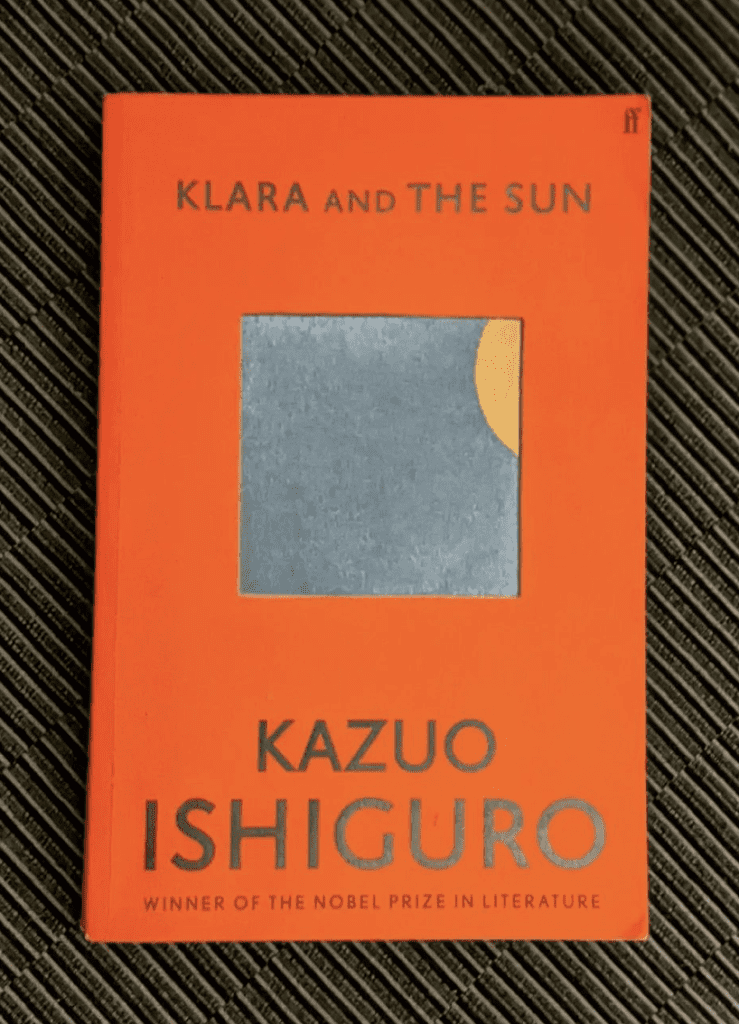
  • Klara and the Sun

    Kazuo Ishiguro

    “The Buried Giant” didn’t really work for me, so I started reading with a mix of anticipation and apprehension. The lump in the throat as I turn the final pages is what I expect from a Kazuo Ishiguro book, and it most certainly delivered on that ache of profound sadness. It reminded me not just of his earlier book “Never Let Me Go”, but also of Louisa Hall’s “Speak”, which is centred around AI’s evolution around stories and storytelling through time. 
    Klara, an “artificial friend” serves as the narrator in a dystopian future where children are “lifted” for enhancing their intelligence. The world at large seems to have a fair share of tribes and movements, as technology has caused a division of classes in which many are “post employed”. We first meet Klara in the store where she is put up for sale, as an observant MF, who loves watching the world through the store window, and who is devoted to the sun (she is solar powered). She is chosen by Josie, a 14-year old made unwell by the “lifting” process. 

    From then on, we see multiple themes playing out – some human, some human and AF, and some just AF. The relationship between the humans – Josie, her mother and father who are separated, their neighbour Helen and her son Rick (who is Josie’s dear friend), and Capaldi, whose studio Josie and her mother visit for her “portrait” – reveal the different “sides” of their selves that play out on different occasions, their understanding of their own fragility, and their diverse views about how society is evolving. This is closely connected to the humans’ interactions with Klara, which show their mindset towards the AFs, again polarised. Most poignant are the moments with the empathetic Manager. 

    But being the narrator, Klara’s own thoughts and actions are the most interesting. She sees the world in boxes (I wonder if that is connected to how we slot people), she “feels” enough for Josie to be prepared to sacrifice anything for her, and has a hatred for the Cootings Machine, both of which are all too human. Her observation also makes her very perceptive (“I understood that my presence wasn’t appropriate as it once had been,”) even though the humans around her are often not. (Spoiler sentence ahead) My favourite is the deep insight at the end, when she says that Capaldi’s belief that there was nothing special inside Josie that couldn’t be continued was flawed because he was looking in the wrong place – it wasn’t inside Josie, it was inside those who loved her. 

    Ishiguro has a way with prose that allows him to move the story forward without massive plot-changing interventions. And as always, he also manages to keep the reader interested with the layered narrative and wonderful insights that make us human. In this case, the book made me wonder about the time when (I am not sure it’s an “if”) AI becomes sentient/ develops consciousness – would humans be able to understand (Klara’s faith in the sun, for instance), what is the kind of loneliness the AI would face, how would it handle its obsolescence, would it also show different kinds of love (the selfish and the selfless), and yes, can it have a heart – “I don’t simply mean the organ, obviously. I’m speaking in the poetic sense”.

    Klara and the Sun
Kazuo Ishiguro

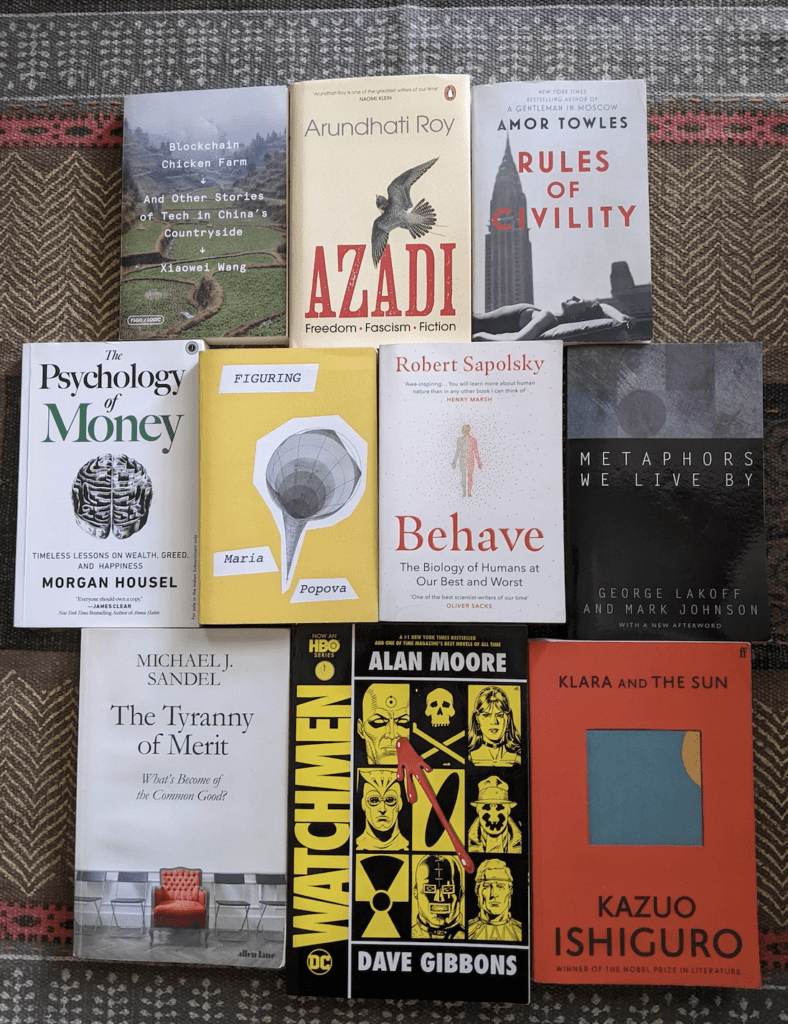
  • #Bibliofiles : 2021 favourites

    Oh well, since Gates doesn’t have a monopoly these days, I thought I’ll continue this from last year and the year before. Actually, it’s for a couple of reasons. One, I think there are underlying themes in my reading every year, which will be interesting to examine years later. And two, if someone chances upon these, they will hopefully be able to discover new books and themes for themselves. The shortlisting was tougher this year, because the list was slightly bigger, and the quality of books was also great. My long list from the 50 books I read this year was closer to 20, and I’ll mention them in the relevant places.

    (more…)
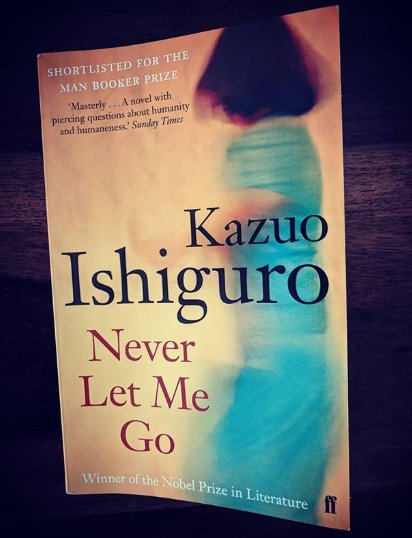
  • Never Let Me Go

    Kazuo Ishiguro

    This is only the second Kazuo Ishiguro book I am reading. But I found at least a few parallels from The Remains of the Day. For starters, both books left me incredibly sad. Some of it is for the plight of the characters, and some of it is do with the other commonality in both the books – the awareness of what could have been. Another thing I noticed is how the principal characters of both books develop a different perspective when they drive through the English countryside.

    Barring this, the books are quite different. (mild #spoilers ahead) This one is set in quite a dystopian future – humans are cloned for organ harvesting, raised in environments that don’t allow a lot of interaction with the outside world, not really made aware of their future, and are not even considered to be real humans capable of feelings and emotions. The focus of the book, though, is on three characters , their relationship with each other, and the world around them.

    It doesn’t really start off with a lot of intensity. The beginning, though it alternates between different phases in the narrator’s life, has a very Malory Towers feel to it (I thought) with different teachers (guardians), the institution and its myths and norms, and the relationship between them and the students, and between the students themselves with their friendships and rivalries. But even that early, one can catch the difference – a clear one being the exhibitions and the “gallery”, both of which are a forum for the students’ creative expression – and this does turn out to be an important theme in the book. The book then traces the life of these students as they step out into a different environment and progressively take up their prescribed roles in society.

    It left me thinking on quite a few things – these humans cannot have children of their own. Is their art supposed to be a means of immortality? But contrast that with how the author dismisses the value of art a couple of times. What are the ‘carers’ and ‘donors’ an allegory for? Is there some sort of parallel for our roles as children and parents, and how both of them, in a way, contribute to us not being a version of ourselves that we could be if they weren’t in our lives? And to end, the bittersweet irony of humans without emotions becoming carers and donors, and exhibiting a complex set of feelings that are on par, if not rival that of the humans they are ‘serving’.

    This is one of those books that drew me in, and without a lot of fuss and theatrics, engaged me in a deep way. Loved it.

  • The Remains of the Day

    Kazuo Ishiguro

    I was a little biased before I started this book. It is impossible to escape the hype – it is a Booker prize winner! But two points – the ‘slimness’ of the book, (!) and the overall premise – a butler’s reminisces – made me wonder about how good it would be. Silly me, I realised long before the book was finished.

    The premise is indeed that – Stevens, the butler of Darlington Hall sets out on a ‘motoring’ tour at the suggestion of his new employer Mr.Farraday. In addition to some leisure time before he implements a new (and much reduced) staff plan, Stevens also looks forward to meeting and recruiting the mansion’s former housekeeper Miss Kenton, who had left the service to get married. He is hopeful of achieving this end thanks to a letter he has received from her which hints at some dissatisfaction in her life and a desire to be back at Darlington Hall.

    The year is 1956, and this is as close to a roadtrip I have read of in that era. 🙂 The narrative, in the first person, is as revealing of the perfect butler qualities of Stevens as the actual stories he shares. This is actually the triumph of the author – the masterly control over every said and unsaid word of the protagonist. The book takes us through the events of the trip itself as well as anecdotes from the past – when Stevens was still serving Lord Darlington. These tales bring to light the political intrigues at Darlington Hall as well as Stevens’ relationships with those around him – primarily his employer, and Miss Kenton. Hindsight gives Stevens (and the reader) a much different perspective of events from the time they actually occurred. We are able to see things much more clearly, something Stevens failed to do then. (more…)