Tag: judgment

  • We, the storytellers (2)

    There is a quote that has found its way into many posts on this blog – “Judging a person doesn’t define who they are, it defines who you are.” I still subscribe to that. However, motivated by the daily outrage on social platforms on everything ranging from a Coldplay video to a newspaper calling the city by its old name – Bombay, to each other’s political or religious belief systems, and by the behaviour of people around, (and myself when I introspected) I decided to go further along that quote. The result was this tweet

    (more…)

  • Give & Take

    Amitav Ghosh is a favourite author, and I find it difficult to answer in my own head which of his works is my favourite. I hadn’t expected The Glass Palace to be equalled, but The Shadow Lines, which I read recently, is quite the competition.

    One of the characters in the book is the narrator’s grandmother, a strong-willed person with her own sets of ideals and ideas. A description of hers that has stuck with me long after the book had been finished is “her fear of accepting anything from anyone that she could not return in exact measure.” I can completely relate to that! Sadly so, I’d add. The corollary to that is expectations from others when one is the giver.  It wouldn’t be right to label it as a transactional approach, because the expectation is not in terms of quantity, but more in terms of thought, consideration, acknowledgement and so on. Yet, the expectation exists. And thus a vicious cycle is born. In many ways, it is a subset of the ‘judgment’ theme(more…)

  • Adaptability & Actualisation

    “It is not the strongest species that survive, nor the most intelligent, but the ones most responsive to change“, Darwin had said, in a more long-winded form. I have been in awe of evolution as a concept for a while now, and have rather prided myself on being adaptive, specially in my work context. In terms of hard skills, I still believe that’s the way to go. However, when dealing with people, both in personal and professional settings, I have realised that it is possible to go overboard on being adaptive.

    A meta prequel before I get to that. On hindsight, I am seeing an evolution in my thinking on this subject. Back in April of last year, I figured out that I am happier when I don’t judge myself.  Later, in October, I realised that there is a correlation, and probably even a causation, between my happiness and the way I treat others. I decided to fix my happiness as my compass. But when I read this post from a couple of months ago, it seems as though I had wandered off the track I had decided on.  (more…)

  • Happiness and compassion

    Though I’d explored the idea of inculcating a sense of compassion in others in this post a fortnight back, I still think our own compassion needs to serve as a solid base. Not being judgmental is one way, but it’s not easy to practice. So I took a step back and wondered if compassion was a result and not a behaviour. The first behavioural direction I could think of was happiness. In myself, I have seen a correlation if not a causation. I am more compassionate when I’m happier. So I decided to explore this a bit. (more…)

  • We, the storytellers

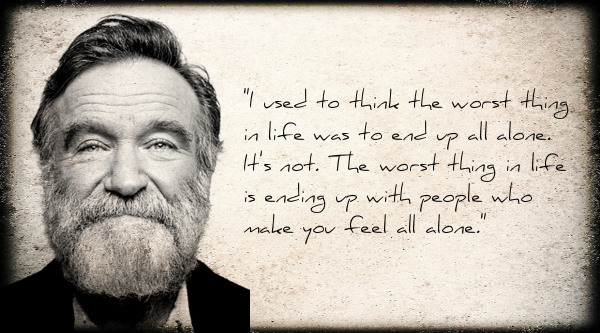
    The day after Robin Williams died, I had posted this on Facebook

    https://www.facebook.com/manu.prasad/posts/10152632582841798

    This was a man whom (I thought) no one could have any ill feeling towards. He made so many people forget their worries, for at least a while, through his roles. When you saw him, you couldn’t but smile. How could such a man have any troubles? But somewhere inside him, a story was being told, one that would end his life. In a tangential way, I had related it to “Everyone you meet is fighting a battle you know nothing about. Be kind” from the ‘One off a kind rating‘ post in which I had written of self perception, and compassion vs kindness.

    Once upon a time, I used to be very judgmental of people who chose suicide, but I realised over time that people are different. Some have the strength to deal with things, others don’t. But I still wonder about one facet of this decision. Barring the ones who end their life simply because they feel they have nothing/no one left worth living for, do people take this decision because they can’t live with something they have done/not done, or they are afraid of how people would judge them for this? In both cases, the common factor is the perception people have about themselves, and how it would change.

    That makes me think – how much of this self perception is built based on cues from others? I think this is very relevant in the era of social platforms, because these cues could come from a variety of people. Arguably, Facebook is already affecting our thinking and behaviour, in a warped version of the Hawthorne Effect. (a phenomenon whereby workers improve or modify an aspect of their behavior in response to the fact of change in their environment, rather than in response to the nature of the change itself. ) That’s probably why we largely see only happy stories on Facebook – because people know they’re being watched, and judged. How soon before this becomes the guiding principle in lives, their only cue for creating self perception? It can be argued that this was happening even before social platforms, but I think there is a difference in scale. If entire generations are spending more time on social platforms, their behaviour offline would probably soon start reflecting that. To stretch it, their sense of identity would be built online before being taken offline.

    When you connect this to the fact that the internet is also home to the kind of taunting and trolling that can radically alter one’s perception of the self, and one’s feeling of self worth, I see a problem. In the aftermath of Robin Williams’ death, the collective trolling power of the internet forced his daughter off several social platforms, at least for a while. Paul Carr wrote about a generation – born before the 90s – that should count itself lucky to remember a time before such acts became the norm. I think the power each one of us has to influence the stories others tell themselves is massively magnified now, if only we could use that to be less judgmental and more compassionate. Maybe that will also affect the stories we tell ourselves.

    Clipboard1