
Tag: Joydeep Roy Bhattacharya

  • The Storyteller of Marrakesh

    Joydeep Roy-Bhattacharya 

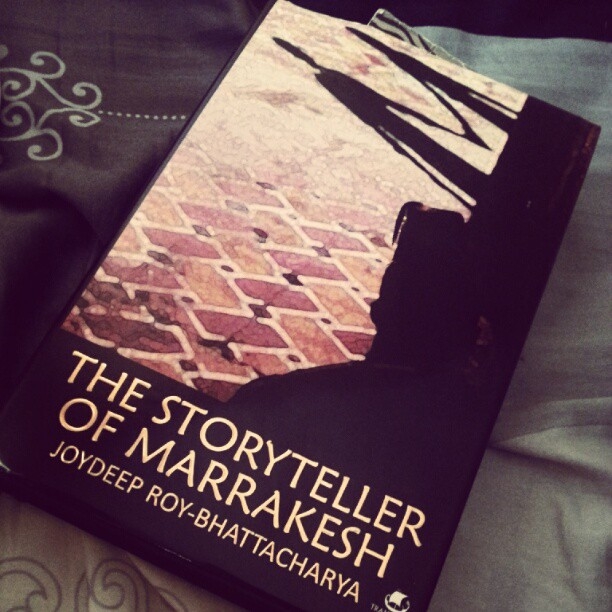
    The book begins with the proposition that there is no truth, and only opinion. This is a fundamental premise of the book and important from the perspective of its narration. Hassan, the primary narrator begins his story at the Jemaa el Fna, surrounded by his listeners, the motive behind the narration supposedly to prove the innocence of his brother Mustafa, who is in jail for a crime he seemingly did not commit. It involves the disappearance of an exceedingly beautiful woman who tantalised all the square’s inhabitants and visitors, when she made an appearance along with her male companion.

    Though Hassan starts the narration, some of his listeners add their versions of what happened on the night of the event, some contradictory, some corroborative. There are arguments, and debates of what actually happened and truth being an opinion is brought out many a time.

    The narrative shifts gears all the while, as speakers delve deep into their pasts for explanations, and Hassan himself highlights events of his past to give the listeners an insight into his and Mustafa’s lives and behaviour. The prose is elaborate, and vivid enough to be almost considered poetry as the author describes people, places and events in all their textures and facets. It is by no means a racy read nor is it gripping in narrative pace. As Hassan himself says, if that’s the kind of entertainment you want, you’re better off at a cinema. It’s not an easy style to get used to, but no harm in giving it a shot!
    Clipboard01

  • A momentous truth

    Joydeep Roy Bhattacharya’s “The Storyteller of Marrakesh” is not among my favourites, mostly because it didn’t deliver what I look for in  a work of fiction. But I’m a fan of it for a different reason – there is prose in it that will haunt me for a long time.

    The book’s narrator begins the tale with the statement that there is no truth, because the moment it is revealed, it is transformed into one of many possible opinions. A few pages later, he says “Our imagination spins dreams; memory hides in them. Memory releases longing; the imagination waters the rivers with rain. They feed each other.

    In terms of memory augmentation, despite the best documentation, I’ve felt many times that there are moments that have not been captured fully, or perhaps not captured enough at all. A presence that is felt, but cannot be captured. It is humbling to realise that acts which we lay importance to, moments which we considered precious, will be forgotten altogether or remembered in a different way from what actually happened, not just by others, but by us too.

    Much later in the book, a character shares a wonderful story, “This professor while addressing a large audience on the subject of beauty, asked that a piece of ambergris be passed from hand to hand until, by the time it reached the last person at the back of the massive hall, it had crumbled away to nothing. But the entire hall smelled of ambergris, and every person there had been touched by its essence. The professor concluded his lecture at that point, stating that he had nothing more to say on the nature of beauty.”

    ..of life, I would say. The smell of ambergris would drift between memory and imagination. If someone found words to describe it, it would exist in the imagination of the reader, but probably in a much different form than it actually was. The moment was the truth, everything else would be an opinion.

    until next time, truth be told…