Tag: James Clear

  • Unidentity-fying

    A theme has been emerging, even more stronger since I wrote “Living a life of Intentionality“. Pithily summarised as “At this age, I prefer an identity that provides the least friction and regrets in the life I want to lead.” How do I get there? A key factor I identified for myself is acknowledging the difference between my wants and likes, and deeply questioning my wants. Where does that get me? From that post, Intentionality helps you have your needs and considered likes as anchors. When that happens, a whole lot of clarity emerges – what you spend time and money on, people whom you will go overboard for, how you plan your days, weeks and months, and what can get you out of those lil twinges of envy and seemingly deep pools of a mid-life crisis.

    But while I was trying to get there, I encountered a strong opponent – myself, or rather, my identity. I first brought it up in Marshmellowing. The key point in the first was how in my approach to getting what I needed/wanted, my larger desire for ‘freedom’ led me to optimising for optionality – a huge bias for scenario planning. I think the identity I created thanks to this is aptly called the Marshmallow mind (by Frederik Gieschen), and its best expression is a poem I read in Poor Charlie’s Almanack: The Wit and Wisdom of Charles T. Munger, attributed to A.E. Housman

    The thoughts of others

    Were light and fleeting,

    Of lovers’ meeting

    Or luck or fame.

    Mine were of trouble,

    And mine were steady;

    So I was ready

    When trouble came.

    In Marshmellowing – The Prequel, I wrote about my path to this identity/self image from childhood. A great description of it appears in Robert M. Sapolsky’s Why Zebras Don’t Get Ulcers. In the personality section, Sapolsky practically described my (former) Type A personality down to a behavioural “time-pressuredness” (research by Meyer Friedman and colleagues), default hostility, and a persistent sense of insecurity, the last being a predictor of cardiovascular problems. Add to it disciplined, discomfort with ambiguity, and (formerly) repressive in terms of emotional expression, and you have my profile! Damn!

    My self image, and increasingly my identity was the kind of person who thought in a certain way and behaved in a certain way. While its origins was my ‘responsible child’ identity that possibly repressed my freedom of emotional expression in favour of (parental) attachment, in adulthood, it transformed into a “responsible adult” self image that ironically optimised for freedom and optionality, and underplayed the need for attachment. It became an identity, and many of my decisions were biased in that direction.

    It is only in the very recent past – through reading and reflection, that I have begun to be at least a little fine with unplanned-ness. As I wrote on LinkedIn, the universe’s tendency is randomness! An excellent read in a different context was The Tao of Physics. I realised that In both quantum field theory and eastern philosophies, physical phenomena (including us) are mere transient occurrences in an underlying entity. How humbling that is!

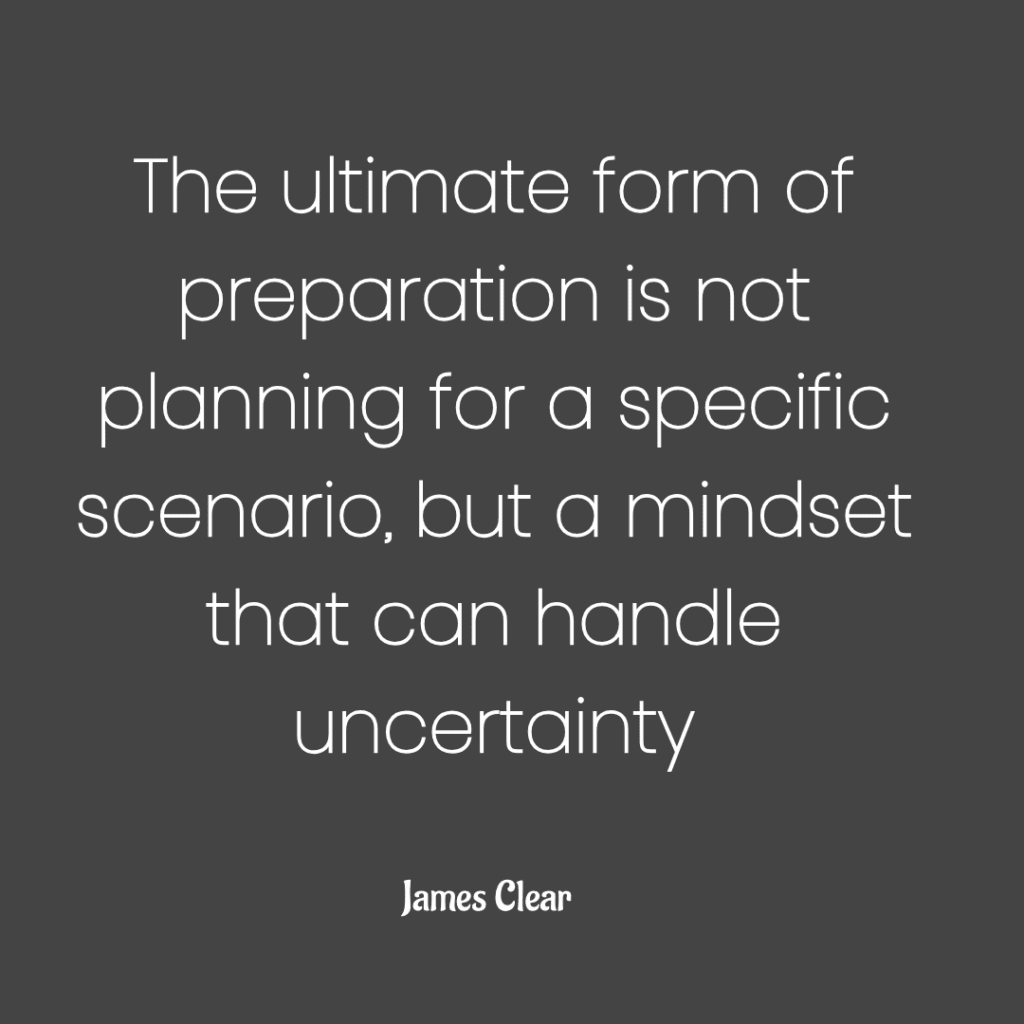
    I think I have made progress by moving from fixed goals through fixed strategies to fixed goals through flexible strategies. I hope, after we are confident of financial freedom, that I can move to flexible goals and flexible strategies. Meanwhile, the biggest task in all this is the mindset. Mindset made the identity, and now it has to dismantle it. Erich Fromm wrote this a long time ago – “Life, in its mental and spiritual aspects, is by necessity insecure and uncertain…The psychic task which a person can and must set for himself, is not to feel secure, but to be able to tolerate insecurity without panic and undue fear“. Decades later, we have a pithier version.
  • Karma meets an iceberg

    A recent event reminded me of a post about karma I had written half a dozen years ago. The idea of the post was thanks to Umair Haque, who had a definition of karma that was different from the garden variety ‘consequences of your actions’.

    Karma isn’t what you “have” or something you “do”. It’s what you are….. Karma is all the concepts and notions you hold in that tiny little head. All those concepts are stitched together by the idea of “you”, right? So karma is all those concepts, together, which determine your intentions, actions, behavior, all of it.

    Umair Haque
    (more…)
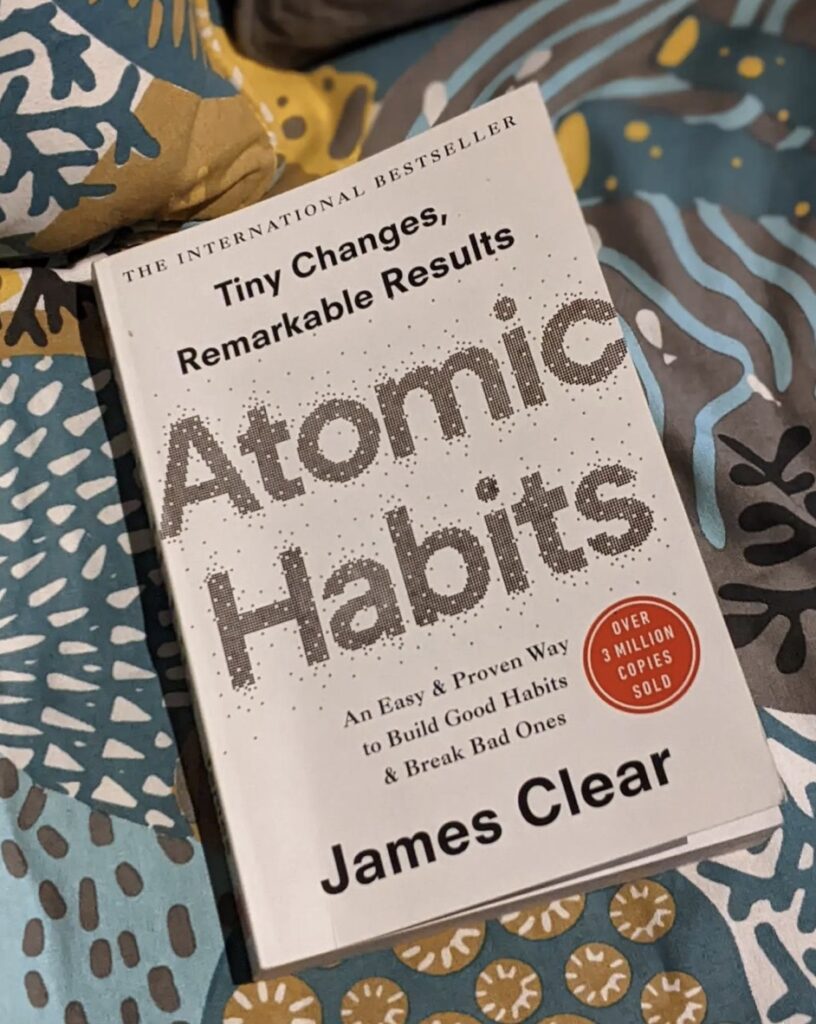
  • Atomic Habits

    James Clear

    Given that I read The Power of Habit a while back, and have been a subscriber to James Clear’s newsletter for a while, I should have read this a long time ago. But better late than never. 

    He begins by explaining how small changes can make a big difference over a period of time. Positively and negatively. ‘Habits are the compound interest of self-improvement.‘ Hence the word atomic – small, part of a larger system, and the building blocks of great results. 

    I think one of the best insights of the book is the three layers of behaviour change framework – outcomes, processes, identity. While most people focus on outcomes, systems (processes) are a better way. ‘ You do not rise to the level of your goals, You fall to the level of your systems.‘ But the best way is to focus on the ‘identity’ – the person you want to become. The first stop is to figure out one’s habits, which tend to be quite a few over a period of time. As per research, apparently 40-50% of our daily actions are habits. And many of them are not even consciously-created ones. A habit, as Clear brings up right at the beginning, is a routine or behaviour that is performed regularly – and in many cases, automatically. From an evolutionary perspective, ‘Habits are, simply, reliable solutions to recurring problems in our environment‘. And that means, nature has its own way of creating things that reduce our cognitive load. 

    He then proceeds to breaking down the process. The process of building a new habit (or getting rid of one) has four steps – cue, craving, response, and reward. Correspondingly, to create a good habit, make it obvious, make it attractive, make it easy, and make it satisfying (and their inversion to get rid of a habit). These make up the Four Laws of Behaviour Change. The remaining chapters are all about bringing this to life. From managing one’s environment to the role of friends and family, fixing procrastination, using commitment devices and motivation rituals, reducing friction, how to stick to good habits, and even automate them when possible. By the time you read the end of this part, you have a fantastic table that can be quite easily applied. 

    I liked the last 50-odd pages the most because of my own interest in the topics. The perspectives on the role of nature and nurture – ‘genes can predispose, but they don’t predetermine‘, and how to determine the game where your odds of success are higher. Habits are easier when they align to one’s natural abilities. ‘Boiling water will soften a potato but harden an egg. You can’t control whether you are a potato or an egg, but you can decide to play where it’s better to be hard or soft.’ 

    He also brings up the downsides of even good habits, the importance of reviews and realignment, and how one can break the beliefs that are holding one back. Becoming the best version of yourself requires you to periodically edit your beliefs and worldview, and expand your identity. 
    Some of the frameworks have been inspired by others (and Clear makes sure he mentions those) but through framing, easily relatable examples, and ways to implement them in daily lives, he makes application very easy. This is a must-read book, especially if you’re in your 20s and 30s. From experience, compounding is probably the most underrated phenomenon. The earlier you start, the better. ‘The costs of your good habits are in the present. The costs of your bad habits are in the future.’

  • #Bibliofiles : 2022 favourites

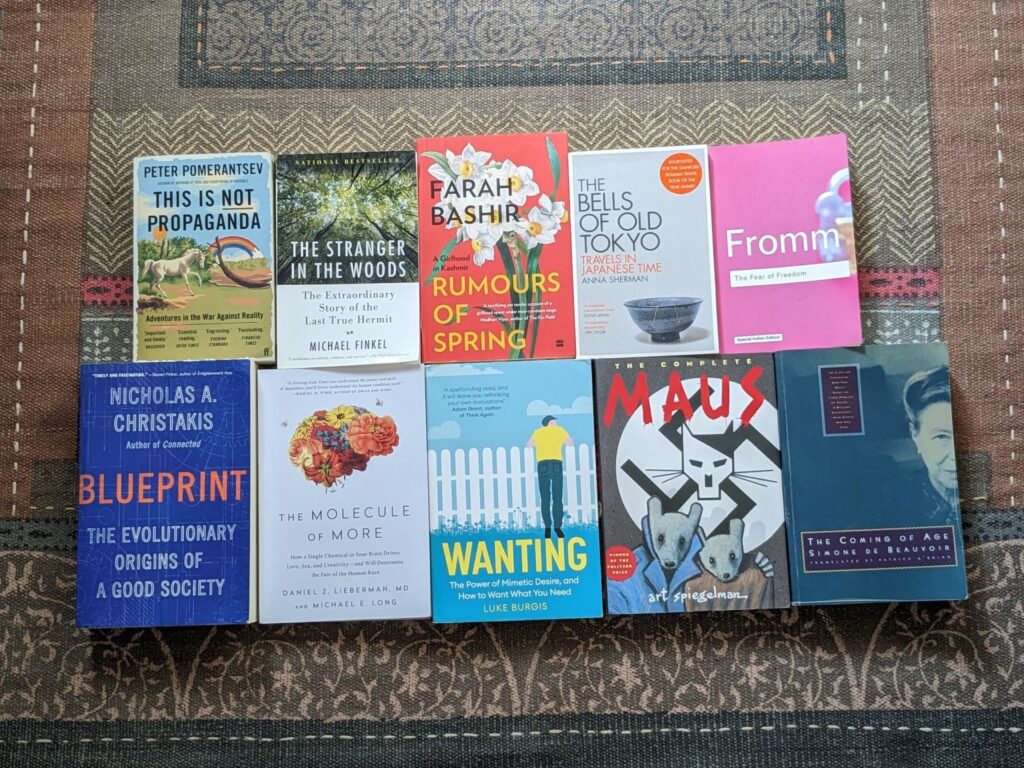
    As I was telling D one day, books are probably the only constant in my life. The earliest ones I have is from the 80s – Amar Chitra Katha. The books I read and the person I am have a correlation, though it’s difficult to establish the direction of causation. And so, continuing from 2019, 2020, and 2021, we have this year’s list. The shortlisting gets tougher as the years go by, so I will add my other favourites on the theme in [these]! From the 56 books I read this year…

    (more…)
  • Habit much!

    Nearly five years ago, when I wrote about the closure of my second (and probably final, given the zero usage now) book of accounts, I had ended it with how the days of our lives have found a rhythm, a familiarity. They actually point to the habits that have become a part of my life. Earlier this year, when I wrote The building blocks of freedom, the ending was again a commentary on habits. As I quoted in it (from a splendid post Routine Maintenance), while habits are indeed a way to off-load cognitive overheadat their most extreme, habits can slide into addictions and compulsions, patterns that resist our conscious efforts to break themRitual dissolved into routine.

    Habits, as I wrote, are possibly a micro-version of intentionality. They are are physical, mental and even emotional. But when we don’t review them, it is almost as though they hijack our intentions and make them subservient! It’s almost like the new Batman’s point about scars – Our scars can destroy us, even after the physical wounds have healed. But if we survive them, they can transform us. They can give us the power to endure, and the strength to fight. As I have realised many times recently, it is extremely difficult to be objective about my habits. It is only when I am deeply mindful that I observe some of my habits, and sometimes laugh at their absurdity. But when I go back and understand where it came from, I also give a mental hug to my earlier self. 🙂

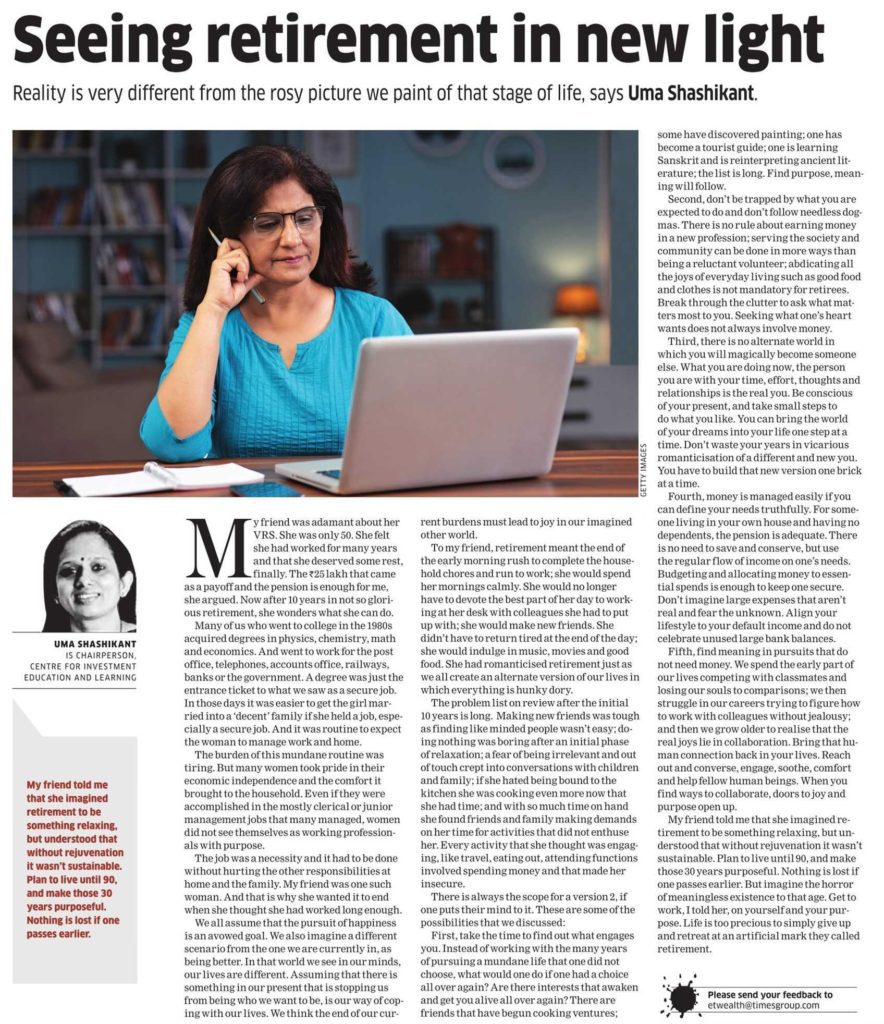
    Very recently, it also made me review my deep-set approach to retirement. I had mentioned that in my previous post – the third point in Uma Shashikant’s excellent article (below).

    I always assumed that the day I stopped working for a living, I could switch into a ‘different me’. I now see how it’s quite impossible. I will have to start looking at the ‘difference’ right now, and build new habits and junk old ones that can help me move in the direction of the ‘new’ me. The idea is that it won’t seem new. Turns out this isn’t a problem that only I encountered. In a couple of books and articles that I read recently, I came across some very insightful perspectives.

    Familiarity and habit impoverishes the way they look at things. They are mostly unable to break away from the past and see things in a fresh way. It doesn’t help that breaking away might mean losing everything that made them great/admired. Lack of interest and curiosity are aggravated by biological conditions, and this intellectual and emotional indifference may cause inertia. 

    Simone de Beauvoir, The Coming of Age

    Marcel wrote of the human tendency to become stuck in habits, received ideas, and a narrow-minded attachment to possessions and familiar scenes. Instead he urged his readers to develop a capacity for remaining “available” to situations as they arise. Similar ideas of disponibilité or availability had been explored by other writers, notably André Gide, but Marcel made it his essential existential imperative. He was aware of how rare and difficult it was. Most people fall into what he calls “crispation”: a tensed, encrusted shape in life — “as though each one of us secreted a kind of shell which gradually hardened and imprisoned him.”

    “On the Ontological Mystery,” Gabriel Marcel, via At the Existentialist Café

    And while being too lazy to type out the one above, I found someone had already written about ‘crispation’. And found this (below) there. It reminded me of the converging life Amor Towles wrote about.

    “We all end up as packaged goods,” Westbrook Pegler remarked a little while before he died. The dreary road to the wrapping and bundling counter is probably inescapable: there is the hunt for the discovery of what works, then the erosion of curiosity about what else might work, then the disappearance of all curiosity about anything unfamiliar, and at last the prison of the safety of one’s own accepted manner. Yeats was a little way off the mark; the peril for the artisan no less than for the artist is not that his circus animals may desert him but that he will let slip past the time when he ought to turn them back to the forest.

    via James Mustich

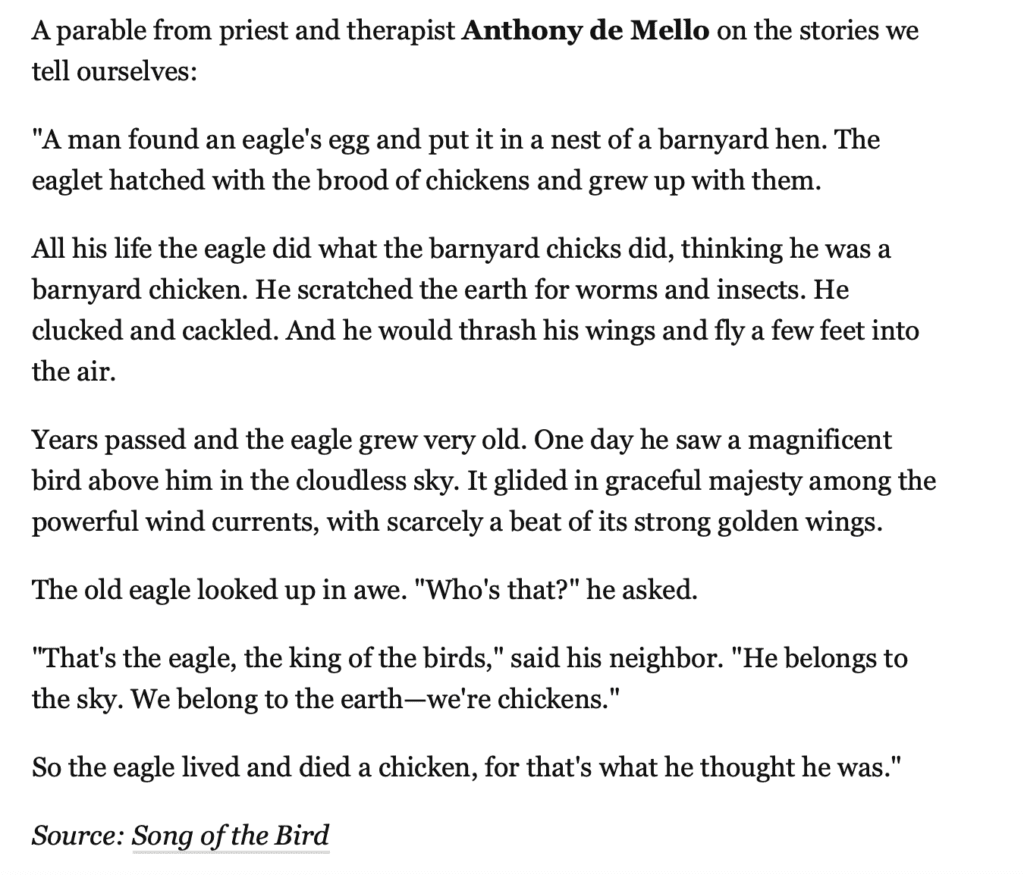
    And finally, my favourite story on what habits can do, and where I don’t want to end up. Poignant, hard-hitting, and true.

    via James Clear