
Tag: institutional realignment

  • Emotion as a Service

    More than a year back, I had written about institutional realignment and had briefly mentioned the institutions of marriage and parenting. ‘The currency of relationships‘ made me think of this, and family – immediate and extended – as a societal construct/contract/ institution, and probably even as a tradition. Where we are born, and whom we are born to, are apparently out of control, but we do have an illusion of control courtesy the choices we make as we go along. Thanks to these choices, our lifestyle and our perspectives may follow a trajectory that is totally different from the circumstances and people we grew up with/in. This is not just about the people from our childhood/youth, but is a continuous process through life. Each of us find our own ways to deal with the constant flow of people through our lives. These are again choices, and like most choices involves some amount of sacrifice and bring with them their own set of consequences.
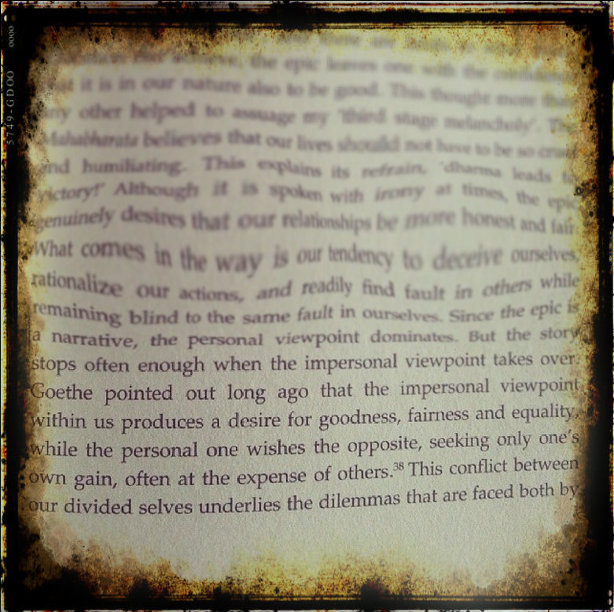
    Clipboard02

    I loved that Goethe paraphrase, because I think it sums up our relationships very well. At the risk of sounding cynical, (or receiving a ‘speak for yourself’ comment) I’d say that we’re increasingly becoming selfish as a species. I have always had the notion that most relationships are contextual, and it would be difficult to scale our emotions/feelings for others for an indefinite time frame. Yes, I do acknowledge there are exceptions, but that’s what they are – exceptions. Do a quick test and find out how many people across your life you’re still in touch with – bouts of nostalgia not included?

    It is with all this as the backdrop that I read Scott Adams’ “The Future of Marriage“. It articulates very well a thought that had crossed my mind earlier. (Of course, he obviously explores it way better than I could have) He deconstructs the institution of marriage and argues that marriage made sense “when the world was inefficient. You married a person nearby who could provide most of your important needs while hoping your lesser needs could also somehow be met.” Now, he says, the internet has allowed us to have a barter economy of relationships. In other words, a virtual spouse comprised of a dozen separate relationships. He tempers everything by saying that in the future, marriage may be one of the many options available. By sheer coincidence, and in a different context, I came across this quote attributed to Steve Macone “A tradition is a habit whose logic has faded“.

    I thought about this in the context of the expectations I had mentioned in the ‘currency of relationships’ post. If the institution of marriage can have a barter economy, why not other relationships? After all, isn’t every relationship a barter at its core? It’s just that we are rarely comfortable with voicing our expectations in the case of an emotional ‘transaction’, quantitatively or qualitatively. (generalising) Parents expect their children to look after them when they are old, in return for bringing you up; relatives expect you to return the favours they once did for you, and so on.

    So who knows, maybe our pace of life and our need to be (seen as) fair in all our relationships will conspire to form a barter ecosystem that offers emotion as a service. It is possible that an alternate path to prosperity might take us in a different direction, but in the era of the quantified self and the augmented human, when we slowly transition our selves into the cloud, maybe ‘Emotion as a Service’ (like)  is not an impossibility. What do you think?

    until next time, a qualified self

  • Future Tensed

    Thanks to Neal Stephenson’s The Confusion, (Vol 2 of The Baroque Cycle) I’ve had to do something that I haven’t done since I started reading – read two books in parallel. Every 200 pages of The Confusion, I take a break and read a volume of The Hunger Games. Neal Stephenson, to me, is genius, and I’ve been a fan since I first read Snowcrash. I could speed read The Confusion, but I really want to pay attention and understand the nuances, the humour, the larger thought and so on. I cannot do that for 800 odd pages, hence this shift.

    I only understood the ‘connection’ after I started reading The Hunger Games. The Baroque Cycle is set in late 17th-early 18th centuries, and uses an excellent mix of historical and fictional characters to cover a whole variety of themes. In some ways, it uses the past to understand the present. The Hunger Games, on the other hand, is set in a dystopian future, and shows a potential fate of humanity. It uses cues from the present to predict the future. The connection ends there, almost. Though at massively different levels, both require imagination, the former at a much more larger scale.

    That’s what led me to think about imagination in the present. We’re in the midst of probably the biggest upheavals in the history of humanity – new technologies emerging at a rapid pace, institutional realignment, socio-cultural changes, behaviour alteration and so on. All of this means, that collectively, we’re having to run really fast just to cope. Where does that leave time for imagination? In fact, such is the assault on senses that I wonder if anything really disruptive is being written in the science fiction genre these days (I hope to be proven wrong and pointed in the right direction) because except for things like teleportation and time travel, pretty much everything that was science fiction is getting played out now, and so busy are we – trying to keep abreast – that science fiction is merely extrapolating the present (read) or giving alternate versions.

    There is a term in psychology called Functional Fixedness, wiki-defined as “a cognitive bias that limits a person to using an object only in the way it is traditionally used.” With my limited knowledge, I wonder if that’s the dystopian future of the human imagination.

    until next time, the end of collective imagination

  • A new era of work

    Sometime back, I had written about institutional realignment – on how the internet will slowly eliminate the middlemen across industries and disrupt every institution that we have built thus far – political, societal, economical, professional, cultural, health and so on. This would have massive impact on our sense of identity and how we live as a society.

    A couple of weeks back, I read this interesting post at Pando Daily titled “Are we becoming a world without big companies?” The post quoted AngelList founder Naval Ravikant “the world would be increasingly made up of very small startups interacting with each other through APIs. No big corporations.” The corporation, at this point in time, plays a lot of middlemen roles – from our sense of identity to global relations – and continuing from my earlier thought, I think the internet will disrupt this one too.

    Which then makes one think of the workforce currently employed in the corporations – that’s most of us. 🙂 From 3D printing which is poised to disrupt the already shaky manufacturing industry and the not-so-shaky distribution systems to singularity, which will have major implications on our health, education and employment, there are macro changes that will affect us. Even the best minds would not have a definite answer on what/ where the jobs of the future would be. As Ray Kurzweil has stated in this interesting interview, “People couldn’t answer that question in 1800 or 1900 either. ” (when asked about the scene in 2000)

    It then brings me to something I believe will be the key to survive and flourish in the coming age – the willingness and ability to live with uncertainty. In this excellent read in the WSJ titled “Learning to Love Volatility“, Nassim Nicholas Taleb argues that rather than trying to predict black swan events, we should be building institutions that are not fragile and can withstand and even benefit from disorder and unexpected events. Though an institution is the protagonist here, I think there are lessons for individuals too.

    In a way, humans could be considered open APIs that big corporations and governments used to meet their ends, it would be interesting to see a future that reverses this. 🙂

    until next time, be the change….

  • Institutional Realignment

    As I was returning from the Bali vacation, I thought about how we had planned our vacation without the help of a big travel operator. Something that would have been infinitely more difficult, if not impossible a decade back. It’s still early in this decade, but when I begin to think about what it will be known for, the recurring theme that runs in my head is institutional realignment. It’s not really the most original thought I’ve had, and I’ve been influenced by several, most notably Umair Haque. He calls it institutional collapse, and the only couple of reasons I have played semantics are one, that while I don’t see a seamless change, I do think that different parts of society – across geography, industry, demographics will shift at different points in time and the change might be distributed across time and space to prevent a complete collapse so that we fail to see that the institutions are completely different from the earlier era, and two, a sense of optimism. 🙂

    To me, these institutions are across all facets of our current existence – political, societal, economical, professional, cultural, health and so on. From an era where most individuals required ‘props’ for a sense of identity, we are moving to an infinitely more connected era where people are using the web to create their own unique identities.

    The fall of several regimes, the increasing push for better governance and transparency etc are probably advance warnings that the concept of a nation state is up for an overhaul. Think about it, what really does being ‘Indian’ signify? Is it a common identity? Do you need it any more?

    Societal norms on the concept of family and relationships have been shifting for quite a while now. Marriage, parenting, do they mean the same thing as they did until a few years back? Do you even remember an era without marriage portals? As people create their own spaces, nothing is sacrosanct and almost everything is becoming acceptable.

    Businesses and corporations. Industries like music and news media have already seen the disruptive powers of the internet. I have already mentioned how travel has completely changed. More industries will follow. Around me, I see more and more people refusing to be tied down to organisations and wanting to do their ‘own thing’. It’s the thrill, the freedom, the sense of purpose and many other reasons. The rigid structure of organisations will probably give way to project based aggregations of individuals. What does that do to economies?

    One level before that – education. Two words – Khan Academy. Though variations and different versions of it exist, it’s probably the best indicator of what the current structures will give way to – with a better focus on interest, building useful skill sets and the freedom and processes for the student to identify his calling early on in life. Somewhere during this, I hope to see medicine getting an ‘open API’ 🙂

    On culture, Vanessa Miemis gives us a great read, more so because it goes beyond culture per se.

    I see the not-so-hidden hand of the web in all of this. From its elimination of the middle man to its way of bringing out more and more information, it has changed the way we view ourselves, and the operational environment around us. I’m not saying that everything will have changed by 2020, but the seeds will be well and truly sown. Now that I am imagining, my biggest hope is that the current currency of our lives – money, will have a better successor, one that will be better connected with our unique identities, and weave in contexts better. (Nike has a great idea of what I mean 🙂 )

    Job (not the same as work), nationality, education – all indispensable parts of a human identity thus far. Will they be relics in the future as we create new paradigms? When do you think this will all settle, if it ever does?

    until next time, bend of an era

    PS: Bill Gates has aptly said, “We always overestimate the change that will occur in the next two years and underestimate the change that will occur in the next ten.