
Tag: institutional realignment

  • 2020 (1)

    First published in Adgully

    It’s technically a new year, but as the quip goes, it does feel like December 93rd 2020. More like a sequel than a new movie. Familiar characters and themes, with some new plotlines. And hence the title, for a short take on learnings in 2020, and the trends expected in 2021. 

    In light of the pandemic, what narratives are good for the brand?

    The consumer’s needs might not have changed, but the relative priorities, ways of achieving them, and expectations from brands most definitely have. At least in the medium term, health and safety (physical, mental and financial) will remain important themes. That would explain why many brands have attempted to hop on to these narratives. While it works easily for say, water purifiers, it might be a threadbare argument for mattresses and shirts. But yes, Ayur is arguably the most powerful four letter word in business now!

    The abruptness of 2020 has also given us time for reflection and recalibration. One of the related changes has been increased participation in societal issues. But a brand pursuing cause marketing because everyone else is doing it might result in some caustic feedback!

    What has also changed are rituals – commute to family time to entertainment and so on. The narratives might not have changed yet, but the contexts have. Social screening (movies) and Zoommates are all adaptations to these contexts. But soon, radical redesigning of products and experiences will lead to narrative shifts as well. 

    With chimeras all around, how do we frame it better?

    Many aspects of our life are chimeral now – still retaining their individuality, and yet to find the balance of a hybrid. Think about it – working from home, but recreating the office online. Digital transformation, and craving physical interaction. Learning new skills, while trying to avoid burnout at work. This operates at societal levels too. On social channels, we talk about being more empathetic. But we also have mobs that seem to have been born outraged! 

    These chimeral contexts have an impact on segments and personas, as well as how narratives can be delivered. If we go by Superbowl ads, humour is making a comeback, but we aren’t LOL yet. Brands are still playing Minesweeper because they, and their endorsers are susceptible to cancel culture. Even a logo needed to dress up because one person insisted we all share the perception! Narrative control is a chimera, an illusion. I expect brands to soon have influencers on stand-by to combat trolls and bots! 

    And if the action is everywhere, where is the narrative best delivered?

    There is no mainstream, there are many streams”. With mobile screen time continuing to rise, and OTTs having a dream run, both branded content and product placements will spike. Even more immersive is gaming – you can have an epic life in Fortnite, and (ironically) join the war to save reality! But we are un-screening too. From podcasts to the ambient, and omniscient Alexa. Does your brand have an Alexa Skill yet? 

    Newer platforms offer further scope for narrative renditions in all forms of reality – mixed, augmented, virtual in addition to our normal agreed upon version. And as digital transformation accelerates, marketers are being empowered with automation and no code tools to deliver these. But the tech landscape is also rapidly changing with impending regulation, and privacy concerns. 

    We’re going through an era of institutional realignment – political, societal, financial and so on. The points I have made are more possibilities than spoilers. We might think we have seen this movie before, but we should wait for the release. Multiplex or OTT, you think?
  • The Change Imperative

    Ever since I first wrote about institutional realignment, I have been more conscious of it and its implications on our lives. To a certain extent, even paranoid, because of the pace of change. Ray Kurzweil is hard at work to make himself immortal, and believes we should get really close by the 2030s. He has been right before on many things of this nature. Moore’s law, digitisation and everything related are also getting us really close to the singularity. I am reasonably convinced that I will see both in my lifetime. If you live to be 200 and have robots smarter than you around, what does that do to education, money, marriage, work and pretty much everything that constitutes life? On the flip side, natural resources are running out, and I can see the complications already. It’s not a good sight, or experience!

    I am finding it impossible to wrap my head around what all of  this would mean to our concept of life. In the meanwhile, I do know that everything is changing at breakneck speed, and in order to survive, we need to be cognizant of things that can impact our lives – as individuals, and as organisations.  I have deliberately avoided the word ‘disruption’ because it gives me a sense of suddenness and it is a furiously debated topic these days. Rather, to quote John Green (said in another context) I think we’re in the first state of “Slowly, and then all at once”.  This, is my take on ‘Change’.

    (Thanks Nikhil for helping on a couple of alphabets and Amit for Unsplash, the source of many images used)


  • Notion states

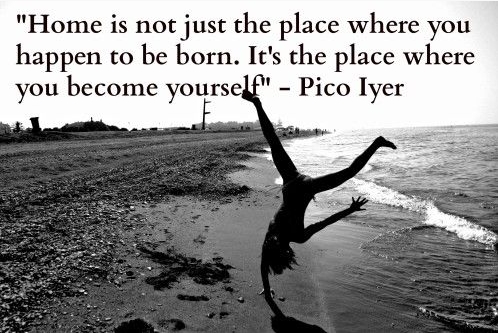
    My last post on the subject of home was in the context of the multicultural world we are creating, how in our pursuit of convenience and familiarity we might end up creating a homogeneous world, and whether the idea of home would change with time, as we begin to choose places that connect to our soul over the soil we were born in. (soul vs soil courtesy Pico Iyer)

    One of my main punching bags in the institutional realignment line of thinking is the concept of the nation state, more specifically its relevance in a massively connected world. A simplistic view is that economics, trade and many other things might be better off without them, given how much of an enabler technology is turning out to be, and geo politics will anyway be a lesser phenomenon if there aren’t any nation states. Arguable, yes.

    However, I had very little idea on the replacement concept. Geography (land) would exist and would have to be organised in some way. What way? In a wonderful display of appropriateness, Wired gave a possible answer – in the form of a post titled “Software Is Reorganizing the World“. I loved the concept of ‘geodesic distance’, and the mapping of not nation states but states of mind. (soul) The idea of (what is now) cloud communities taking physical shape is fantastic! While it might sound far fetched, it really isn’t – the post gives historical precedence and emerging patterns to back up the idea. As does Tony Hsieh’s The Downtown Project in the present day to transform the decaying and blighted part of the old Vegas Strip into the most community-focused large city in the world.

    Around the same time, I came across this Facebook (official) note titled “Coordinated Migration“, (thanks MJ) which shows how Facebook is using ‘hometown’ and ‘current city’ descriptions to track migratory patterns across the world. Probably, in a few years, this would be a mapping everyone would take a keen interest in, to find kindred souls, and to be what they are destined to be.

    pico2

    (via)

    until next time, a state of bliss

  • PhilosoRapture

    In one of the slides in the presentation I shared last week, I had touched upon institutional realignment, and ‘health’ as one of the drivers. But the origins of this thought go back at least 4 years to The Man..the machine, and  Life…streamers, and the subject of immortality and the path to it – the augmented human – have since then made several appearances here – ‘The Immortal’s Reality‘, ‘Back to Eternity‘,  ‘Your Next Avatar‘, and Remember the Feeling to name a few. As I read these posts recently, I realised (again) that the possibility of the current version of the human being just another step in evolution is a humbling one.

    On one hand, I remembered the story of Yudhishtira and the Yaksha, and the answer to a part of Question 9. The Yaksha asks, ‘What is the greatest wonder?‘ and Yudhishtira answers “Day after day countless people die. Yet the living wish to/think they will live forever. O Lord, what can be a greater wonder?” On the other hand, I also read that Google (which shares its first two letters with God) has invested in a company that will work on combating aging and disease. Google is not the first company to attempt this, and scientists are already figuring out how to reverse ageing, but it does have the Ray Kurzweil advantage. (also read) This is promising to be a fight to the death! 🙂

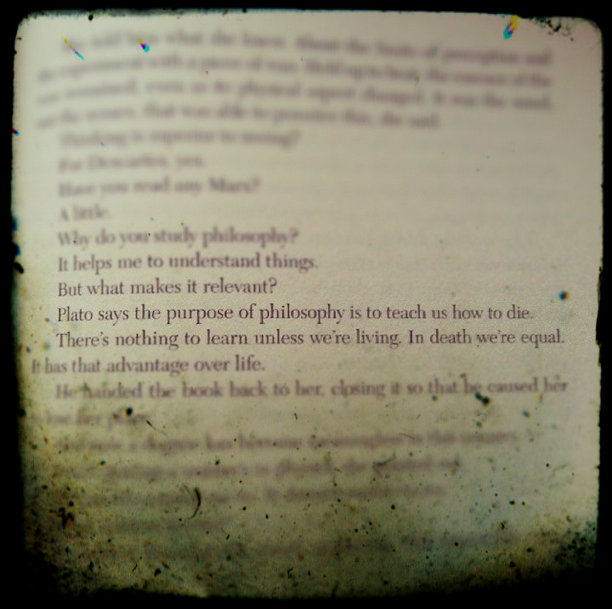
    On the same day that the Google article was published, my favourite thinker on the subject – Scott Adams – posted an article on our ‘choice’ of immortality- one was the Google way of doing away with aging, the second was we would be able to transfer our mind to robots, and the last was transferring our minds into virtual worlds. I am inclined towards the augmented human route – body parts getting replaced one by one, until we become a ‘Ship of Theseus‘ and a perfect example of the paradox. But one way or the other, it seems as though we’re destined to be immortal. The funny thing is that despite that, the question would remain – ‘what is life and why do we exist?’ I wonder if an eternity would be enough to answer it. Or probably, our state of consciousness would be such that we wouldn’t feel this urge for an answer. After all, according to my 500th photo on Instagram,

    Clipboard02

    The end of death is probably the end of philosophical questions as well. Whether that is a good thing is an open question. Or not. After all, Carl Sagan did say “I think if we ever reach the point where we think we thoroughly understand who we are and where we came from, we will have failed.” 🙂

    until next time, cogito ergo hmm

    P.S. Not a big fan of donuts, but a fantastic take on the subject of life and its context – http://imgur.com/K6EKeRW

  • The evolution of work and the workplace

    I spent Rajinikanth’s birthday  at Jaipur, all thanks to one of my favourite bloggers – Kavi, who, in his official avatar, invited me to his organisation’s annual HR conference. The theme of the conference was Evolve Connect Enhance, and I can honestly say that many of my perspectives were enhanced during discussions about the real  implications and challenges for organisations, brought about by radical changes in the business environment.

    For now, I’ll let the talk do the talking!  (transcript below the ppt) Do comment with your thoughts!


    Final Talk Points by manuscrypts


    until next time, work it out