Tag: immortality

  • It’s about time

    Time

    There’s a question I’ve been asking myself for a while now – is time a man made construct or not? Days, seasons, years and cosmic events would happen even if we never tracked them, but our lives are defined by the time frame we live in – from a personal as well as socio-economic and technological standpoint. I recently got a perspective I thought I should share. I also found this overlapping with the devices we have used to track time. Hence these thoughts.

    Form: For a while, the mobile phone was the watch, but wearables (my attempt at a primer) is the new entrant. I already see a little crossroad in wearables – the smartwatch/accessories like Glass, and the activity tracker, both connected to the mobile device. The former, in addition to being a chronograph, is aiming to be a personal assistant of sorts by aping many functions that a mobile phone does – GPS, messages and notifications, and contextually relevant information. (I liked this post on Google Now and Android Wear) The activity tracker, on the other hand, focuses more on fitness and health. What connects them is the battle for the wrist. Between Android and Apple, I’m hoping they combine both the above streams quickly. I’m also hoping that both will get better at moving from data to actionable insights.

    Function: To bring the focus back to time, the form factor increasingly makes me think of time as an app. In this era, our control on time is negligible –  I can decide how I spend my day, (application of time) but I cannot really control my life span –  therefore we are bound to think of increasing its efficiency. I’d expect the device  to notify me on the best way to use my time – roughly speaking the bottom two levels (and a portion of the third) of my favourite framework – Maslow’s hierarchy of needs. But as we gain on immortality, we might have so much data on ourselves and the collective consciousness (related post) that it will offer more value in the top two levels – relevance and value to others (esteem) and self actualisation. The simple guiding thought is that isn’t time one of the only things that stops us from self actualisation, the other being economics?

    Future: From a function perspective, I think the ambiguity on time (as a construct or not) exists because we can control it only partially. As we control it more and more our need to control it becomes lesser (increasing lifespans is one reason) it will automatically become a construct/’application’. (Very roughly, think of fire – before we learned to ‘create’ it, it might have been an enigma, but the moment we did, it was more an application.) Then, the decisions we make will probably be influenced less by time. Time will have to find a new way to be contextually relevant. Therefore, from a form factor perspective, I expect to see devices which provide us contextual applications of time wherever they are located eg. say bearables (implants, micro-devices attached to skin etc) that tell you it’s time for a heart checkup through an interface that’s probably an app on a portable device. It’s only a matter of time.

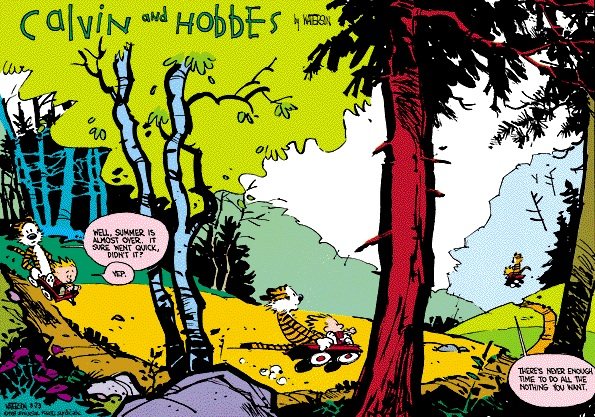
    Even further on, the philosophical question to ask is that if one had an infinite supply of time, would one still measure it?

    until next time, watch this space
  • The Change Imperative

    Ever since I first wrote about institutional realignment, I have been more conscious of it and its implications on our lives. To a certain extent, even paranoid, because of the pace of change. Ray Kurzweil is hard at work to make himself immortal, and believes we should get really close by the 2030s. He has been right before on many things of this nature. Moore’s law, digitisation and everything related are also getting us really close to the singularity. I am reasonably convinced that I will see both in my lifetime. If you live to be 200 and have robots smarter than you around, what does that do to education, money, marriage, work and pretty much everything that constitutes life? On the flip side, natural resources are running out, and I can see the complications already. It’s not a good sight, or experience!

    I am finding it impossible to wrap my head around what all of  this would mean to our concept of life. In the meanwhile, I do know that everything is changing at breakneck speed, and in order to survive, we need to be cognizant of things that can impact our lives – as individuals, and as organisations.  I have deliberately avoided the word ‘disruption’ because it gives me a sense of suddenness and it is a furiously debated topic these days. Rather, to quote John Green (said in another context) I think we’re in the first state of “Slowly, and then all at once”.  This, is my take on ‘Change’.

    (Thanks Nikhil for helping on a couple of alphabets and Amit for Unsplash, the source of many images used)


  • The path to immortality

    I’d written earlier on how brands could use an individual’s data (the personal API) to fit themselves into his/her narrative and had used Nike as an example.  But this data could also be used by fitness and health companies to discover ‘fault lines’, gradually delay wear and tear, and one day, totally prevent a machine shutdown. This video – A Day in the life of Tim Ferriss (watch for a minute from 3:25) – gave me an idea of how we might be moving faster in that direction because of  data collection.

    Back in 2011, in ‘God in the details‘, I’d opined that over a period of time, when our data capture capabilities were evolved enough, and we had a lot of data on people on a lot of their behaviour, consumption etc, we would potentially be able to answer the most profound questions about our existence, purpose etc, and unlock further dimensions. I was extremely happy to read the same thought in this (long, but) amazing read called ‘Navigating Stuckness‘. “I could sit safely at my desk and write computer programs to gather vast amounts of Internet data, which I thought could finally answer timeless questions like “what is love?” and “what is faith?” with precision and clarity.

    On one hand, data could help us in our path to immortality, and on the other, it could provide us the answers to fundamental existential questions. I wonder what would happen first, because, as I wrote in PhilosoRapture, I also wonder if those questions would remain relevant once we became immortal.

    Meanwhile, the other track to immortality that is rapidly developing is that of the augmented human, where human parts (including the brain) will be replaced by mechanical replicas. We’re only a part of evolution, as this wonderful, humbling video would show, and it is probably only our ego that makes us believe (if we do) that we’re the endpoint. Maybe, there will be a species later, of whom we’d be probably be creators, for whom our questions will seem irrelevant and who will have their own sets of answers to seek.

    cs

    (quote via, image via)

    So it would seem that whichever way we approach immortality, by the time we get there, chances are, it may not be that significant.

    The year we conquer morality, by the way, is 2040, as per Ray Kurzweil. I’ll be 62 then, or maybe not, or maybe it won’t matter, or maybe…  🙂

    until next time, live long and proper 🙂

  • PhilosoRapture

    In one of the slides in the presentation I shared last week, I had touched upon institutional realignment, and ‘health’ as one of the drivers. But the origins of this thought go back at least 4 years to The Man..the machine, and  Life…streamers, and the subject of immortality and the path to it – the augmented human – have since then made several appearances here – ‘The Immortal’s Reality‘, ‘Back to Eternity‘,  ‘Your Next Avatar‘, and Remember the Feeling to name a few. As I read these posts recently, I realised (again) that the possibility of the current version of the human being just another step in evolution is a humbling one.

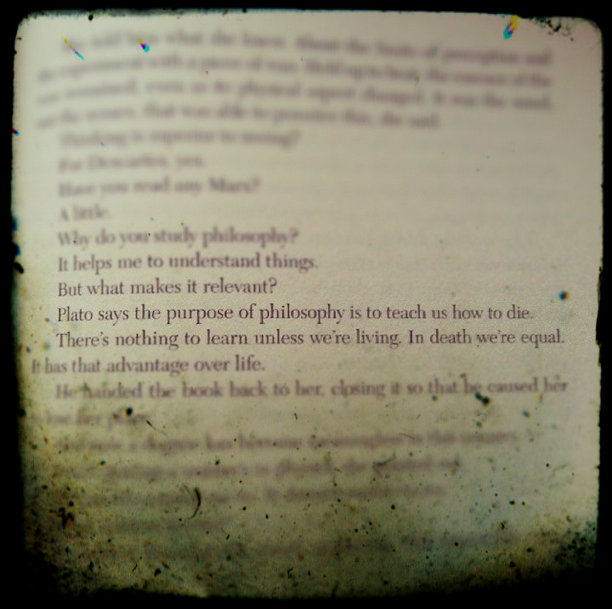
    On one hand, I remembered the story of Yudhishtira and the Yaksha, and the answer to a part of Question 9. The Yaksha asks, ‘What is the greatest wonder?‘ and Yudhishtira answers “Day after day countless people die. Yet the living wish to/think they will live forever. O Lord, what can be a greater wonder?” On the other hand, I also read that Google (which shares its first two letters with God) has invested in a company that will work on combating aging and disease. Google is not the first company to attempt this, and scientists are already figuring out how to reverse ageing, but it does have the Ray Kurzweil advantage. (also read) This is promising to be a fight to the death! 🙂

    On the same day that the Google article was published, my favourite thinker on the subject – Scott Adams – posted an article on our ‘choice’ of immortality- one was the Google way of doing away with aging, the second was we would be able to transfer our mind to robots, and the last was transferring our minds into virtual worlds. I am inclined towards the augmented human route – body parts getting replaced one by one, until we become a ‘Ship of Theseus‘ and a perfect example of the paradox. But one way or the other, it seems as though we’re destined to be immortal. The funny thing is that despite that, the question would remain – ‘what is life and why do we exist?’ I wonder if an eternity would be enough to answer it. Or probably, our state of consciousness would be such that we wouldn’t feel this urge for an answer. After all, according to my 500th photo on Instagram,

    Clipboard02

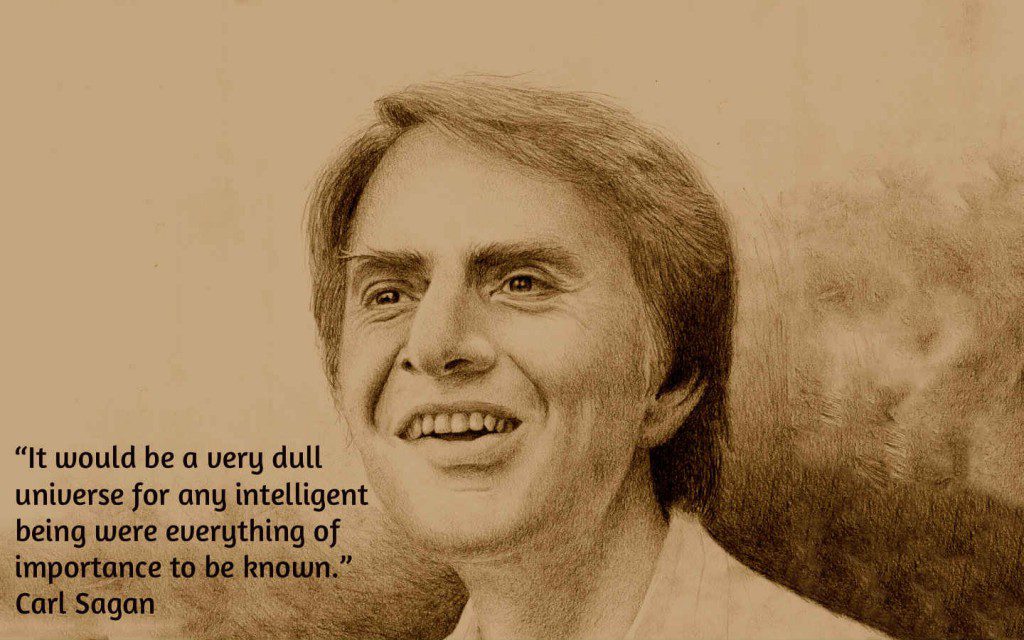
    The end of death is probably the end of philosophical questions as well. Whether that is a good thing is an open question. Or not. After all, Carl Sagan did say “I think if we ever reach the point where we think we thoroughly understand who we are and where we came from, we will have failed.” 🙂

    until next time, cogito ergo hmm

    P.S. Not a big fan of donuts, but a fantastic take on the subject of life and its context – http://imgur.com/K6EKeRW

  • The Immortal’s reality

    ‘1984’ is a subject that has appeared in many conversations, no, not Indira Gandhi’s assassination, George Orwell’s book. And every time it did, I have smiled politely and pleaded ignorance except for ‘Big Brother’, nothing to do with Shilpa Shetty’s adventures or Sunny Deol’s movie, in spite of my Bollywood fixation. I read the book a while back, and was absolutely fascinated by the dystopian world Orwell has created.

    Though I found many facets of the book interesting, there were two that were more equal than the others. 🙂 One was the idea of a few people controlling the minds and actions through unrelenting propaganda (among other things) and the sentence ‘He who controls the past controls the future, he controls the present controls the past’. History being written by winners, and it being what’s recorded (either in books or other data storage devices), or people’s minds. The second interesting thing is to do with the latter, of how reality is such a deceptive thing, and is of our own making. If there are two of us, and both of us agree that one is flying, then that is reality for us. Yes, you might laugh at the simplistic approach, but in the context of the book, absolutely possible.

    The human mind, its storage capabilities, and its evolution is a subject that keeps popping up regularly in this blog. Recently, the concept of singularity has interested me a lot, and I’ve been reading up material available on the net. While I’ve been interested in science fiction for quite a long time (from watching Star Trek and Sigma on DD, okay well, that’s a start to Doctor Who and the Foundation series in school and college, with minor setbacks like not being able to like Clarke, and recently, not able to enjoy Doctor Who on the BBC) and I saw singularity as a natural progression of that basic interest. Except, as I read more, I realise the lines between fiction and reality are beginning to get blurred.

    I had an interesting conversation recently with a friend S which was a sort of mash up of both these subjects. We were discussing the effects of these advances on society. I brought up the argument from 1984 that whatever happened the three tier classification of society (high, middle and low classes) would be retained in some form or the other. S was of the opinion that the have- have not divide would widen, he even brought up the concept of human farms, harvested for body parts. (a human controlled version of the Matrix). The 1984 premise of thought control would be perfect for that.

    And then, after teleportation, time travel, whether teleportation would be significant if we are able to replicate all sensations before that (as of now, we can see and hear across distances, smell, taste, touch remain) and similar interesting stuff came the subject of immortality. I said , one of the things that sadden me when I’m reading science fiction is that I’ll not be around to witness science fiction becoming reality. But I also  wondered whether, even if the body were capable of lasting for an infinite amount of time, would the mind be ready for it. All of our life, we base on finite time – things to be done, objectives to be achieved, what if we had all the time in the world, how would we adjust? S pointed out that these things happen gradually, and by the time we become immortal, we would have already grown used to really long life spans. Like many things now, we would take it for granted, and would not appreciate the significance. We were only having coffee but discussed how there might still be loss of (memory of) experiences so far, and how there would perhaps be preloaded SIM cards one could install, and how the immortal’s “will” would have instructions of the “I don’t want a Windows OS for my body, Chrome is where my heart is” variety. Ok, cheesy, but can you imagine the possibilities?

    My biggest concern was the revenue model. If i lived forever, how would I afford it? What would be the economics of such an existence? Writer this century, sportsman the next, will natural ability be of any value or significance? And the final question, will we able to control time enough to have alternate realities? S says never, but i get back to the 1984 premise of reality, of controlling sources of information to ensure that the past is consistent with the present, and I wonder what humanity will end up doing.

    until next time, morality and mortality…