
Tag: human

  • The IP Man

    Disambiguation: This is about the Infinitely Patient Man. For the original, see Ip Man.

    In the last post, and a few before that, (Brand &  the personal API, The path to Immortality) I’d written about our increasing ability to log and monitor our various activities (food consumption, exercise, sleep, location, to name a few) as well as apply them – for example, to measure and  course correct – manually, machine-led or using a combination. The idea of the quantified self, I’d think, is to make a better human being at least in the physiological sense to begin with.

    In another line of thought, I’d also explored whether, as we proceed along this evolution, we could also create a more mindful version of ourselves – what I called a qualified self. This surfaced again a few weeks ago, as I analysed my own behaviour in a certain situation. I have been trying to be non judgmental, but it’s not easy to let go of some baggage, especially deep rooted ones that have existed for a long time. As I became grumpier (also) thanks to my irritation at not resolving my battle with inner demons and the other person’s behaviour remaining unchanged, the person at the receiving end remained his calm self. As always, I had conflicting emotions later – on one hand, guilt, for treating him thus, and on the other, a justification based on many events past and present. I also tried to put myself in his shoes and imagine how he must have felt.

    That’s when I realised that the process of creating a qualified self is much more challenging because there is no objective measure of right and wrong. i.e. one can objectively quantify the input/burning of calories based on BMI, gender, age and other factors which are subjective, but on what objective scale does one decide whether one’s action/decision/thinking is right in a particular context?

    What must have gone on in his head – did he face and win against the same struggles I had, or was he detached from it? Either way, it seemed to me that he was less anguished than I was. Is it his considerably larger experience of life that makes him so? It made me think – are such people, the infinitely patient ones, a key to cracking the qualified self? Is it even possible to monitor let alone apply their path? Or is it the kind of IP that refuses to bow to objectivity, and plays a part in making us what we are – human?

    until next time, intellectual propriety 🙂

    Bonus read: Achieving Apatheia
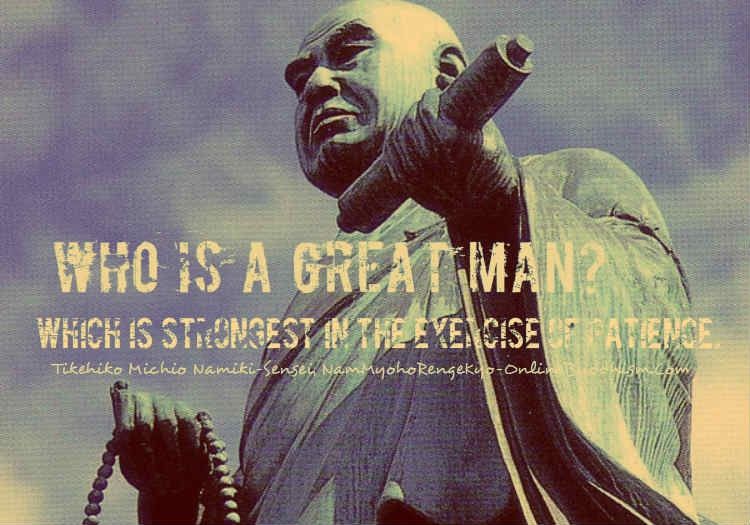
    patience

    (via)


  • Your next avatar

    There was a good debate at Slate on how far (if at all) we should go in augmenting what we have been biologically endowed with. I’d noted earlier the three tracks of speciation, and how we are already on two of the tracks. (prosthesis and cell/tissue engineering) The debate introduced me to the word ‘transhumanism’, and its proponents believe that nature has done all it can do in terms of human evolution, and we should now take the ownership of driving our evolution forward. The opposing view (that’s not religion based) is that by manipulating all this, we might lose track of ‘being human’. There is a middle path that advocates augmentation to the “species’ typical best”, so that everyone would be ‘maximum humans’.

    One of the conclusions of this debate is that it will happen to us slowly. This is one of the fears I’d expressed in that earlier post – that we won’t realise when it happens to us. One of my other fears on account of increasing lifespans is the economics of it all, again something I’d written earlier. In yet another post, I’d wondered if we would speciate on the basis of whether we want to keep up with the information deluge or not. Those who choose to, would most likely need augmentation of the mind.

    ‘Evolution on Steroids’ is the theme of this article in BBC News (via Vedant), in which Prof. Church would now like to write/edit DNA, now that we have started reading it, with devices that will monitor internal and external environments, warn us, and then change our body accordingly. It’s probably an inevitable reality, with the only real question being ‘when’ and not ‘if’.

    The Cyborg in us all‘ is another excellent read, this time from the NYT, in which I learned of scientists who are working on controlling computers via thoughts. In one of computer engineer Schalk’s experiments, on the effect of Floyd’s “Another Brick in the Wall – Part 1” on human brains, a particular brain created a model of what it expected to hear, after the music had been switched off in between. What the guys are really working towards though, are neurons and language – eg. thinking ‘cat’ and the image popping up on screen. Towards the end of the article, there is the NeuralPhone – which lets you pick a name from the phone contact list, telepathically.

    That brings me back to the Slate article which mentions this argument against trashumanism -increased lifespans would cause us to be more fearful, because we have more to lose. That would cause us to opt for “safe but shallow digital experiences, leading to long, ultimately empty lives”. This debate on enhanced and extended humanity reminded me of a post by Scott Adams, in which he writes about programmable avatars, which over time, would pick up our preferences and memories so well that they could live on as us even after we die, thereby extending our mortal lives into the infinite. And in ‘Hitchhiker’ style, he wonders if this has already happened. We are avatars of those who came before us – a premise not dissimilar to one I had reached via a different path. So much for humanity, and the debate about it. 🙂

    until next time, Google Human+