
One of the movements that I’d mentioned in the drivers for brand/marketing in 2014 and beyond is agile marketing. In my mind, there are various factors that are contributing to this eventuality like fragmentation of media platforms and the phenomenal amount of data being created and consumed to begin with.
Simulations, testing, analysing data, and quickly adapting are the basics of this approach to marketing. In terms of ‘ingredients’ to play with, I’d still go with the traditional 4Ps of the marketing mix- Product, (includes packaging) Price, Place (I include the internet with Platform) and Promotion, with Purpose being an umbrella addition. The input and the output, I have categorised into business dynamics, using the other favourite marketing letter – C. These are consumer, competition, channel, content and context, and the cohesive narrative that is created. I’m trying to evolve a framework from these, while watching brands actually practice it – with or without a theoretical structure to the approach.
One of the brands I’ve noticed doing a good job using many of these ingredients and the I/O is Uber. That’s despite the recent surge pricing bad press. In fact, I’d see this as an example of their ability and willingness to adapt. In the US, they’ve been honing their craft for a while – free rides for students during the Boston school bus driver strike was the first occurrence I noticed, and then soon after, the delightful hat tip to pop culture on National Cat Day in a tie up with Cheezburger.
They launched in India recently, and true to form, wasted no time in launching the UberSLEIGH during Christmas in Delhi, Bangalore and Hyderabad – a tie up with Goonj. From a critical agile marketing evaluation perspective, it would be easy to argue that Christmas is a recurring annual event that brands plan for. But auto-rickshaw strikes are relatively less predictable. A fortnight later, on January 6th, Uber slashed rates by 75% in Bangalore in response to a strike. What is easy to see is the anatomy of an agile strategy. To me, it seems that they are well on their way to developing a flexible marketing framework that helps them take advantage of any variations in the ‘input-output’ factors I’d mentioned earlier – in this case, pricing product and place in response to consumer and context.
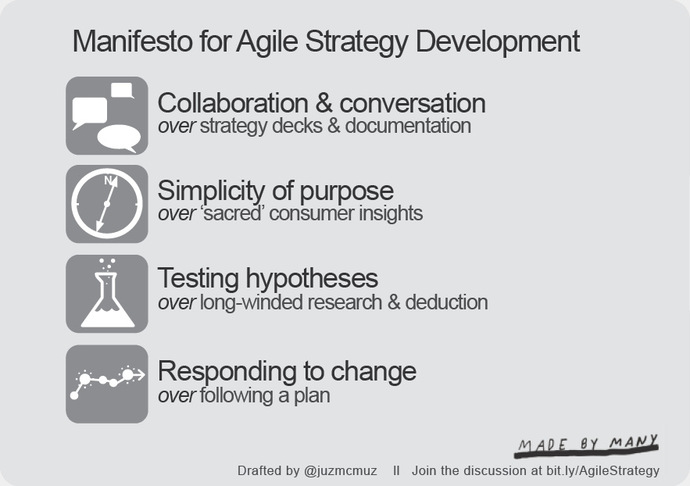
Newer brands might have an advantage in developing these frameworks because of minimal ‘baggage’ in their brand philosophy. But then again, the advantage for existing brands might be their existing role in a consumer’s life. Traditionally, brands have attempted to build a unique/distinguishable/identifiable ‘idea’ of itself in the mind of the consumer, with different forms of the promise+identity+attributes+personality framework and (relatively) limited broadcast media options. Iterations cycles were lengthy and included brand tracks and insights which resulted in large campaigns. Several things have changed now. Consumers have shorter attention spans and are increasingly fragmented in their consumption habits. Social platforms have caused brands to cede control over the conversations – any consumer’s experience can potentially create the perception for millions of potential customers. Platforms for reaching the consumer are exploding, and each have their protocols. The potential amount of data from all of this is huge! The challenge for brands is to stay relevant across contexts and create a cohesive narrative, and this requires an evolution in marketing processes. Like I’ve written before, if technology is invading marketing, then perhaps agile – which is a popular approach among that kind – is the way to go!
until next time, sprints and marathons