Tag: favourite

  • Bologna

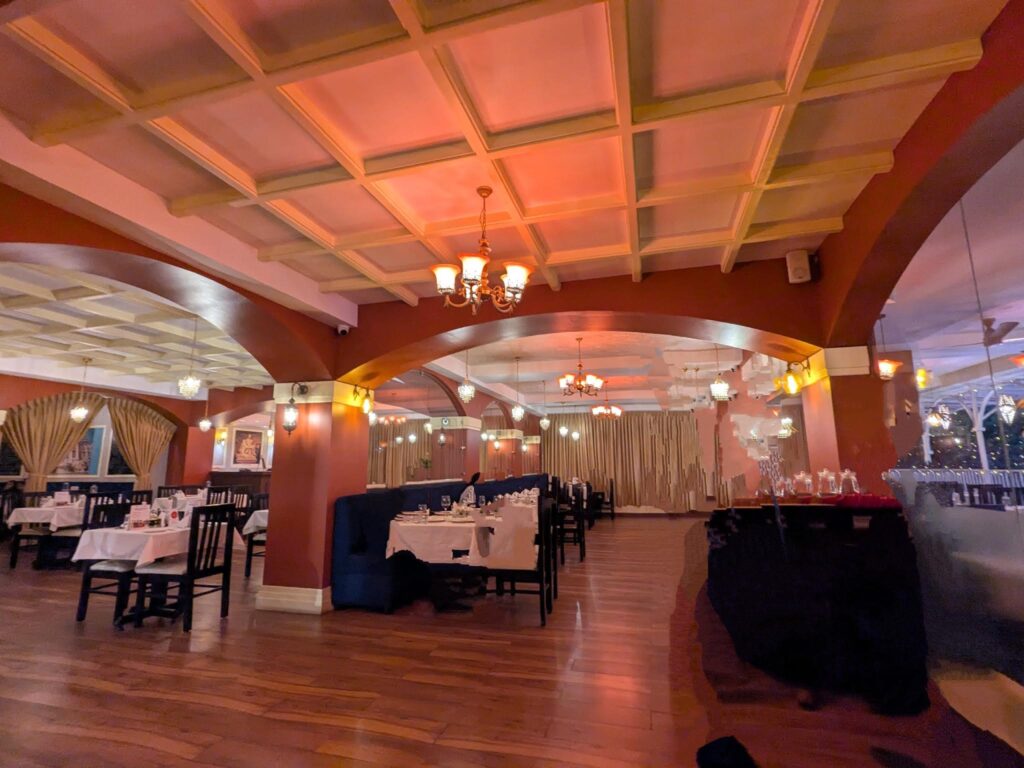
    We fell in love with home-delivered food to the extent that we had to visit the Whitefield version of Bologna. The good news is that for a change, meeting one’s heroes was not a disappointment. And therefore no more home deliveries, dine-in is the way to go when it comes to Bologna. The first time we visited, we chose the balcony seating with a view of the road. Perfect lunch spot for the December weather. The second visit was more recent, introducing the place to friends, and the cosy indoor seating was perfect.
    Bologna Whitefield

    We began with a White wine sangria pitcher which made its way into glasses before I could take out the phone for a pic! I missed the Zuppa di Bologna as well because I was famished. 🤦 But for want of a better word, the Italian herb-infused chicken broth with Mascarpone & Parmesan cheese was soothing. A great start.

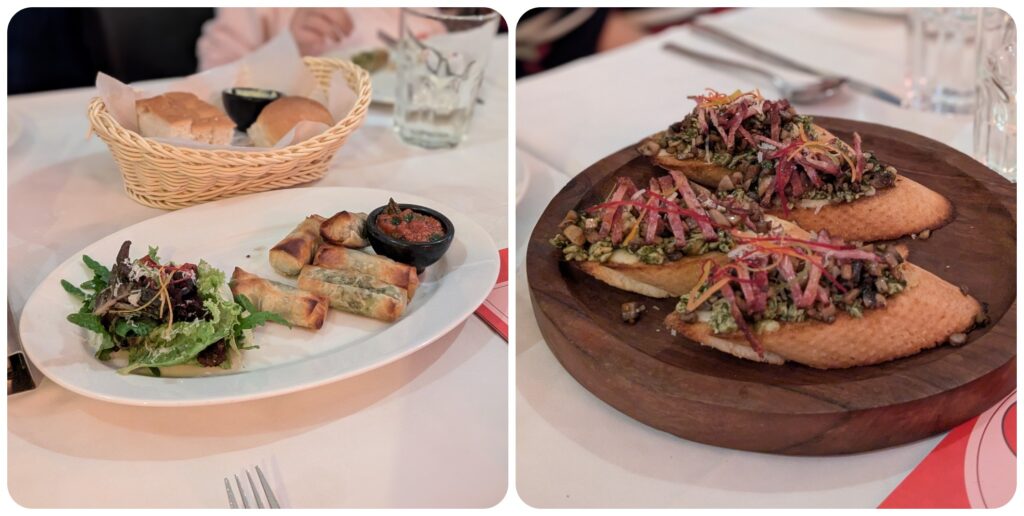
    Speaking of start, we tried a couple of starters – Pollo Ripieno di Formaggio in fillo and the Crostini di Bologna. The first is a filo roll stuffed with herb and pesto-infused chicken, and had a mix of great textures. The Crostini tastes just as it looks – a burst of flavours from the chicken, bacon, mushrooms and Mozzarella complemented by that excellent bread.
    Bologna Whitefield

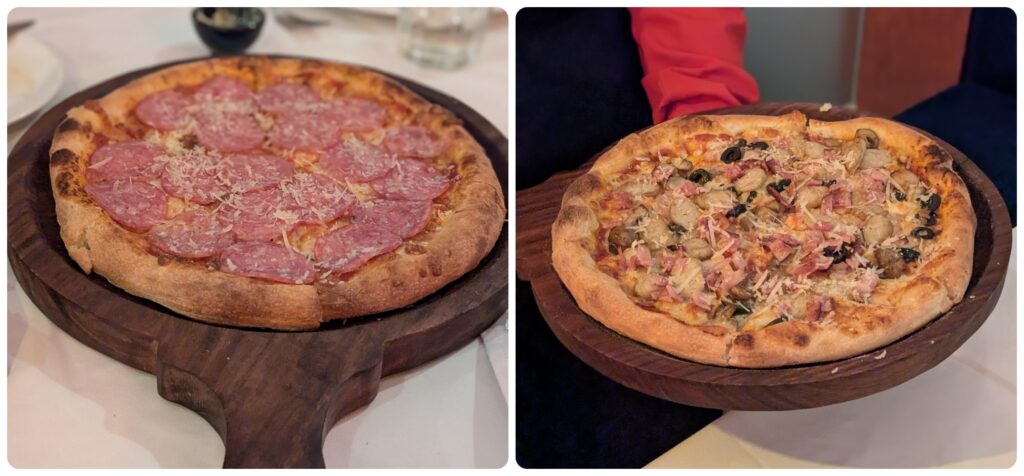
    We loved both the pizzas we tried. The Pepperoni with a delicious tomato sauce, and the Ai Funghi e Salsicce which had a bunch of ingredients – chicken sausage, bacon, olives, mushroom and mozzarella, all of which worked together beautifully.
    Bologna Whitefield

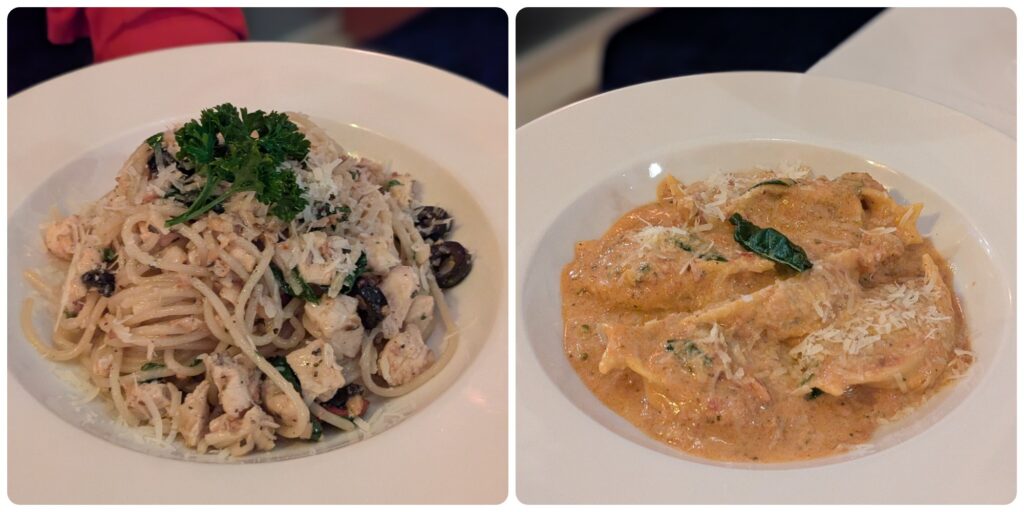
    The Spaghetti Aglio Olio would never be my first choice anywhere, but this one was flavourful enough for me to not complain. The Cappellacci (means ‘little hats’, and named after the hats from where it originated) Di Bologna, I’d gladly recommend any time. Great sauce.
    Bologna Whitefield

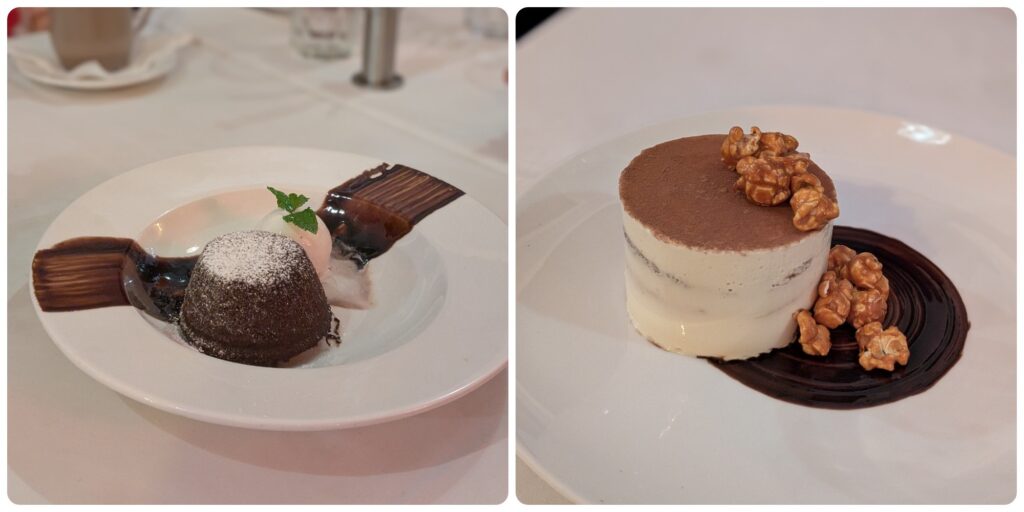
    There were four and a half people sharing all this, which meant that we had space for desserts! The Bomba di Cioccolato is just a fancy name for the humble lava cake, which is great for kids. But you should go for probably the best Tiramisu in Bangalore.
    Bologna Whitefield

    A meal for two with a couple of glasses of wine, a starter and a couple of main course dishes would land you in the Rs.3000 range, but it is easily worth the money and the ambience. The staff is pleasant, prompt and helpful. We’ll be regular visitors for sure.

    Bologna, No:921, Belathur Village, Kadugodi Post
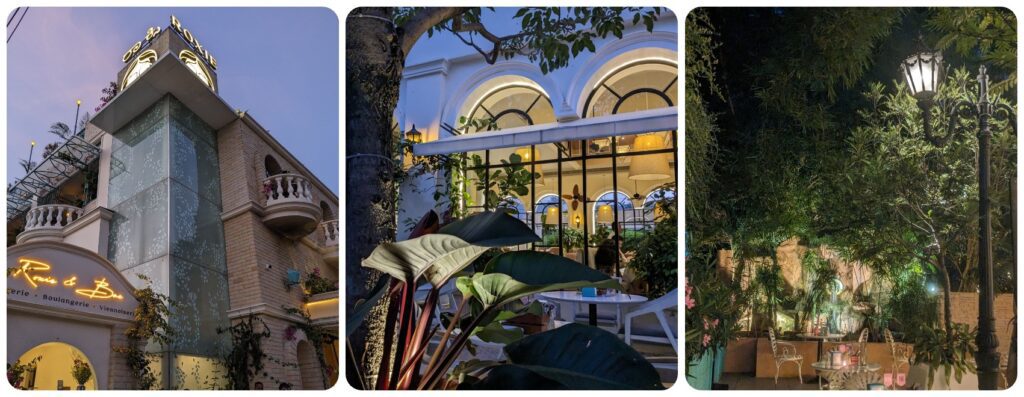
  • Roxie

    We’ve been hearing about Roxie for a while now, and everything we had heard had been good. So, in what is now becoming a little tradition, we set out for Sarjapur Road on the Diwali weekend, when we hoped that most of Bangalore would either be at home, or visiting their hometown. That indeed seemed to be the case, as our journeys both ways took us just about half an hour. Yes, that is a very big deal in Bangalore.

    Roxie

    I think the biggest thing going for Roxie is how pretty it is! We didn’t get an opportunity to go upstairs, but the interior as well as the al fresco space somehow exudes an old world charm while still providing a contemporary comfort (furniture). High ceilings and those lamp posts outside accentuate all this. It was, as the meme goes, “looking like a wow”. ‘Roxie’ is whom the theme is based on – a traveler who picks up favourite recipes from different journeys. Yes, she is about as real as the tooth fairy. That explains Korean, North Indian, and Italian on the same (digital) page. (the menu we actually found there was slightly different)

    Meanwhile, D said she has been here when it was some other restaurant. Any idea?

    Roxie

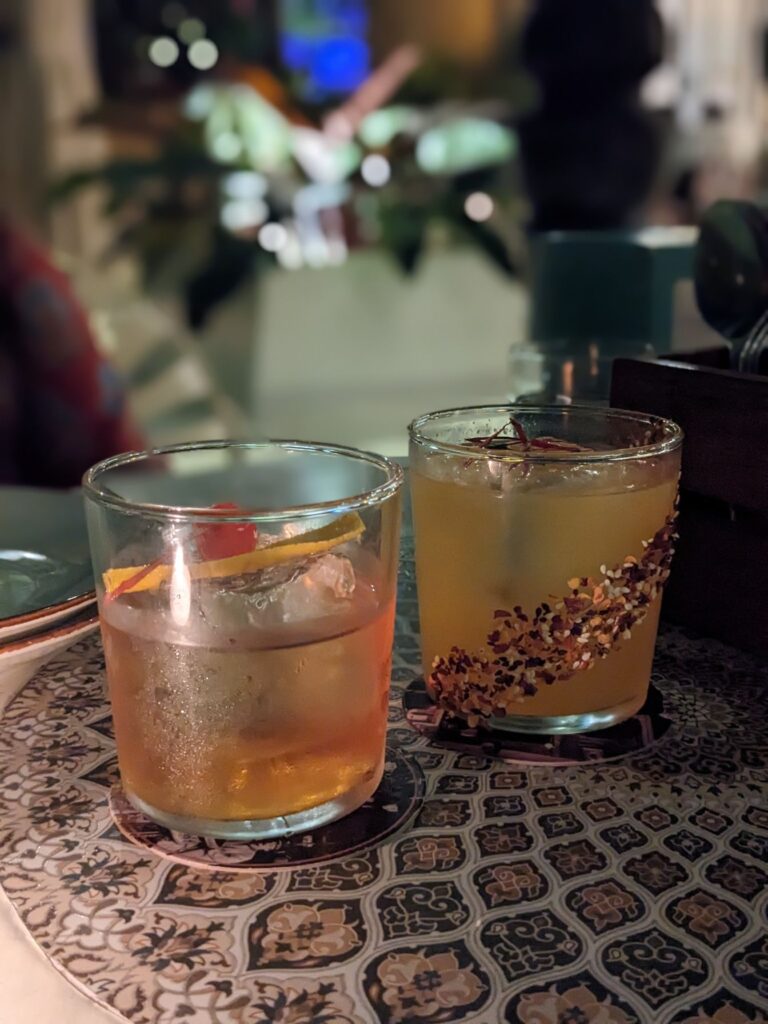
    I was boring and chose my regular Old Fashioned. In many recent experiments, the cocktails have failed. This was one was par for the course, nothing extraordinary. D was more optimistic, and chose ‘The Solution’. I think that was some hint aimed at me. This tequila-based drink apparently has an origin story from Roxie’s hometown – Amalfi, where her friend Max used to run a Speakeasy. With Jalapeno, orange, passion fruit, thyme and lime juice, and a fancy garnish that included chilli flakes, was very good. D couldn’t resist a smirk.

    Roxie

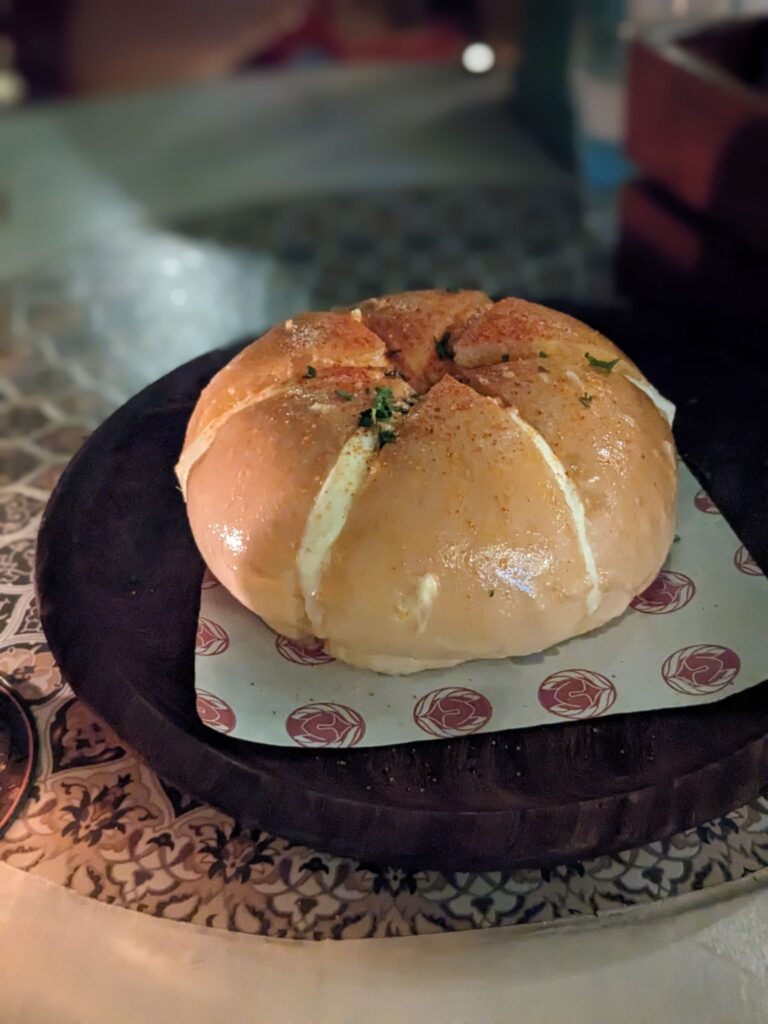
    If you’re going to Roxie, this is the one dish I will highly recommend. Korean Garlic Bread. Super soft bun filled with Philadelphia Cream Cheese and garlic butter, this one is really the melt-in-your-mouth kind. To the extent that we were tempted to pack one up for the next day!

    Roxie

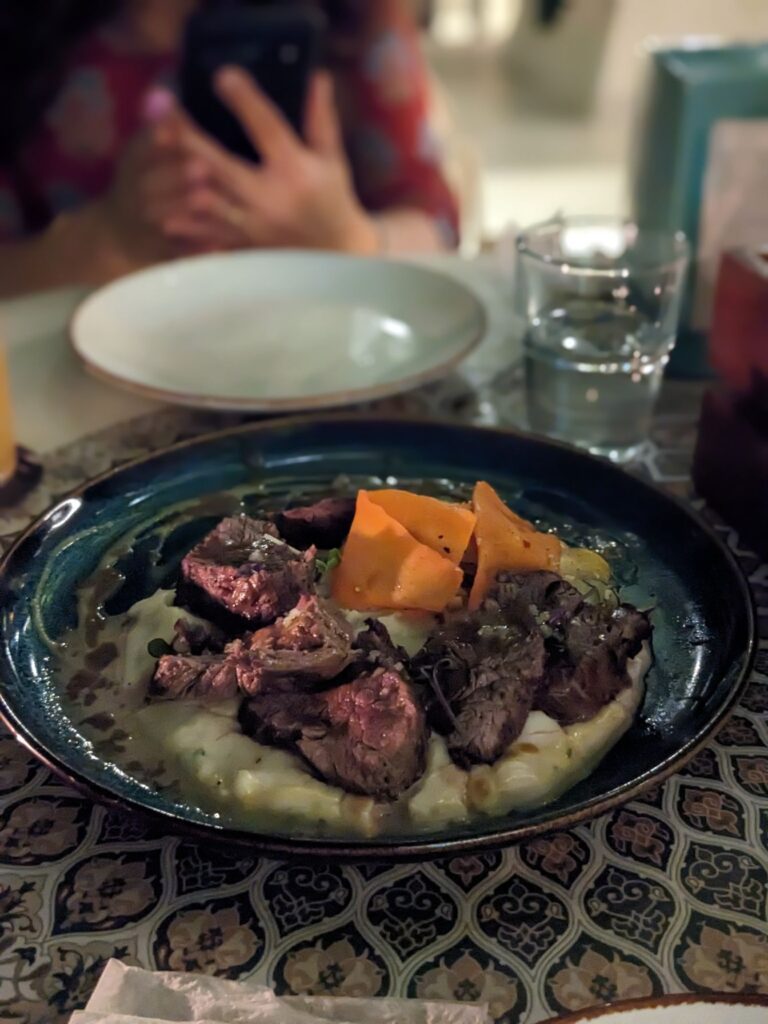
    This is the Chateaubriand Royale: Rosemary Wine Elegance. This apparently pays homage to a Parisian dish. Grilled Chateaubriand beef in Rosemary Wine jus , accompanied by mashed potatoes and Hollandaise sauce. The beef was very well cooked, and the sauce complemented it very well.

    Roxie

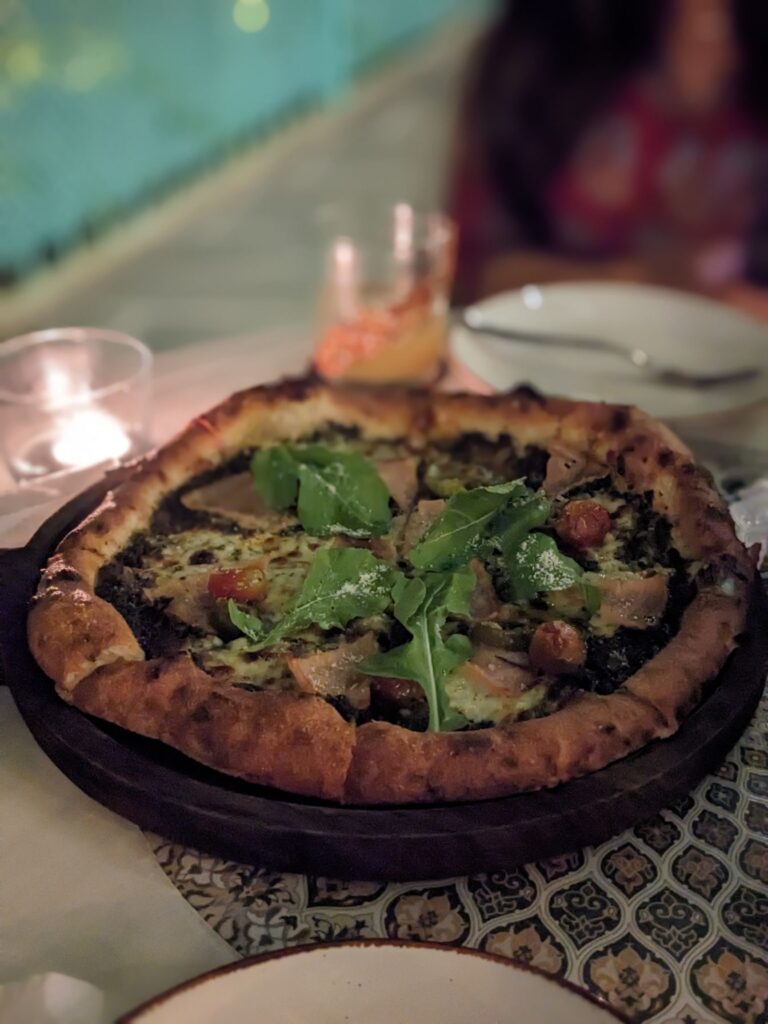
    We debated pizza vs pasta, and finally went for the Siciliana. Smoked Turkey was the attraction, and it also had pesto, Jalapeno, Mozzarella, Parmesan Cheese, Confit Tomatoes, and Arugula. This was quite a disappointing dish. First of all, that smoked turkey only made a guest appearance, and secondly, there was some very inconsistent saltiness that made ‘shock’ appearances that really took away from anything the dish might have accomplished. I also felt the amount of pesto could have been reduced quite a bit. It was overwhelming.

    If you’re visiting, probably a good idea to reserve, since, even on Diwali eve, the place began filling up after 8. The service is friendly, and my request for keeping the sugar low in the cocktail was carried out reasonably well. The music was retro, and I loved it. The wallet was lighter by about Rs. 3100, but thanks to Dineout and Infinia, we paid a little over Rs.2550. Not bad at all, given the location. Despite the pizza, I have to say the place has pizzazz. I’d definitely recommend a visit, especially if you’re going to Sarjapur Road, whose breweries I am anyway not a fan of. (except maybe Aurum)

    Roxie, 26, Haralur Main Rd, near HP Petrol Station, Amblipura, PWD Quarters, Ambalipura, HSR Layout Ph: 074062 75551

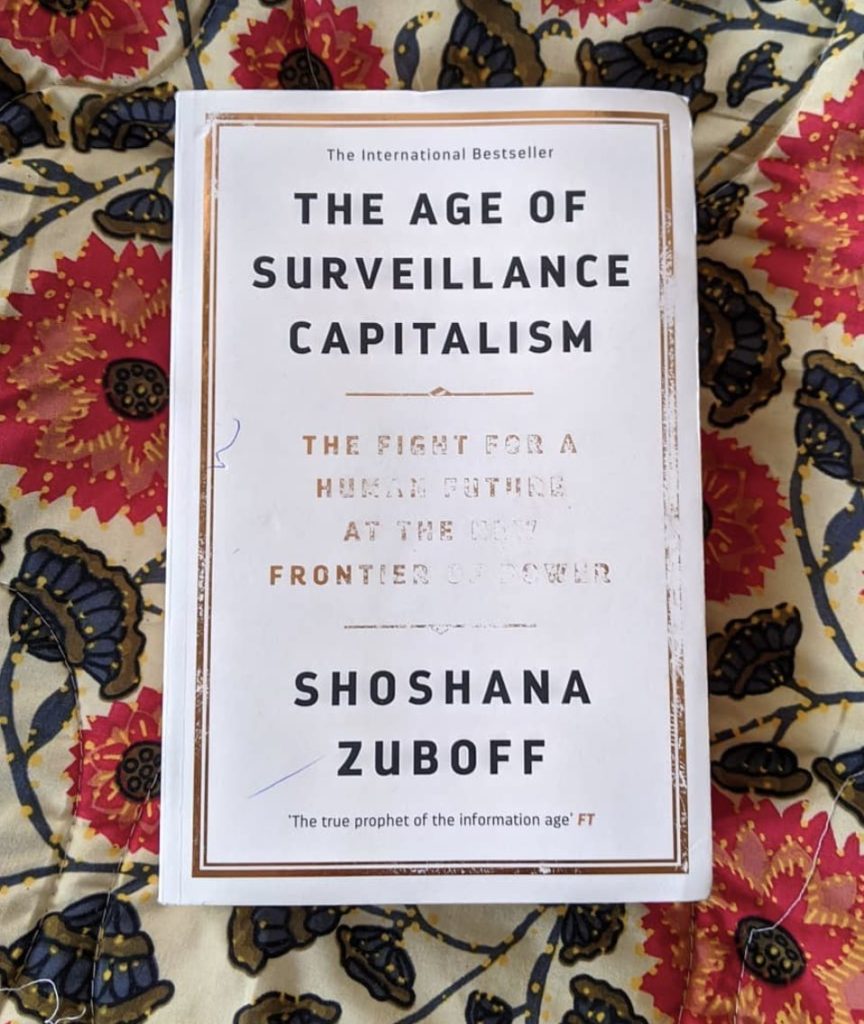
  • The Age of Surveillance Capitalism: The Fight for a Human Future at the New Frontier of Power

    Shoshana Zuboff

    Around the same time last year, I remember tweeting a quote attributed to Jamie Bartlett – “The end result will be ad targeting so effective that you may well question the notion of free will altogether“. Connecting digital advertising to free will seems absurd, but it wasn’t a facetious remark. It reflected the reality of our times. This is the reality that Shoshana Zuboff explores and confronts in The Age of Surveillance Capitalism, frequently echoing the thought that keeps cropping up in my mind – how did we get here?

    She begins with a deeply personal story about her home, and brings up an “aware home” project in 2000, which among other things, assumed that the rights to the knowledge would lie in the hands of the human living in it. She then juxtaposes it against the current privacy policy and usage agreements of Google’s Nest, which all but completely gives the ownership to the search giant. This is just one example.

    Industrial capitalism thrived by exploiting nature, and surveillance capitalism is thriving by using human nature as a resource. That means that even though, due to rapid industrialisation and mass production, we got to a “second modernity” that provided millions access to experiences which were until then the preserve of a smaller elite, we are now being led back into a “neofeudalism”, a consolidation of elite wealth and power. How did this happen?

    Google plays the primary antagonist in this narrative, and though Brin and Page were initially reluctant, the 2000 bust set Google on a path that used the “behavioural surplus” generated by users. At a basic level, it is probably difficult to imagine that when one carries out a search on Google, the machine is searching for patterns in the expressed intent, and making rapid incursions into one’s life. And yet, that’s exactly how it works. It then leads to prediction products, economies of action and future behaviour markets, fuelled by an ever expanding scope of information extraction. Those ridiculous permissions apps require make sense now? And how does a corporation create and grow a future behaviour market? Simple, behaviour modification, whether you realise it or not.

    Over a period of time, Google has institutionalised its invasions into private human domains, helped in the beginning by the national security imperative following the 9/11 attacks. Chrome, GMail, Android, Photos, YouTube and so on have created a dependency that now borders on feeling left out of the societal narrative if one is not using these. The behind-the-scenes look at PokĂ©mon Go is chilling – in terms of how users were giving away data of their own volition, how partners were brought on board to expand the scope of surveillance, and how human behaviour was controlled at global scale.

    Facebook makes its presence felt in the latter half of the book, thanks to its exploitation of social connections. By creating a prototype of a hive mind through the weaponisation of peer group reinforcement, it increasingly shapes minds and behaviour, especially that of young adults. The author uses Goffman’s framing in The Presentation of Self in Everyday Life and shows how the “backstage”, where individuals are truly themselves, is now shrinking thanks to the omnipresence of social incursions. Where does this lead to? One example is when the state starts using this power – China’s social credit system now has a direct impact on an individual’s life, driving economies of action in the real world. More broadly, totalitarianism, driven by powerful corporations.

    The consequences are that there is increasingly no refuge, no sanctuary, from the relentless efforts of corporations that are intent on controlling every facet of an individual’s existence. At a broader level, it threatens the fabric of society and democracy itself. Capitalism’s latest avatar has clearly gone rogue, refusing to abide by the reciprocal nature of every kind of interaction we have experienced thus far. Regulation isn’t really keeping up, except for some efforts by the EU. But there are those who refuse to give up – activists, and artists who use technology to keep out surveillance. However, this is a fight we have to contribute to, because what’s at stake is what makes us human – free will, or at least the notion of it. This is not an easy read, but it is a must-read.

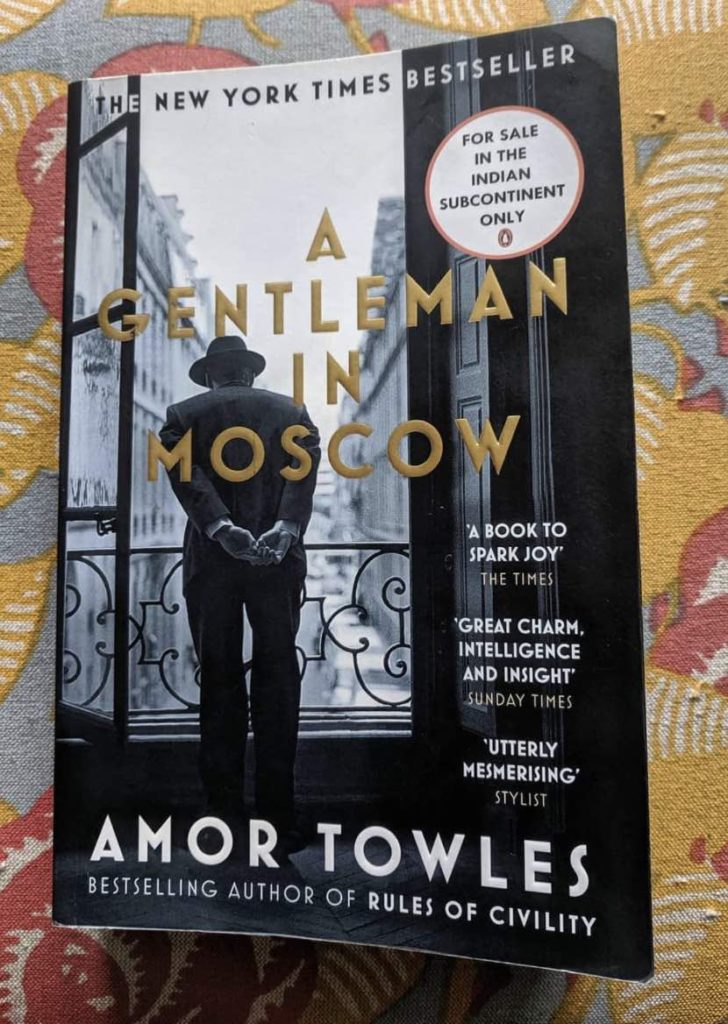
  • A Gentleman in Moscow

    Amor Towles

    I was hesitant to write anything about this book for fear that it would take away from its wonderful aftertaste. But not doing so would be an injustice too, so here goes.

    The adjective I would use to describe A Gentleman in Moscow is sublime. That applies to the story, the writing, and the protagonist – Count Alexander Ilyich Rostov. On 21st June 1922, a Bolshevik tribunal sentences him to house arrest indefinitely. The “house” is the Hotel Metropol, and he is forced to substitute his suite for an attic room. As the author insightfully notes, “the Russians were the first people to master the notion of sending a man into exile at home.”
    Russia, post-revolution, exile – it is difficult to imagine anything that’s not depressing in the 450+ pages that follow. But in the face of imminent disaster, Towles, just like his protagonist, steps up to the plate, shuns maxims, and hits the ball out of Gorky Park. (ok sorry, but bad wordplay is a sure sign of my affection) Hope has a new champion. For Count Rostov is probably a living embodiment of Marcus Aurelius’ Meditations, and from the time that he is forced to choose from his possessions what he can take along to his new residence, he embraces his future by well, counting his blessings. His poise does not miss a step as he moves from “it is not the business of a gentleman to have occupations.” to becoming a waiter, and he continues to exhibit his “essential faith that by the smallest of one’s actions one can restore some sense of order to the world.”

    But one cannot be blamed for thinking that even for such a wonderful character, the four walls of a hotel is bound to be a constraint. The Metropol, though, is a world unto itself. We discover spaces and mind spaces inside, the people who work there, and its visitors. And through the eyes of the Count and his friends, we see Russian history unfold from Lenin to Stalin to Khrushchev.

    Amor Towles’ mastery over situations and the words he uses to express them is not something I have seen much of around. It’s genuine craftsmanship. In the Count, he has created a character that brings out the essence of old world charm, and class. Instead of aristocratic snobbery, what one gets is a very human mix of upbeat bearing and wistful serenity – a character for whom one genuinely feels for. The Count has his basic lessons right – “The first was that if one did not master one’s circumstances, one was bound to be mastered by them; and the second was Montaigne’s maxim that the surest sign of wisdom is constant cheerfulness.” And it isn’t just the Count – the support characters also do a splendid job of covering a vast spectrum of predicaments, thoughts and behaviour.

    And thus it is, that when one reaches the end of the book, and lets out a sigh, one has the “feeling that this moment, this hour, this universe could not be improved upon”.

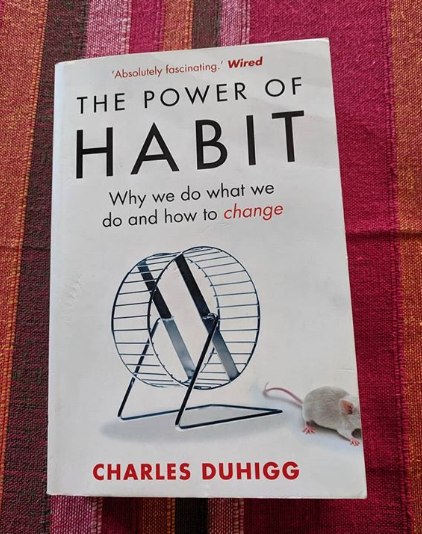
  • The Power of Habit

    Charles Duhigg

    There is something meta about me reading this book. I have my own book-reading habits – genres, number of books on the to-be-read shelf, and such. It is an example of the fundamental premise of this book – cue, routine, reward. Under normal circumstances, I reckon that this book might have landed up on my list 3-5 years down the line. But thanks to my wife D, it not only got into my shelf, but gave me a favourite book as well! Same cue, changed routine, same reward – the exact process to lose a bad habit and pick up/better a good one!

    Towards the end of the book, the author quotes William James – “All our life, so far as it has definite form, is but a mass of habits – practical, emotional, and intellectual – systematically organized for our weal or woe, and bearing us irresistibly toward our destiny, whatever the latter may be.” As a creature of habits, I wholeheartedly agree. Habits form character, and character forms destiny.

    The book can be helpful to anyone seeking to improve the self, whether it is in life or at work. From losing weight to raising children to building great teams, the importance of habits (individuals) and routines (groups), and the fundamentals of changing/bettering them do not change. The author demonstrates that in separate sections dedicated to individuals, companies and societies. Michael Phelps’ habits and routines, Howard Schultz’s (CEO, Starbucks) processes that have transformed not just how the organisation works, but employees’ lives, and Martin Luther King’s successful civil rights movement, all showcase a pattern that can be used to radically alter trajectories.
    I think the success of the book is also due to the excellent storytelling that converts what could have been a dry subject to one that is not just enlightening but entertaining too! I suspect there is some understanding of a reader’s cue-routine-reward mechanism here, because I was hooked soon as I started! 🙂

    There are a couple of wonderful analogies for habits at the end of the book – both using water. It captures the essence of the book beautifully, and encourages us to believe that we can choose our path, and swim wherever we want to.
    Pick it up. Now!