
Delivery guys riding on the wrong side of the road, kids behind you kicking your seat on a flight, speaking on the phone loudly in a public space – these are a few of my favourite peeves. I am sure you have yours too. That’s why this post on LinkedIn caught my attention – “things pissing me off” in situations where people aren’t following rules is something I could relate to.
Barring a few exceptions where I am absolutely not able to tolerate what I believe is ‘inconsiderate behaviour’, I don’t engage. But engage or not, these instances also reveal my snap judgements. e.g. what an inconsiderate idiot, speaking loudly during a movie. I judge myself the most, but also try to intellectually understand my motivations.
That’s why I found this particular episode of The Knowledge Project – in which Shane Parrish speaks to Todd Herman – fascinating. Around the 49th min mark, Shane asks Todd if he has a hard time relating to average people, people who just didn’t want to be the best at what they do. I could relate to it in my professional context – another pet peeve. Todd admits how despite having matured, he still has to watch out as his ego still tries to stack them as ‘average’. Todd explains that he does this because he over-indexes what he personally finds important. e.g. a career-driven person might judge someone who prioritises being a parent.
I battle my own bugbears – punctuality, work ethic, grammar and spelling errors etc. That image below is my team taking revenge on my birthday cake. Cheapos! 😂
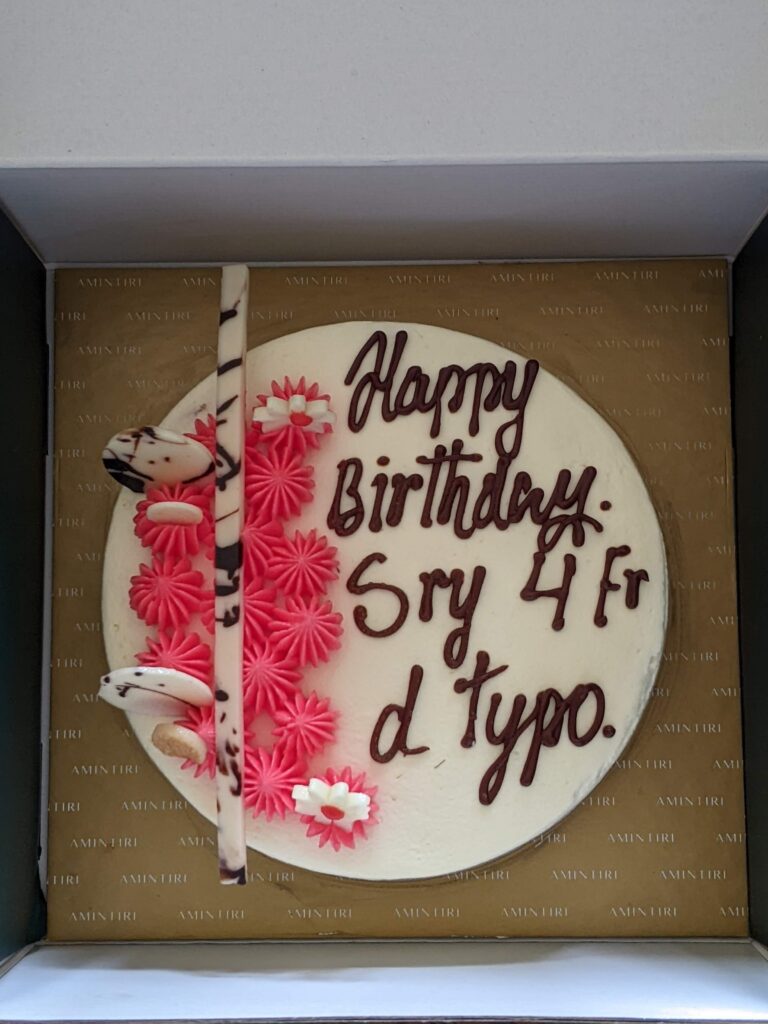
The point is that others are not average/ inconsiderate people, they are at best average/inconsiderate in the thing I am over-indexing for! There are many contexts and reasons why they don’t behave in a way I think they should . As I commented on LinkedIn, I have realised that being able to afford consideration (or applying oneself) is a privilege.
But that was level 1. When I dug deeper, I saw my real problem. When that ‘idiot’ is not following my worldview (‘ideology’) – whether it is ‘considerate behaviour’ or being conscious of spelling mistakes – it raises (in my own mind) doubts on the objective correctness of my ‘ideology’. Will Storr has a brilliant insight – “for humans, ideology is territory”. We fight for ideas like animals fight for land.
At this point, we have evolved to an extent where we hold hundreds of “shoulds” and “shouldn’ts” in our heads. And we expect the world to comply – from nationalism to having pets/kids to the usage of the Oxford comma and so on. Any deviation from our ‘ideology’ is treated as a judgement against us. No wonder every interaction has the potential for conflict. We are defenders of our own little faiths that make up our identity. What we could practice, when we have the privilege, is to step back and think about the little judgements we make, in work and life scenarios, and then react with empathy, because it is not a personal attack.
There have been many posts on this blog about morality, and recently, I found two quotes that connect it to judgement and empathy.
“The drug of morality poisons empathy” ~ Will Storr (again)
“Compassion is the basis of morality.” ~ Arthur Schopenhauer
I found these to be an educative lesson on how I look at my subjective morality, and how I behave with others in real life.