Tag: Devdutt Pattanaik

  • Sita

    Devdutt Pattanaik

    Fantastic!

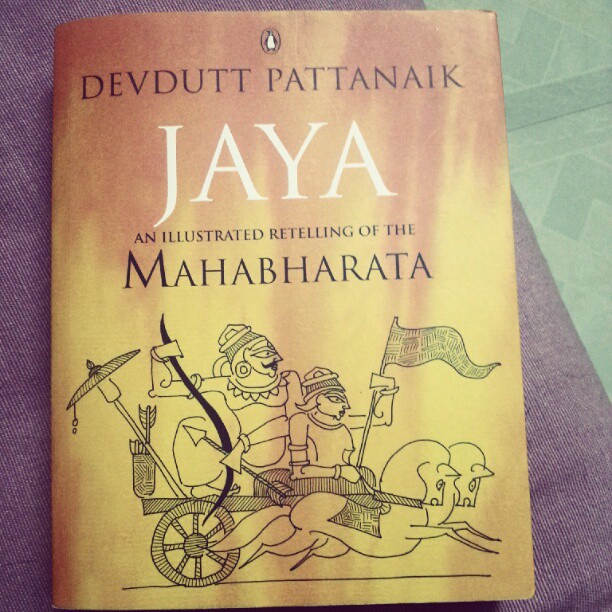
    When I reached page 250 (almost 5/6th of the book!) – at which point Sita is freed – I finally allowed myself the comparison that had been bubbling inside my head for a while. Jaya, an illustrated retelling of the Mahabharata by the same author, ranks among my top five books of all time. Thus far, this book had not really touched those levels. Rationalisation was easy – the Mahabharata is perhaps a more complex and interesting tale because of the sheer number of characters, the back stories, and the grey shades that permeate every character in it. There were many little nuggets I hadn’t known about earlier, and that made the reading more exciting. On a relative note, the Ramayana is more ‘linear’, and there are a limited number of layers that the author can add to situations or characters. I consoled myself with the fact that the narration was as spectacular as Jaya, and I had gained at least a couple of perspectives beyond my current understanding of the epic and its underlying philosophies. (Aham, and Aham Brahmasmi, for example) I did wonder though, why the author had to call it Sita – there wasn’t really a justification. (more…)

  • Jaya: An Illustrated Retelling of the Mahabharata

    Devdutt Pattanaik 

    I consider myself more well-versed with the Mahabharata than the average person, because of my interest in Hindu mythology and the amount of reading I’ve done on the subject. But I’m really glad I read Jaya, not just because of the small details I learned about (I counted 6 things I hadn’t known about – Sahadeva’s precognition gained by eating Pandu’s flesh, Draupadi cursing dogs to copulate in public for stealing Yudhishtira’s slippers, Vibhishana being present at Draupadi’s swayamwar, a couple of stories on why Krishna stepped in to protect Draupadi when Dusshasana tried to disrobe her, why Shakuni did his best to ensure the destruction of the Kuru clan, Draupadi’s regret over Karna and at least a couple more interesting tidbits) but because of the wonderful lessons it provides. The author also mentions several variations of the tale, regional renditions and folk variations adding layers to the original story. Even as one feels the familiarity thanks to the places (which still exist) mentioned and can identify with the experiences and tribulations of the mortal characters, there is also an awe created by the elements of divinity.

    Jaya’s excellent illustrations and the simple yet elegant and evocative storytelling took me back to a time when I first started hearing these stories – childhood. So vivid is the prose that one can easily create visualisations of the events. The explanation of events are done on many planes – rational, metaphysical, spiritual, bringing a lot of clarity to the complex tale. The concepts of dharma and justice are explained beautifully and even as the Pandavas grow their perspective during their exile and their pride, anger etc get tempered before and after the war, there is tremendous learning for the reader too. It is easy to understand why this is indeed considered the greatest story ever told, and continues to be relevant through ages. The original tale is epic, and so is the narration in Jaya. Very highly recommended.

    Jaya

  • The world we create

    A while ago, I had written about the narratives of our lives, a look at various narratives across time – from religions and nations to popular culture and brands to the internet – that have (arguably) tried to fulfill our sense of belonging. All the narratives I had considered were external in nature, though they might be dictated by our choices and preferences.

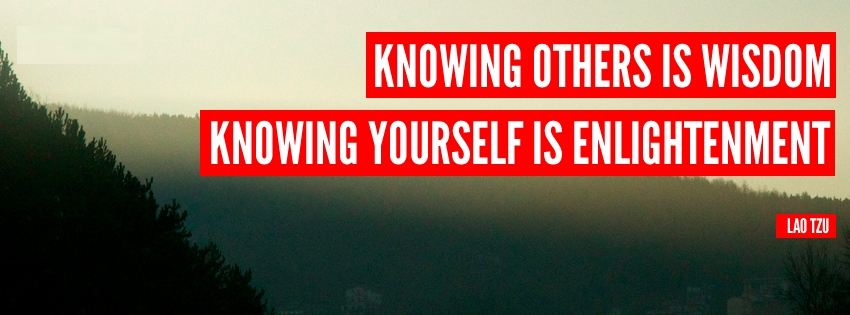
    An excellent comment on the post by The Lit Room made me consider ‘the narrative of individual imagination’. As I answered, it is probably the most important one, as it takes all sorts of external stimuli, and converts it into a unique stream of consciousness. Just when I began thinking of writing a follow up post by including that aspect, I was reintroduced, thanks to Devdutt Pattanaik’s Sita, to the concept of ‘aham brahmasmi‘ – “every human creates his own imagined version of the world, and of himself. Every human is therefore Brahma, creator of his own aham“. I think it is impossible to crack everything that goes into the making of one’s own consciousness, which is probably what led to

    Clipboard01

    (image via)

    But there are at least a couple of perspectives that the book provides in terms of how one can create an ideal ‘world’ for oneself. It says, “stay true to the idea of dharma. Be the best you can be, in the worst of circumstances, even when no one is watching.” I thought a bit about what actually drives our actions, and realised that at the bottom of it is fear. (debatable) Not just one fear, but many, many fears driven by our contexts – some we acknowledge, some we don’t. George Lucas probably figured it out earlier, (see) though we might travel paths different from what Yoda has suggested. The book also states that – Fear is a constant, and faith is a choice. Fear comes from karma, from faith arises dharma. Faith in what, was the next thing I pondered over. In oneself, and a moral code that one adheres to? Or a higher power/cosmic law that governs all that happens? Or is it just a mechanical process with the fittest surviving? There are more options as well, probably, but I like to go with the first, because in the world that I create, my actions can ensure I do not have to fear.

    Meanwhile, also from the book – Shiva chooses the path of asceticism and self control to control the aham, and the world it creates. Vishnu chose to live amidst materialism and yet find a way to break free – a middle path. (now I can see why Buddha is assumed to be a form of Vishnu) I think there are several degrees to choose from, and there lies the challenge. I also realise that it if each of us are creating our own worlds, we cannot really answer the questions of the world at large – a universal answer – because it is an aggregate of each of our worlds, which are different from each other and have unique rules. We can only find the answers to our own world, and through our individual paths, find our own version of the answer to the purpose of life.

    until next time, muddled path

  • The Non Fiction Collection: Twenty Years Of Penguin India

    Celebrating Penguin’s twenty years in India, this book has a collection of 46 non-fiction works, (chapters from published works) and since there’s no specific theme that links every one of them, I’ll just list my favourites. Devdutt Pattanaik’s Myth = Mithya is probably the best way to begin the book with its premise of creation (as per Hindu mythology) and its take on the complementary forces at play in the universe. Gita Piramal’s “the old fox” gives us the ringside view of the Ambani – Goenka war that played out in the eighties. Humra Quraishi’s “from Kashmir” offers us a glimpse of today’s Kashmir, and the life of the people there, a far cry from the times when Kashmir was described as heaven on earth. Vikram Seth’s “From Heaven Lake”, in addition to its vivid description of travel in China, shows in its last page a snapshot of the human condition that remains unchanged across the globe. Amrita Shah’s “Launching Into Space” is one of those reads that take across time, and space, with its chronicling of the early days of India’s space research programme. Khushwant Singh’s “Village in the Desert” is a very personal recollection of the author’s own childhood in a village that now stands in Pakistan, and shows how people across the line really can go beyond the lines drawn on a map. Sanjay Suri’s “Near Mrs.” (that title is a good example of the humour involved) is a brilliantly funny respite from the serious content in the rest of the book, involving a bride-search in London.

    Roopa Swaminathan’s “Extras” is a poignant piece of writing on the life of extras who come to Mumbai/Chennai with the hopes of becoming the next star, but who find that their life has passed them by even as they clung on to hope. Giles Tillotson’s Jaipur Nama has an account of the East India Company’s activities in the context of Rajasthan. Even as Mark Tully’s “No Full Stops in India” gives an excellent perspective on ‘development’ in India, Pavan K Varma’s “Being Indian” has a fantastic take on how India’s own way of getting things done still survives. Abraham Verghese’ “My Own Country”, while set in the US, touches upon, among other things, the idea of a home.

    Pinki Virani’s “Home as hell” informs us about sickening cases of child abuse in India. John Wright’s “Indian Summers” gives us a behind-the-scenes look as well as a non-Indian’s perspective on the game that unites India, even as S. Hussain Zaidi’s “Black Friday” shows how communal forces and the merchants of terrorism try to break this unity.

    There are also very interesting pieces like the Veerappan based “Face to Face” by Sunaad Raghuram, former PM Narasimha’s Rao’s version of what happened at Ayodhya in 1992.

    The book also had quite a few excerpts from works that are already my favouries – Mishi Saran’s “Chasing the Monk’s Shadow”, Shashi Tharoor’s “India: from Midnight to the Millennium” and Arundhati Roy’s “The Algebra of Infinite Justice”.

    The book is a few years old, and some of the works, even more so, but they are in some ways, timeless pieces too. I read them because they not only give me clues on interesting books to read, but also offer me a glimpse of worlds that I probably might not travel to in the course of my normal reading journey.

  • The Pregnant King

    Devdutt Pattanaik

    ‘The Pregnant King’ is Devdutt Pattanaik’s first work of fiction, in which he takes the story of Yuvanashva and distorts the timeframes to juxtapose it with characters in the Mahabharata, whereas in reality, the tale of Yuvanashva is recounted twice in the epic, as one predating it by many generations.

    Yuvanashva’s tale is special in at least two ways – it involves his mother Shilavati who possesses all the qualities to be a king, but cannot, only because she is a woman and Yuvanashva himself, king of Vallabhi, who accidentally drinks a potion meant for his queens (for them to become pregnant) and gives birth to a son. Is he the child’s father or mother, that is the answer Yuvanshva seeks. By bringing in various characters like Shikhandi, born a girl, but who uses a Yaksha’s masculinity to become a man, Somvat, who becomes Somvati during the course of a night by exchanging his gender with the yaksha, Arjuna, who lives for a year as a woman courtesy Urvashi’s curse, Ileshwara/i whose gender changes with the moon’s cycles and Adi-natha himself, seen as a hermit and a nymph, the author manages to not just show the nature of gender roles but also gives profound perspectives on dharma – its rigidity and fluidity, the dynamic nature of matter and the static nature of the soul, its various symbolism, and ‘the imperfection of the human condition’.

    This is an amazing read, and that’s not just because I am really interested in mythology. Ancient in origin, and contemporary in narration, the questions it raises belong to a different era and yet manifest themselves now in another form.