
It’s almost a year and a half since I wrote In Code we Trust. More recently, Tim Ferriss had Eric Schmidt on his podcast (transcript). In what I thought was a fascinating discussion based on the latter’s recent book The Age of AI: And Our Human Future, (coauthored with Henry A. Kissinger and Daniel Huttenlocher), they also brought up AlphaGo. Go was a game that humans had been playing for 2,500 years, and it was thought to be incomputable until DeepMind’s AlphaGo beat world champions. As Schmidt explained, some of its moves and strategies were the kind no one had thought of before. In Kissinger’s words, we’re entering a new epoch, similar to the Renaissance, this age of artificial intelligence, because humanity has never had a competitive intelligence, similar to itself, but not human. To note, a more recent version – AlphaGo Zero self-taught itself without learning from human games, and surpassed its predecessor in 40 days!
(more…)Tag: culture
-
In Code we Trust
Eugene Wei’s TikTok and the Sorting Hat is a splendid read on many counts. It provides some excellent perspectives on tech companies’ crossovers across WEIRD (Western, Educated, Industrialised, Rich, Democratic) and non-WEIRD countries like China and India, made complicated by the culture difference. This serves as the context setting for TikTok’s rise in the US, and some deep chronicling on how this came to be, while juxtaposing it against social networks like Facebook, Instagram, Snapchat and Twitter. On an aside though, all of these networks have found varying degrees of success in India. Meanwhile, he points out that TikTok is not really a social network, because instead of a social graph, it plays on an interest graph that it builds from the user’s reactions. All of this makes for some excellent reading. But what really caught my attention was this –
in some categories a machine learning algorithm significantly responsive and accurate can pierce the veil of cultural ignorance. Today, sometimes culture can be abstracted.
A meta example of this appears at the end of the post when he visits the Newsdog. At that point it was the top news app in India, and it was built by a Beijing-based startup. Around 40 male Chinese engineers, none of whom could read Hindi!
(more…) -
10 Observations from working with Millennials
The dynamics of ‘work’ have been changing for a while now, so much that when I think about writing on the subject, my thinking almost seems outdated! Not surprising, GigaOm’s post from a year ago – How the great generational shift is causing transformation in the very nature of employment – shows as many as six generations active in the workforce these days! Each of them with different world views, attitudes, priorities and approaches to work. But given that I’m trading one demographic number for another in a couple of days, I thought it an appropriate time to share a few observations based on my recent experiences. Since I had written earlier on the challenges faced by my generation in The Future of Work and The Entrepreneur & the Professional, this post focuses on a younger workforce. Millennials, if you are into labels.
The first two points set the context. I mention these two because I think they have a direct link to the worldview, attitudes and behaviours of the emerging workforce towards work, and their life in general. They serve as the backdrop for me to observe the 15+ people I have managed in the last 4-5 years. (more…)
-
A shift in the world order
(via)
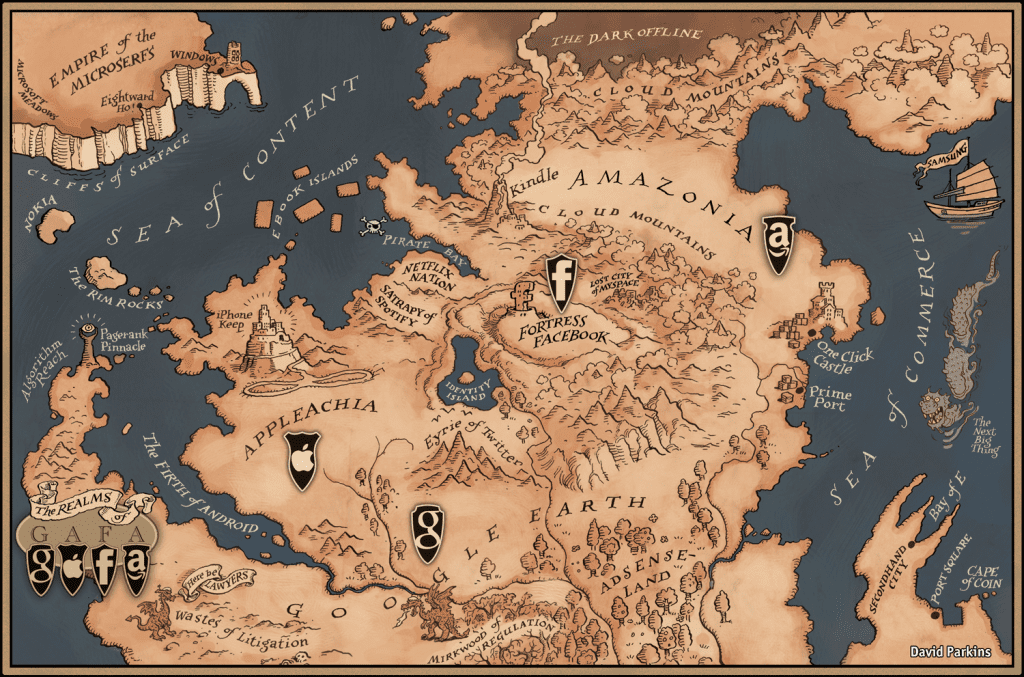
It has been a while since I wrote about nation states, or notion states as I call them. Now is not really a good time to bring this up in India, but hey, it’s a free country. Oh, wait! Therefore, let’s talk about Apple vs the FBI on where digital security ends and national security begins. (via The Guardian) Washington-Silicon Valley shadowboxing as the publication puts it, and Apple has the support of Google, Facebook and Twitter. [If this were happening in India, by now Tim Cook would have probably been lynched by a mob, and charged for sedition – now a very loose word that can be applied to even things such as sneezing while watching the Republic Day parade on TV]
This battle is interesting as it is because it will set a precedent for an individual’s privacy rights, and is being fought between the world’s most valuable corporation and the world’s biggest (one might even say only) superpower. On one side, we have and entity whose decisions affect billions of lives around the world, and on the other, a country marked by boundaries but influencing policies that affect an equal number. Phenomenally intriguing and layered as this is, I actually find it riveting because I see a couple of my favourite narratives coming to a boil. (more…)