
Tag: Conformity

  • Planning for spontaneity

    Erich Fromm’s Fear of Freedom (1941) has been my favourite read this year. The book was largely meant as an explanation for the rise of Nazism, but by tracing historical patterns of man’s interaction with society, it ended providing some fantastic perspectives on the self. Specifically, man’s contradictory needs of wanting to conform and wanting to be free. As Fromm points out, across ages, we have attained a variety of ‘freedom from’ (nature’s whims, Church etc) but have also systematically discouraged the expression of emotions, our spontaneity.

    He lives in a world to which he has lost genuine relatedness and in which everybody and everything has been instrumentalised, where he has become a part of the machine he has built. He thinks, feels and wills what he us supposed to think, feel and will; in this very process he loses his self upon which all genuine security of a free individual must be built…

    By conforming with the expectations of others, by not being different, these doubts about one’s own identity are silenced and a certain security is gained. However the price paid is high. Giving up spontaneity and individuality results in a thwarting of life.

    Fromm explains how spontaneous activity is the means by which we can attain “freedom to”. This is positive freedom.

    Spontaneous activity is the one way in which man can overcome the terror of aloneness without sacrificing the integrity of his self; for in the spontaneous realisation of his self, man unites himself anew with the world – with man, nature and himself.

    The inability to act spontaneously, to express what one genuinely feels and thinks, and the resulting necessity to present a pseudo self to others and oneself, are the root of the feeling of inferiority and weakness.

    Somewhere in all this, I sensed the indirect presence of a favourite topic – the abundance mindset. Specifically, in the idea of spontaneity. In my immediate circle, I know three people who are quite spontaneous. Interestingly, they also share an abundance mindset. Yes, correlation, not causation. But maybe…

    Let me unpack the connections. One reason to not be spontaneous is conformism. But I have never really been a conformist. (I have recently figured out the probable reason, but that’s a different story.) However, there is a wrinkle, perhaps best explained by this:

    If loneliness is to be defined as a desire for intimacy, then included within that is the need to express oneself and to be heard, to share thoughts, experiences and feelings. Intimacy can’t exist if the participants aren’t willing to make themselves known, to be revealed. But gauging the levels is tricky. Either you don’t communicate enough and remain concealed from other people, or you risk rejection by exposing too much altogether: the minor and major hurts, the tedious obsessions, the abscesses and cataracts of need and shame and longing. My own decision had been to clam up, though sometimes I longed to grab someone’s arm and blurt the whole thing out, to pull an Ondine, to open everything for inspection.

    To refuse scrutiny is to dodge the possibility of rejection, though also the possibility of acceptance, the balm of love. 

    The Lonely City, Olivia Laing

    I’m still working out the paradox, but while I am nonconformist in most things, I also avoid getting judged. It doesn’t help that I am shy and introverted. My trade-off has been similar to Laing. Rather than conform, I clam up, as a shield against judgement. But it also means that I am forgoing chances of a genuine connection beyond a handful of close friends, and yes, this blog. Clamming up and spontaneity don’t mix well.

    “…to be ourselves causes us to be exiled by many others, and yet to comply with what others want causes us to be exiled from ourselves.”

    ― Clarissa Pinkola Estés, Women Who Run With the Wolves

    There’s another factor that works against my being spontaneous – a scarcity mindset. My reaction to it, instinctively to begin with, and by design later, was to create predictability by planning my life. Or, in the insightful way that Khaled Hosseini has framed it,
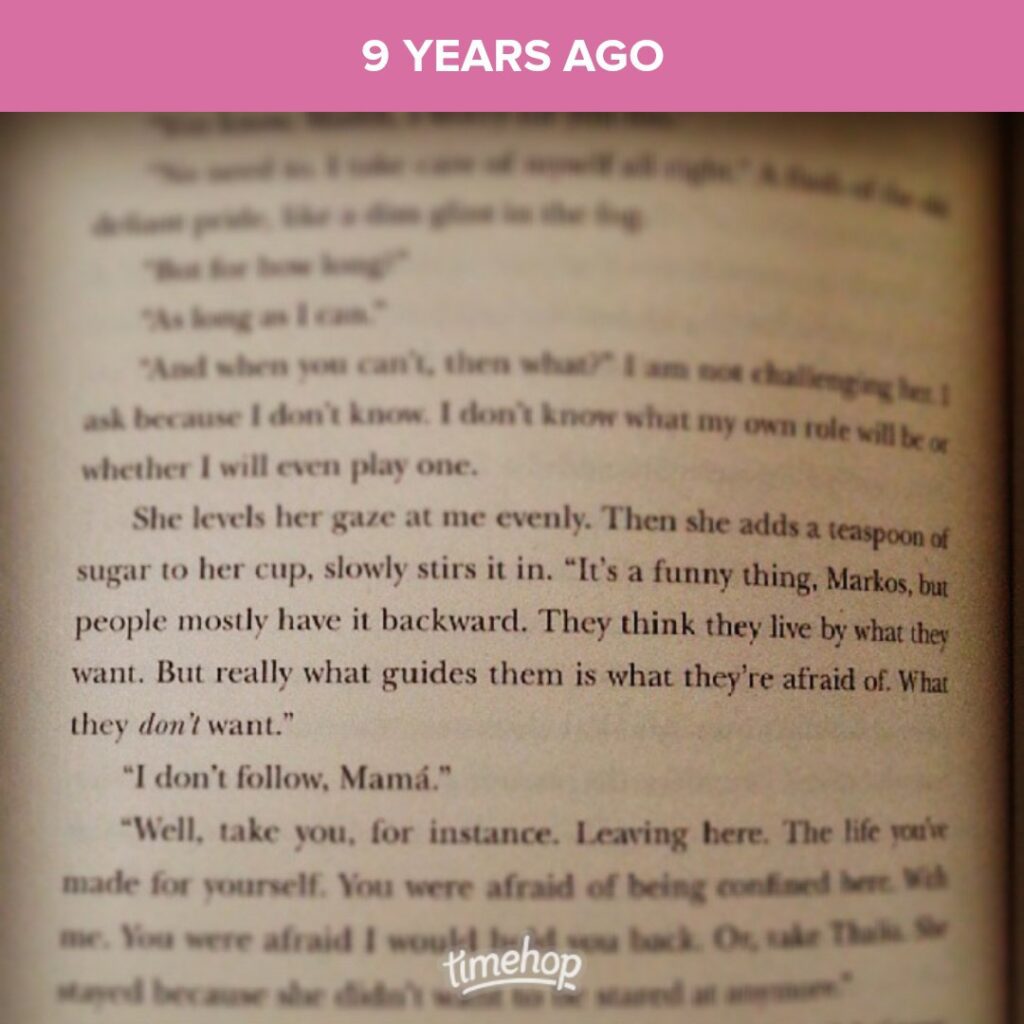
    But I had a plan for spontaneity. My thinking was that by making many things routine (clothes, diet, finances) etc, I can use choice avoidance to have the space and the mind space to be spontaneous. (read) But the extreme is a bad place to be, and in my case, I not only became a slave to routine, but also got upset if it didn’t happen in a certain way. As it goes, the neurons that wire together, fire together, and over a period of time, it also led me to seek efficiency in everything.The instrumentalisation of life, in Fromm’s words. Also, the crowding out of spontaneity.

    Before we get to possible solutions, a few reasons I need to solve this. At a human level, the combination of non-conformity and the slavery to routine and efficiency is practically a fool-proof way to push people away! Also, the uncertainty in things around us is only rising. Trying to have a plan that covers everything is just hubris. As a species, we will have to draw upon the innate strength that got us here – adaptability. And finally, there is philosophy

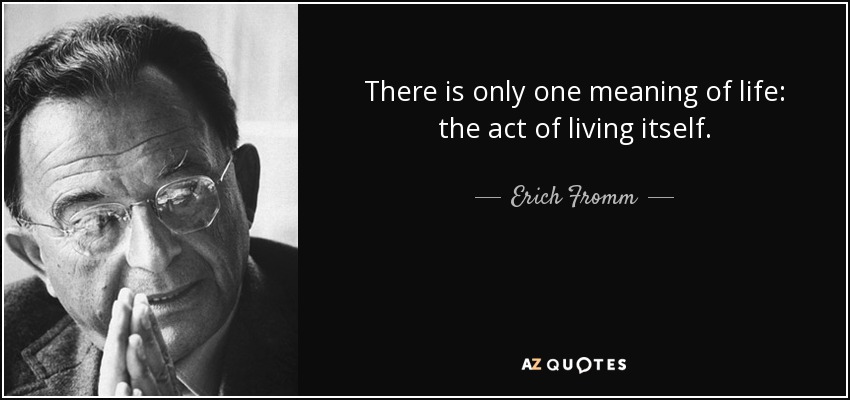
    People say that what we’re all seeking is a meaning for life. I don’t think that’s what we’re really seeking. I think that what we’re seeking is an experience of being alive, so that our life experiences on the purely physical plane will have resonances with our own innermost being and reality, so that we actually feel the rapture of being alive.

    Joseph Campbell

    So what’s a possible fix? In Atomic Habits, James Clear argues that we can behave in a certain way until we get to the mindset. Intuitively, and from experience, that seems relatively easier than theoretically changing a scarcity mindset. If one isn’t blessed enough to have an abundance mindset, maybe behaving like one does – spontaneity to begin with, will get one there. So, if spontaneity is the behaviour change, I have to go oxymoronic – force myself to be spontaneous! In other words, use my nonconformism to unlock the ‘freedom to’ be spontaneous. Hopefully, its positive results will temporarily override shyness, introversion and the desire for efficiency, and an abundance mindset might find a way in. The first baby step is to watch myself when killing spontaneity. I also have another clue. Money is a factor that has a disproportionate influence on my mind, and I have discovered that when something doesn’t make a dent there, I am more amenable to spontaneity, and joy.

    At a daily level, to quote from this fantastic read on happiness, “any neuroscience article will tell you that the “reward centre” of the brain – the nucleus accumbens – monitors actual reward minus predicted reward.” In my efficiency play, I will have predictable happiness, which will get normalised to practically zero happiness over time. I have found a couple of ways to engineer prediction error – one is not to plan the minutiae of travel, and the second is to spend more time with people who are spontaneous. Or as Venkatesh Rao puts it, ‘differently free people’, in this fantastic post. The good news is that I have three readily available ones and I am now ‘awake’ enough to spot others when I find them. Predictable unpredictability!

    Thus the idea is to go from choice avoidance based on efficiency to choice avoidance based on the freedom to be. As Venkat so brilliantly put it, “Detachment does not mean you don’t care what happens. It just means you don’t care whether a specific thing happens or not.” I have solved it in terms of conformity (freedom from) I now need to solve for spontaneity (freedom to). To live for an in-the-moment version of the want in Hosseini’s quote.
  • An efficient existence

    The Cyberiad by Stanislaw Lem is a book I recently read, and loved. It was written in Polish in 1965, and translated to English in 1974. Lem wasn’t an author I had heard of, despite having read many science fiction anthologies. An online post that extolled him at the cost of my favourites like Asimov was what led me to this book. (I would have linked it, but I’ve forgotten how I found it!) Lem has been translated into 41 languages and has sold 30 million copies. But he was rebuffed by quite a few American writers including Philip K. Dick, multiple times, because he was perceived as being annoying, and had commented that American writing was “ill thought out, poorly written…” Also, his belief was that the only true motive for writing was to contribute to literature.1

    It made me think of a post in one of the newsletters I often recommend to folks – Taylor Pearson‘s The Interesting Times. As I tweeted sometime back, his writing is centrifugal – pointing to books, posts and ideas, and centripetal – goes deep into an idea and provides food for thought (the latter is different from what Austin Kleon meant in the original framing 2). The specific post I am referring to – 4 minute songs, which was about certain rules that a creators need to follow if they want their work to be consumed and appreciated, was the latter, and made me reflect. I wondered whether, even at an individual level, we are increasingly optimising for others’ consumption over our own expression.

    (more…)
  • Balance Wheel

    Somewhere between the need to belong and the constraints of conformity lies that Utopian state. I am beginning to realise that this is applicable across all modes of social interaction, whether they be real or virtual.

    It begins with people finding a common interest or ‘wavelength’ and sharing great vibes. School/college cliques, blogs and microblogs, workplaces, interest groups and so on.  Startups are fun places to work in the initial years because rules are made on the go, blogs and microblogs in their early days were sparsely populated and everyone was discovering their own voice and community norms.

    I have always wondered what breaks the utopian state – time or an increase in the group size. These days I am beginning to be convinced that it is the latter. As each new member is added to the initial set, the needle begins to slowly shift from the erstwhile average. The addition of new members also changes the dynamics of the group and slowly the earlier common sense of belonging changes even as a new one is created. Some adapt, others refuse to conform and break away.

    But what I have also realised recently is that there is a middle path – refusing to conform but refusing to go away either. It is a tightrope walk, and best done without baggage. And that’s the walk I am trying to learn, across my worlds.

    until next time, walking schtick

  • A social club of one

    Sometime back, I read a post on @daddysan’s blog on choices and how we “defend freedom of choice but we criticize those who exercise it because those choices may not be concurrent with ours.”  To be noted that the thrust of the argument is not on ‘labeling’ products/services per se, but labeling the people who consume it, more so in cases when it’s a personal choice and doesn’t endanger or even affect others in a significant way.

    I found this post interesting because I have always been intrigued by choices and their significance, not just from the perspective of whether they are choices at all, but also from that of the judgmental robes we like to wear. The last time I had written about the latter was in the context of expertise. But a comment on this post gave me quite a new direction for thought. More on that in a bit.

    In the context of the post itself, though I understand that labeling (and battles around them) has probably been around from the time the species became 2 in number, I think the publishing power that the internet created has taken it to a whole new level. So while “people who smoke/drink versus those who don’t”, “people who apply coconut oil on their hair versus those who don’t” and so on have had battles fought with much fervour, the internet’s ability to aggregate opinion has escalated many issues to war levels, like the examples daddysan has used.

    And so I wonder if it has something to do with the ‘Like’ necessity that has increased its hold over our lives recently. Social endorsement, even from total strangers. When I am a consumer of X, and you chose to buy Y instead of X, it is as though you have not ‘Liked/Retweeted’ my awesome intelligence in choosing X. Peer reaction was probably a major factor in my choice, whether I acknowledge it or not, and in saying that I have gone wrong, you have invoked my ego and brought up the subject of whether I chose X purely for its tangible or even intangible benefits or whether I chose it to conform to some section’s decree. Now, you probably didn’t mean to do any of this, and also are under some sort of peer review process yourself, but that’s irrelevant and it’s now war. Just like many of the Likes/shares/retweets are from people I don’t even really know, the war just brings in all sorts of strangers and camps.

    For the record, I have exactly one Apple product, which was gifted to me, and if it has any iron parts, it should be rusted by now. I read Chetan Bhagat and when I get a chance, take potshots at him. Just can’t resist. 😀 I think Ponytail sucks, and again, don’t lose a chance to crack a line at his expense, but I have held back much since the time he made a movie with the awesome Funny Deol. Joke sako to Joke low is the policy.

    But, enough. The comment that made me think was made by Jo Chopra McGowan, and it was about how individual choices add up, affect others, and could probably end up in impacting popular culture/lifestyles etc. I’d never thought of it that way. But yes, most of us/our actions influence at least one other person, and so the chain goes. More often than not, our reasons for doing so remain un-shared, and somehow one personal choice could create a conformity wave. Obviously the easy way to stop it is to make conscious choices and that brings us to the vicinity of square one. 🙂

    until next time, unheard mentality!

  • Bridge over troubled water

    In ‘Tin Fish‘, there is a wonderful speech given by the school captain, which goes (edited a bit)

    …..I am not what I’d have liked to be. The school is aiming to prepare me for others. I want to be for myself. But it is growing increasingly difficult for me to prepare myself for myself as my expectations grow greater. A reformed, open-hearted school can help me. Till then, I shall stand on the beaches, look towards the sea and wait for a solution to be washed ashore.

    The novel is set in a boarding school in Rajasthan, deals with peer and parental pressure, and has the chaotic politics of the 70s as the backdrop. As a late 70s born, I could identify with the book because though the cultural icons had changed (rock bands/actresses etc) societal changes seemed to have moved at a much slower pace. The value and belief systems as well as the prejudices – caste, religion, income are a part of the 80s too.

    I could also identify with the above excerpt on two counts. ‘Preparing me for others’ ..the pressure to conform – on the kind of education one should have, the kind of career one chose, the kind of person one could get married to, one’s conduct with family, boss, and one’s behaviour in society in general, all had their own sets of conformity. ‘Prepare myself for myself’..when I wrote this post sometime back, I had mentioned the conformity that the blog imposes on the blogger, it is something that happens in real life too – we create an image of ourselves, consciously or more likely, sub consciously, and try to stick to it. In either case, more often than not, objectivity will be lost.

    Sometime back, I also came across this wonderful piece in the New York magazine, titled ‘Say Everything’. It talks about how as the young population gets increasingly used to the net, there are many among them, for whom, sharing their ‘stuff’ online is the natural way to be, and for whom, privacy has an entirely different definition. In fact they consider the extreme caution of the earlier net generation to be narcissistic and are prepared for the implications that the shared stuff might have on their lives decades later. The author sees this as the biggest generation gap in a long time, perhaps since the hippie generation. She even wonders whether in this era of surveillance cameras and tracked card transactions, their belief that privacy is an illusion might be the sane approach. The article outlines a series of changes that are happening with this generation –  “they think of themselves as having an audience, they have archived their adolescence, their skin is thicker than ours”

    Now, one could say that they are conforming to an online audience (like my blog example), but as the author points out, over a period of time, will this generation, which has been growing up with the net, move towards such degrees of comfort that they are totally un-self conscious? And perhaps, to quote the extreme example used by the author, a Paris Hilton level where what could have been the worst humiliation possible, was used as a stepping stone for fame? A generation so transparent that any ‘forced’ conformity would be easily detected and would be undesired. And moving on, to use the words I had seen in a totally different context (link), would transparency be (or subsume) objectivity?

    At this stage, we are of course, smack in the middle of these changes, but unlike the above generation, technology (more specifically, the web) entered our lives relatively much later. We perhaps have the baggage of not just peers/parents/society but also the ones we have created for ourselves earlier on in our lives. We might struggle to adjust, but yet we are perhaps the bridge generation, across the cultural changes wrought by the www or even liberalisation (in India). Did every generation have to play similar roles? 🙂

    until next time, stage fright