Tag: compassion

  • Happiness: The End

    A while ago, in Happiness and Compassion, I had written about what Fahadh Fasil described as the biggest lesson he learnt from failure – he said it made him decide that he would only do things that made him happy. The more I read, the more I think, and the more I live, the more I start relating to what Fahadh is doing, and what Aristotle said, “Happiness is the meaning and the purpose of life, the whole aim and end of human existence.” Everything else – fame, power, money, compassion, detachment etc – is probably just the means we create.

    The thing though is, even if happiness were indeed the purpose, I can see at least a couple of challenges. In this excellent read “10 truths you will learn before you find happiness“, the first point is “It is impossible for anyone else to define YOU”. This echoed my first challenge – a difficulty in defining what happiness is to me. At the next level, I felt that the paths to happiness are confusing and have many things going against them. For instance, fame – “..other people’s heads are a wretched place to be the home of a man’s true happiness.” (Schopenhauer) Or compassion/pity (not kindness, which I regard as a more active expression, though the following might apply to it as well) – “There is a certain indelicacy and intrusiveness in pity; ‘visiting the sick’ is an orgasm of superiority in the contemplation of our neighbour’s helplessness” (Nietzsche) As you can see, it isn’t difficult to bring each down.

    (more…)

  • Happiness and compassion

    Though I’d explored the idea of inculcating a sense of compassion in others in this post a fortnight back, I still think our own compassion needs to serve as a solid base. Not being judgmental is one way, but it’s not easy to practice. So I took a step back and wondered if compassion was a result and not a behaviour. The first behavioural direction I could think of was happiness. In myself, I have seen a correlation if not a causation. I am more compassionate when I’m happier. So I decided to explore this a bit. (more…)

  • The people we are….with

    After I shared the “We, the storytellers” post on Twitter, Surekha sparked off this interesting discussion on how we could persuade others to be less judgmental and more compassionate. I really didn’t have a fix-it-all answer and felt that it was more important that we simply practice this ourselves. That, however, did not stop me from thinking about it.

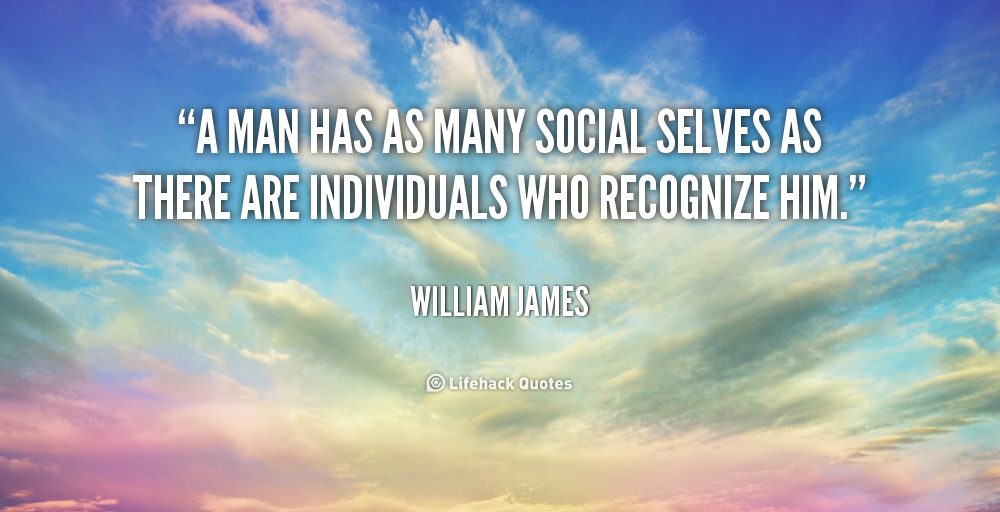
    The next day, my reading list had this post, which touched upon things that get people to change their behaviour. I remembered this William James quote used in the post from something I had seen a while back at Brain Pickings.

    Clipboard01

    (more…)

  • We, the storytellers

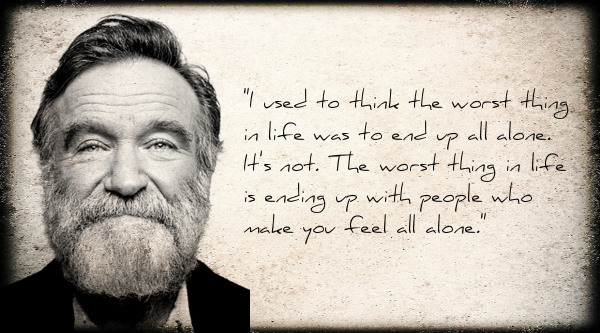
    The day after Robin Williams died, I had posted this on Facebook

    https://www.facebook.com/manu.prasad/posts/10152632582841798

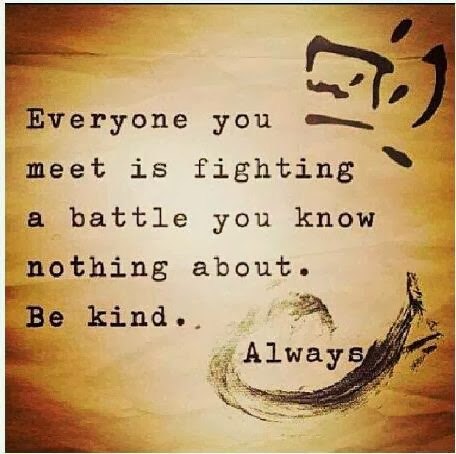
    This was a man whom (I thought) no one could have any ill feeling towards. He made so many people forget their worries, for at least a while, through his roles. When you saw him, you couldn’t but smile. How could such a man have any troubles? But somewhere inside him, a story was being told, one that would end his life. In a tangential way, I had related it to “Everyone you meet is fighting a battle you know nothing about. Be kind” from the ‘One off a kind rating‘ post in which I had written of self perception, and compassion vs kindness.

    Once upon a time, I used to be very judgmental of people who chose suicide, but I realised over time that people are different. Some have the strength to deal with things, others don’t. But I still wonder about one facet of this decision. Barring the ones who end their life simply because they feel they have nothing/no one left worth living for, do people take this decision because they can’t live with something they have done/not done, or they are afraid of how people would judge them for this? In both cases, the common factor is the perception people have about themselves, and how it would change.

    That makes me think – how much of this self perception is built based on cues from others? I think this is very relevant in the era of social platforms, because these cues could come from a variety of people. Arguably, Facebook is already affecting our thinking and behaviour, in a warped version of the Hawthorne Effect. (a phenomenon whereby workers improve or modify an aspect of their behavior in response to the fact of change in their environment, rather than in response to the nature of the change itself. ) That’s probably why we largely see only happy stories on Facebook – because people know they’re being watched, and judged. How soon before this becomes the guiding principle in lives, their only cue for creating self perception? It can be argued that this was happening even before social platforms, but I think there is a difference in scale. If entire generations are spending more time on social platforms, their behaviour offline would probably soon start reflecting that. To stretch it, their sense of identity would be built online before being taken offline.

    When you connect this to the fact that the internet is also home to the kind of taunting and trolling that can radically alter one’s perception of the self, and one’s feeling of self worth, I see a problem. In the aftermath of Robin Williams’ death, the collective trolling power of the internet forced his daughter off several social platforms, at least for a while. Paul Carr wrote about a generation – born before the 90s – that should count itself lucky to remember a time before such acts became the norm. I think the power each one of us has to influence the stories others tell themselves is massively magnified now, if only we could use that to be less judgmental and more compassionate. Maybe that will also affect the stories we tell ourselves.

    Clipboard1


  • One off a kind rating

    (‘off’ is intentional. Thanks)

    A while back, in ‘The Currency of Relationships‘, I’d written this – But there is no standard currency in relationships, and my lesson from this experience is to not to take for granted that my approach is the one that works for people at the receiving end. I should spend some time first in understanding expectations, and then meeting them. Recently, a little incident on Facebook reminded me of this. But first, a step back.

    Don’t laugh, but I think of myself as a kind person. This is a recent phenomenon, and one that finds a parallel in my struggles with being judgmental, though I have had more success on that front. Together, a reasonable (and sarcastic) wit, a tendency to see things from a skewed perspective and more often than not, the propensity to see humour in the worst of (others’) circumstances, have made being kind a very difficult task.  I rib people all the while, and am probably the poster guy for “People who don’t know me think I’m quiet, people who do wish I was.” It is very rarely that my intent is to hurt, I try to be mindful of all my words and actions, and that is what has probably created my own perception of the self as a kind one.

    kindnessAs with all perceptions, this one too built on itself. Maybe that is why I was quite surprised when a share on Facebook (the message being the same as what you see on the left – via)  – something I believe in and try to practice – elicited one response that I was in no place to ‘preach’ this. It made me think about my self perception, and reminded me of currencies. I also gained a few perspectives – common, yet usually forgotten. (Thanks N)

    One is that my words and actions have effects that I might be completely unaware of. This is not a new understanding. In fact, for a while – a couple of years ago probably- when I became aware that my words could hurt, I willfully restrained myself from saying a lot of things I came up with! I realised that it might get laughs and LOLs but I might hurt someone too. (even if that may not have been my intent) But then I realised I was just being miserable and at least with friends, I let go, thinking that I didn’t have to prove the lack of malice. The fact that I was ribbed back by many only reinforced this. My credo since then has been based on “how would I feel if I were at the receiving end?”  But maybe that is a flawed approach. After all, what gives me the right to say when a person should feel hurt and when not. I plan to be a little more careful, and if you’re a friend and reading this, give me a heads up when you think I’m going overboard. 🙂

    The second perspective was that it is probably my ego that wants others to perceive me as kind. If I trust the objectivity of my own moral compass, I wouldn’t need a reinforcement. I should also maybe realise that I can’t have the laughs and the label.

    The third perspective came from looking at kindness itself. You might say it’s semantics but I noticed that there is a difference between kindness and compassion. Arguably, compassion is about how you feel, and kindness is about what you do. I can instinctively see that on a relative scale, I am more compassionate than kind. No, this is not me asking for a new label. Both deal with empathy and understanding, but maybe compassion is only the first step to kindness.

    Meanwhile, my new ‘social’ plaything ‘Secret‘ is a good reminder. Its prompt when I have to comment on a post is ‘Say something kind’. Sometimes I can, and at other times, I keep quiet. 🙂

    until next time, a different kind