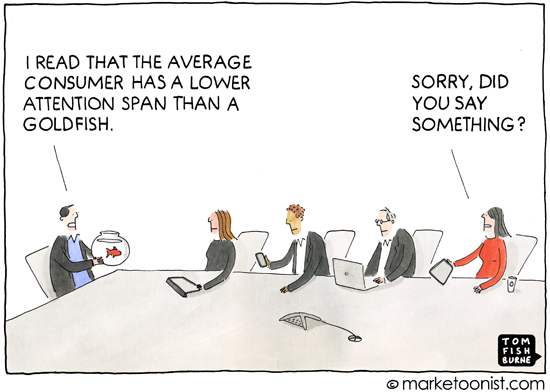
A brand could be defined as a perception in the mind of a consumer, based on his/her/others’ experiences. These experiences could be either of the product/service itself, or its marketing communication. Earlier, in a post in a different context, I had alluded to the framework of choice during consumption. To elaborate, what are the factors that influence a customer’s decision to buy/not buy? The basic 4Ps of the marketing mix cover a lot of ground in this regard. But it does not really acknowledge (even when it is extended to 7Ps) the one thing that is increasingly becoming the most scarce commodity – time.
Tag: capitalism
-
Prosperity’s moral code
A few months ago, TechCrunch had a post debating the role of capitalism in a world that includes AI, where jobs are disappearing at a rate faster than new jobs coming in. Capitalism has always been played as a finite game, focused on profit for a set of people, largely irrespective of the costs to others or society at large. As I wrote in “A shift in the world order“, its only real foe in the recent past has been the nation state, and its executive arm – the government. A foe increasingly struggling to even defend its own relevance, I’d say. As the dominant system of the world, we will then automatically (whether rightfully, is debatable) begin questioning capitalism’s morality codes. More than what we are doing currently, because the impact will not just be higher, it will also start affecting more people.
Earlier this year, I had written on how if it intends to survive, capitalism needs to expand its scope, and play an infinite game – whose purpose is to continue the flow of the game, and bring in new players. Something similar to what Douglas Rushkoff calls digital distributism (read) a model that aims for the circulation of money rather than the extraction of money. An evolution that capitalism needs to go through, or it runs the risk of imploding. This, of course, is not really in line with the way an earlier generation of corporations, or Silicon Valley operates. As Maciej Cegłowski writes in “The Moral Economy of Tech“, treating the world as a software project gives us a rationale for being selfish. We pretend that by maximizing our convenience and productivity, we’re hastening the day when we finally make life better for all those other people. (more…)
-
In Capitalism we bet?
The Book of Life is one of those internet gifts that keep on giving. If you haven’t read/subscribed, now is a good time! One of its articles that I read recently (though it seems to have been written a while back) was On the Dawn of Capitalism. It was about the need for capitalism to expand its scope and address the full range of needs of mankind, and uses Maslow’s needs to frame this. (Reminded me of “Currencies of Engagement @ Scale” from a while back)
The article states that companies are (vaguely) aware of this, and that’s why advertising tries to sell to us with an appeal to higher needs. But, We get promised friendship or love and end up with a 4×4 or a new barbecue set. Our materialism/consumerism is also to blame, but it is attributed to our lack of self knowledge. Capitalism, the argument goes, is capable of tackling the higher, deeper problems of life, and make us more refined, and restrained. (more…)
-
Temptations of the West
Pankaj Mishra
A commentary on life in the subcontinent, that vividly portrays issues that pertain to the region- from the university politics of Uttar Pradesh to the lanes of Bollywood and from Ram Janmabhoomi to the plight of Kashmir, and thats only one country.
It also shows the role of Pakistan in the cold war, its dealings with the US , the mujahideen, communists and the rise of the Taliban in Afghanistan. Touches on Nepal and the Maoists vs Monarchy tussle. Most importantly it also throws light on how religion can fuel the fires of jihad (Afghanistan) as well as serve as a cohesive force that becomes a source of cultural identity (Tibet).
While it could be claimed that he does not devote the deserved attention to each part of the sub continent and therefore leaves the work incomplete, what I liked was that though Mishra tries his best to remain objective in his understanding of the issues, he is also not dispassionate, and tries to bring in a perspective that reflects the views and experiences of the resident population. If you’ve read his earlier work, ‘The Romantics’, you’ll feel a sense of deja vu, not just in the content, but in the tone too.
Read it at a good time since the outcome of a lot of things discussed in the book is happening now – Prachanda’s triumph in Nepal, the return of the Kasmiri pundits, the Tibetan protests.
The other good take out was his projecting of Buddhism as possibly the last bulwark against capitalism. No, I’m not a communist anymore, but strongly believe that our society needs an anti thesis, an option against the unbridled arrogance of money.