Tag: Brand Equity

  • Brand equity in real time

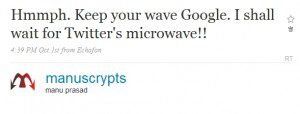
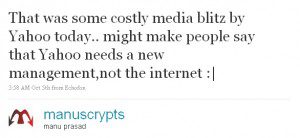
    Media Post reports that Yahoo’s latest campaign caused its perception among U.S. adults to fall steeply – apparently, YouGov’s BrandIndex, which tracks daily consumer perception of brands, found that Yahoo’s buzz score had tumbled from 35.4 on Sept. 22 to 25.5 as of Monday. Acknowledging India’s growing significance, the $100 million (global) “It’s Y!ou” campaign was rolled out in India too – y!ou couldn’t have missed the “disruptive” frontpage takeover of multiple mainstream dailies or the TVCs. My views on it were expressed in <140 characters
    Clipboard02

    Before you take me for some kind of Yahoo hater, I’m not. (Actually, I’m quite a fan of the Carol Bartz style of no-nonsense management – typified by the last few lines here) In fact my irritation with them stems from their relative disinterest towards a few tools that were original pathbreakers and that they’ve had for a long time – most importantly ‘delicious’, but I’ve written about that earlier, and some work on that service has happened since. So, anyway, Yahoo, this is not about you, you were simply a prolongued prologue, and a good example.

    A couple of weeks back, when writing about Wave, I’d wondered  “is brand equity an excuse/surrogate for thin value, and exist only in theory, or until the last good product?” This entire activity above somehow reminded me of that. Brand equity, and the lord knows there’s no shortage of definitions. (ignore the newspaper brand references)  So why did I think brand equity is now a surrogate/excuse for thin value?

    Every brand that enjoys good equity now must have provided ‘thick value’ at some point of time, to its audience. At some point though, did the ‘brand’ take over, and the focus become more on perception management, rather than as an aid to retaining/attracting customers. Is that the reason why brands in many industries cannot find a way past the disruption they’ve been facing – because they’ve been focused on creating brand equity basis communication and superficial value additions, and sticking way too close to the specifics, like competition, and not bothering about the generic fulfilment of a need?(classic example, newspapers and news delivery) Somewhere did brand and marketing communication start dominating the proceedings, at the cost of the basics – a product solving a need/a distribution that increases convenience/the factor that built the equity in the first place? And then did they shortchange consumers by putting a premium on the brand’s equity without delivering value? While trying to build the emotional connect and create a value perception beyond the commoditisation, did the means become the end?

    Take Yahoo for example. By an unfortunate coincidence, last week, GMail replaced Yahoo Mail as the most popular email service in India. I can imagine why. Like many others, I have multiple Gmail ids, and a Yahoo id too. While I open Yahoo because of a couple of e-groups, GMail is my primary communication centre. It has never been static, features and tools have been added to a point where I wonder how I worked without them. (try operating in basic HTML for a while) I checked Yahoo out again, with as fresh a perspective as i could, and didn’t find anything that could make me consider a shift. I still use Delicious a lot, and it still has a lot of equity (in my mind) going for it. Yahoo’s brand campaigns have nothing to do with it.

    Maybe the concept of brand equity had some merit when the audience didn’t talk to each other, but as WOM keeps getting bigger,  push brand communication is bound to become more meaningless. As consumption patterns change, needs change, distribution systems change, as real-time becomes the norm,  and exit barriers and costs for consumers come down, relying on a static and uni dimensional concept of brand equity is bound to be harmful. Also, with fragmenting media, fragmenting audiences, and an increasing importance for ‘my experience’, brand equity will be different things to different people at different times, and even the hazy setof objective measurements in vogue today, would be rendered ineffective. (Yes, it might have been the same before, but in an earlier era, consumers did not talk to each other, and it was easy to push the brand’s equity on to consumers). (Generalising, but) Take a look at the communication and taglines adopted by brands, their superficiality, the efforts that go into forcing the tagline’s emotion/value into the actual value provided, and thereby build/increase brand equity and you’ll see what I mean.
    Clipboard02

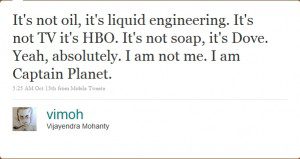
    Perhaps, product equity will be the only measure that matters, and brand equity will be earned and burned real time, as consumers share feedback and rely on their trusted sources for updates, and historic performances will decrease in significance. (when the Fail Whale comes out on Twitter, evangelists become bloodhounds, or whatever..you know what I mean) And so perhaps, from a brand perspective, its about time that meaningless communication took a back seat, and we went back to the basics of brand equity, that may mean redefining the roles and responsibilities of everyone associated with ‘brand’ as a function. Because if you’re good, they’ll talk about you, and if you’re bad, they’ll talk more about you 🙂

    But you know what, I had more fun when i thought about a parallel. Thought leaders. Replace ‘brand equity’ with ‘thought leaders’ (or personal brand equity) and tell me what you think. 🙂

    UPDATE: Yahoo hires a new agency, tells Ogilvy “It’s not Y!ou”.. Damn, that was fast!!

    UPDATE 2 Meanwhile, a homepage redesign gives them 9% more page views and 20% more time spent.

    until next time, equitable solutions..

    Bonus Reads:

    Braggarts take over the web

    Almost unrelated, but an excellent read – Jerry Yang’s Advice in Interesting Times (via @mukund)
  • Wavering

    My twitter stream over the last weekend and to a certain extent this week too, was dominated by Wave. People asking for invites, writing about their first impressions, cracking one liners and so on. The entire activity reminded me of how brand custodians try to create ‘virals’. From making ‘viral’ a part of the strategy, to announcing on the day of the release that they have ‘launched’ a viral, there are stories and stories. For me ‘Wave’ was a viral. Google has done this before with GMail. This time too, there was hardly any advertising. It was banking on the brand and product equity of Google, and the (potential) awesomeness of the product. It made me think on both fronts.

    Google’s brand identity has been dominated by search. For most people, it is their starting point on the web. But its not just that. From the iconic, simplistic, patented home page and the doodles it exhibits there, to its attempts to disrupt the real time conversation domain that is dominated by Facebook and Twitter with Wave, Google is many things. GMail, Orkut, Picasa, Blogger, YouTube, Maps, all operating on different domains, and brands in their own right. And they only make up one part of what Google is today. (link to an informative analysis of Google) Currently valued at $100 billion, and rising. Though wary of it, the brand has my respect, and for me, Google has been awesome.

    Awesomeness. Umair Haque had an extremely interesting post about awesomeness recently. He wrote that innovation is passe, that it is ‘what is commercially novel’, doesn’t create anything fundamentally new, and that awesomeness is the new innovation. He lists ethical production, insanely great stuff, love, and thick value as the four pillars of awesomeness. Arguable, right from a semantics/ new buzzword premise. But I tend to agree, especially when I see the stuff being passed around as innovation.

    Now, some of you might be aware of this, but for those who don’t, Google has a ten point corporate philosophy. An extremely interesting set of things, which you must take a look at.#10, I thought, was related to awesomeness. It goes “Great just isn’t good enough.” Google believes that great is just a starting point, and their “constant dissatisfaction with the way things are becomes the driving force behind everything we do.”

    They obviously felt that the entire domain of real time communication, search, sharing and collaborating could do with some disruption, that would explain Wave. And from the time I saw the video, I’ve thought that it would be a game changer, and wrote as much. But the feedback so far has been less than encouraging. From productivity killer to RSS, The sequel, it has been called quite a few things. The opinions are from guys who know what they’re talking about.From the little I have tried it out, I’ve to admit it can totally knock off productivity, but then again so can Twitter. Its less fun if there aren’t many around. Twitter in 2007, for me. Most are still learning, because it IS quite different. Seth Godin called Twitter a protocol (yes I keep saying that because its absolutely apt), I still figure that Wave has the potential that it showed in the video, the potential to create its own protocol. After all, there must be a reason why they call it a preview.

    But it did make me wonder about Google and awesomeness. Is Wave awesome, as opposed to an innovation? What if the idea is too advanced/difficult to provide ‘thick value’ now, does it still deserve to fail? Does that mean that sometimes innovation is better than awesomeness? How does ‘failure’ feature in the awesomeness manifesto? What does this do to the overall brand equity of Google? Or is brand equity an excuse/surrogate for thin value, and exist only in theory, or until the last good product?  But maybe Mitch is right when he says that we’re killing it before it begins. More after I play more with it.

    until next time, a wave new world

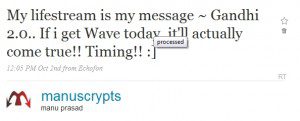
    PS: a few of my Wave tweets below 😉

    Clipboard02Clipboard03Clipboard04

  • Trust they’re connecting people

    I just realised that I totally missed this one – The Brand Equity Most Trusted Brands Survey, at least writing about it. Unforgivable, but let me try to redeem myself by attempting a post now. Bottomline, Colgate has been dislodged from the numero uno position by Nokia, no mean task, that, and it is a testament to the inevitability of this medium (not the brand)  reaching the top of the media chain in a future that’s closer than it appears now.

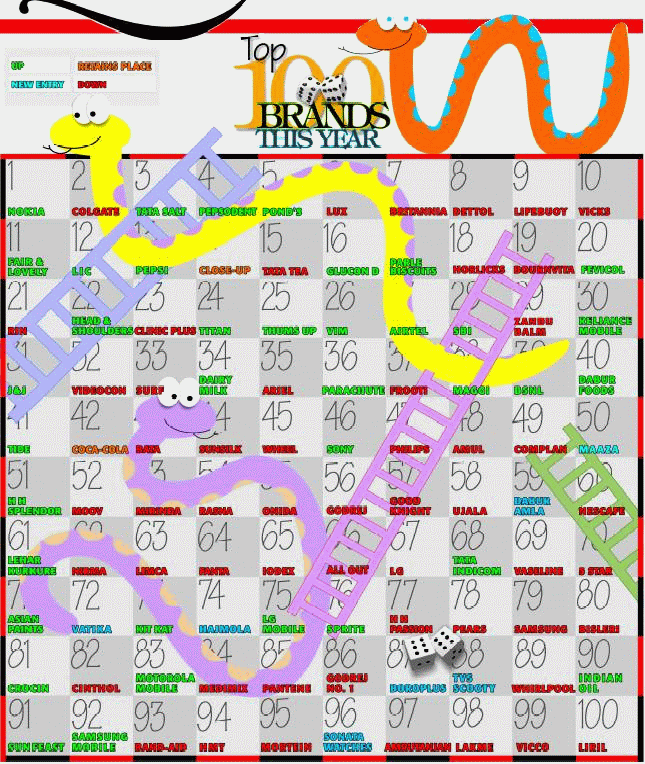
    Since I have been lax on the topic and enough has been debated on it, I did some epaper reading and have focused on a few things I thought would make an interesting read. For those who missed the entire top 100 list, here it is

    I think Nokia’s climb to the top has been mainly because unlike the poor toothpaste, its not a single product or even single service/utility (oh come on, it easily transcends  a pure play communication device, its also a camera, a music player and so on). This not only heps it give different USPs to different kinds of people, but also helps them in communication (to appeal to different kinds of audiences across SEC categories).

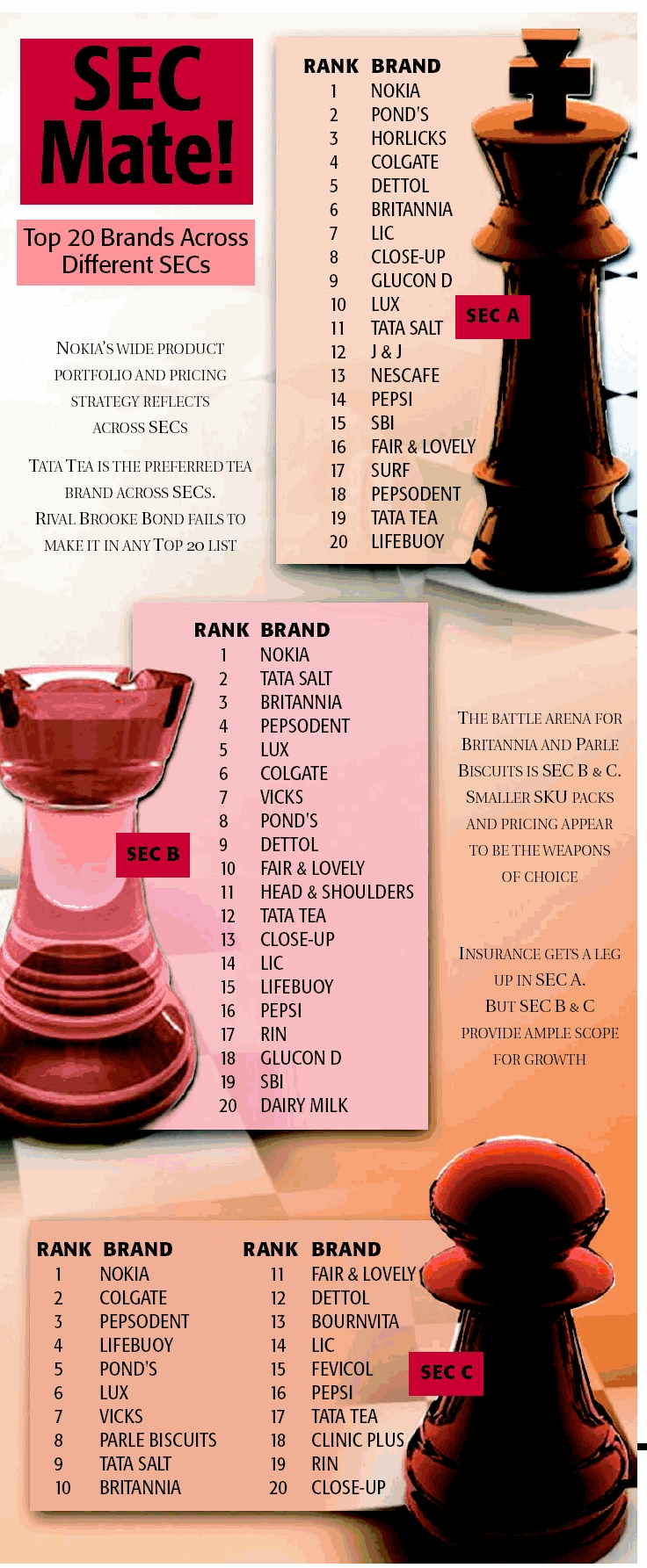
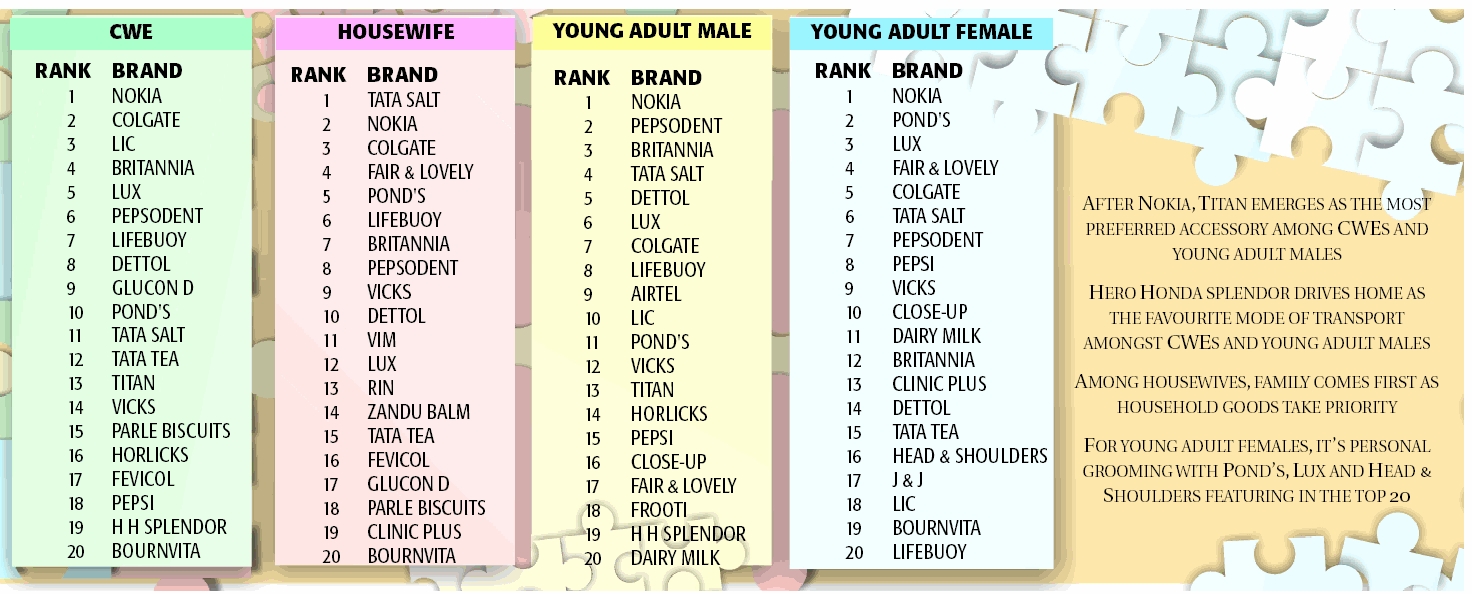
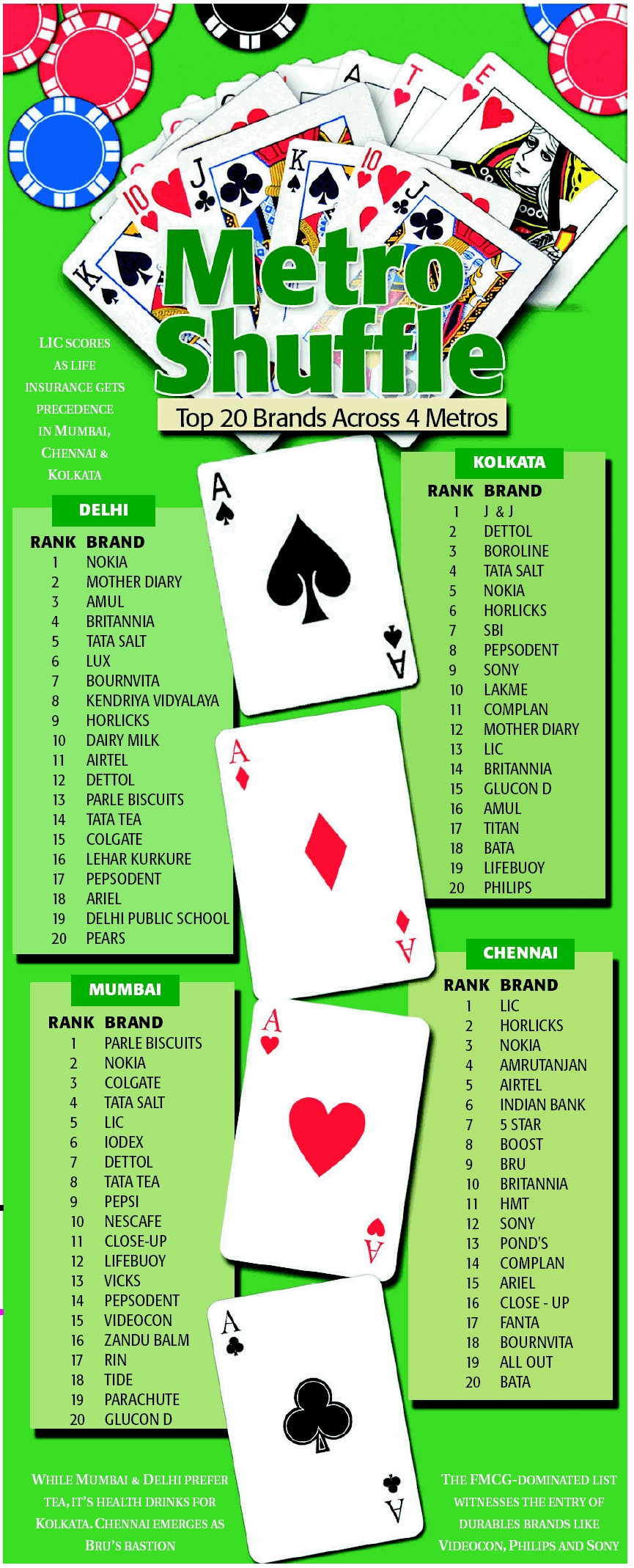
    Speaking of SECs, here are the results based on income, SEC and respondent type, and by metros

    Other than trivia like the fact that Fevicol doesnt have a mazboot jod with SEC A and the ones mentioned in the image itself, the lists in the SEC split seem to be just a reworking of the top 100 order. As far as the income split goes, quite understandingly the income class below Rs.2500 are in a lot of pain. What else explains Crocin’s jump from #81 in the top 100 list to #10 (okay, bad one 🙂 ) You know, these lists would make one think that this is one of the most hygienic and healthy countries in the world, look at the number of personal care and cleaning products and health+ food brands out there. Sigh, now if only trust would lead to usage 😉 In the ‘respondent type’ list, its amusing to see ‘Fair and Lovely’ at #17 in the young adult male list. 🙂

    Its interesting to see education occupying two spots in the Delhi list, the top three brands in Kolkata having something to do with the skin, Mumbai having a cleanliness fetish, and Chennai not having it (must be the water problems). Yes, I am glossing over, but a detailed look will take time 🙂

    Meanwhile, Brand Equity has also given the methodology in selecting brands. A couple of thoughts on this. Considering that we’re hunting for the most trusted brands, shouldn’t we also have a media category (all media, or is it a problem because of possible bias allegations?) When do things like retail chains (CCD, Big Bazaar, FoodWorld), familiar brands like say, Levis and gang, India Post, Indian Railways, IRCTC etc make an entry? And i know this won’t happen any time now, but will computer (hardware manufacturers as well as things like Windows/Linux and entities like rediff) make it into the top 100 list in at least 5 years?

    Meanwhile, I really don’t see anyone being able to challenge Nokia, unless simultaneously, a telecom brand (service) really becomes a pan india player (is already there) with excellent service and other mobile manufacturers give Nokia some really tough competition. The other possibility is when public utilities like power, water supply etc start having private players (not in an infrastructure capacity, but as a branded utility). Whatcha think?

    until next time, in brands we trust

    All images are courtesy Brand Equity, the Economic Times dated 11th June 08

    Update: Guess who makes it to the top in the US.