
Tag: brain

  • An entropic guide to history

    In the last year, I have read four ( + one) books that I thought summed up the why-what-how of humanity’s evolution very well. Respectively, The Case Against Reality: How Evolution Hid the Truth from Our Eyes (Donald D. Hoffman), and Being You: A New Science of Consciousness (Anil Seth) (my favourite this year), The Master and His Emissary: The Divided Brain and the Making of the Western World (Ian McGilchrist) (first among my favourites last year), The WEIRDest People in the World: How the West Became Psychologically Peculiar and Particularly Prosperous (Joseph Henrich) (don’t worry, it is inclusive enough in this context), and finally the + one The Cosmic Game: Explorations of the Frontiers of Human Consciousness (Stanislav Grof) because while it is fringe science and despite the qualitative proof, I wasn’t convinced on the existence of divinity, I think our experiences in our non-ordinary states of consciousness has a connection with the ‘why’.

    The theme that unites them is entropy and ‘order’. Haha, school stuff, I know. So here’s a quick refresher. Simplistically, entropy is the measure of the degree of disorder in a system. The second law of thermodynamics states that in any isolated system, the total entropy tends to increase or remain constant over time. Our universe is an isolated system because, as far as we know, there is nothing else other than our universe; there is no external environment that our universe can exchange matter or energy with.

    Let’s begin with Hoffman. He points out how natural selection is the only process we know that ‘fights’ entropy. It pushes organisms to higher degrees of functional order to try and delay entropy if not offset it completely. Across a vast amount of time, it has tweaked living systems to not just be fit for survival, but also reduce disorder. But there is a trade-off. We don’t see reality as it is. He posits that “some form of reality may exist, but may be completely different from the reality our brains model and perceive.Maya, anyone? He compares this to icons on our screens that are a way of interacting with the system but don’t look/feel/behave like the system underneath. They are a user interface that spares you tiresome details on software, transistors, magnetic fields, logic gates etc. And everything we perceive around us through our sensory organs and mind is just like that – icons that help us navigate. Our perceptions don’t even have the right language to understand/describe reality. Think of it like the UI or formats we have evolved for navigating the world, and there are different ‘languages’ for different species.

    The non-ordinary experiences – courtesy psychedelics etc – that Grof writes about , I suspect, opens up our brain to a different language and thus a different interpretation of the world. A perception of reality in a different language.

    Anil Seth also touches upon how our brain is wired for survival and the functional order that natural selection is driving towards. Reality is an interpretation, and the entire process is not optimised for accuracy, it is designed for utility. ‘We perceive the world not as it is, but as it is useful to us.’ A mechanism of making it seem real so we respond to it. Additionally, perception is a ‘controlled hallucination’ (phrase by Chris Frith), an active construction as opposed to a passive registering of an external reality. The brain constantly makes predictions about the causes of its sensory signals through a Bayesian process in which the sensory signals (also) continuously rein in the brain’s various hypotheses. Perception is thus a continual process of prediction error minimisation (reducing the difference between what the brain expects and what the signal provides) because lesser error, more order, lesser entropy.

    McGilchrist ‘s work goes deeper into the functioning. The right is present and pays attention to the world outside, the left re-presents. The differences between them are less about what they do and more about how they approach something. A fascinating perspective on how the two halves of our brain have quite different worldviews – the “left hemisphere is detail-oriented, prefers mechanisms to living things, and is inclined to self-interest, where the right hemisphere has greater breadth, flexibility, and generosity.” Relatively, mechanisms offer more control (order) and predictability than living things. Thanks to its ability to break things down into simple answers and better articulation, the left hemisphere has been able to grab control at an accelerated pace since the Industrial Revolution, and create a world where it prizes precisely these capabilities in individuals, institutions, and culture at large.

    And finally, Henrich, overlapping with McGilchrist, shows how cultural learning adaptively rewires our brains and biology to calibrate them for navigating our culturally constructed worlds. “Unlike other animals, we have evolved genetically to rely on learning from others to acquire an immense amount of behavioural information, including motivations, heuristics, and beliefs that are central to our survival and reproduction.” From kinship altruism and pair bonding to our own motor patterns to projectile technology and food processing to grammar and social norms. When you look around, the dominant narrative is the WEIRD (Western, Educated, Industrialised, Rich, Democratic) one. Broadly, individualism and personal motivation (self focus, guilt over shame, dispositional thinking – based on intent not context, low conformity, self regulation and control and patience, time thrift, value of labour, desire for control and choice), impersonal pro-sociality (impartial principles, trust, honesty and cooperation with strangers and impersonal institutions, emphasising mental states in moral judgment, not revengeful but willing to punish third parties for not sticking to principles, reduced in-group favouritism, free will, belief in moral truths like physics principles, linear time), and perceptual and cognitive abilities and biases (analytical over holistic thinking, attention to foreground and not surroundings, endowment effect, overconfidence on own abilities) are all features of this, and the correlation with higher functional order is evident.

    If I look around the metro crowd in India and across the world, the optimisation for WEIRD is rising. As I wrote in Kaumpromise, we can still see an alternate way in patches. It’s interesting how with the rise of AI, we are at once creating even more order in many ways but at the same time ceding control to blackboxes. That requires some thought, and another post!

    P.S. There is a nice time dimension to this as well, brought out in monochronic and polychronic cultures. Read more here.
  • Accustomed Reality

    Shared understanding is something I have been interested in for a while and have written about in some of my earlier posts – Default in our stars, An IG Story* – among the most recent ones. While the posts were primarily on the individual context, my concern has also been at the societal and species levels because the ability to create and act on a shared understanding is what got us this far. Variety, serendipity, and the opportunity to debate, agree, disagree, identify biases, agree to disagree but hopefully in a civilised manner.

    (more…)
  • Reflections on my OS – Part 1

    Alternately: Internal Pattern Recognition: IPR? 😉

    If there’s one thing that Stoicism has taught me, it is that the good fight is not with the world, but yourself. Many of the books I read and observations I try to make on family are to get a better understanding of the ‘why’ behind my thinking. Among the many things that “Behave” gave me insights on was this, and an explanation for how siblings can be very different in terms of mindset and behaviour, despite inheriting not just ‘nature’ but sharing ‘nurture’ too.

    Another dogma was that brains are pretty much wired up early in childhood – after all, by age two, brains are already about 85% of adult volume, but the development trajectory is much slower than that. …the final brain region to fully mature (in terms of synapse number, myelination, and metabolism) is the frontal cortex, not going fully online until the mid twenties.

    …the brain is heavily influenced by genes. But from birth through young adulthood, the part of the human brain that most defines us (frontal cortex) is less a product of the genes with which you started life than of what life has thrown at you. Because it is the last to mature, by definition the frontal cortex is the brain region least constrained by genes and most sculpted by experience. This must be so, to be the supremely complex social species that we are. Ironically, it seems that the genetic program of human brain development has evolved to, as much as possible, free the frontal cortex from genes.” 

    (more…)
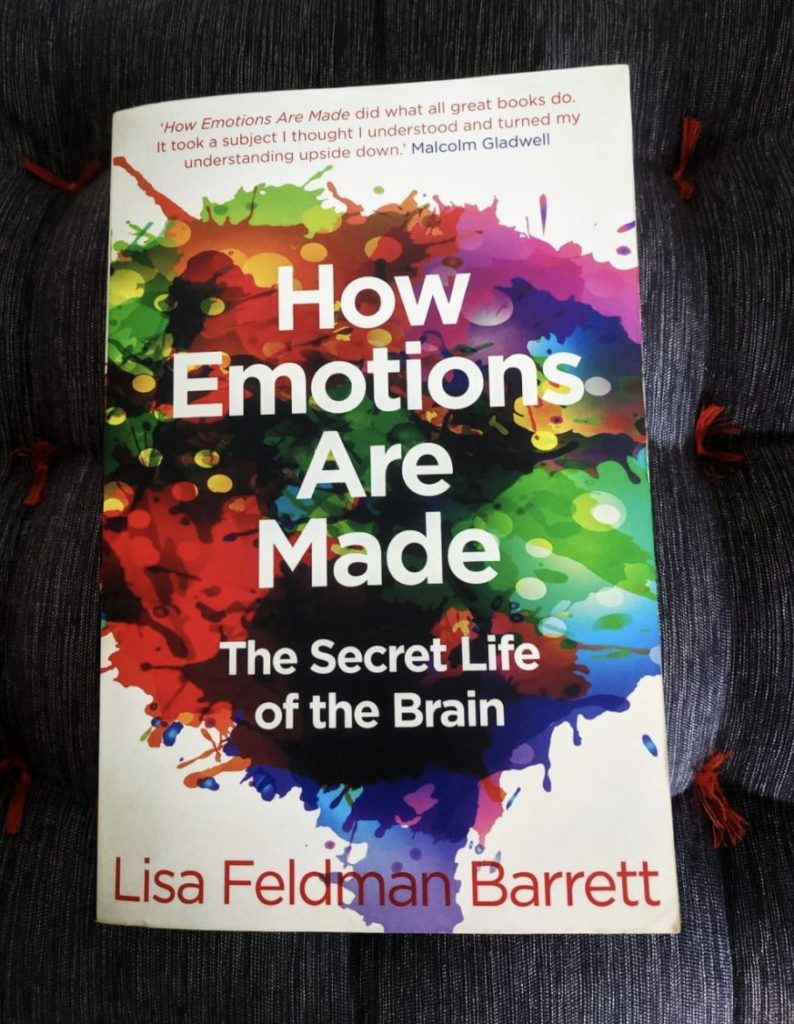
  • How Emotions Are Made

    Lisa Feldman Barrett

    Just when I thought I was getting some stability (in my thinking) on the free will vs determinism debate, here comes fresh food for thought. As per ‘How Emotions Are Made’, while the combination of genetic and environmental factors do determine our behaviour, free will has a definite play.

    The core theme of the book is a constructionist theory of how emotions are made, as opposed to a classic theory. The classical view assumes that each emotion has a unique ‘fingerprint’, as against the opposing view that variation is the norm. This has implications not just on how we physically manifest our emotions but on our understanding of how the nervous system operates as well. And finally, the classical view believes that emotions are inborn and universal. But the alternate view is that emotions are formed based on shared concepts, influenced by social reality and culture.

    The view of the brain as a tiered system (survival, emotion, cognition) is one of the first myths that the author breaks. Further, as opposed to being the result of a stimulus-response mechanism, emotions are a result of the brain simulating and predicting, based on a bunch of factors. What we call emotions – anger, fear, happiness etc- are concepts that get created and honed in the brain. Concepts, goals, words all help the brain frame any new stimulus it receives and then predict. By reframing concepts and looking at them more objectively, we can reshape what emotions are surfaced, and thus exercise free will.

    Towards the middle of the book, the author sets up the answer for “are emotions real” with the classic philosophical question of “If a tree falls in a forest and no one is around to hear it, does it make a sound?”. The answer is that both fall under the “perceiver-dependent” category. Emotions are thus, a social reality and become real because of collective intentionality and our ability to communicate using words.

    This understanding of emotions, and how much we control/are in control has implications on a lot of things ranging from our daily behaviour to the way the judiciary system works and how we deliver justice.

    ‘How Emotions Are Made’ is refreshing because of the alternate perspectives, all of which are backed by science. The author makes it a point to call out hypotheses where it’s not. The language is technical only when needed and explanations are lucid. In all, it is a fascinating book that has made me rethink a lot of what I thought I knew about myself and the world. Not an easy read, but absolutely worth the time. And that’s why it made it to my 2019 favourites.

  • A mind beyond auto pilot

    The world we create for ourselves, as I wrote a fortnight back, is a filtered version of all the stimuli we encounter. As we grow older, our stream of consciousness gets more populated because of our experiences and we automatically try to find patterns. That’s the brain’s basic learning process which helps us to navigate stimuli. The world though, does become complex, the navigation more difficult, and that’s probably how we slip into auto pilot.

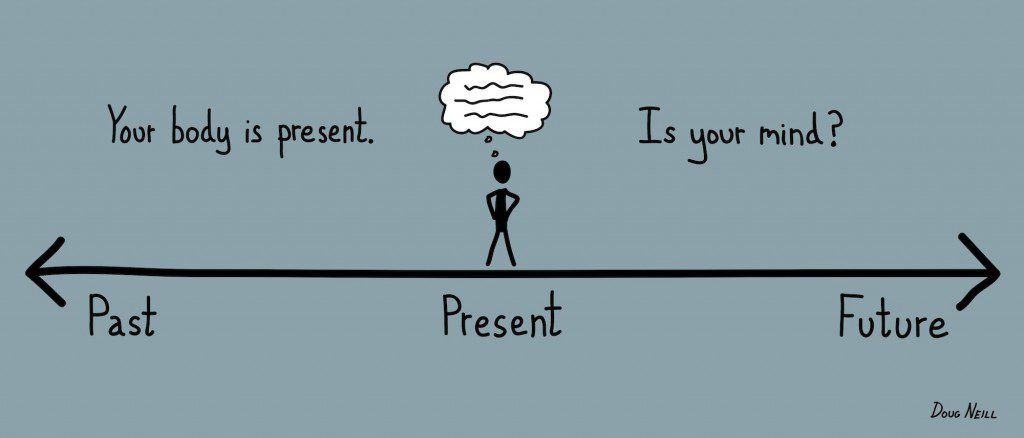
    We think we’re conscious of the things we do, and we are, at a superficial level, but are we really mindful? The simple experiment to do, and I think I’ve written this earlier, is to re-imagine the last hour of your life. How many actions you can remember is probably an indicator of mindfulness. There’s no question that the auto pilot is useful, but I doubt we’re in actual control of the takeover, and that’s where the problem is. Our decisions and our actions become mechanical, and even when they’re not, they’re dictated by filters designed by the auto pilot.

    mindfulness2

    (via)

    But I think there is hope. One of the best 2014 trend reports I’ve seen – by Zambezi – has ‘Mindful Society’ as its first trend. While that is more a take on digital devices and our time spent on them, the JWT trend forecast has ‘Mindful Living’ as their final trend, and talks about a growing interest to experience everything in a more present, conscious way. I also think that we might have unwittingly figured out a way to start out on this. One of the hottest trends this year is the quantified self – self knowledge through numbers – it encourages people to monitor all aspects of their physical, emotional, cognitive, social, domestic and working lives. (via)

    At this point, it is more focused on the physiological aspects, and there will most likely be a deluge of devices, services and allied products that would be an end in itself. However, it is also possible that we will truly understand our body, as numbers show the impact of our behaviour and consumption, and as a result, we’ll become more mindful in our actions. And maybe, just maybe, once we’re done with that, we’ll begin trying to do the same for our mind, and the decisions it makes. It’s difficult to imagine how that will work out, I agree, but hey, even five years back, did you think something you wear on your wrist could give you analytics on your sleep patterns?

    until next time, a qualified self 🙂