Tag: blogging

  • Home, virtually

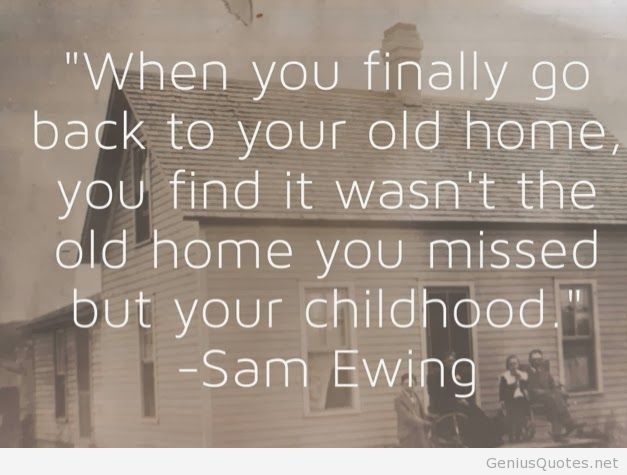
    The idea of home has made its presence felt many times on this blog – personal perspectives, as well as its evolution based on the institutional realignment line of thought. In fact, this is one of those topics  which I continue to have many thought wrestling matches on. While home begins as a physical place, as one steps out of it and moves out into the larger world, one realises that it becomes as much a place that is created in the mind.

    Clipboard01

    To quote Pico Iyer, “For more and more of us, home has really less to do with a piece of soil than, you could say, with a piece of soul.” The ‘piece of soul’ changes with circumstances and choices – from childhood, landmarks, experiences and so on to a different set of people and places, and a different sense of purpose, for instance. All of this continue to change over time, until probably, at a certain point, you realise the set of places, people and props you’d want around in your final years. But let’s not get morbid ahead of time! 🙂

    To quote Pico again, “Home is not just the place where you happen to be born. It’s the place where you become yourself.” And sometimes it can be both. It also explains why I did not recognise a future home when I saw one – 11 years back, on a screen not very different from this one. That’s what this post is about – to acknowledge the day it all began – 11 years ago. It is also a hat tip to Rediff, where I began my blogging journey (when I spoke at BlogAdda recently, most people didn’t know Rediff used to have blogs) and a nod of thanks to my 25 year old self who had no idea what he was getting into and wrote some horrible verse to start it all off.

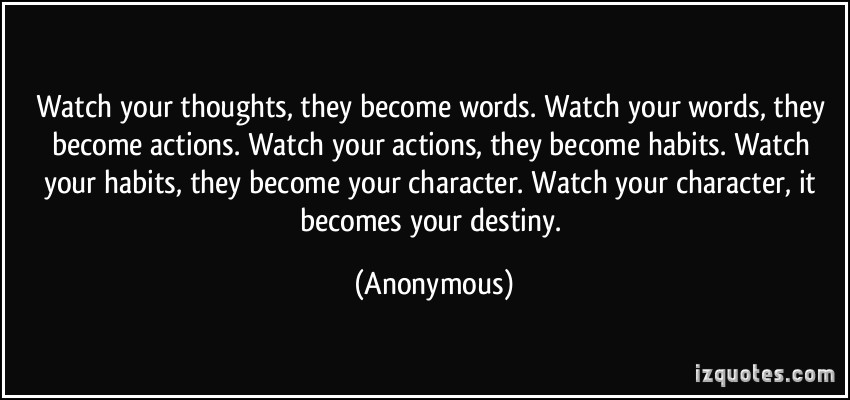
    A place that, in a click, helps me travel back in time and shows me people, perspectives and pages, some of whom/which I have outgrown, but have influenced what I am today. Experiences that have shaped the course of my life. A journal of the past which continues to help me shape my narrative – thoughts, to words, to actions, and beyond. A place where I continue to become myself.

    thoughts

    A piece of my soul that is my consciousness and on many occasions, even my conscience. A homepage that I consider home. 🙂

    until next time, thanks for reading!

  • @ #WIN14

    BlogAdda and I go a long way back, practically to around the time they were born, and when I was asked to be a speaker at #WIN14, there really was no question of not going. The icing on the cake was being a part of this excellent list of speakers!

    My favourite talk of the day was delivered by one Kavi Arasu, who, first virtually and then really, has become a very good friend. As I tweeted

    Meanwhile, I was part of a session whose subject was ‘Influence of Blogging’ and my fellow speakers were Lakshmipathy Bhat and Anaggh! The areas I tried to cover in 15 minutes were the changing nature of influence, its effect on brands, how blogs can help in that context and how bloggers can create a market for themselves.  (does that explain the breathlessness? 😀 ) Do take a look and let me know your feedback.

    Shekhar Kapur made his presence felt in the second half by being his usual articulate self. His analogy of crests and troughs, and tsunamis, to explain media cycles, time, and social was just fantastic. He had the audience spellbound, and deservedly so.

    It was wonderful to meet people,  some of whom I knew online, but had never met – Anaggh, Maneesh, Kalyan, Ankita, Rakesh, and others whom I got acquainted with at the event   – Ravi Subramaniam, Ashwin Mushran, (what a fantastic compering role he played!) Anuradha Goyal, Amit Agarwal, Sampath Iyengar and Anil P.

    A big thanks to BlogAdda for putting together a great event (photos) and having me over, and to Courtyard by Marriott, who were great hosts!

  • Social @ Myntra – Part 1

    [The intent in writing this is manifold – primarily my obsession for chronicling, and it being my way of expressing gratitude. But since this might be useful to other social practitioners, I have uncharacteristically added text highlighting and such, and also sought to bring some semblance of order as opposed to the regular free flowing text 🙂]

    Almost exactly a couple of years back – Autumn Winter 2011 – the blog had an update on a new assignment. I can only vaguely remember writing the post, but what I have not forgotten is the excitement at the opportunity – to experiment with concepts, ideas and hypotheses. I have been blessed with great bosses, they have wanted to hire me again. So the first hat tip is to S, not just for believing I could chart a social agenda for Myntra, but for using his auctoritas in the organisation to ensure I got a runway good enough to attempt a flight. The second hat tip is to Mukesh, Myntra’s founder-CEO, who nearly stumped me with his first question as I was about to begin my huge social roadmap presentation (towards the end of Oct 2011) – why does Myntra need ‘social’? It was a very fundamental question – it not only underlined what I had in mind, but also served as a subconscious beacon during my stint.

    We began with stating objectives. The idea was not to create a silo out of social, but to tie its objectives and strategy to various existing domains, and therefore business outcomes. This would ensure that social could create a strategic business advantage in the long run, and also meant that we could use domain specific metrics to track the progress of social investments.

    The best advice I got, again from Mukesh after the first presentation, was to prioritise, because there was so much we could do. Thus began the planning – focus areas, time frames, strategy, resources, measurable outcomes. Our focus areas were primarily four – Customer Connect, Brand, Product, and Sales, and everything we did had a link with business metrics in these.

    1. Customer Connect: Before anything else, this domain had to be addressed. The rationale was simple – until we resolved the issues that customers were sharing, there could be no conversation on any other topic. We began with a shared Google doc, taking complaints from Facebook and Twitter, getting them resolved internally, and then communicating back on the relevant channel. The objective of solving customer issues quickly could easily be measured by standard Customer Satisfaction indices around the number of issues resolved and average turn-around-time. By April 2012, the excel sheet process became crazy enough for us to opt for a more robust approach. After evaluating social CRM options at varying levels of complexity, we began using Get Satisfaction in April 2011, one of the first e-commerce companies in India to do so. It allowed us to seamlessly integrate with Facebook, and later Twitter, via Hootsuite. The metrics began looking much better since then!

    2. Brand: In the absence of consistent brand campaigns, social automatically becomes one of the few media platforms available to create a perception about the brand. There are many aspects to this, and among all focus areas, this is the domain which is evolving most rapidly, and in which there’s always something to do.

    Listening: Unlike broadcast media, social platforms have conversations – about the brand, to the brand. The best example in the Myntra context is the reaction to our first Lisa Haydon ad. (details) Before ORM became a buzzword and a zillion tools were spawned, the choice was simple for frugal social folks – Hootsuite vs Tweetdeck. We chose the former, and continue to use it even now. Though we did try out many tools, we couldn’t really reconcile the amount we would have to pay with the value we could derive from them. Finally, Unmetric has been brought on board because they manage to give a view of the brand vis-a-vis competition, and also actionable insights.

    Branded Content: I had been a blogger for 8 years when I joined Myntra, and have always considered it the original social platform. Style Mynt was my first major project at Myntra. (details) Born on December 1st 2011, with no further investments in manpower, (because there were people in various departments who were interested in, and could write well about fashion)  and costs that only included theme and hosting charges. It not only gave Myntra a platform to express fashion thought leadership and style advice with utilitarian value, but also provided content for social networks and served as a good medium to build relationships with partner brands. (eg. with behind-the-scenes brand focus posts) . End-to-end project management was fun, especially content planning and tweaking themes, and I was even de facto editor until April, when we saw that this kind of content creation had tremendous potential, and hired a full time editor. Later, the activities on Style Mynt also resulted in video content. On Twitter, we created lists and constantly curated them – one of the applications is the Myntra #LookGood Daily. The objective in all these efforts is to create a strong association between Myntra and fashion/style. There are many ways to measure this – blog subscriptions and visits generated to Myntra from the blog, questions in the brand track for evolved brands, and for others, the share of voice in relevant keywords which can be tracked using monitoring tools. Though not the primary objective, Style Mynt has been a contributor to revenue as well, and Thinglink needs to be mentioned in this context. (details)

    Social Media: Or rather, social as media. In 2011, Facebook and Twitter were the only platforms that were considered serious enough to be active on. We tracked platform metrics (Likes, PTAT, Followers) because they were surrogates that gave us an idea of the reach of our content and even brand salience to an extent, all the while conscious that they were a means, not an end. The content strategy on both were in a constant state of evolution, until it found its current version which aims to balance infotainment, (with creatives made specially for social) content marketing and selling pitches. Facebook Insights, though by no means perfect, gave us indicators of the efficacy of the content we were sharing. ‘Social as media’ is also where the much vilified hashtags on Twitter can play a part. All our hashtags have had a clear objective – to create some buzz around a tactical or strategic initiative. (examples) Their reach can be measured using free/paid tools. Also to be mentioned in this context – we are connected to over 60 of our partner brands on Twitter.

    We tried out an interesting Foursquare experiment as well, to emphasise the fashion destination positioning – leaving tips at retail outlets of partner brands on seasonal trends. Being a fashion brand, we got active on Pinterest and Instagram early too. We’re probably the first Indian e-com/fashion brand to have season collection videos on Instagram. We were present on Google+ because it had a rub off on SEO as well, but in addition, there is much potential for creating excellent branded content using Hangouts. (and its On Air version) On YouTube, we began with content curation until we got our own videos. But even given that, at this stage, I’d have to say that it is an under exploited channel.

    The value for the original two can now be measured in terms of reach metrics (brand) as well as revenue. The others are in a nascent stage, and will evolve rapidly, I’m sure. Earlier this year, Franchisee India gave us an award for the Best Use of Social Media & Communication Strategy. In terms of ‘vanity metrics’, when I started out, we had 5.8L Likes and 984 followers, and were non existent on the other platforms! Now, we have over 1.5m Likes, 13000+ followers on Twitter, more than a 1000 followers on Pinterest, 500+ on Instagram, 400+ on Foursquare, 600+ subscribers on YouTube and 3000+ on Google+.

    Corporate Brand: Style Mynt had taken off very well, and blogs were in tremendous favour within Myntra. 🙂 I pitched that a corporate blog would allow us to showcase values, culture, and build trust, within the organisation and among consumers. Myntra’s corporate blog is now a year old and continues to do exactly what I wrote it aimed to do in its About page.  The benchmark continues to be the Cleartrip blog, but this one is a labour of love at this point. I’m confident though, that having a place to air the brand’s side of the story can only do good in the long run. I’d also recommend the use of Quora – you cannot be present as the brand, but if you can get 2-3 management team members to be active, it could do a lot for you.

    Blogger Outreach: Fashion is a domain of specialisation for many bloggers, and we began associating with them pretty early. From guest posts to sponsored contest giveaways in the initial days to a more organised and rigorous blogger outreach program for reviews more recently, we have tried a lot of stuff. They’re invited to our events, their posts get promoted via twitter, we have a board exclusively with their posts on Pinterest, and they even get #fridayfollow tweets from us. We have built relationships and there are plans in the pipeline that for more concrete ways to take this further – providing value to both parties. These efforts help in associating Myntra with fashion, catering to the bloggers’ niche audiences, and generating positive buzz about Myntra.

    This has proven to be longer than I expected! Therefore, to be continued..

  • Personal Brand

    ’10ways to unlock your personal brand’ would guarantee hits, but the problem is that I can’t bring myself to write it. That’s what the post is about.

    The title is because the post is related to me, and the raison d’être of the blog. To give you a quick update, I have been considering various employment options in the last couple of months – not just ‘the next job’, but even at a ‘consultancy vs job’ level. Given the options, I believe I’ll be able to put that to rest next week, at least for the medium term. Since the blog’s existence played its part in providing me these options, I thought it deserved a ‘take stock’ post.

    I had always intended this to be a resting space for my ideas and perspectives. But I have realised that the blog is at best, a strategy, and not an objective. The objective is to tell the world that I have perspectives on the areas I specialise in – brand and social. Notwithstanding my interest in these areas, it has been driven a lot by the same blogging discipline that has kept the personal blog alive for more than 8 years now.

    However, the autopilot discipline, in cahoots with my general nature, has kept me writing more for myself than an audience, which completely goes against the objective. It not only affects the content generated, but the brand/communication strategy as well. I have followed a ‘build and they will come if they are interested’ approach, something that I advise brands and publishers not to do in an era of abundance. Also, I rarely publicise posts beyond a single tweet/ LinkedIn status, and refrain from baiting. (brand or individual) In fact, I very reluctantly started sharing my own posts on GReader only a few weeks back. Bad strategy in the era of aggressive personal brands.

    This thought had been gnawing at me for a while, but hit me when the afaqs guest post happened, and the reactions started coming in. This is a good time to mention that left to myself, the article wouldn’t have happened. It took consistent ‘do it’ pushes from the ever kind and wise Vijay Sankaran for the article to see the light of day. It took just a little more time than the average post to be written, but the amount of people who sat up and took notice was many multiples more than anything this blog had seen. It has also led me to the question of identity and a single web location (unifying the blogs), but that’s for later.

    Considering that time is going to be my most valuable resource going forward, I will need to prioritise.  I experimented with tumblr and paper.li to see if i could produce more content in lesser time (to be used here) and leave ‘heavier’ writing for platforms with more reach. But I realised I would just be adding to the noise, and not being original at all. I like what I do here, and won’t stop. What I might have to do is skip a week once in a while so that I can also meet the objectives I had initially set for myself. Interestingly, the immediate trigger for this post was that while I was writing the original post for this week, i realised it could make a decent article elsewhere. 🙂

    In case you have reached here, I have a question. If you could change something about the posts here, what would it be? Shorter? Better scope for debate? More personal/topical examples? Let me know.

    until next time, happy I-Day 🙂

  • The clique friendly web

    In spite of the last post, I’m a bit ambivalent about Vir Sanghvi’s column.

    On one hand, I am in complete agreement with the rebuttals that I have read – Lekhni, Amit, Rohit. Rational and well articulated.

    And yet, over the years, that’s almost 7 of them, I can confidently say that blogger cliques have always been around. They may not have been formed with that intention, but over a time frame, many have developed that way, and this is a phenomenon I see on twitter too, where ‘followers’ tends to be taken literally. Will I name any? No, simply because they are cliques, and these days, cliques to mobs is a single click conversion. Heh.

    Simplistically put, many news channels and newspapers started out as a means of expression. Those who produced good content realised that many were paying attention to what they had to say. They looked around and noticed that there were others of their kind too. Mutual acknowledgment was a bit difficult because of business considerations, but they still stuck together, broadly, in terms of stances towards issues. The adoption of the medium rose, bringing new audiences. Somewhere, the quality of content became iffy. Sometimes because it had become a business, and sometimes because the content creators lost objectivity and started dictating norms, because they believed their audience was THE only audience that mattered. Of course they had measurement tools. Heh. (Just a small detour to say that even media planners trash the TAM and IRS/NRS methodology, yes, go on, take a poll)

    And then the web happened, and became a force to be reckoned with. It brought with it, blogs, which took less than 5 minutes to create. Some of the creators spent exactly that much of time. But others stuck on. Time and effort brought them recognition, and even some fame. They looked around, saw others of their kind. There were hardly any business consideration, linking to each other became the norm. The audience was being built all this while, and unacknowledged, a herd mentality too. Personal branding crept in. In many cases, the quality of content might have dropped with time – rehashed content using previously successful templates, link-baits, these are just online manifestations of things we see in newspapers and television. But though the posts were not as funny as they used to be or not well thought out, the audience stuck on, it was after all, a cool community to be in. There’s nothing wrong with it, its human nature to seek out kindred souls. The unfortunate part is the increasing intolerance for contra-views among many bloggers. You can see enough comment wars if you look around. At some point, perspectives became dogmas.

    And then came twitter, and microbloggers. It became all the more easier – from the simple RT to #followfriday and lists, there are multiple tools available, to build audiences, and cliques. And as I’ve written before, we on Twitter are famous for mobs. 🙂

    So,  my point is Mr. Sanghvi, relax. We’ve seen it all before, its only the medium that has changed. The people remain. This too shall give way to something else. If all goes according to the way it has before, in a few years, you can chuckle over post like yours by some blogger, who thinks someone in what is then the new media has been judgmental to a senior blogger. Heh.

    Meanwhile, the good part is, the web makes content production and distribution very easy, so you can ignore people if you personally think they’ve ‘lost it’. You will always find a contra-voice, it might be brow beaten sometimes, but it exists.

    until next time, sanguine 😉