• Gem in the Lotus

    Abraham Eraly

    History is not usually kind on its readers, and changing that is probably the biggest advantage this book has to offer. The author makes history accessible through a largely simple narrative and writing style. While he has taught history, I don’t think he is a historian. Thus it isn’t based on what one might call ‘original research’ but more an aggregation of sources. Indeed, the book cites a large number of sources for the information it gives.

    The ‘seeding’ begins long before humans arrived on the scene, when plate tectonics created the land mass that is now called the Indian subcontinent. The geological results – the Himalayas that act as a barrier, the fertility of the land etc – have had huge implications on how the civilisation in this part of the world has evolved.

    The book moves on to the Indus Valley civilisation, the influx of the Aryans and the Rig Vedic times, the later Vedic times, and in the process, touching upon quite a few popular misconceptions. This entire shift is obviously significant from a civilisational and cultural point of view, but it is also interesting to see the theatre of action shift from the Indus to the Ganga. The societal and cultural milieu is also explained well, using the texts of the time – the Vedas and Upanishads. (more…)

  • Oota

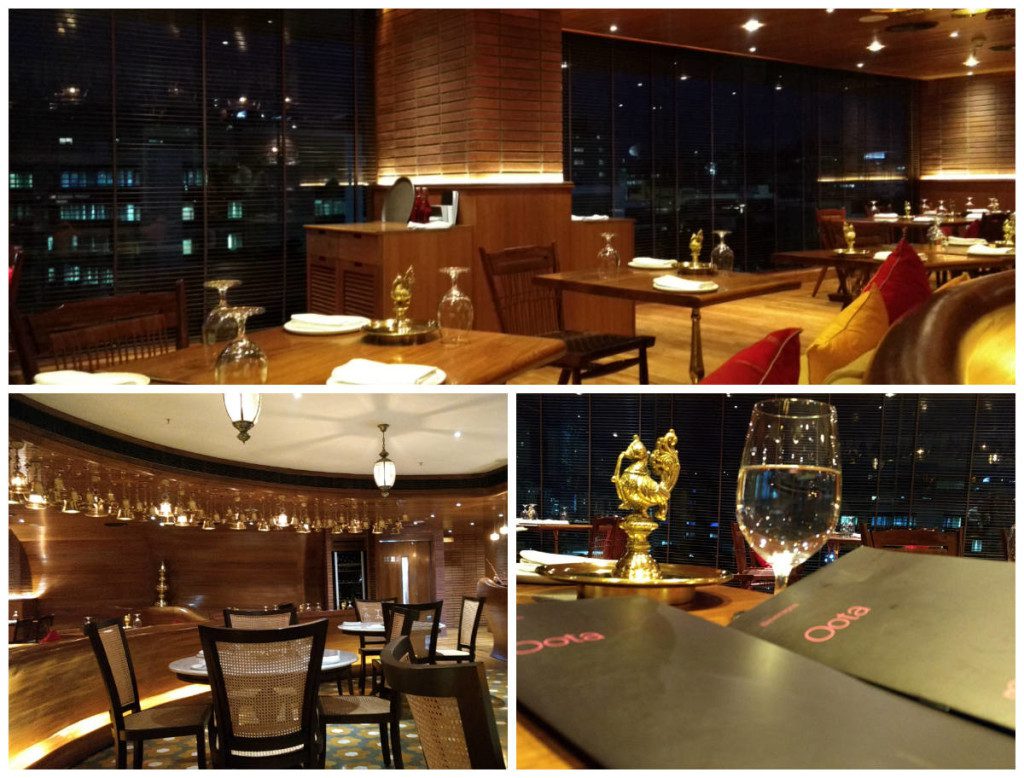
    That local food in a rustic setting thought? Kill it. Oota is in the same building as Windmills Craftworks (map) and run by the same folks, so while the cuisine is definitely what the name suggests – Karnataka – the setting is absolutely fine dining. The clincher is when they explain the non existence of cutlery with “should be eaten with hand for the complete experience” and let you know that if you do feel uncomfortable with that, they could get you cutlery. In fact, I did see a person at a table nearby wrestling with a Maddur Vade armed with a fork. Sigh.

    The ambiance is absolutely classy, with lots of rich wood finish, bright cushions, show lamps hanging from the ceiling interspersed with actual lights, and an annapakshi vessel on the table.

    collage 1 (more…)

  • Home Outgrown

    On our way to the airport, for what would be one of our shortest trips to Kerala, I told D that I didn’t see myself making this journey a decade from now. At least not framed in the way we do it these days – a trip home. I was wrong – it happened way sooner than a decade.

    It wasn’t a comment made lightly – after all, to borrow a phrase, I was referring to a city which had all the places that made up a couple of decades of my life.

    What does one go home for? The obvious answer is easy – to spend time with people who matter in one’s life. To note – even that changes during one’s lifetime. But if I have to dig a bit deeper, Rana Dasgupta’s words make sense – when one becomes homesick, it is not a place that one seeks, but oneself, back in time. And when one does that, the props matter. The places, the faces, all reminders of different phases. When they no longer exist, the place is no longer a cure for homesickness. (more…)

  • Throwing Rocks at the Google Bus

    Douglas Rushkoff

    At the beginning of the third chapter, the author asks us to imagine a world where there is only one operating system. In such a world, it would be difficult to imagine another OS, or even think of the OS as something that need not be the way it is. That, in a nutshell, is what money has become. “Central currency is the transactional tool that has overwhelmed business itself; money is the tail wagging the economy’s dog” because “money makes money faster than people or companies can create value”. The proof of it is in the abstractions that have come up in history – the stock exchange was an abstraction of commerce, and the derivatives market its further abstraction. The author notes how fitting it was when in 2013, a derivatives exchange had enough ‘value’ to buy the NYSE, its own creator of sorts!

    My introductory paragraph, and the title itself might give you the idea that this is some kind of a call for a bloody revolution against capitalism and technology. But it isn’t. The title is based on an incident in 2013 and in fact, the author notes how Google, using its buses, is actually doing its bit to protect the environment. He proceeds to ask “since when has doing the right thing become the wrong thing?” The buses, he argues, are soft targets, and the real culprit is a program that promotes growth above all else. So if the book is a call for revolution, it is against the concept of growth for growth’s sake, because such growth is the enemy of prosperity.  (more…)

  • Bar Bar

    Whitefield scores high on beer, but is relatively less awesome when it comes to cocktails. Shizusan was a welcome relief, and we then found out that Bar Bar had opened right next door. The menu seemed very promising and we landed up there one Saturday evening, braving the Kumbh Mela in front of Phoenix. We weren’t early enough to catch the outside-facing tables, but were comfortably placed at a table near the bar. This portion was rather empty, and we didn’t mind the peace. There was no quiet because the sound system was blaring hits. We didn’t mind that either. The decor echoes the grunge look that Social made familiar, but the decor has more fancy elements and yes, better cutlery! 😉

    collage 1 (more…)