• Kalimpong

    In case you’re wondering if we got arrested in Kalimpong, no. This is a hat tip to what took us to the town. We came to know about the place thanks to Kiran Desai’s The Inheritance of Loss, and one of the key characters in the book is a retired judge, who, by the way, was disdainful of Indians and ate chapatis with a knife and fork. Anyway, that’s why, even with folks staring at us, wondering why anyone would take a photo of this, we just had to. 🙂
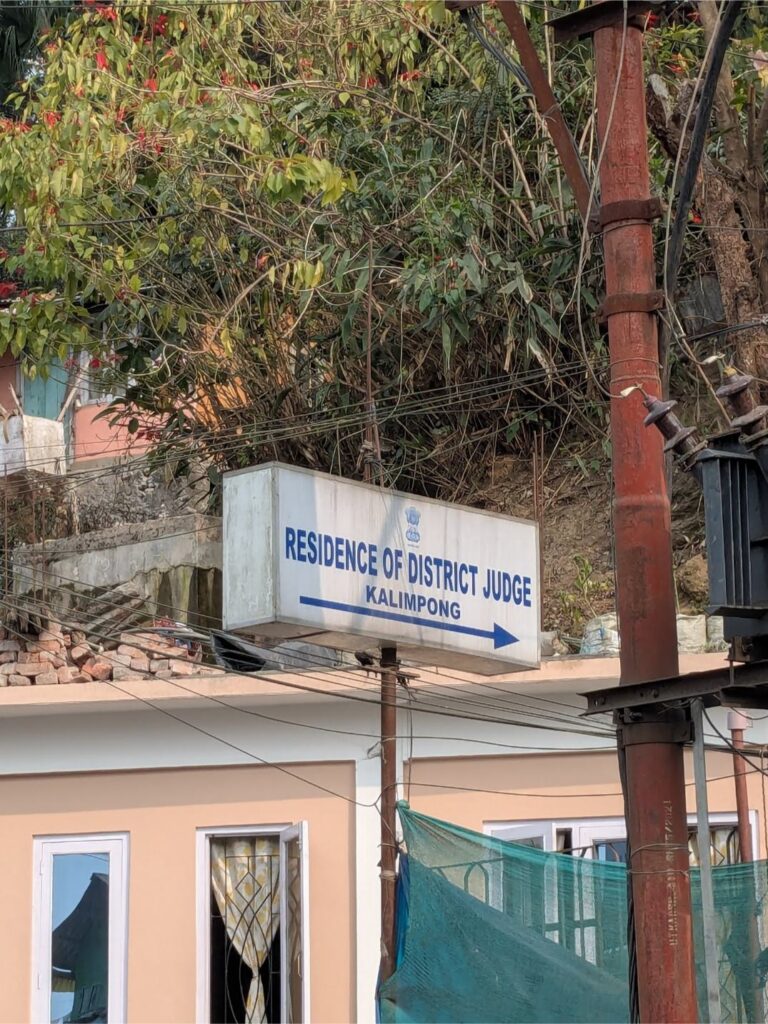
    Kalimpong

    Stay @ Kalimpong

    We paid a fair premium for Mayfair, especially since our room was priced higher because of a Kanchenjunga peak view (it was cloudy all the time we were there, so no view) but can’t complain. It’s a splendid property in which you can carry out your own treasure hunt discovering history, culture, and spectacular views.
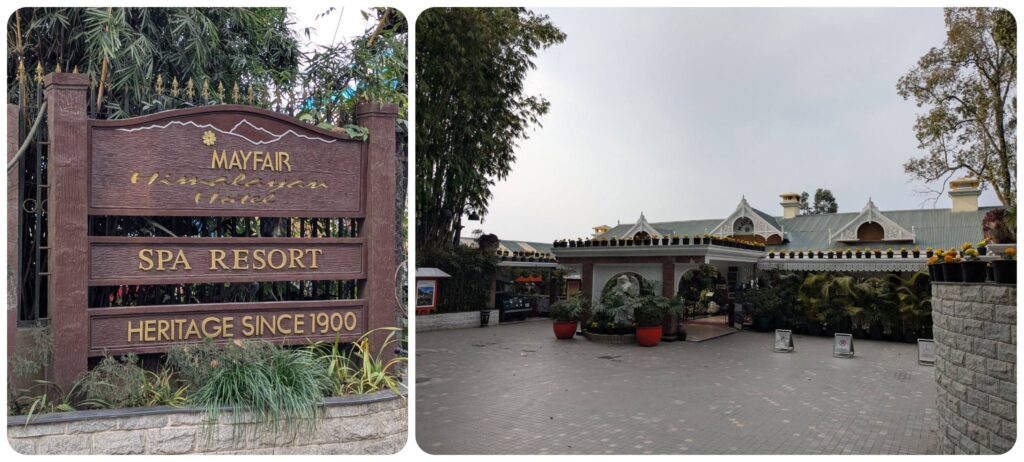
    Mayfair Kalimpong

    Our first room was spacious and had a great view, but we discovered that it was right below the kitchen! That meant, being a light sleeper, I was woken up at 5AM by the clanging. We shifted rooms and the second, though slightly smaller, was nothing to complain of. You can sit for hours gazing outside. The town and valley playing peekaboo thanks to clouds. When I wasn’t doing that, I was indulging in my guilty pleasure – 80s/90s/2000s Bollywood movies. D usually conspires against a TV in the room, but this time I got lucky.
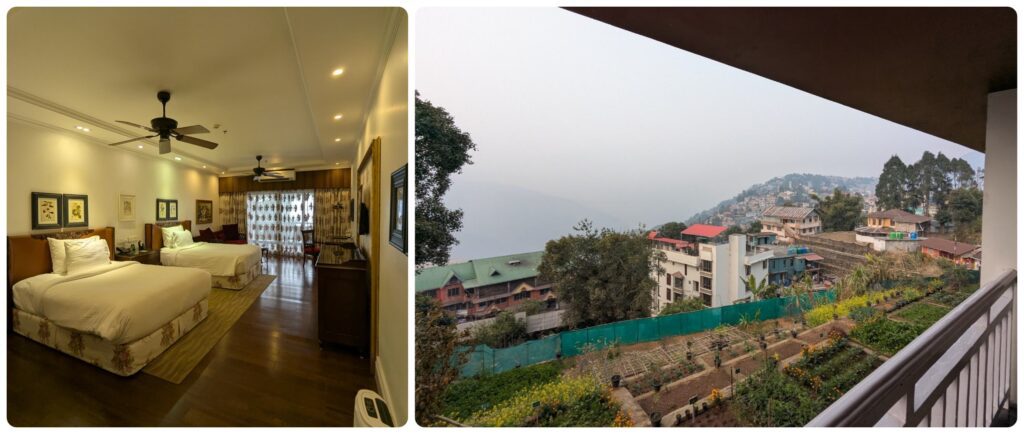
    Mayfair Kalimpong

    And it wasn’t just the room, the entire property is just enchanting. In any other place, I’d have found Snow White & the Seven Dwarfs kitsch, but somehow it fit right in. Each building has a name and a history attached to it. The one on the bottom right has played host to several historical figures including Nehru.
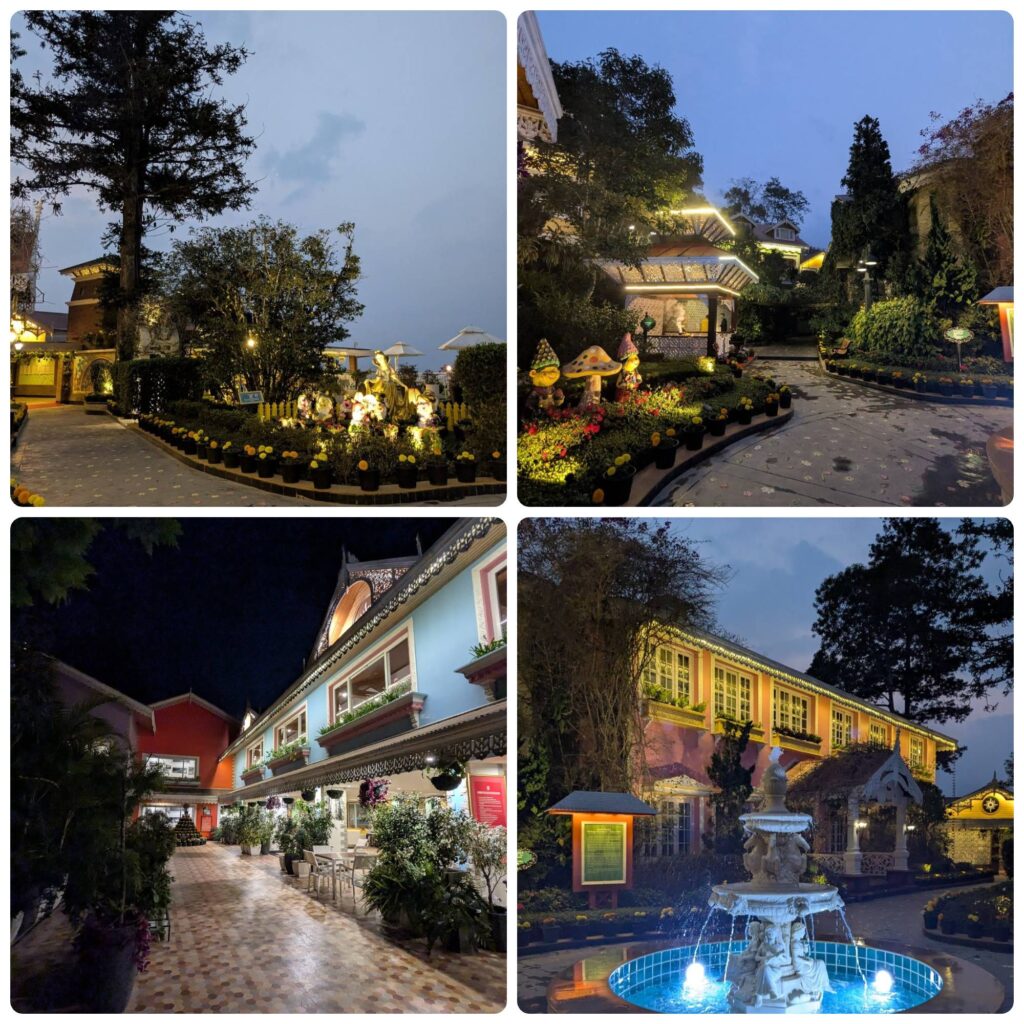
    Mayfair Kalimpong

    The library is exquisite, because it isn’t just books, but artefacts from a different century – from maps to cameras to typewriters, it is an absolute treasure trove for anyone who is into these things.
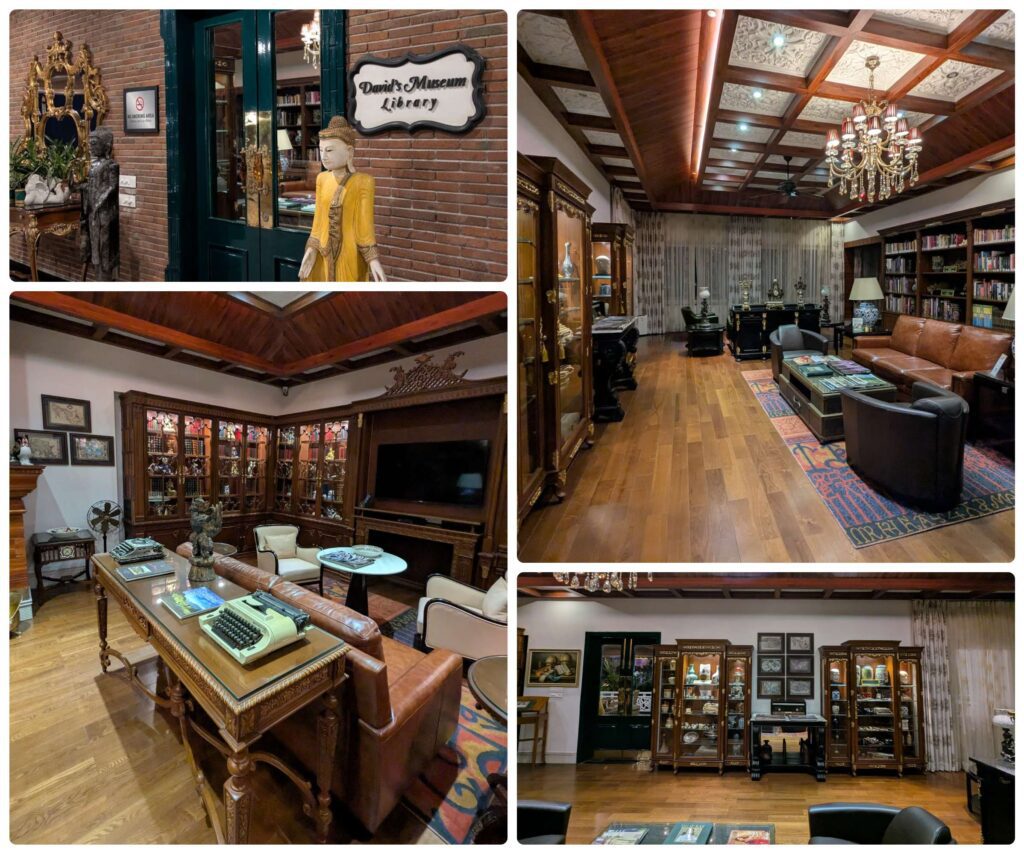
    Daniel's Museum Mayfair Kalimpong

    And if you still need things to do, there’s water, an ancient land machine and lovely sky views.
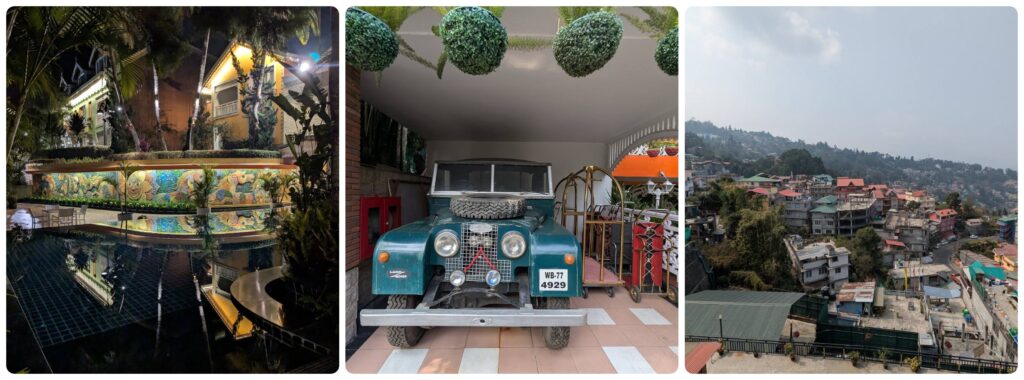
    Mayfair Kalimpong

    Eat @ Kalimpong

    We only had breakfasts and one dinner at Tiffany, Mayfair’s main restaurant, and it probably wouldn’t be my go-to place for a meal. It’s pricy, and the food is only so-so. I have to admit that between the tablecloth and the instrumental Bollywood music, it was almost like stepping back to restaurants in the 90s. Some lovely nostalgia. The service is also very pleasant and know how to take care of guests.
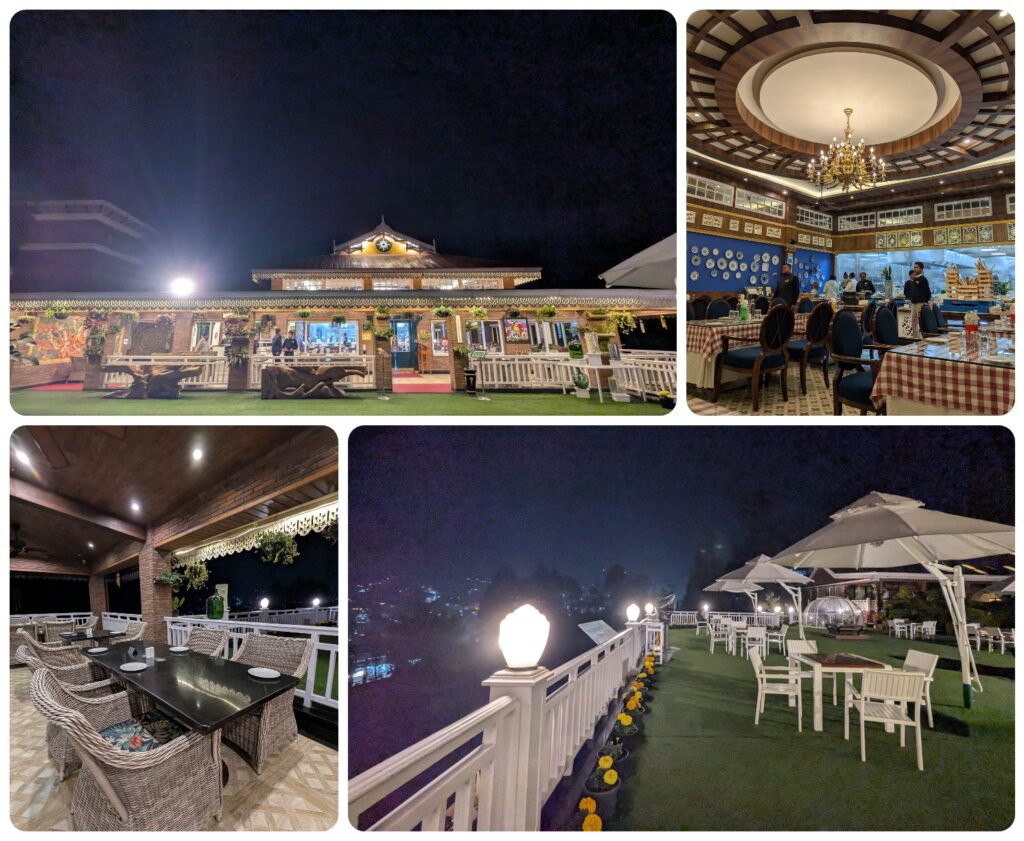
    Tiffany Mayfair Kalimpong

    They also have a cafe called Mamma Mia. We went in because it looked very gram-friendly, and it was. But there were so many places we needed to try that we couldn’t make space for eating here.
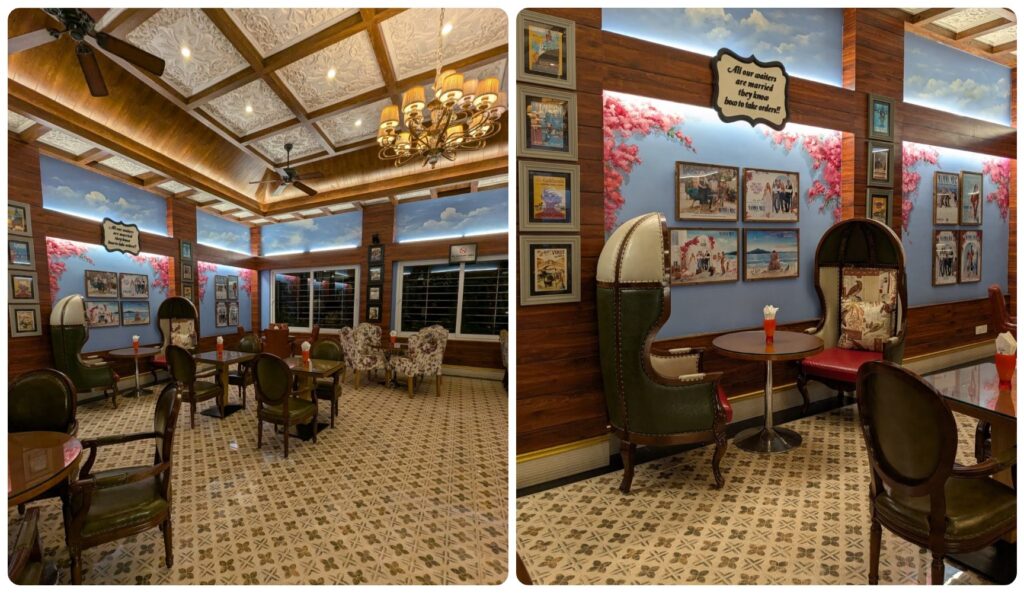
    Mamma Mia Mayfair Kalimpong

    Another place we didn’t manage to spend time at was their bar, which too has a fantastic history and teaches us that alcohol can save lives too!
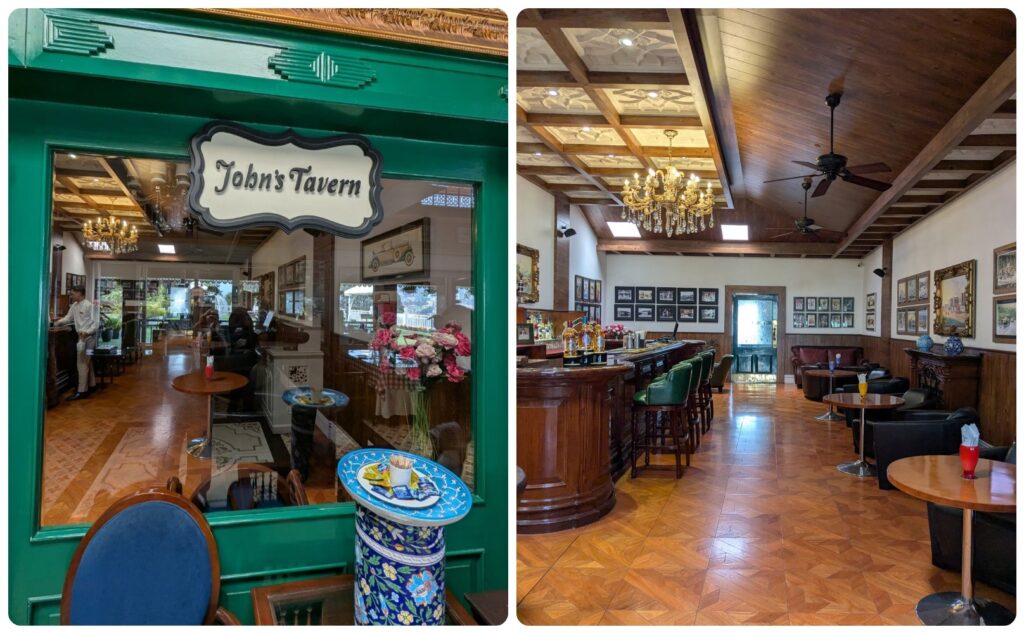
    John's Tavern Mayfair Kalimpong

    Our first lunch was at The Shire Bistro, which turned out to be the cafe at a homestay. It’s a short walk from Mayfair. If you don’t mind a limited menu, this isn’t a bad place. We liked the Kothey momos and loved the hot soupy Gyathuk. Perfect for the weather.
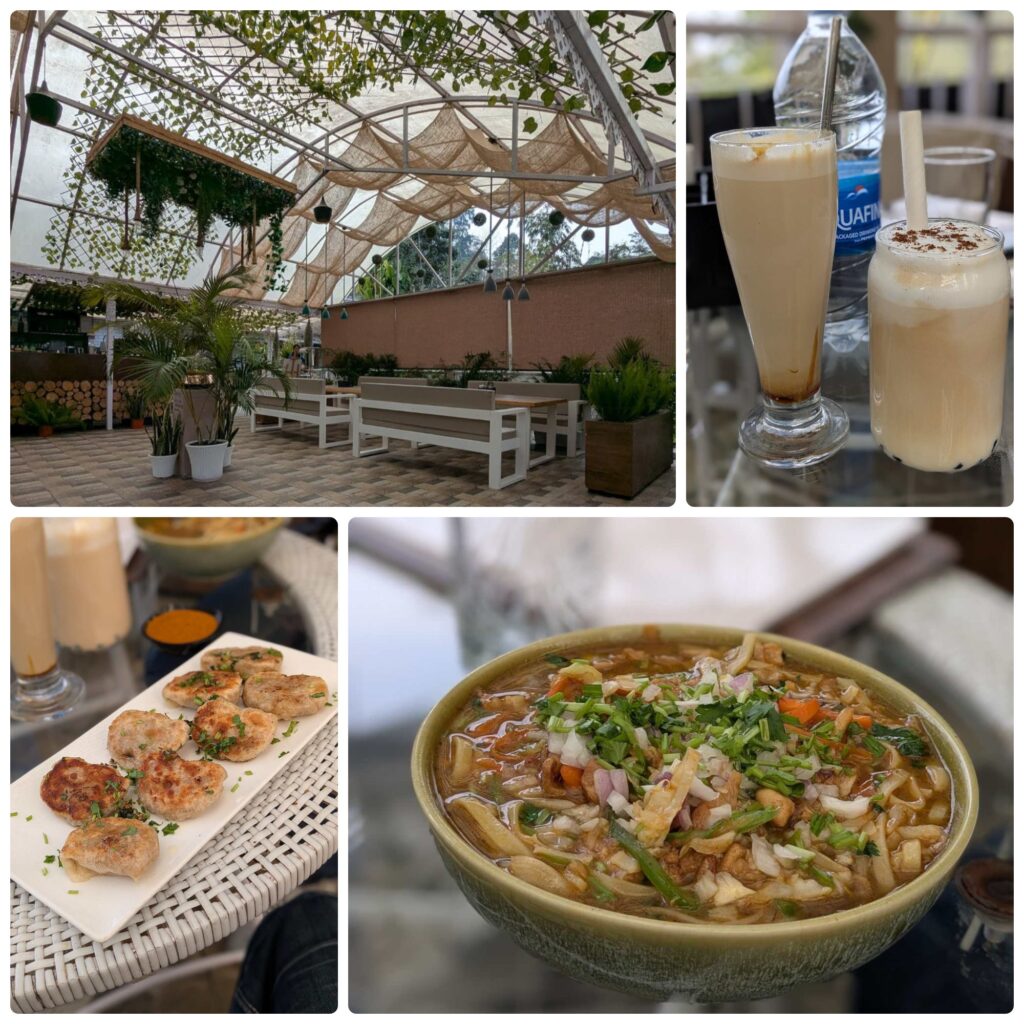
    The Shire Terrace Bistro Kalimpong

    Our favourite meal though was at Nom Nom Bakery And Korean Cafe, which used to be Cafe Kalimpong earlier. A very happy ambience, smiling and helpful staff, a wonderful night view of Kalimpong, and most importantly, excellent food.
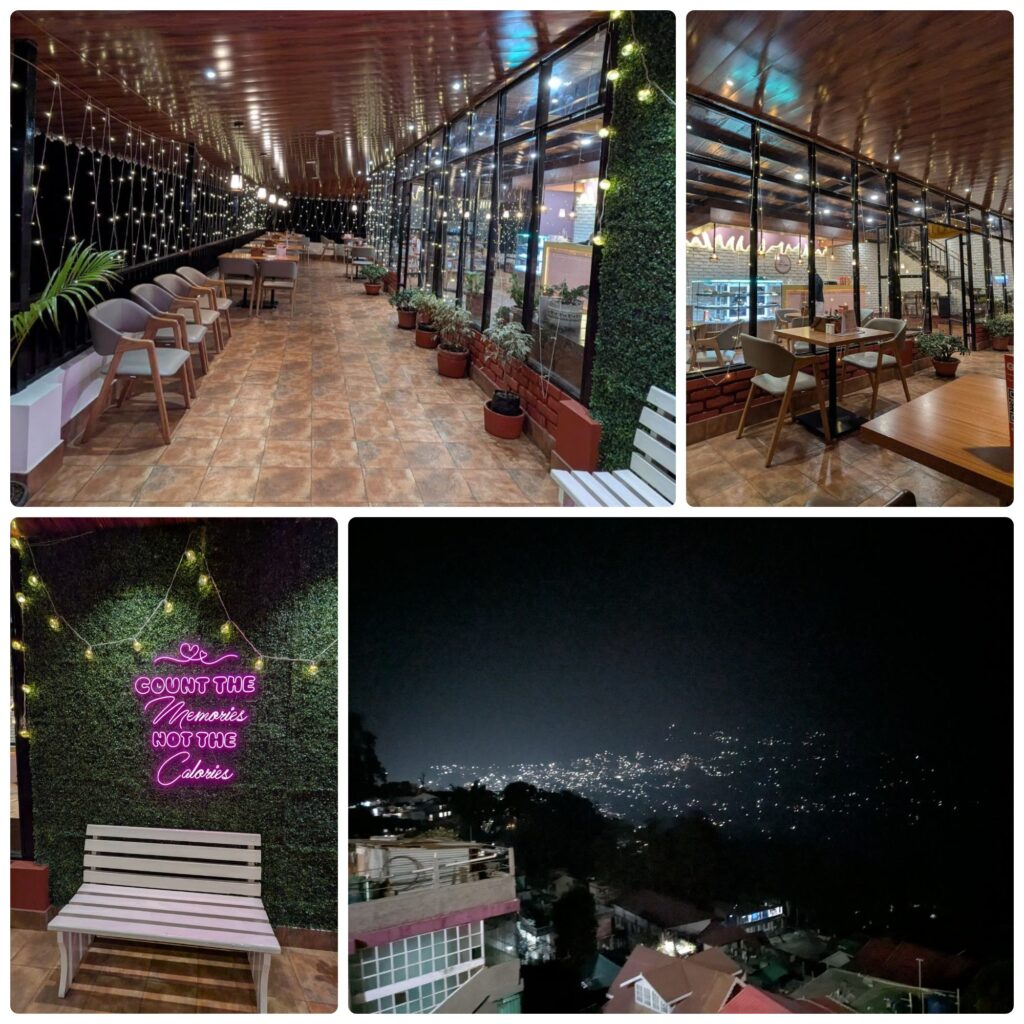
    Nom Nom Bakery and Korean Cafe Kalimpong

    We tried the Korean Kimchi Ramen, Tori Teriyaki Don, and the Japanese cheesecake, and loved everything. There is enough in the menu to visit at least 2-3 times without getting anywhere close to bored.
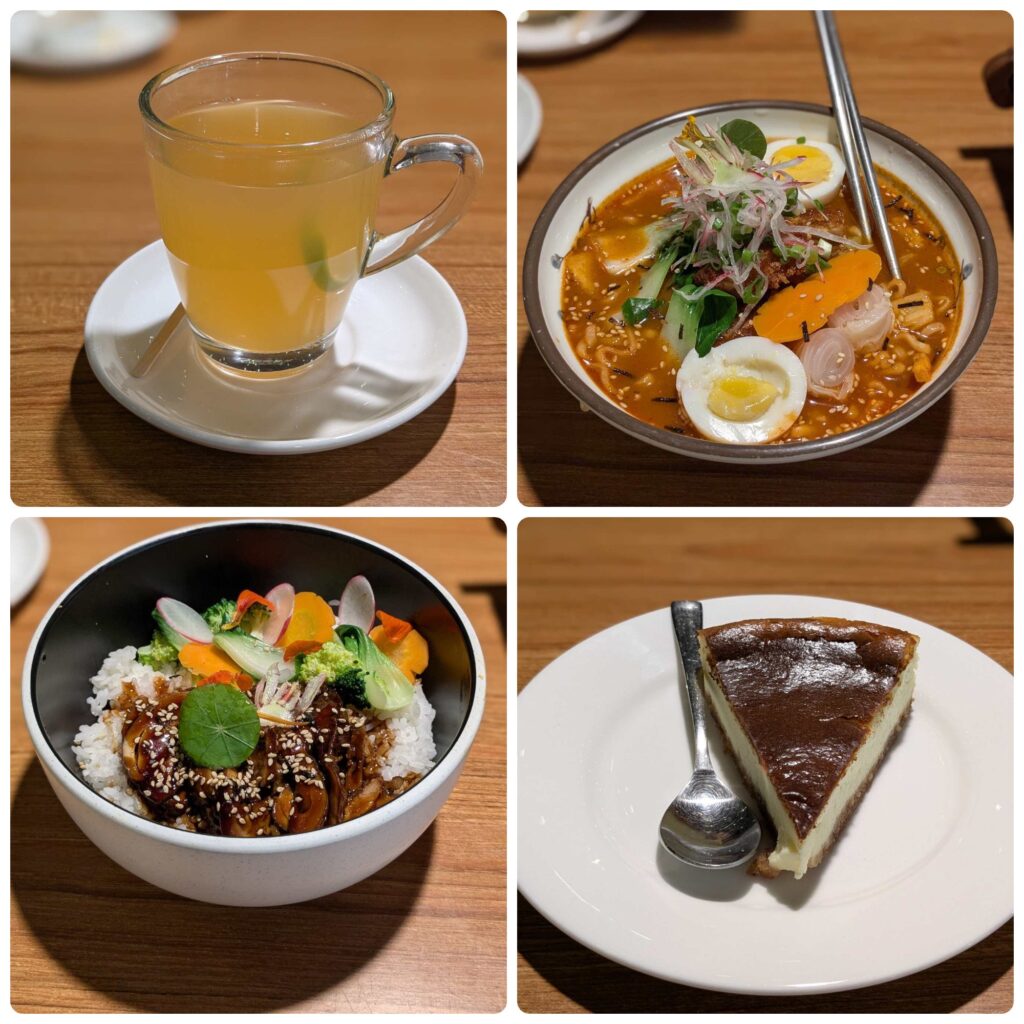
    Nom Nom Bakery and Korean Cafe Kalimpong

    OTOH, Aam’s courtyard was a disaster. That was mostly thanks to the person who took our order. She was clueless, bungled up most of the simplest things, and to top it all, was giggling all the while! We tried some local pork and pasta, and both left us dejected! I have to wonder how a lot of these restaurants manage to get a 4.5+ rating on Google!
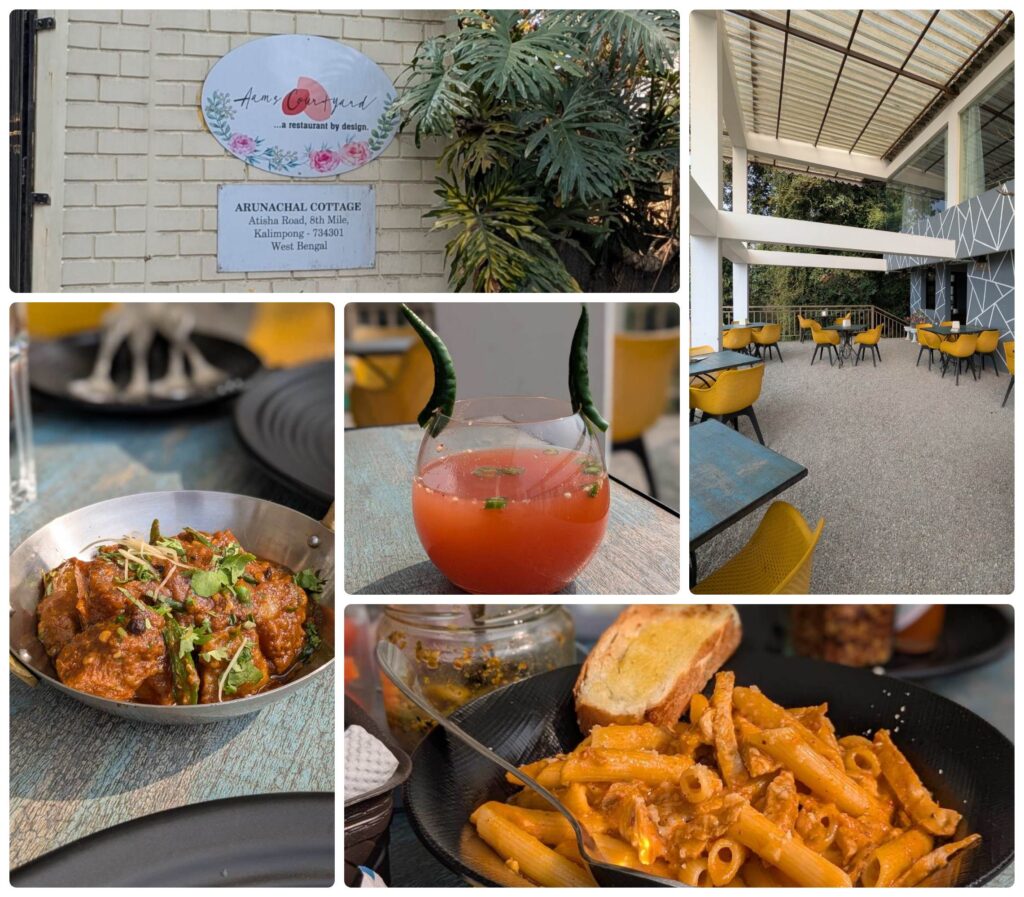
    Aam's Courtyard Kalimpong

    We actually went into Cakes and Crumbs thinking we’d have something to drink, but they didn’t really have anything worthwhile. The Biscoff cheesecake wasn’t bad.
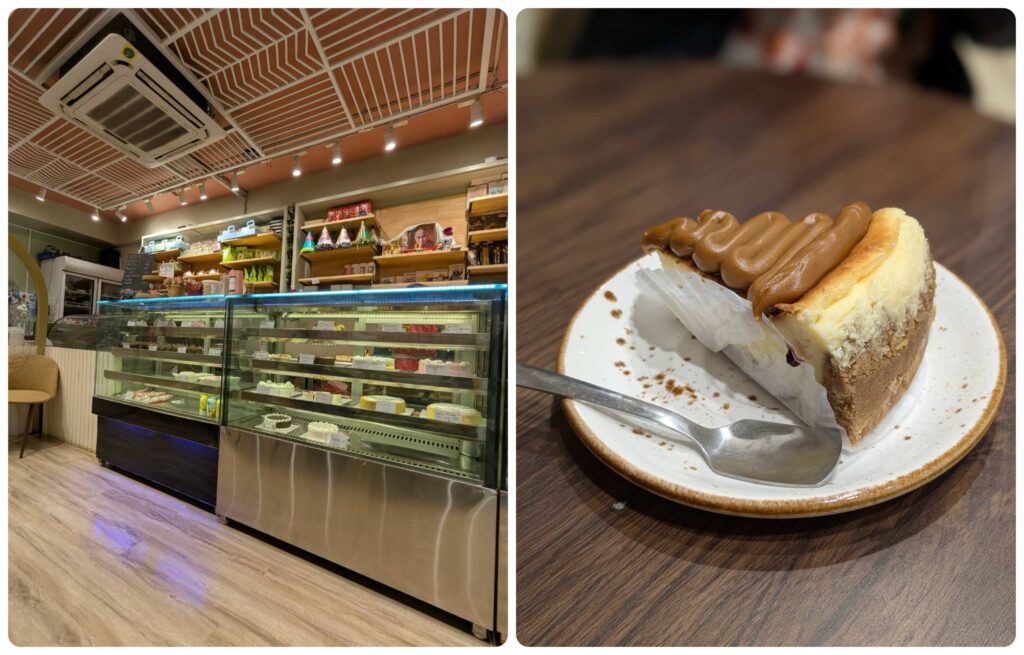
    Cakes and Crumbs Kalimpong

    Our final meal in Kalimpong was at Art Cafe. Pretty place with a great view, and we were lucky enough to see mist rising, even as the city lost power for a few minutes!
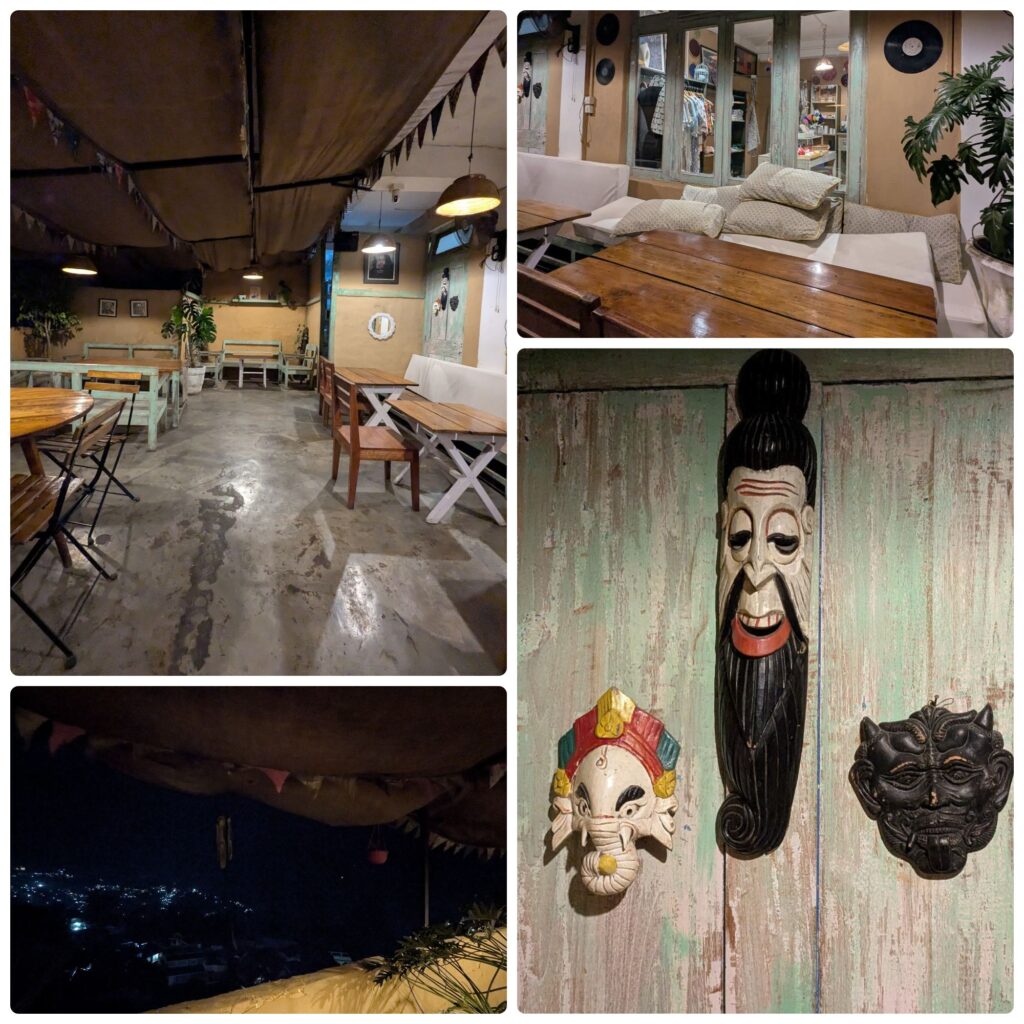
    Art Cafe Kalimpong

    While the decor was great, most of the items in the menu were unavailable. So we made do with what we could find. D liked her hot chocolate.

    My recommendation is to ignore Google mostly, and walk around in the vicinity of Big Will Mart. There are a few restaurants in and around it, and I have a feeling they are better than the ones we tried, barring Nom Nom. There is also the Kalimpong Local which I heard good things about.
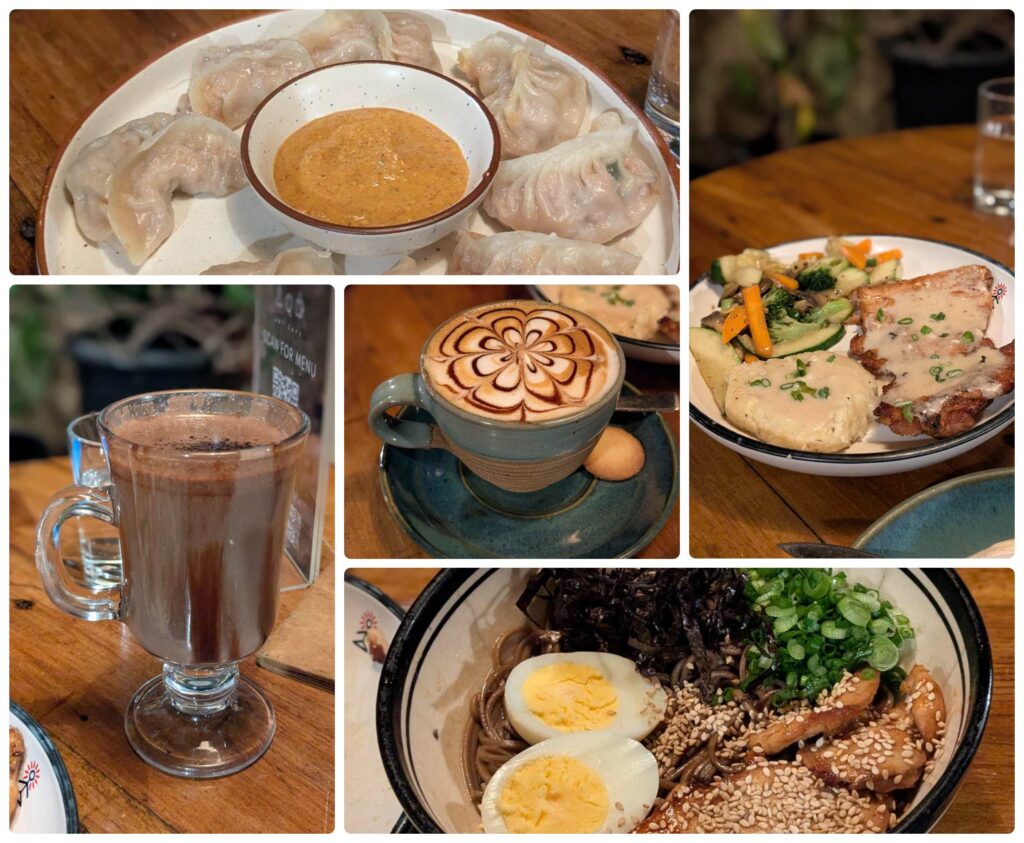
    Art Cafe Kalimpong

    Things to do @ Kalimpong

    You could walk around with a minimalist agenda and come across views like this.
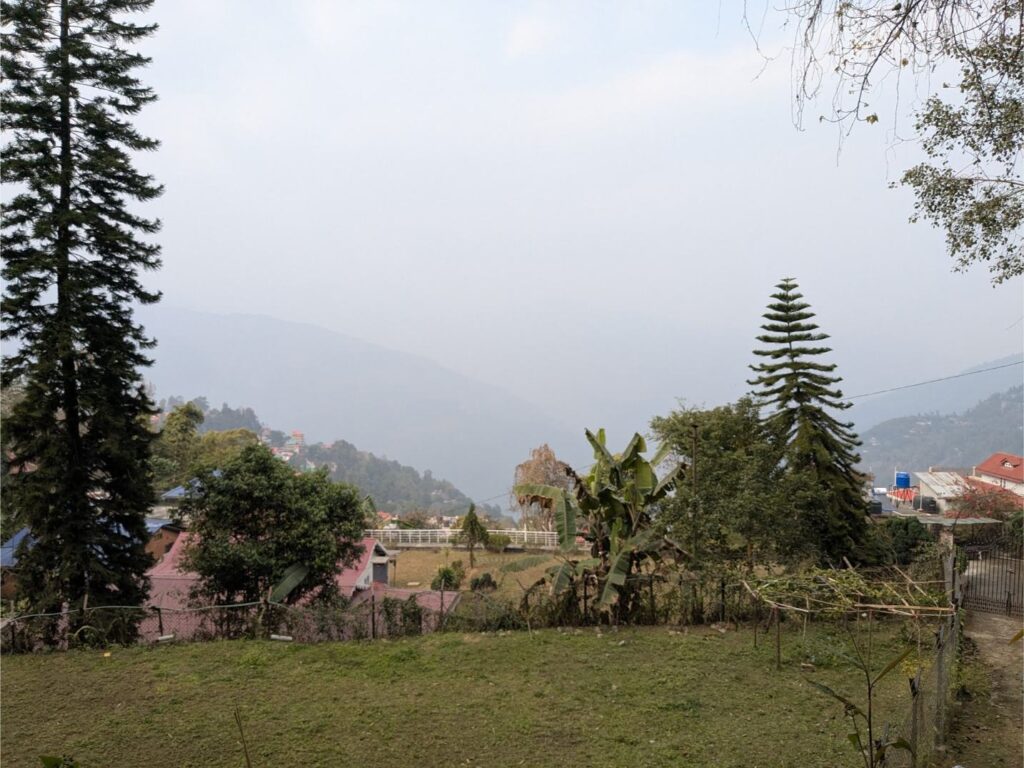
    Kalimpong

    If you need a driver to take you around (and airport trips), call Suman.

    Graham’s House and the 500 acre property is an institution worth a visit.
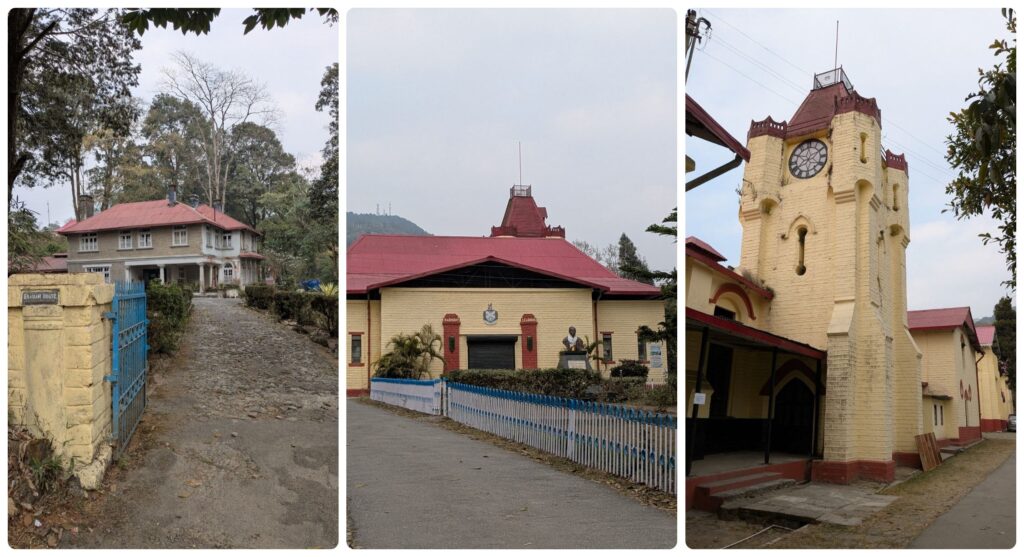
    Graham's House Kalimpong

    Classic boarding school feels. Entry is restricted to specific times in the evening. We caught kids at play after their school hours.
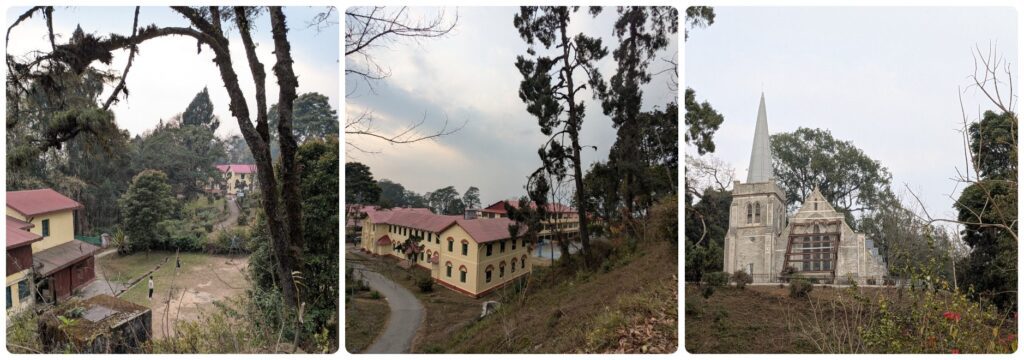
    Graham's House Kalimpong

    Delo is the tallest place in Kalimpong. Again, simply walk around, and if the clouds aren’t hanging around, the views are breathtaking.
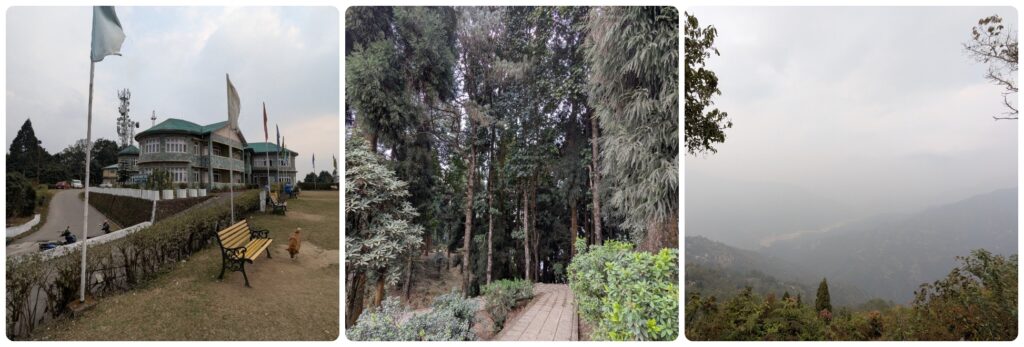
    Delo Kalimpong

    At the Buddha Statue and Park, we caught dogs doing things to advance their number, and Buddha being offered Parle G. I took a photo just to ensure it wasn’t an altitude-induced mind-bender.
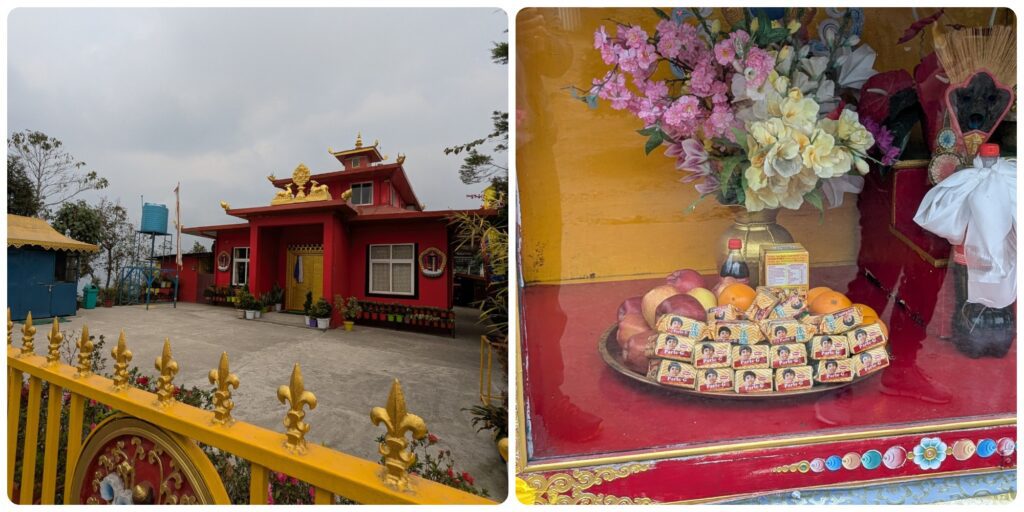
    Buddha Statue and Park Kalimpong

    At the Durpin Monastery, we were in time for the evening prayer, and one child monk was in charge of shepherding everyone in with a gong. Monks were strolling in late, with tea mugs, and altogether it reminded me of college.
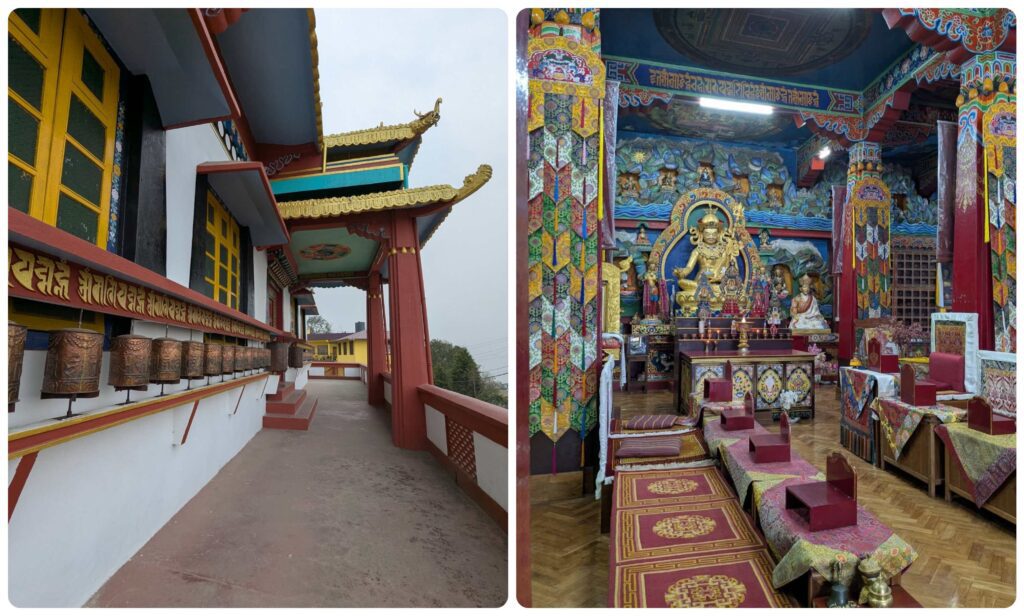
    Durpin Monastery Kalimpong

    Walk around the busy streets and drop in at Big Will Mart (the photo on the right). It’s apparently a little new so our driver wasn’t exactly sure where it was. Google Maps though is accurate.
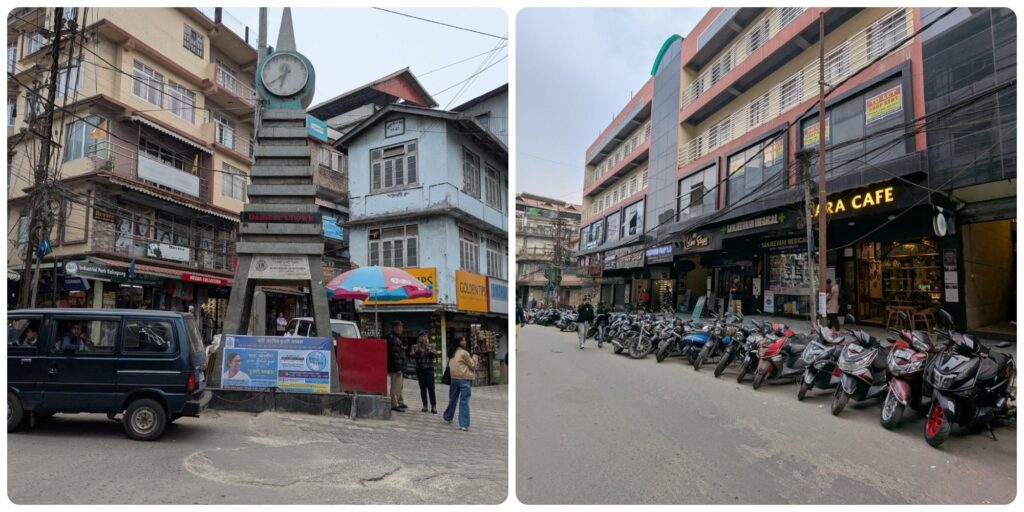
    Kalimpong Market Damber Chowk Big Will Mart

    Kalimpong is quaint little town with a leisurely place. You have a great view at every other corner, and you could simply sit and gaze at it. As with many places in India, squalor and splendour exist side by side. I’d have recommended it as a consideration for retirement, but realised the nearest hospitals are about 2.5 hrs away. That would mean that when it comes to things like a heart attack, the only way would be up!

    But yes, heavily recommended for short term inner peace. 🙂

    And that’s a cloud wrap from Mayfair!
  • Why Zebras Don’t Get Ulcers

    Robert M. Sapolsky

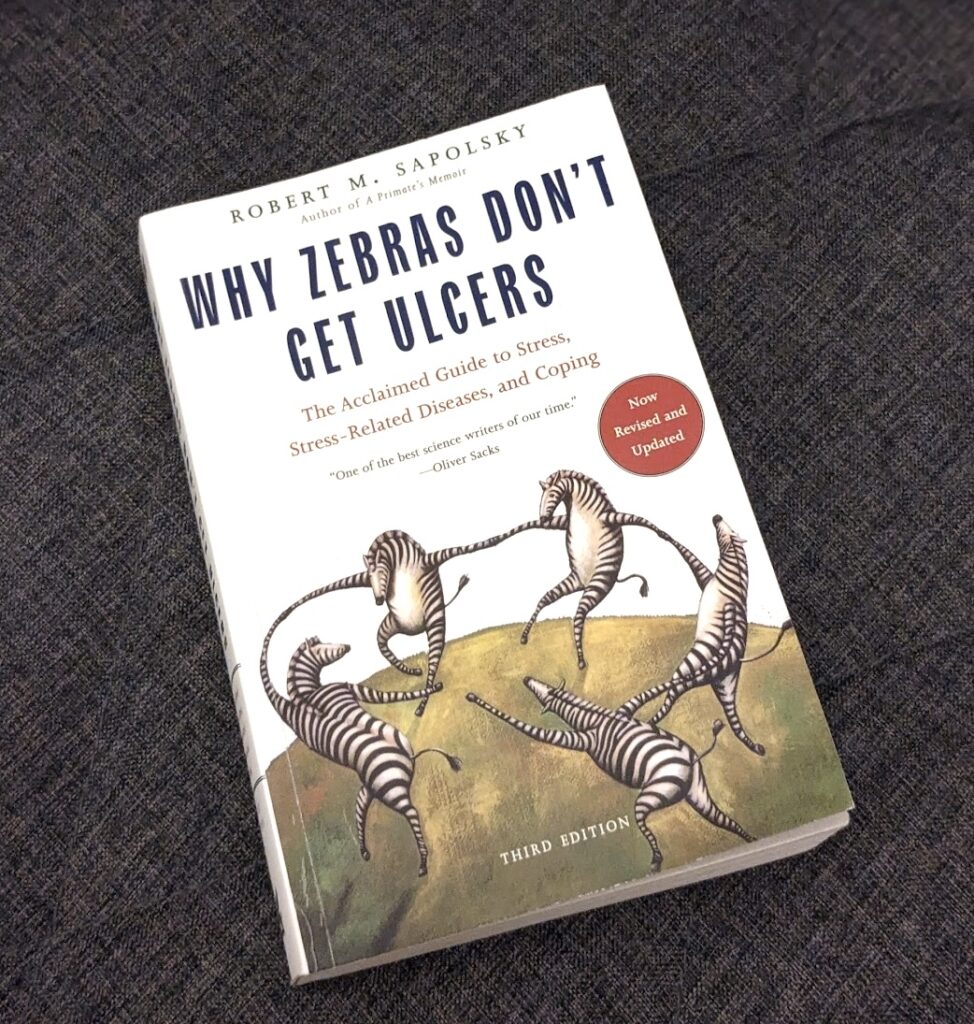
    Sapolsky’s ‘Behave‘ was in my list of favourites back in 2021. So when I got to know about Why Zebras Don’t Get Ulcers, it became a must-read, and that title really helped. The book was originally written in 1994, and is now in its third edition, so things continue to be updated.

    He gets the title out of the way very quickly, and this is perhaps the underlying premise of the book – zebras, and the lions who chase them both are stressed, and their bodies are brilliantly adapted to handle these emergencies – fear of life and fear of starvation respectively. Go up to the apex predator – humans, and it can even handle things like drought, famine, pests. But when we include psychological and social disruptions – from finding a parking spot to an unpleasant conversation with a manager/spouse etc – and start worrying about them, we turn on the same physiological responses.

    When this is chronic (and it is – think about the things you get stressed about daily), the stress response itself becomes harmful to the body, sometimes even more than the stressor itself. Because they were not meant to do this all the while, they were only for emergencies!

    The early pages of Why Zebras Don’t Get Ulcers also draw out a significant difference – between homeostasis and allostasis. ‘The brain seeks homeostasis’, but the concept itself is now modernised because there is no single optimal level (e.g. it can’t be the same when sleeping vs skiing) and because we now understand that the point cannot always be reached by a local regulatory mechanism, it requires ‘the brain coordinating body-wide changes, often including changes in behaviour’. And this tinkering has its own second-order consequences. Even more complicated because in allostatic thinking, there can be changes made in anticipation of a level going awry. When it is stressed for ’emergencies’, the body goes for homeostasis, with consequences in the long run.

    The book then traces out the working of the brain – and the regulation of glands and hormones (and how it is different in males and females), before getting into specific areas that stress specialises in! This includes physiological things cardiovascular health, ulcers and IBS, (oh, if only I knew this 3 years ago, I would have been better equipped to deal with idiot doctors) pregnancy and parenting, sex and reproduction, pain, immunity and diseases, memory, sleep, cancer (the jury is still out on this) and aging and death, as well as psychological domains like addiction, depression. It also looks at how temperament and personality can either assist or resist stress.

    In the personality section, Sapolsky practically described my (former) Type A personality down to a behavioural “time-pressuredness” (research by Meyer Friedman and colleagues), default hostility, and a persistent sense of insecurity, the last being a predictor of cardiovascular problems. Add to it disciplined, discomfort with ambiguity, and (formerly) repressive in terms of emotional expression, and you have my profile! Damn!

    Towards the end of Why Zebras Don’t Get Ulcers, there is also a very interesting section (and studies) on how socio-economic-status (SES) can affect stress. The poor have more chronic daily stressors, and feeling poor (not the same as being poor) in our socioeconomic world (digital media expands ‘our’ from friends, family and neighbours to anyone on Insta) predicts poor health. Income inequality predicts mortality rates across all ages in the US.

    The last chapter is on managing stress – exercise, meditation, increasing control and predictability, social support, finding outlets for frustration. And building coping mechanisms around fixed rules and flexible strategies – when stress management is not working, instead of trying extra hard on our preferred strategy – problem solving/emotional/social support – switch the approach.

    I was expecting a fair amount of trudging and it turned out to be that way. But Why Zebras Don’t Get Ulcers is definitely fascinating to see the stress fingerprint in so many of our ailments – ranging from very visible to almost invisible. Great book, if you have the interest and patience for it. 🙂

    Notes from Why Zebras Don’t Get Ulcers

    1. Water shortage in California. Homeostatic solution: mandate smaller water tanks. Allostatic: smaller toilet tanks, convince people to conserve water, buy rice from SE Asia instead of doing water-intensive farming in a semi-arid state.

    2. When stressed, the sympathetic nervous system is activated, the parasympathetic nervous system is turned down, the heart shifts into a higher gear, glucocorticoids enter the play enhancing the effects of epinephrine and norepinephrine. As a result blood pressure goes up, the blood sent to nonessential areas like digestive tract and kidneys go down (fascinating how we wet our pants in fear though the kidney function is kept low – basically to remove excess water quickly from the bladder). Chronic use of this mechanism promotes plaque formation in arteries by increasing the chances of blood vessels being damaged and inflamed and the likelihood of platelets, fat, cholesterol sticking to those areas.

    3. Also when stressed, the contractions in the colon increase to get rid of the ‘dead weight’. See how IBS and diarrhoea works!

    4. In a British Victorian family, the mother’s favourite son David dies and she takes to bed, ignoring her 6 year old son. And when the boy comes to the darkened room, she asks ‘David, is that you?’, before saying ‘Oh, it’s only you’. The younger boy stops growing, because this is the only way he seems to get some chance of affection. He is J M Barrie, the author of Peter Pan!

    5. Stress-induced analgesia (not feeling pain during strenuous activities – from war to exercise) and stress- induced hyperalgesia (feeling more pain, e.g. waiting for a dentist) Both are emotional reactivity to pain and do not involve pain receptors or the spinal cord.

    6. Personality style can lead to stress-related disease – either due to a mismatch between the magnitude of stressors and respective stress responses, or even reacting to a situation that is not a stressor

    7. How does social capital turn into better health throughout the community? Less social isolation. More rapid diffusion of health information. Potentially social constraints on publicly unhealthy behaviour. Less psychological stress. Better organised groups demanding better public services.

    8. If you want to improve health and quality of life, and decrease the stress, for the average person in a society, you do so by spending money on public goods – better public transit, safer streets, cleaner water, better public schools, universal health care. The bigger the income inequality is in a society, the greater the financial distance between the wealthy and the average. The bigger the distance between the wealthy and the average, the less benefit the wealthy will feel from expenditures on the public good. Instead they would derive much more benefit by spending the same (taxed) money on their private good – a better chauffeur, a gated community, bottled water, private schools, private health insurance. As (Robert) Evans writes, “The more unequal are incomes in a society, the more pronounced will be its disadvantages to its better-off members from public expenditure, and the more resources will those members have (available to them) to mount effective political opposition.” He notes how this “secession of the wealthy” pushes toward “private affluence and public squalor”. And more public squalor means more of the daily stressors and allostatic load that drives down health for everyone. For the wealthy, this is because of the costs of walling themselves off from the rest of society, and for the rest of the society because they have to live in it.

    8. Heaven, we are told, consists of spending all of eternity in the study of the holy books. In contrast, hell consists of spending all of eternity in the study of the holy books. 😀

    9. In a diagnosis that helps explain the confusing and contradictory aspects of the cosmos that have baffled philosophers, theologians, and other students of the human condition for millennia, God, creator of the universe and longtime deity to billions of followers, was found Monday to suffer from bipolar disorder. ~ The Onion

    Why Zebras Don't Get Ulcers
  • Unidentity-fying

    A theme has been emerging, even more stronger since I wrote “Living a life of Intentionality“. Pithily summarised as “At this age, I prefer an identity that provides the least friction and regrets in the life I want to lead.” How do I get there? A key factor I identified for myself is acknowledging the difference between my wants and likes, and deeply questioning my wants. Where does that get me? From that post, Intentionality helps you have your needs and considered likes as anchors. When that happens, a whole lot of clarity emerges – what you spend time and money on, people whom you will go overboard for, how you plan your days, weeks and months, and what can get you out of those lil twinges of envy and seemingly deep pools of a mid-life crisis.

    But while I was trying to get there, I encountered a strong opponent – myself, or rather, my identity. I first brought it up in Marshmellowing. The key point in the first was how in my approach to getting what I needed/wanted, my larger desire for ‘freedom’ led me to optimising for optionality – a huge bias for scenario planning. I think the identity I created thanks to this is aptly called the Marshmallow mind (by Frederik Gieschen), and its best expression is a poem I read in Poor Charlie’s Almanack: The Wit and Wisdom of Charles T. Munger, attributed to A.E. Housman

    The thoughts of others

    Were light and fleeting,

    Of lovers’ meeting

    Or luck or fame.

    Mine were of trouble,

    And mine were steady;

    So I was ready

    When trouble came.

    In Marshmellowing – The Prequel, I wrote about my path to this identity/self image from childhood. A great description of it appears in Robert M. Sapolsky’s Why Zebras Don’t Get Ulcers. In the personality section, Sapolsky practically described my (former) Type A personality down to a behavioural “time-pressuredness” (research by Meyer Friedman and colleagues), default hostility, and a persistent sense of insecurity, the last being a predictor of cardiovascular problems. Add to it disciplined, discomfort with ambiguity, and (formerly) repressive in terms of emotional expression, and you have my profile! Damn!

    My self image, and increasingly my identity was the kind of person who thought in a certain way and behaved in a certain way. While its origins was my ‘responsible child’ identity that possibly repressed my freedom of emotional expression in favour of (parental) attachment, in adulthood, it transformed into a “responsible adult” self image that ironically optimised for freedom and optionality, and underplayed the need for attachment. It became an identity, and many of my decisions were biased in that direction.

    It is only in the very recent past – through reading and reflection, that I have begun to be at least a little fine with unplanned-ness. As I wrote on LinkedIn, the universe’s tendency is randomness! An excellent read in a different context was The Tao of Physics. I realised that In both quantum field theory and eastern philosophies, physical phenomena (including us) are mere transient occurrences in an underlying entity. How humbling that is!

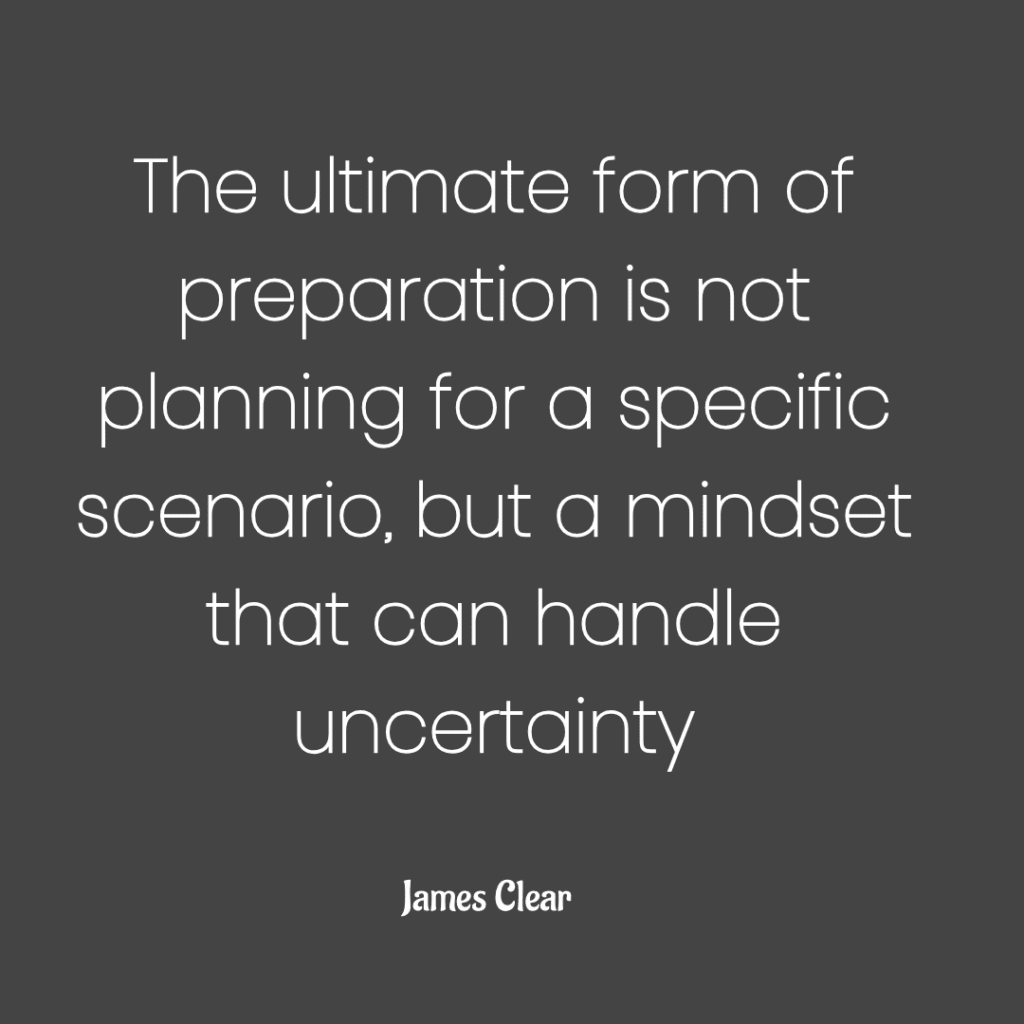
    I think I have made progress by moving from fixed goals through fixed strategies to fixed goals through flexible strategies. I hope, after we are confident of financial freedom, that I can move to flexible goals and flexible strategies. Meanwhile, the biggest task in all this is the mindset. Mindset made the identity, and now it has to dismantle it. Erich Fromm wrote this a long time ago – “Life, in its mental and spiritual aspects, is by necessity insecure and uncertain…The psychic task which a person can and must set for himself, is not to feel secure, but to be able to tolerate insecurity without panic and undue fear“. Decades later, we have a pithier version.

  • Doppelganger

    Naomi Klein

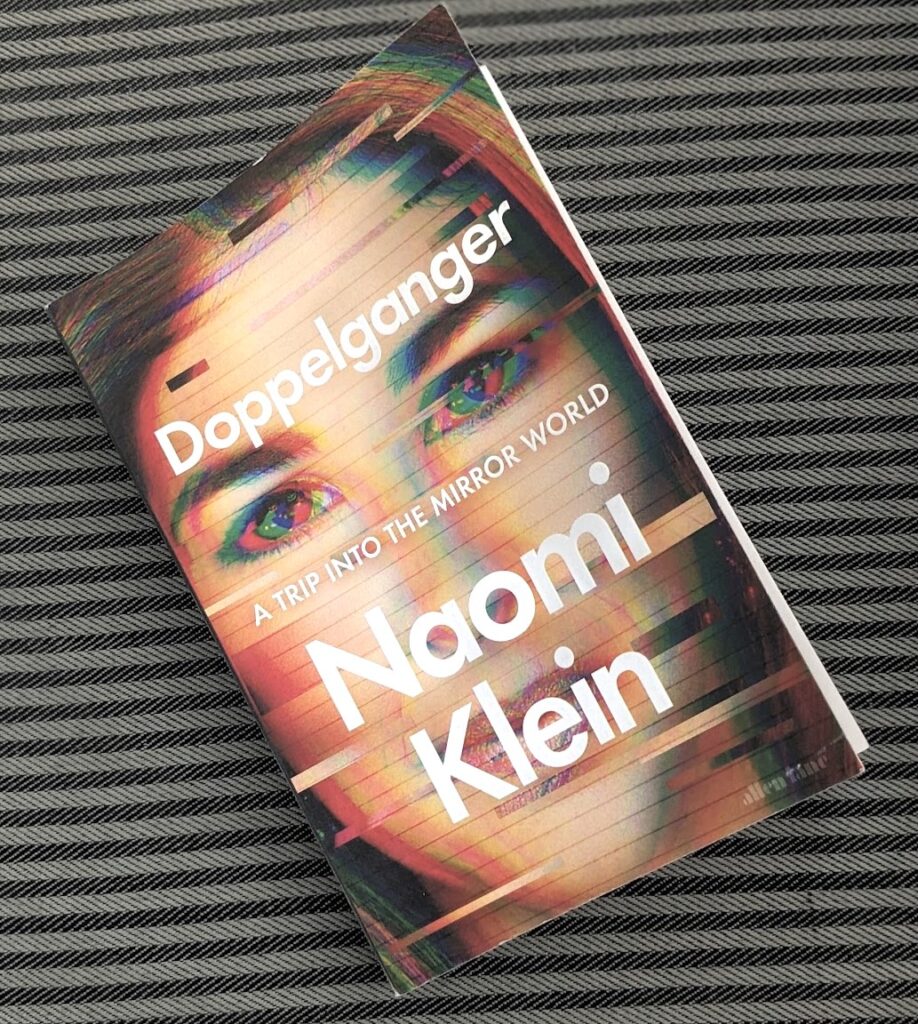
    Quite eerie that I read this immediately after I read Carol Roth’s “You will own nothing”. Here’s why. Doppelganger’s starting premise is how the author (Naomi Klein) gets confused for Naomi Wolf, both being ‘white Jewish women’, increasingly helped by the overlap in the subjects they comment on. The former is a left-leaning writer and social activist while the latter is a third wave feminist who turned from centre-left to becoming a right wing conspiracist. It is fascinating how Roth’s views largely align with Klein (Davos, Big Tech) but also agree with Wolf in others (Canadian truckers, for instance)

    In her new avatar, Wolf’s argument – with a full endorsement from none other than Steven Bannon (once Trump’s chief strategist) – during Covid was that vaccines and public health measures were a conspiracy by a global cabal to sterilise, and in general, undermine the constitution. People increasingly began believing that these were Klein’s views. At one point, after it goes beyond being just a joke, Klein decides to dive into the rabbit hole of the universe that Wolf inhabits – the Mirror World is how Klein describes it.

    While this is where the book starts, and also spends pages drawing out the different worldviews, approaches etc, the narrative then expands its scope to cover the title – Doppelgangers – in general. Not just at an individual level but a societal level. For instance, today the simplistic left vs right categorisation is almost devoid of meaning. Even the horseshoe theory of left and right being similar the extremes isn’t nuanced enough. With big tech, Covid lockdowns, and a plethora of social media influencers, most people have very little trust in anything mainstream media, or what politicians say or do. The difference is only in their own perspectives of who is lying and for what. Wolf and Klein, for example, agree on Bill Gates being a force for evil. While the former goes on about tracking people, the latter is against how he sided with big drug company patents on life-saving Covid medicines.

    Klein decodes how issues remain the same but how Bannon & Co spin it to stoke common underlying tensions and use it to further their agenda. For example, blue collar workers who felt betrayed by Democrats when the latter signed trade deals that accelerated factory closures, Bannon pitched Trump as a radically different Republican who promised to make the rich pay. This modus operandi was an echo of what I had read in Peter Pomerantsev’s ‘This is not propaganda’, in which he pointed out how Trump and his ilk could create coalitions of people who agreed on some topics, while the left/liberals would argue on the tiniest of nuances. There is a name for the former – diagonalism.

    There is also an interesting section on how our personal brands are our doppelgangers – what happens to our self when we create for social media? What is real, and what is for camera? “Which of our opinions is genuine, and which are for show? Which friendships are rooted in love, and which are co-branding collabs? Which collaborations don’t happen that should because individual brands are pitted against one another?” What doesn’t ever get said, or shared, because it’s off-brand?” What does it do to our capacity for internal dialogue and deliberation?

    The focus on doppelgangers allows Klein to apply it to diverse contexts – wellness influencers who became anti-vaccine propagandists, parents of autistic children (and their belief that this was something that had to be cured instead of accepting the child and its unique ways), to Nazis (and the fascinating view that European colonists had been on genocide sprees long before Hitler, and that it was only the scale and more importantly, that it happened in Europe that shocked the West into retaliating; also how the Australian Aborigines League saw this coming way back in 1938 and wrote a protest letter against persecution and handed it to the German Consulate) to Israel (and how the Palestinians had become the victims’ victims).

    Towards the end of the book, the narrative switches back to personal, with lovely anecdotes on how Klein was originally inspired by Wolf, and also how today, with Wolf uttering all sorts of things in public, Klein believes she is freed from her own public self and how it’s an “unconventional Buddhist exercise in annihilating the ego”.

    This is a fascinating read which prompts us to look within ourselves and at the society we inhabit, forcing us to acknowledge the doppelganger within us at both levels.

    Quotes
    “Ms. Wolf is the moral equivalent of an Armani T-shirt, because Mr. Gore has obscenely overpaid for something basic” ~ Maureen Dowd

    “The accelerated need for growth has made our economic lives more precarious, leading to the drive to brand and commodify our identities, to optimise our selves, our bodies, and our kids” Naomi Klein

    “In the Mirror World, they… rile up anger about the Davos elites, At Big Tech and Big Pharma – but the rage never seems to reach those targets. Instead it gets diverted into culture wars about ant-racist education, all-gender bathrooms, and Great Replacement panic directed at Black people, nonwhite immigrants and Jews.” Naomi Klein

    Doppelganger
  • Idyll

    This is far from our village, but thanks to the metro, if we get out early, it is quite a breeze getting to Indiranagar. And that is how, one Saturday evening, we broke our rustic idyll to visit Idyll, about whose fusion fare we had heard good things.

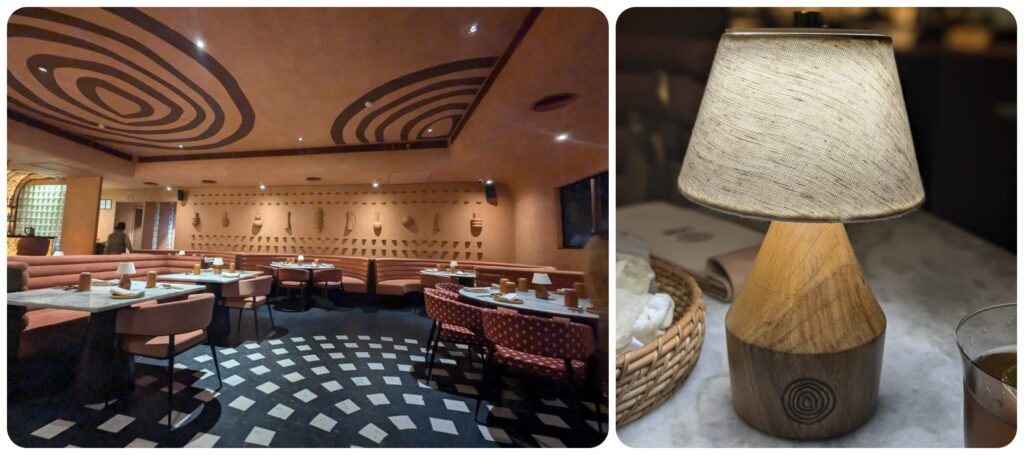
    Idyll has two floors. The top floor is the one with the pounding music and cool bar. Relatively, the ground floor is the more ‘boring’ one, almost like the family room, and that’s where we chose to sit. That ‘maze’ symbol on the lamp (that we loved) is everywhere and kept reminding me of the Westworld maze. See that ceiling again?

    Idyll Indiranagar Bangalore

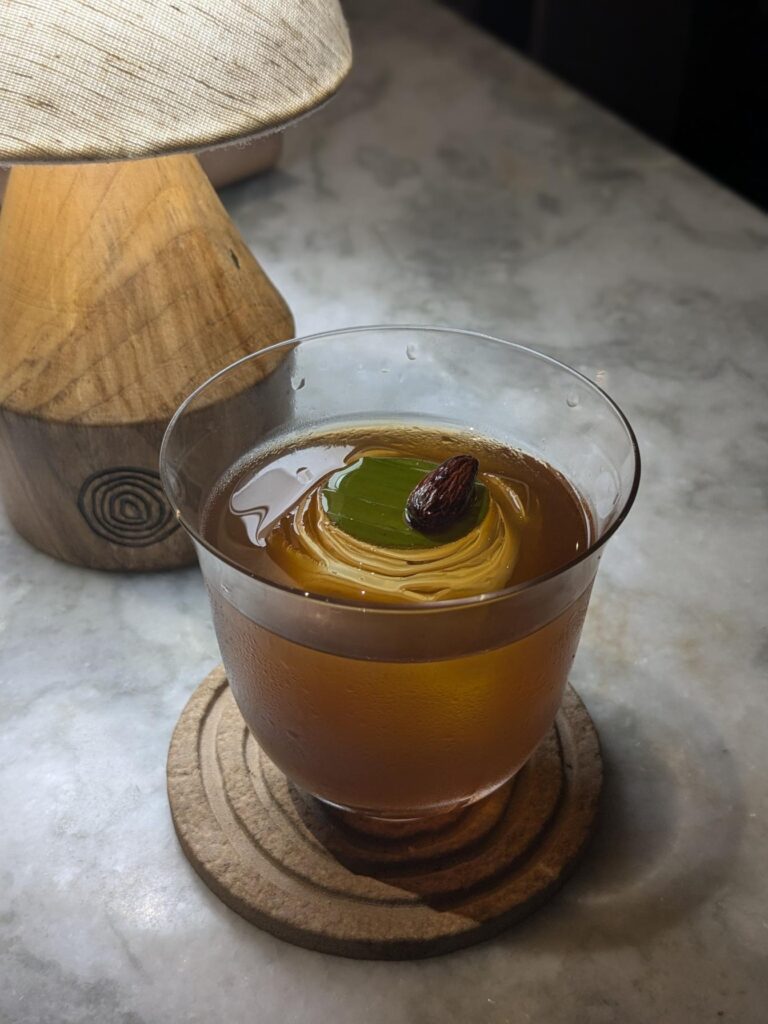
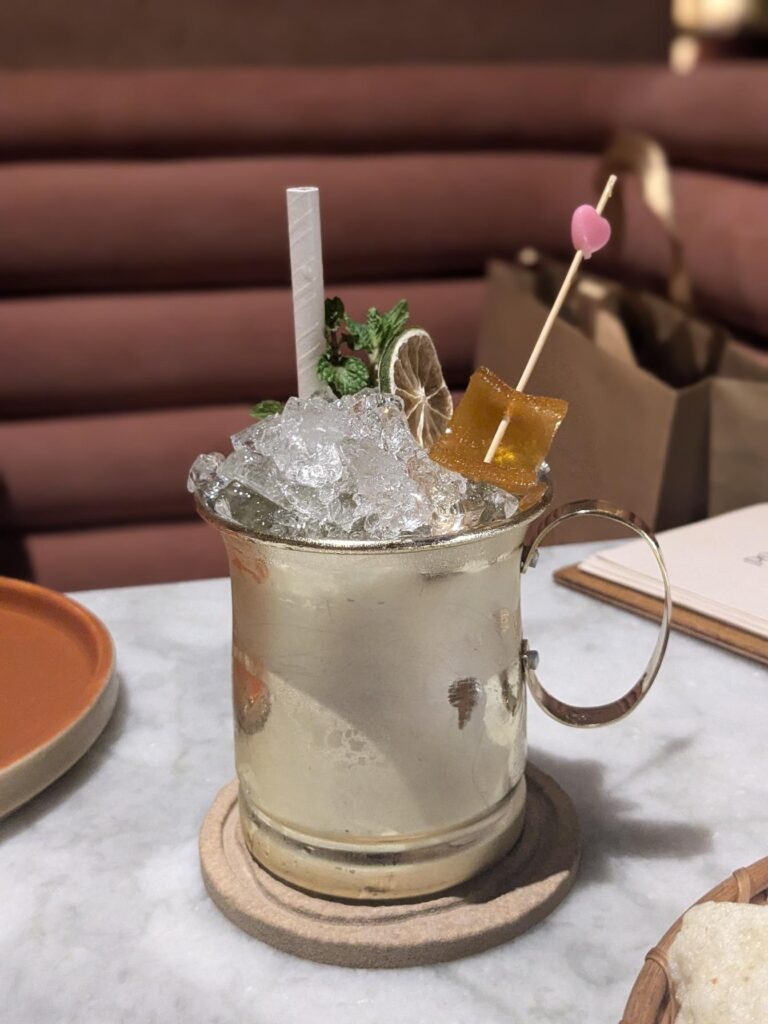
    The Kashmiri Old Fashioned was what I came for. Roasted raisin infused bourbon, spiced Demerara almond syrup, and in-house Kashmiri bitters was how it differentiated itself from the standard version. I enjoyed it because it didn’t go overboard on the sweetness and they didn’t scrimp on the alcohol.

    Idyll Indiranagar Bangalore

    D tried the Kerala Mango Pachadi – tequila based, with strained mango pachadi and a few other ingredients, which turned out to quite good. As always, looked prettier than my drink too!

    Idyll Indiranagar Bangalore

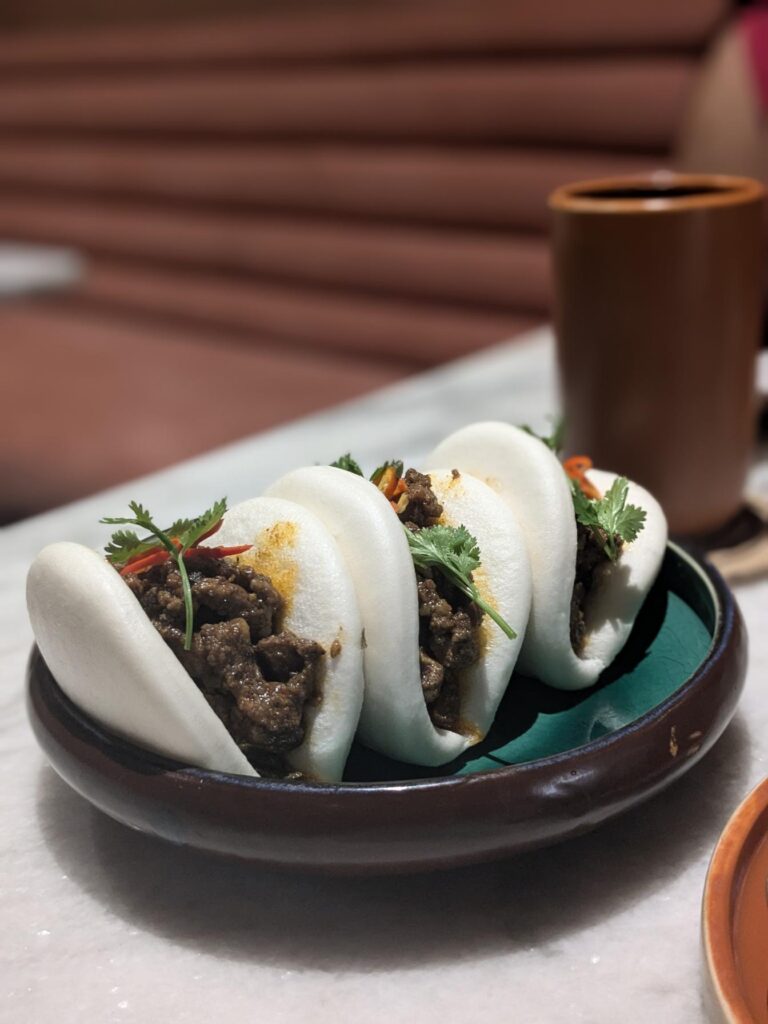
    We started with a Pandi Pork Bao – slow cooked pork belly in Kachampuli vinegar with fermented Thai chilli. We loved the spice level, the well cooked meat, and the superb flavouring.

    Idyll Indiranagar Bangalore

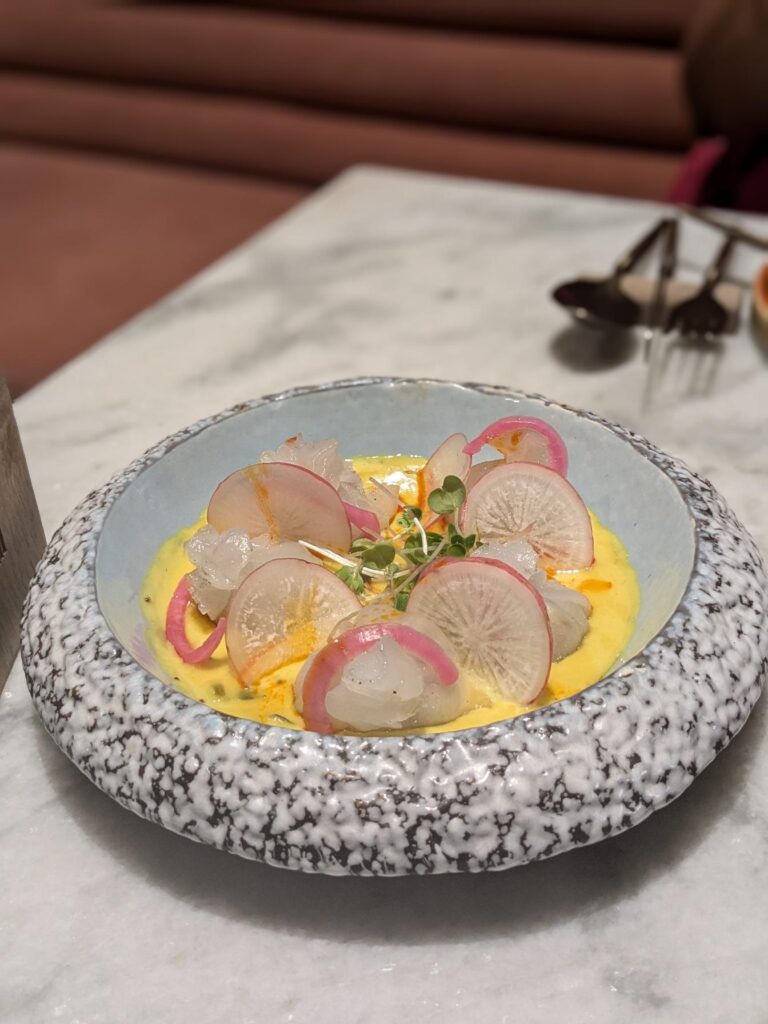
    Meen Moilee Dimsum made us very curious. River sole, coconut milk and fermented chili oil. I think, once you get used to the idea of the weird combo, it is tasty enough. 🙂

    Idyll Indiranagar Bangalore

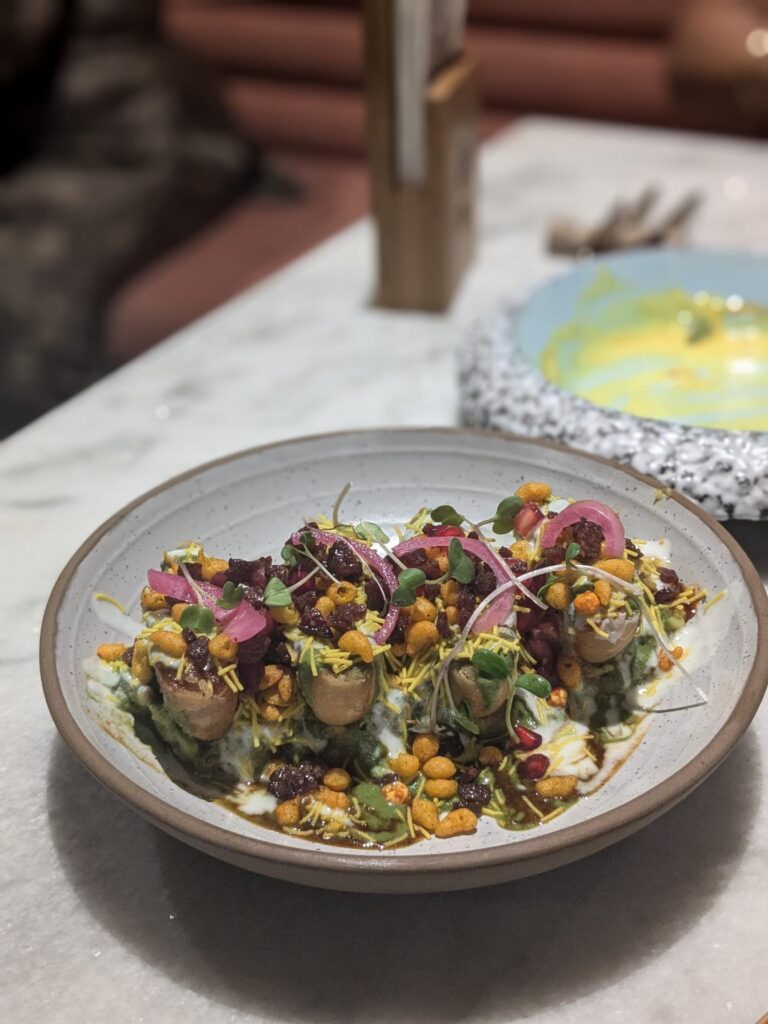
    The last dish we tried was the Chorizo Kachori Chaat, which is your typical chaat with Goan chorizo. It wasn’t bad, but this, I thought, was the one that did the fusion the least justice.

    Idyll Indiranagar Bangalore

    The bill came to a little over Rs.3700. Indiranagar pricing, but hey. Excellent food and drinks, prompt and helpful service, and a peaceful ambiance if you get there early.

    If you like a little bit of experimentation, try Idyll when you’re around next.

    Idyll, 608, 12th Main Road, HAL 2nd Stage, Indiranagar, Ph 6364315734