• The abstraction of trust

    Usually, I use evolution. But that indicates a forward movement, and in this case, I am not so sure now! I had a thought on how the notion of trust in transactions has changed, and felt that I should document it, even if it’s in a super simplistic way!

    1. It began with a producer/consumer – consumer/producer relationship in the form of barter.

    2. A central currency suddenly opened up trade and now it could just be producer – consumer

    3. That also meant that a middleman could enter the system, hence a producer – seller – consumer (more…)

  • Stories of your Life and Others

    Ted Chiang

    I’m a fan!
    One of the reasons I like science fiction as a genre is because of its ability to broaden thinking horizons. This is speculative fiction at its best! Each of the eight stories is different yet wonderful in their own right, because they explore realms not just with imagination but with humaneness.

    What makes it even more fascinating is that unlike the usual hits in the genre, none of the stories are set in the future. In fact one is based on the Tower of Babel, another is more aligned to steampunk and the others seem more an alternate present than an alternate future. What is common among all these though is that the reader doesn’t really feel the temporal shift. Somehow the author normalises it in the first page itself! (more…)

  • Vapour Brewpub and Diner (Sarjapur Road)

    A microbrewery is compulsion enough for me to travel to any part of Bangalore, even Sarjapur Road. Some people are not completely in control of their faculties after a few beers, craft beer works for me the other way. That probably explains why I forgot that two of my least favourite microbreweries outside of that hideousness called 3 Monkeys exist on Sarjapur Road. In my defense, our visit to Vapour in Indiranagar, despite the negative reactions we had heard, wasn’t bad at all.

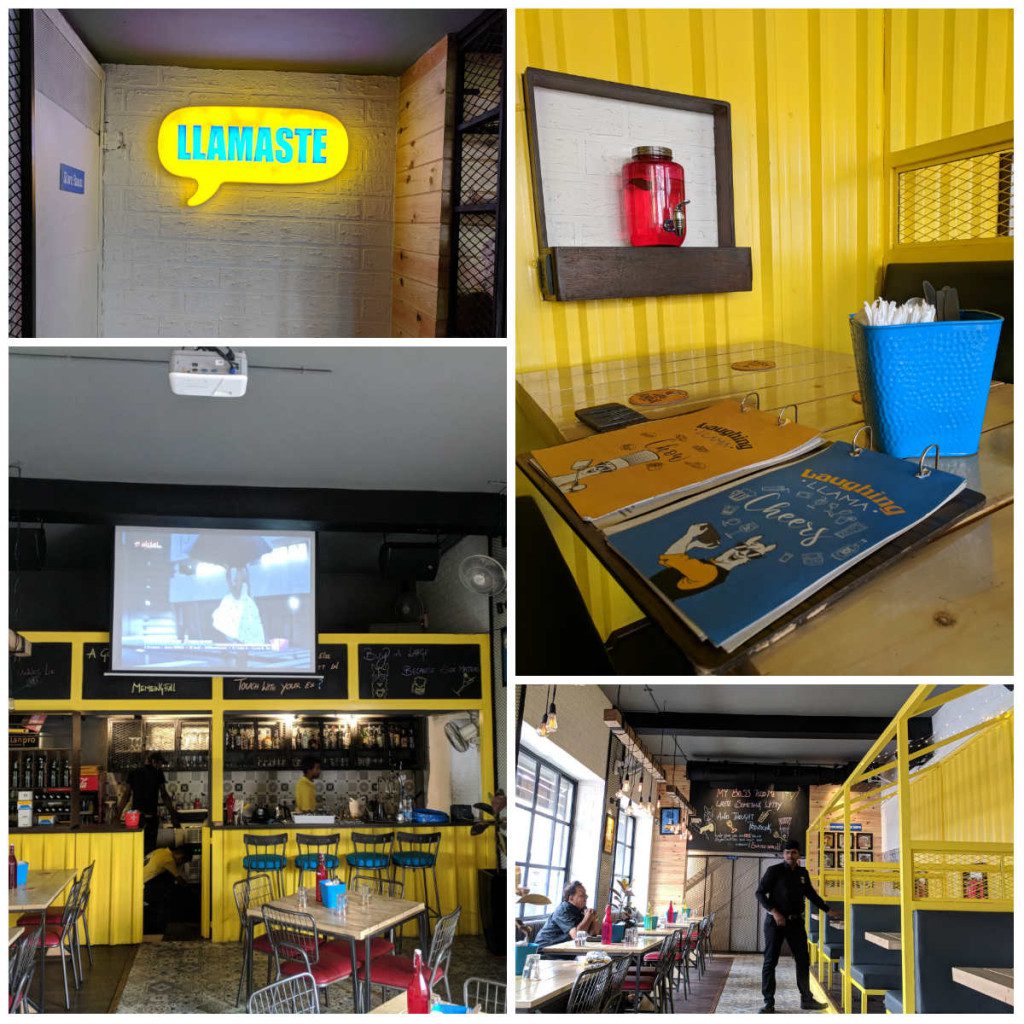
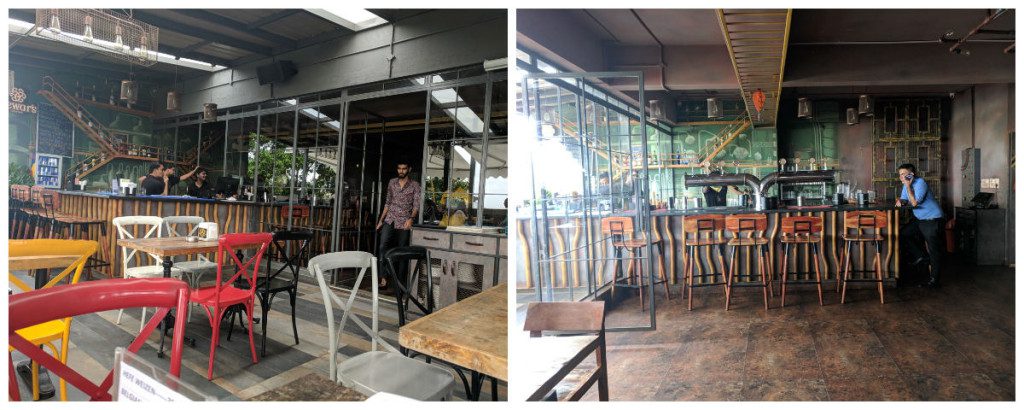
    So one fine cloudy Sunday, we chose to travel to Vapour. The place is huge, and while we were there, the alfresco section was kept closed. Predictably, they tried to squeeze everybody into the areas they had kept open. We got ourselves a table on the upper floor. The decor is very lively, despite the distraction of a giant TV. They had a DJ as well. There was a buffet available, but we chose a la carte.

    collage 1 (more…)

  • Expectations? Surely you’re joking!

    Borrowed one part of the title of the book that sparked this thought – ‘Surely you’re joking, Mr.Feynman!’ Towards the middle of the book, Feynman talks about the time he got incredulous job offers and wondered how he could ever meet the expectations. A colleague explained to him how he (Feynman) was doing a good job of teaching, and any other expectation that the university would have of him was subject to luck. They might get it out of him or not, and they were ok with the risk. Freed Feynman from guilt, and gave me a thought on expectations.

    If I plot a me/others and meet/don’t meet 2×2 matrix, I get 4 boxes. Let’s take the easy ones first. I meet expectations, and so do others, life is awesome. I don’t meet expectations, others don’t, I think that would follow a natural progression of drifting apart. More on that in a bit. (more…)

  • Travelling In, Travelling Out

    edited by Namita Gokhale

    I haven’t read a travel book in a while, and there couldn’t have been a better book to welcome me back into the genre. I think it was the mention of Mishi Saran, whose Chasing The Monk’s Shadow I really liked, that made me aware of this book.

    What I loved about the book is its exploration of what travel could mean. That takes the book far beyond the standard travelogue writing. Journeys can be of different kinds – the simple physical movement from one place to another, to the exploration of the self within, “thought to thought”, to seeing things in a different light and so on. This book has all that, and more.

    Devdutt Pattanaik sets the tone well with the exploration of the idea of travel seen through the lens of Hindu mythology and civilisation and brings up the concept of parikrama – returning to the point from where we started. Ashok Ferrey throws in a fantastic light touch immediately after that – fortunes changing with time. This humour finds a neat continuation in Marie Brenner’s take on holy India for the 5 star set. The tinge of cynicism is given full throttle in Mayank Austen Soofi’s time travel in Nainital, but balanced beautifully with nostalgia and wistfulness.
    Bulbul Sharma’s journey to the hills is as much a journey within, and it talks of a place that almost stands still in time. This theme resonates in the detailing of Nobgang by Bhutan’s Queen Mother. A darker turn of places where light does not enter is Ipsita Roy Chakraverti’s exploration of the haunted fort of Bhangarh, and her writing forces one to acknowledge the limited understanding of forces unseen. Both MJ Akbar and Rahul Pandita throw light on yet another nuance of places in India that have remained outside of time, and people who continue to be exploited.
    Mishi Saran’s “A House for Mr.Tata” is a poignant tale of a place changing even as its memories remain firm in the minds of those who inhabited it. The closure missing in this is exactly what happens in Urvashi Butalia’s partition based “The Persistence of Memory”. Indeed, some journeys are for exploration, and some others, for closure. (more…)