In vs Amazon, I had cited Simon Andrews’ article – it might be “easy” to get about $50m, the journey to $100m and beyond gets tougher because efficiencies start maxing out. In this context, “efficiencies” relate to acquisition when building a DTC business. It led me to think of “maxing out efficiencies” in the broader context of the organisation and the business environment it operates in. (more…)
-
Float
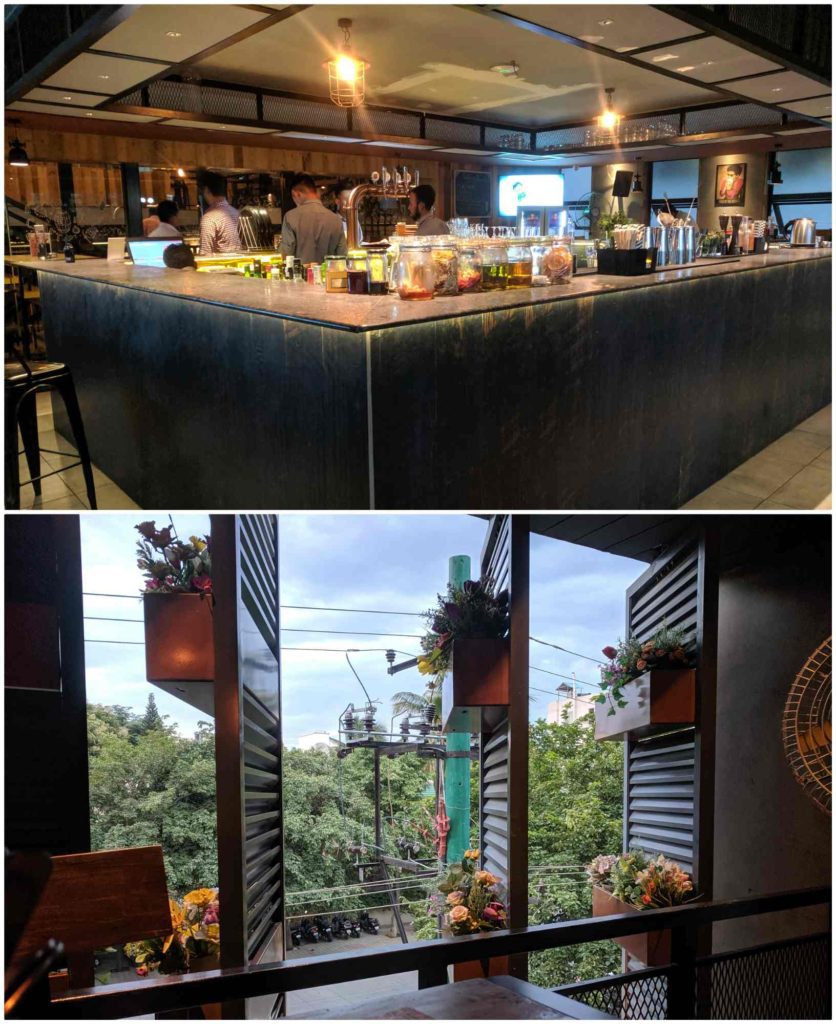
Kalyan Nagar is a favoured food hangout and Float got into our list when we had made the trek that side for Wanderers. While that place didn’t curry any favour with us thanks to its obsession with curry leaves, we live on hop and cannot resist a microbrewery!
Float is spread across some four floors, each of which seemed to have multiple sections! How do these places break even, and when?! We sat on the first floor, next to pretty windows that overlooked the road. High seats, which bordered on uncomfortable.
-
The Mammoth Book of Alternate Histories
Edited by by Ian Watson, Ian Whates
The idea of “what if?” has never failed to fascinate me, especially in the context of history. What if the Roman empire had survived, what if Christianity never became a religion, what if the Caliphate was victorious, what if the bombs weren’t dropped in Japan, and so on. Since this was a collection of stories, I knew that I’d like at least some of them, and that’s exactly what happened. These are my favourites from the collection.Sidewinders explores the popular concept of parallel universes, with a few people possessing the ability to travel between them. Dispatches from the Revolution is a very interesting take on an alternate America, ironically one that features a “madman” in the White House, but in the past. Another take on the subject is His Powder’d Wig, His Crown of Thrones, in which the British won the War of Independence and the idea of America ironically lives on in the underground culture inhabited by American Indians! Speaking of Indians, The English Mutiny is a reversal of India’s first rebellion against the empire in 1857. India is the ruling force against whom the English mutiny! -
The half of it
It’s that time of life, when there are a bunch of reunion invites – school(s), engineering, MBA. The sudden influx makes me realise that it’s halftime. We are pausing – to collect our thoughts, to take a deep breath. I wonder aloud to D if the journey is like a mountain, and halftime puts you closer to the peak. The way is downhill and you can read that in more ways than one. Maybe that prompts folks to look back at the journey and savour the moments – the significance and insignificance, the hits and misses, the gains and losses. Or maybe it’s just a moment taken to catch our balance in a world that’s changing at a dizzying pace, and to seek the anchor of certainty that the unchanging past provides.
-
Aurum Brew Works
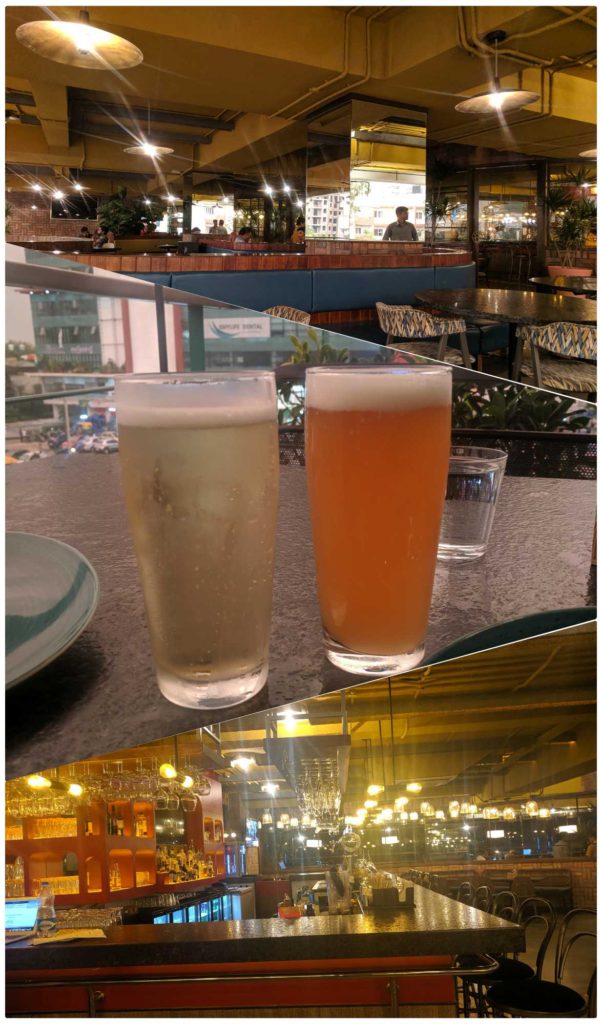
After the horror story that was Vapour, we had sworn off Sarjapur Road. But a peaceful Saturday evening, combined with a reasonably good experience at Sarjapur Social a few weeks ago, and favourable reviews of the new microbrewery, got us back to the area and specifically Aurum Brew Works.
The dingy access lift got us panicking a bit on whether we had gotten it wrong, but we were fine once we were in. We chose to sit outside – the weather was pleasant and there was a skyline view to be enjoyed.
Not all the craft beers were available. We tried the Amber Lager, Witbier and the Cider. The last one was seasonal and was just ok. The Lager was the best of the lot and the Witbier was quite good too.