• Metaverse: Get a second life

    What’s real?

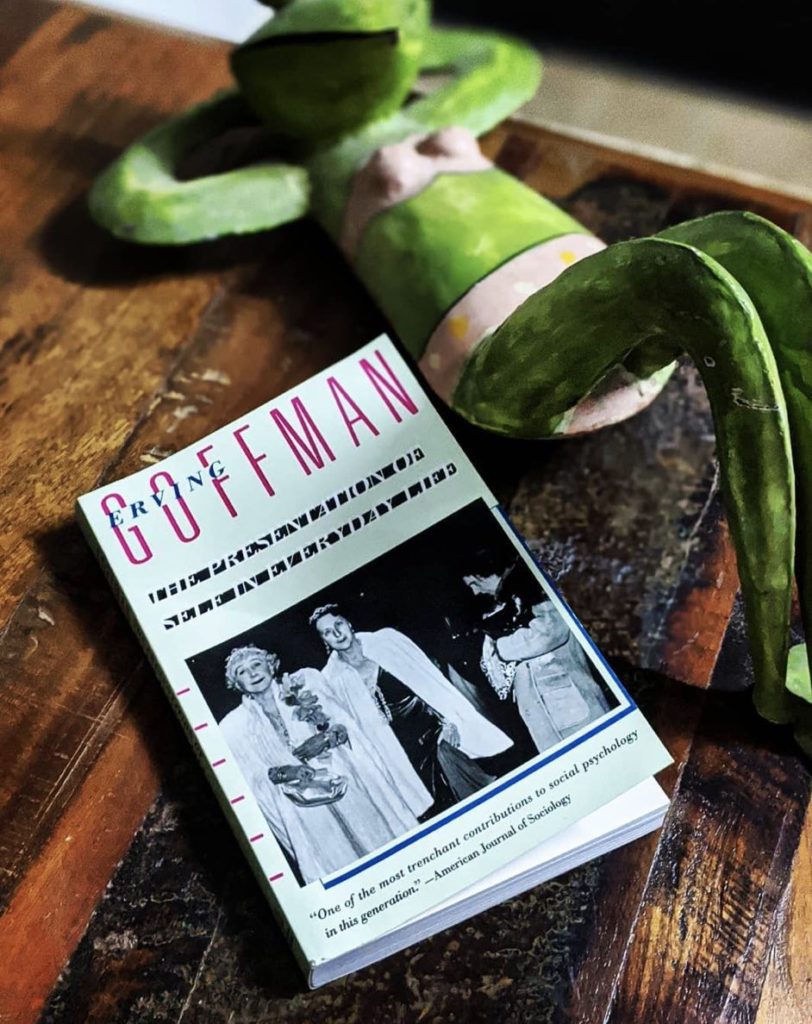
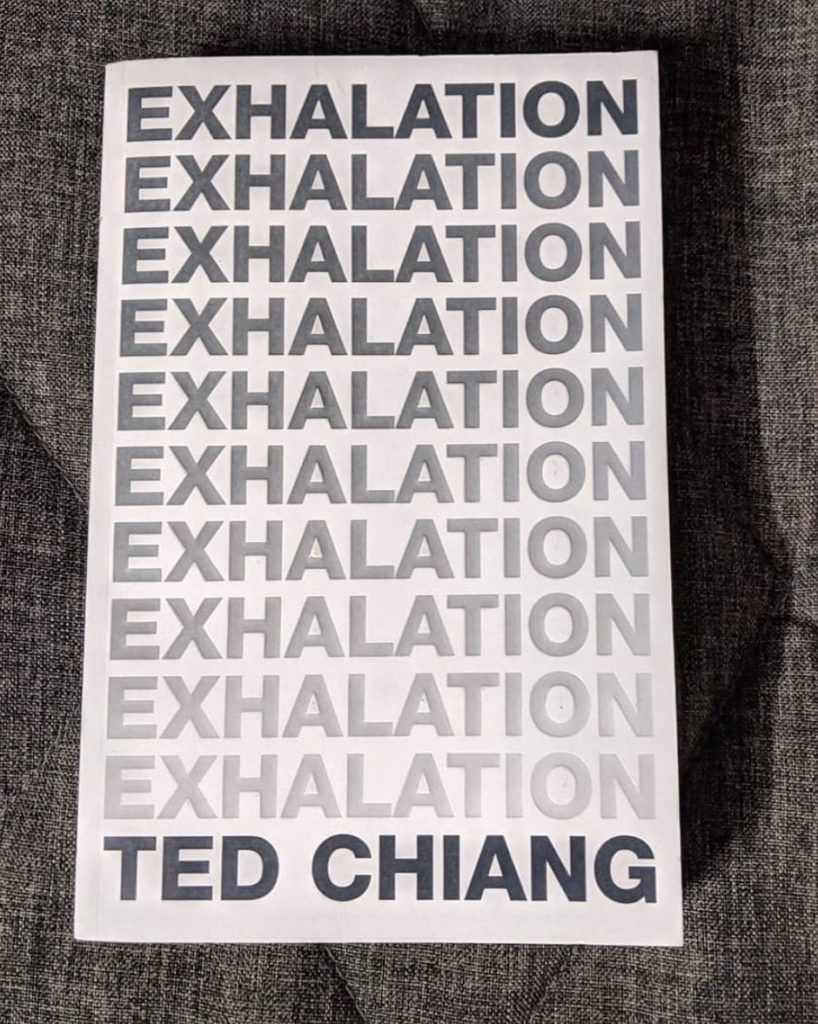
    I read The Real-Town Murders around the same time last year. It is set in England in the near future, or at least partly so, because it also features Shine, “the immersive successor to the internet” into which people are happily plugged in.

    More recently, in “Why is this interesting?“, I learnt of Roblox, apparently used by three-fourths of all 9- to 12-year-old kids in the United States at the moment. It’s more than a gaming platform, it is a single digital location that now offers all her old activities: playground, schoolyard, theater, and mall all in one. Thanks to the pandemic, and the digitisation that it has fast tracked, an entire generation might have a different definition of “real”. In the real world of adults, gaming is on a tear, and many reports claim that AR and VR are on the cusp of massive adoption. To note that Snapchat is the king among social networks for a particular generation.

    (more…)
  • The Anarchy: The East India Company, Corporate Violence, and the Pillage of an Empire

    William Dalrymple

    There was so much money in India – that’s one of my biggest takeaways from this book! Every other page has a note at the bottom that shows the current value of the money that was paid to a local mercenary or the Company as protection money, or a deal as simple as crossing the river safely! I am exaggerating only a little bit. It reminded me of the inane charging for random things by modern airlines, and corporations in general trying to squeeze out every bit of revenue from the average user. And the story of the East India Company is exactly that – a corporation that arrived in India for trade, and ended up pillaging the country and finally giving it to the Crown on a platter.

    Dalrymple begins from where it all started – London, 1599, when the idea of the company was first discussed seriously by a diverse set of individuals. Though not an original idea, the joint stock process allowed the Company to raise resources efficiently in the beginning, and until things went south, provide handsome profits to its investors. The book traces the Company’s trailblazing journey in India, one that features not just its own principals like Clive, Hastings and Wellesley but the local rulers and power brokers as well – from the Mughal emperor (in name) Shah Alam, and Tipu Sultan to mercenaries like Benoît de Boigne who helped shape the Maratha army into one that matched the Company’s own fighting force, and interesting characters like Begum Samru, a feisty courtesan who became a mini-ruler in her own right! Some familiar from history, and others from the author’s own earlier works (like James Skinner from White Mughals). A word on Shah Alam – he is a far cry from his glorious predecessors, but in an age when living till 50 was a luxury, the man survived every tribulation that was thrown at him and lived into his late 70s even as his enemies perished around him.

    It is amazing how, from an inconspicuous office in far away England, with less than a hundred employees, a corporation controlled the destiny of a land as large and diverse as India. It was in 1600 that the Company received the charter from the Queen, and by the early 1800s, they had defeated the last credible threat – the Marathas. These two centuries are full of intrigue, and there are multiple occasions when a single different decision or event (e.g. if Nelson had not sunk Napoleon’s navy and the latter had been able to give Tipu an assist) might have resulted in an entirely different contemporary history. Politics – the English replicated the Roman divide et impera, and economics – many of their moves would have been impossible without local financing – went hand in hand in what was the first hostile takeover of a nation by a business entity. That’s not the only first – abuse of corporate power, lobbying, unfair trade practices, the Company pioneered all this. And finally, in another first, it had to be bailed out by the government because it was too big to fail!

    If you’re a history enthusiast, this is obviously a must-read, and even if you’re not, this is a fascinating piece of history that you’ll enjoy.

  • The future of Fintech marketing

    First published in ET Brand Equity

    Fintech is one of those small words that contains worlds. Just like marketing. While the former could be payments, lending, insurance, wealth management, neobanks etc, the latter includes brand management, digital acquisition, marketing automation, social media and so on. A combination of the two makes for a complex mix. It also means that crystal gazing has its limits and there really is no common answer. Having said that, let’s try our hand at “how it started, how it’s going to go…”

    Audience & Access: India’s digital economy now boasts over 700 million connected users. As per RBI data, the number of digital transactions are expected to make a 12x jump from 125 million a day in 2020 to 1.5 billion by 2025! Fintech has made leaps over the last 10 years – starting with personal finance products such as banking accounts and deposits, moving on to mobile payments and e-wallets, and finally leading to a full bouquet of financial services including trading, insurance and wealth management. But the pandemic has been a force multiplier for digitisation in many sectors, including personal finance. This audience avalanche means that marketers have to revisit their segmentation and personas, and deal with different cohorts of digital audiences at different levels of maturity. What are the new user segments, what financial products and services would they like to access, and what are the new use cases that will emerge?

    Brands & Behaviours: With new segments emerging, education and awareness will need to go hand in hand with acquisition strategies, and nuanced, personalised communication for different segments. While financial products on digital platforms may not be completely new to many consumers, brands will still need to earn the customer’s trust. This is especially true in the context of an unfamiliar investment product or service, and might require a revisit of customers’ needs, barriers and opportunities.

    This is crucial because we’re now living through a kind of liminality, a period marked by the uncertainty between an old normal, and what emerges next. Even more than before, marketers will need to have an empathetic mindset. Channeling this into communication will be necessary to build trust. Beyond actual trials, different consumer segments would have different surrogates for trust. And old wines and new bottles have challenges. Take celebrity endorsements, or its (relatively) poorer cousin – influencer marketing. Or “cause marketing”. All of them are susceptible to social media vigilantism and cancel culture, even as manufactured word of mouth thrives.

    The pandemic has forced us to relook our lives, and maybe even did a Marie Kondo on our lifestyle choices. “Experience shapes memory; memory shapes our view of the future.” What is the impact on the spending, saving and investing habits of your existing customers? What behaviours will we continue, what will we drop? Whom will we trust on money matters, and why?

    Cords & Cookies: We’re in the era of the second screen. After all, some people still use the television when they want a large screen experience. But seriously, though cord cutting may not be mass yet, such has been the rise of OTT and digital consumption in general that the erstwhile second screen is practically the first. This has a huge impact on the media mix, especially because of the range of customisation that’s possible on digital media. Of course, you might still be an IPL sponsor if you’re a mass brand, but it’s definitely possible to build brands with digital as the primary medium. Not that it’s without challenges. Some level of precision targeting will continue to be an option at the top of the funnel, but privacy concerns are making a cookie-less world imminent. Even as adtech is scrambling to find a replacement for cookies, (I believe that) first party data and a non-cookie cutter approach is something brands should focus on. Codeless designing, chatbots, and the ever increasing tools of marketing automation allow the digital marketer to create custom journeys using demographic, behavioural, and other parameters. Content marketing using multiple formats is still a great way to build domain authority and trust. Podcasts have seen quite a lift during the pandemic. In short, we have moved further from mainstream to many streams.

    Data & Delivery: The common theme in all the above points is fragmentation – of markets, messaging and media. And this is essentially what the future looks like. The challenge for the marketer is to ensure narrative cohesion. This requires us to get comfortable with collecting and analysing data, and being able to deliver this understanding via communication and channels. The other kind of delivery we’ll be responsible for is ROI. This will require us to find new ways to measure both effectiveness and efficiency across campaigns, channels and market segments.

    In closing: The “new normal” is unlikely to be the normal we knew. Especially for marketing, because even after the pandemic goes away, the uncertainty will linger in consumer minds. Despite the abundance of choice that customers have, there is an opportunity for brands. As Scott Galloway has astutely pointed out, “Choice is a tax on your time and attention. Consumers don’t want more choice, they want confidence in the choices presented.” In the race for wallet share, trust continues to be the best currency. Building a trusted brand in a fragmented world takes time and a growth mindset. It’s good to remember that there are no perfect solutions, only conscious trade-offs.

  • The Wizard and the Prophet

    Charles C. Mann

    The world is only a few decades away from reaching a double figure billion population. We’re already experience a scarcity of many things we take for granted – clean air, potable water, affordable food and scalable energy sources. How will the species survive? There are two lines of thought – both with the same intent, but fundamentally different approaches.

    Represented principally by Norman Borlaug (the wizard) and William Vogt (the prophet), this book juxtaposes these diverse lines of thought in the context of the four main resources – food, energy, air and water. Vogt sees nature as the main protagonist and the human species as one among the diverse cast of organisms. As per this view, humans have to understand and play within the constraints of nature. Borlaug considered humans the principal character, and nature as raw material that the species could reconstruct to its own advantage. It was just a matter of finding the right methods and technology, and educating people. A “worldview that valued efficiency rather than empathy and the spirit.” Two different ways to survive, and thrive. In a way, scarcity and abundance thinking.

    Funnily enough, even though both men were (almost) contemporaries, they crossed paths only once. Their arguments and their supporters and followers more than made up for it though!

    In addition to this very interesting philosophical debate, the book also works as a rough biography of Borlaug and Vogt. Both of them went through many trying circumstances, and whatever they have achieved is a tribute to their tireless spirit.
    Another very interesting section, towards the end, throws light on the behind the scenes action of the Green Revolution in India and Pakistan. It is amazing how events such as the Cuban missile crisis, India’s wars with China and Pakistan, and even Nehru’s death all had a crucial role to play! It was touch and go a lot of times and worth a screenplay.

    All of this makes for an interesting read and I wish the author had made it a bit more accessible by focusing a little less on the detailing. It is not an easy read, but it does provide some excellent perspectives on topics such as global warming, fossil fuel scarcity, GM foods, all of which have an increasing impact on our daily lives.

  • Geist

    And thus it is, that after six months, finally there’s a food post here! When I wrote the last one in March, I wondered whether at the time of publishing it – May – the virus would be in the rear view mirror. What an underestimation that was! The actual time till the next visit turned out to be seven and a half months. That’s the kind of year 2020 has been. True to the spirit of the year, we visited Geist on Halloween, a couple of days after they had opened. The photographs I had seen on Twitter did a good job of convincing us to finally step out!

    The location is accurate on Maps, though after we passed the gate, the looping path did give us a few moments of doubt on whether the place was open. Later, I also wondered whether this would add to the loopiness as one was getting out of the place after a few beers! Anyway, we were finally rewarded with  open spaces,  abundant greenery, and excellent beer and food. As Mr.Narayan, the CEO of Geist pointed out, a banyan, a peepal and craft beer do make a good recipe for nirvana! Word had definitely gotten around, because we found the place fairly packed. I mean that loosely because there was enough space between tables. Also present were the other “artefacts” of this era – sanitisers at multiple touch points (punintended), and masked service staff.

    We first ordered what we came for – craft beer! Six out of the nine beers were available, I started with a German Lager and D asked for a James Blond. The latter turned out to be a good way to tip the hat to Sean Connery, though we didn’t hear the news until later. The lager had the perfect level of maltiness, and the Blond, a Belgian ale, was smooth and fresh. Since good pork was something that had eluded us for a while, we immediately agreed on the Pork Seekh. Well cooked, great flavours and superb texture. From the tricolour dip, I loved the spicy red the best. The Bacon Thecha Kulcha was next. More subtle than the previous dish, we would have loved to see more bacon in this one.

    I liked the sound, and taste, of James Blond enough to have it for my second round. D went with a Witty Wit, a light and easy drink. The Coorgi Pork (should be Coorg is my understanding) was quite enticing, but we finally went with the Baffat Pork Cutlet, which came with an excellent spicy gravy and spaetzle. A great way to end an Oktoberfest that never was!

    The service was friendly and polite. An excellent rock playlist enhanced the ambiance, and we felt lighter by a little short of Rs.2400. A dine out after more than 200 days though, felt priceless!

    Geist Brewing Factory – Restaurant & Beer Garden, No.23/3, 21st KM Stone, Old Madras Road Nimbekaipura, Bidarahalli, Uttarahalli Hobli, Bengaluru Ph: 8861557576