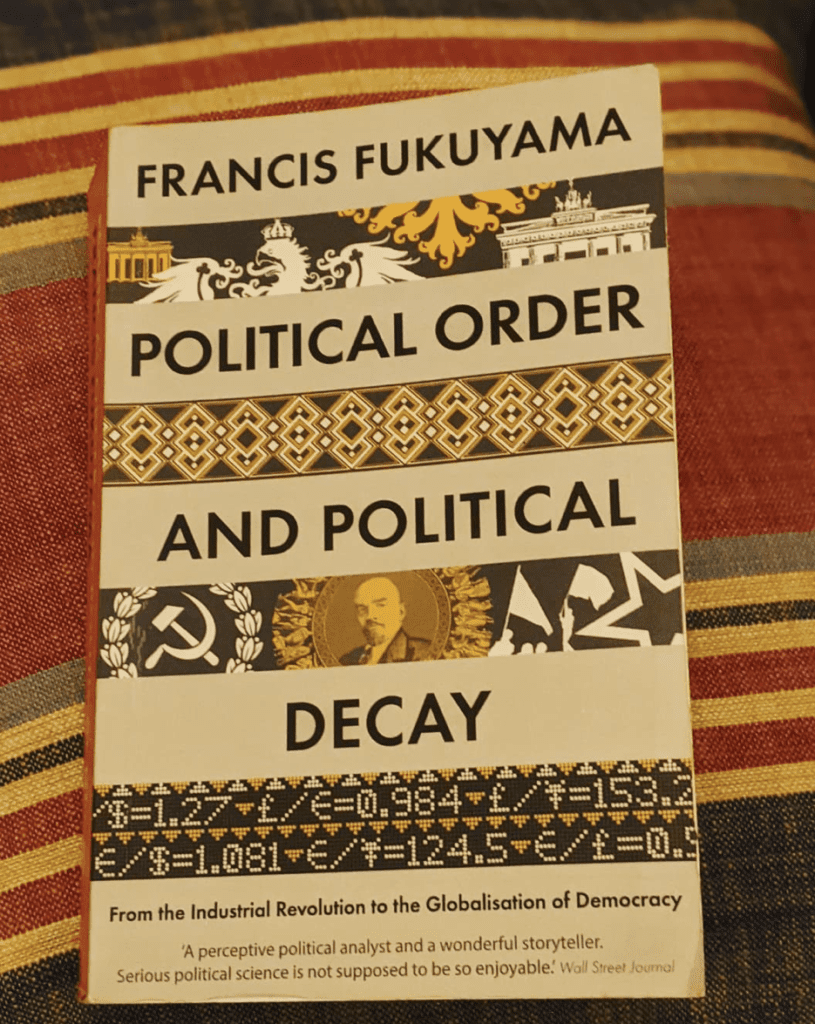
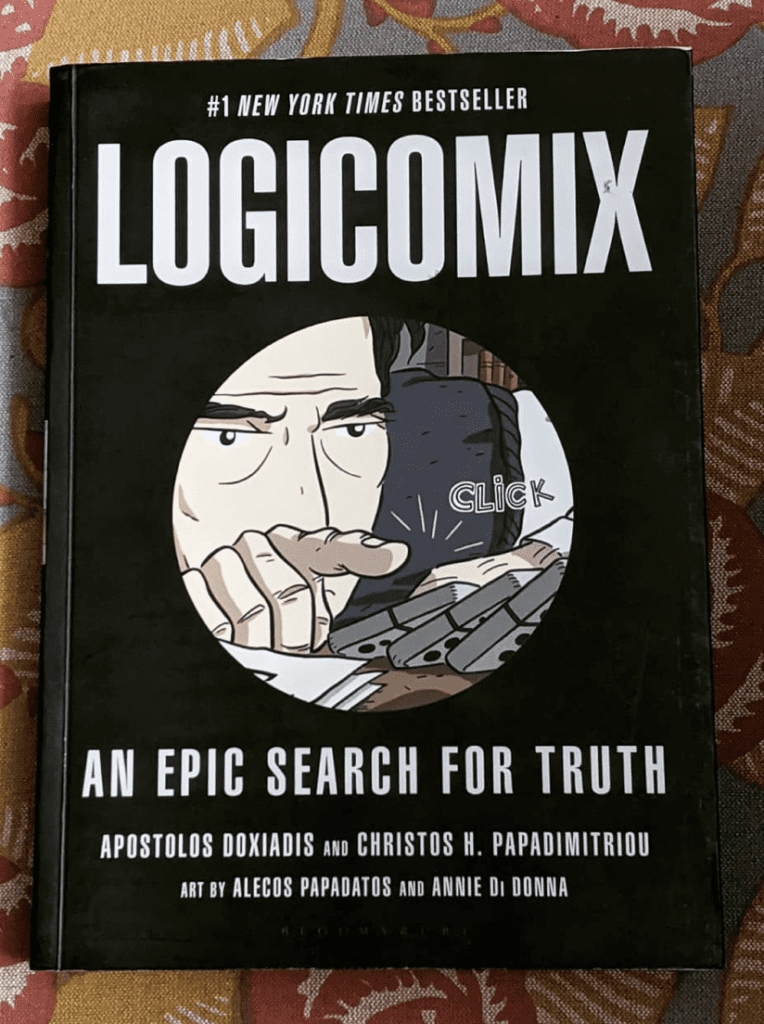
• The illegibility of freedom

    I often blame evolution for my compulsive planning. “Blame” is probably the wrong word, since I think of it as one of only two factors that gave our species an edge. The ability to project – think about the future and come up with ideas on how to navigate it had, and continues to play, a role in survival. (The second is language, which gives us the ability to communicate and organise people around ideas). Projection leads to some level of planning that does at least two things. One, by charting out the knowns and unknowns, make the entire journey more efficient and predictable. And two, by seemingly knowing the path ahead, one can create a narrative, that makes the past, present, and future legible.1

    I also console myself that both of these are phenomena in the world at large. An earlier era was complicated but offered opportunities for planning to increase efficiency. Starting from agriculture to the printing press to the first and second industrial revolution, we have progressed and systematically improved human lives with increasingly efficient systems and processes. That is probably what led to our techno-capitalist hubris that we could know and solve everything. But we now live in a far more complex world. We can project, but the variables in planning have exponentially increased. That doesn’t stop us from expecting though, and we use everything from astrology to machine learning to rid us of uncertainty. It manifests in everything from company projections to predictions & trends to even daily apps. We trust Amazon, Uber and any of the food delivery apps, because they are predictable.

    But in our efforts to maximise predictability and make the system of the world legible, we have created increasingly connected and correlated structures, so that the risk of one epoch-changing event is now magnified. It has also led to an attitude of zero-wastage, in terms of time, thoughts, processes etc. That, in turn, has reduced our exposure to unknowns and the potential to create low-risk scenarios from which we could learn how to handle larger crises. There are other side effects too.2

    And these themes also reflect in individual lives. In my own life, I have relied on planning to make life as risk-free as possible and craft a legible self-narrative for ourselves by focusing on income and investments. Correlated. This also means that there is a desire for predictability, and an urge for efficiency. Which further means that the exposure to anything that doesn’t provide this is reduced. All of this, to achieve the freedom I seek. In The Impulsive Path to Freedom, I wrote about how I was trying to move beyond efficiency and into an abundance mindset by creating money and time slack. In If it makes me happy…, I pointed out the realisation that more than a narrative and meaning, what I probably seek is the feeling of “being alive”. The idea is that the slack will enable me to have a more visceral experience of life as opposed to one that is mechanised and optimised for efficiency. Time, for the mind to play.

    Intuitively, one would think that it’s the control (predictability, efficiency) that would automatically provide the freedom, but to me, that control is a never-ending quest. In fact, it’s the opposite – giving up the need for control – that allows me to free. But this also brings in unpredictability and the possibility of things not being planned or going according to plan. Not a comfort zone for me at this point. I now realise that I won’t be able to approach it in a binary fashion. It’s a continuum I have started on, and I have no idea where it will take me. And that, is the illegibility of freedom.

    1 A big little idea called legibility

    2 The loss of life skills and memory that I brought up in Regression Planning, the increasing inability to have an informed opinion – In Other Fake News, what gets lost in the race for efficiency – An efficient existence, and the attempted conversion of whatever agency/free will we have into predictable behaviour, as I wrote in Default in our stars.

  • Raj: The Making of British India

    Lawrence James

    Well, well, history isn’t what it used to be! At least not when I juxtapose this book against what I was taught in schools. As Lawrence James notes in the Epilogue, a past shaped by foreigners reminds a nation of its submission, and doesn’t really bode well for pride or self-confidence. So we lionise our own efforts and heroes and shape a new narrative. And that is what goes into the history books.

    The good news is that India did become free from British rule on August 15th 1947. The original deadline was June 1948, but as with most everything else in India, the astrologers had the final say. But everything else, from the time the British first arrived on Indian shores, to this event, more than a couple of centuries later, is seen through a lens that tries hard to be objective, but is also inevitably tinted a bit by the bias of the author, who is an English historian. But at least, his bibliography is extensive enough to support it. 

    The book begins with the ideal prologue – the sunset years of the Mughal empire, and then covers the first century of British presence in the first 250 pages. This includes not just the skirmishes with the French down south, but also the East India Company’s battles in Bengal, and Clive’s victory in Plassey, which apparently assumed a supernatural significance and was seen by some Hindus as the starting point of a predestined historical cycle that would last a century. No coincidence that rumours of this was in full flow in 1857, right before the mutiny. Between Plassey and the Mutiny, there was the gradual expansion of the Company’s land assets, helped to a large extent by the infighting and lack of unity among Indian rulers. The Company wanted the freedom to trade, and everything else that happened seems to be a byproduct!

    The mutiny itself seems to have been a throughly disorganised series of skirmishes and battles, with every move by the sepoys being led more by circumstances than by design. At some point, the last Mughal Emperor was seen as a good idea to rally around, and he was forced to play his part reluctantly. The leaders whom our version of history has designated as the first freedom fighters – notably the Rani of Jhansi and Nana Saheb – were at best tactical leaders more interested in the sovereignty of their kingdoms, since they were the losers in the prevalent Raj system. And there was very little impact down South, or even the West for that matter. Having said that, it did give the British a fright. 

    From then until World War 1, there are interesting sections around The Great Game, the main theatre being the frontier and Afghanistan. This was also the time when Anglo Indians started organising themselves, and Indians too began understanding, and thus demanding Home Rule. A Russian invasion was on the minds of folks on both sides, and largely that was only where it was. But this did lead to a lot of intrigue and the Afghan wars. Also interesting is how many of these incidents made its way into popular culture via books, and then movies.

    1919 was a decisive year, and it is fascinating to read about the granular circumstances that drove men to take certain actions. Case in point – Dyer, his chronic discomfort and pain from old war injuries, the hype that a huge uprising was in the offing, and finally the Jallianwala Bagh. Gandhi first rose to prominence in 1919, just after the Spanish Flu hit Indian shores, and specifically thanks to the Rowlatt Act in March 1919, against which he first experimented with the satyagraha. The book isn’t very flattering to him, and talks about his numerous failures in organising mass movements, which got away from his control very fast. “Gandhi was also a consummate showman and a shrewd politician, with a knack of projecting himself in such a way to attract the greatest possible attention in India and abroad”. In essence, very good at political stagecraft, but the cult of Gandhi was so popular that it was sufficient to give the Congress, which had its tentacles everywhere but didn’t really have a plan, a dominant status in the provincial assembly elections. Some villagers actually sent messages to Gandhi in the ballot box!

    By the 1930s, the Hindu-Muslim rifts were growing wider, and the cult of Jinnah was becoming popular. Another rising personality was Bose, whom Gandhi did not trust. Bose considered Gandhi’s moves against the British mild, and it finally took him away from the Congress, and then a ricochet across alliances which finally led to very little. The story is depressing every time I come across it. 

    The final years of the Raj actually highlights the in-fighting and intrigue among the country’s top politicians. To note that if the Labour party hadn’t come to power after the Second World War, and Churchill was still in power, the story of India would have been very different. Attlee, and his party, were more supportive of India’s self-governance. The winding up job was left to Lord Mountbatten, even though the book portrays his predecessor The Viscount Wavell as being the more capable man. In fact, Mountbatten is shown to be everything but impartial and detached. Edwina’s flirtation with Nehru didn’t help either. His lack of understanding on how princely states were coerced into accepting Indian suzerainty also led him to buckle under Nehru’s pressure. 

    In essence, the book shows everyone involved in a completely new light from what I (as an Indian) had seen thanks to my history lessons. I think we tend to regard our leaders as men with clear and objective plans, but it seems there were just ordinary men sometimes tossed into extraordinary events and trying to do what they thought was right. Strange, but historical figures are people too. 🙂

    If you’re interested in history, this is a must read. It meanders a bit, but persist and you will be rewarded with a very different picture from what you know.

  • $ocial Validation

    The presentation of selfie in everyday life is all around us, and the words I always refer to paraphrase this are

    When everything becomes image rather than action, you can’t judge the value of any act. You can only judge what it “looks like”. But when all of society is doing that, it means that you’re being judged on everything. After all, you may not always be acting, but you are always appearing. When it’s your appearance that determines worth, there is no moment to rest. There’s a social invasion.

    The Uruk Machine
    (more…)
  • The Moment of Lift

    Melinda French Gates

    “When we invest in women and girls, we are investing in the people who invest in everyone else.” That’s indeed how we can change the world, and the best part is that despite the tremendous experience she has on the subject, Melinda French Gates neither makes the book prescriptive, nor makes it about herself. 

    The book is only about 270 pages, but it covers a whole lot of ground. From maternal and newborn health, to the importance of contraceptives and family planning, to education for girls, the unpaid work that women do, and gender inequity in the workplace, it is clear that nothing in this context is an isolated problem. And to solve them, the work has to be done at both the macro and micro level. While many of the anecdotes are heartbreaking, it is a testament to the narration that one closes the last page with hope. 
    There are two things that impressed me a lot. The first is an intellectual honesty with which she approaches each subject. Right from “American billionaires giving away money will mess everything up” – she provides the reasons for this towards the end of the book, and there is a tremendous objectivity at work here. The second is the understanding that there is much learning to do. Several times in the book, she admits that she writes from a position of privilege, and there are aspects that took her time to grasp. But she spends the time to listen and learn. That’s also why she lets others tell their stories. 

    These are women in Africa and Asia who have been directly affected, but have had the courage and will to create a solution. There is compelling data, but what’s more moving is the humanity of it. The school on a railway platform, the BandhanTod network, Avahan – simple things that one wouldn’t think is a problem, or access to necessities one takes for granted, is a struggle for many others. Leymah’s story about the Liberian Women’s initiative carried an important lesson about how successful social movements needed a combination- strong activism and the ability to take pain without passing it on. That second part underlines why women are best placed to heal the angst that the world experiences every day. 
    The only exception (to letting others tell their story) is when she believes that her own experiences can get people to think differently. I found her perspectives on marriage and empathy at the workplace extremely insightful. 

    In the book, Melinda, quotes Mary Maxwell Gates – “From those to whom much is given, much is expected”. From whatever I have read, Melinda French Gates is on it! It is not just the empathy she shows towards those who are less fortunate, but the active steps she has been taking to overcome the obstacles that hold women back. The book is a compelling read, and a great learning experience.

  • If it makes me happy…

    In a workshop I attended recently, the trainer made an interesting point that being a little selfish and taking care of our own needs first will actually enable us to help others better. Around the same time, I also read this very interesting post on the conversational gambit. Extremely helpful for those of us who aren’t good at going from zero to conversations quickly. Put simply, ask a question. The one that stuck with me was “When were you happiest?” I directed the question inwards and got some answers. Then I upped it to “What will make me happy?” That was complex, but something I heard recently gave me some direction.

    People say that what we’re all seeking is a meaning for life. … I think that what we’re seeking is an experience of being alive, so that our life experiences on the purely physical plane will have resonances with our own innermost being and reality, so that we actually feel the rapture of being alive.

    Joseph Campbell
    (more…)