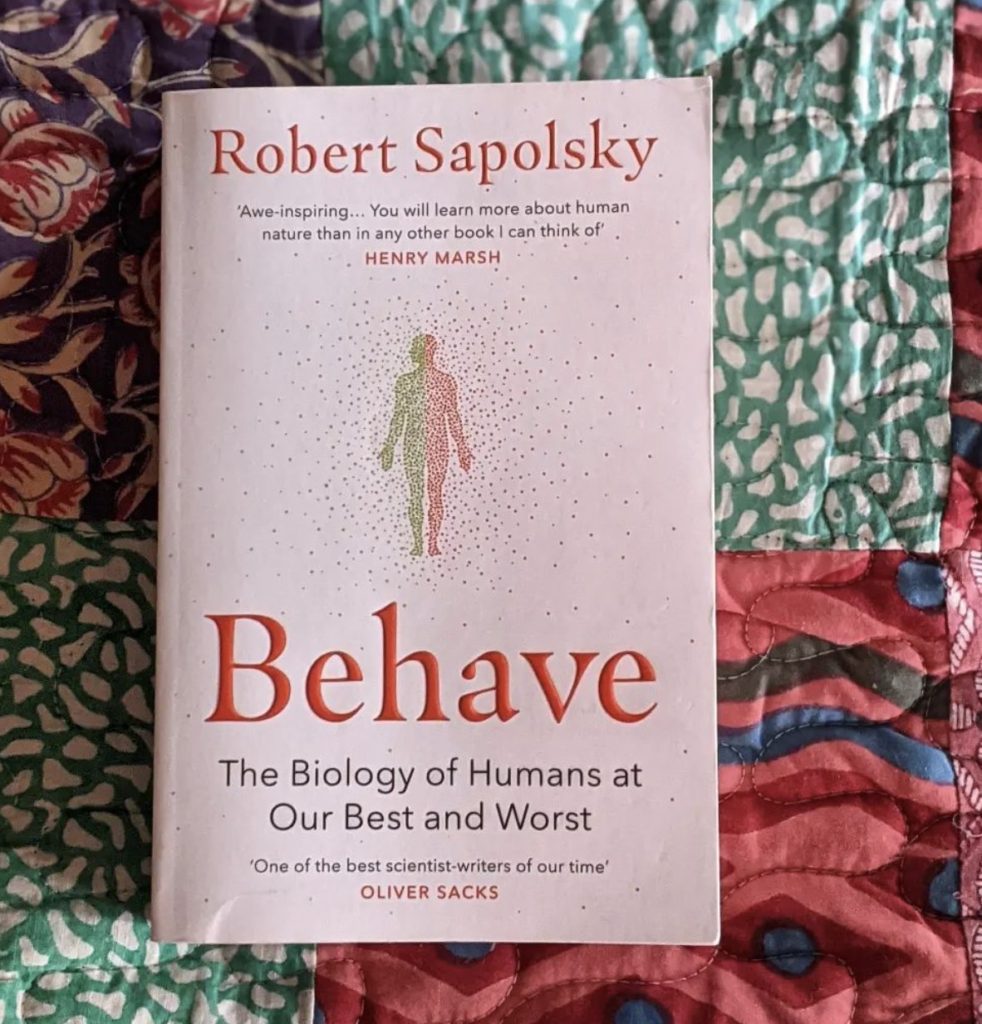
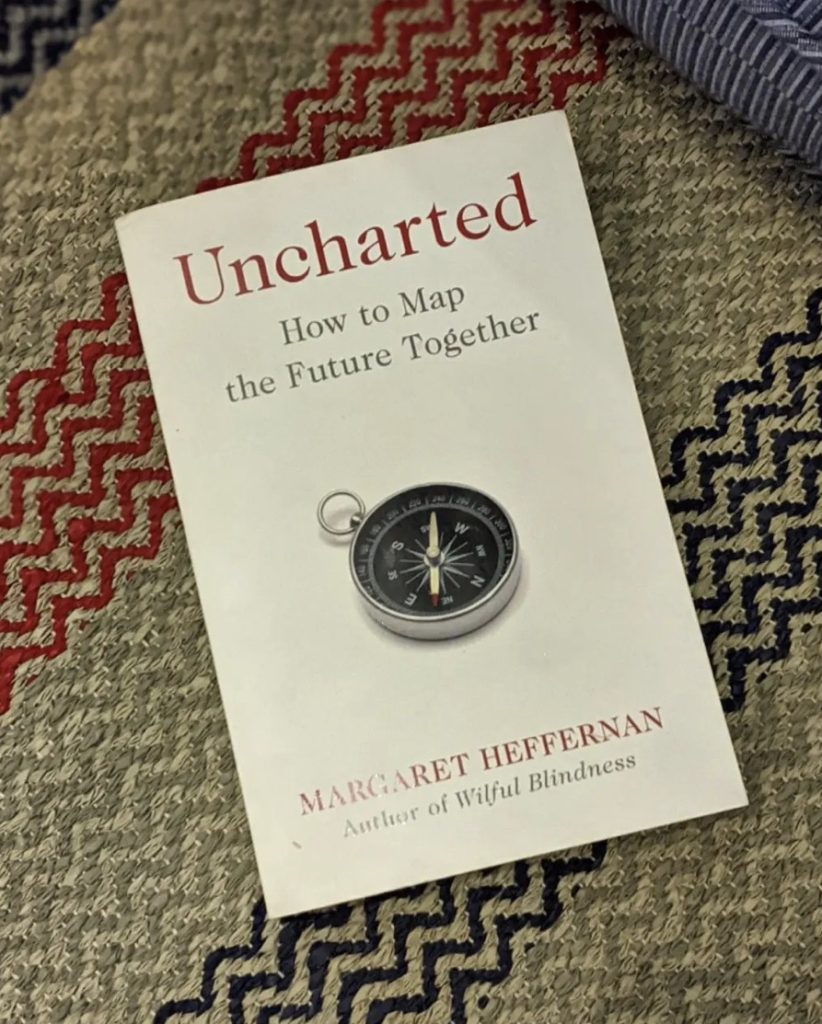
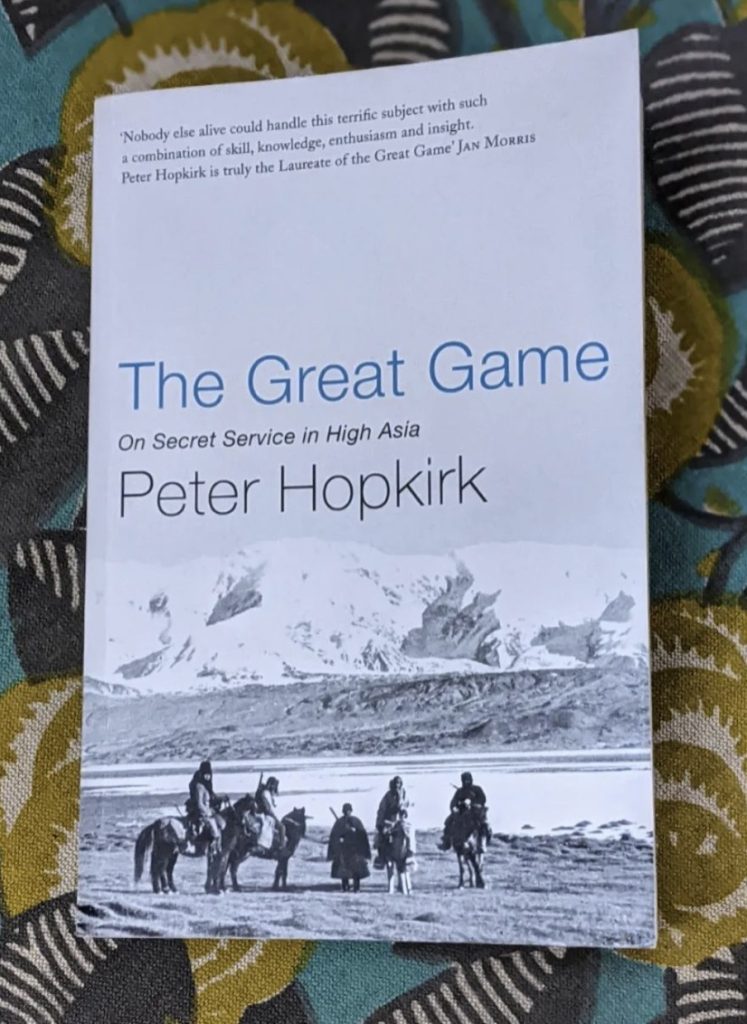
• Caste

    Isabel Wilkerson

    An artificial construction of human value, that deems one group of humans to be superior to another, based on ancestry and immutable traits, and rigidly enforced consciously, and subconsciously. Caste is not new, but surprisingly still a phenomenon in 2021. In the US, race is the visible manifestation of caste. But as the author points out, its underlying infrastructure is caste. That’s why Nazi Germany and India both serve as examples too. And that’s also why Martin Luther King, Jr., despite the initial discomfort, agreed to his introduction in a school in Trivandrum, India, as “a fellow untouchable from the United States of America“. Caste is also different from class, which is a measure of one’s standing in society marked by education, income, occupation, and taste, manners etc that flow from the socioeconomic status. This can be acquired, which is not the case with caste.

     Isabel Wilkerson sets up the context – “heat rising all around” – with the 2016 US Presidential elections, and the history of caste, including the arbitrary term “Caucasian” (on the basis of German professor Blumenbach’s favourite skull) that now denotes the white population, and the millennia-old varna system in India. It is interesting to note that while the Americans were considered heroes in World War 2, they had a history of eugenics that the Nazis took a lot of inspiration from for creating their own policies. And it wasn’t just eugenics, they even had tourism based on lynching scenes! It is also interesting that many pro-slavery losers of the Civil War are still celebrated as national heroes. Exactly the opposite has happened in Germany, where there are memorials for those who had suffered most under the Nazis. 

    She then proceeds to the eight pillars of caste – from heritability and endogamy to its enforcement, the cruelty it spawns and the presumption of inherent superiority/inferiority. When caste becomes deeply embedded, its tentacles spread everywhere, and so do its consequences. Any upliftment could be perceived as a threat to the dominant caste. Unfortunately, it also causes stratification in those who are in the bottom rungs, to the extent that many of them willingly role-play to maintain the hierarchy and acceptable forms of behaviour. 

    The election of Obama was a change in the order of things, and while it did give a few years of hope, the backlash has been strong ever since. It not only played a big role in Trump’s win, but also led to even more rigid mindsets and actions by the dominant caste. An interesting point that the author brings up is 2042, when for the first time, the white population in the US will be a minority. What will happen then if the current narrative of caste persists? A world without caste is better for all, even for the dominant caste, as various examples in the book show. The answer is conversations, and creating bonds through common interests. But one has to wonder how that is going to happen in this charged atmosphere that only seems to foster hatred and intolerance. 

  • .bio

    D heard a podcast recently, in which a “patient”, after going through an entire treatment procedure, realised that she had been misdiagnosed – there was no illness! This could be an isolated case, but even then, how could it happen?

    Based on my recent experience with the doctor community, I realised that at least one facet of it was like any other profession. Some doctors keep themselves updated and bring a nuanced understanding. On the other hand, some still stick to what they have been told a decade or more ago, despite advances in procedures and medicines. For instance, several doctors in top hospitals for years had claimed I had a sinus problem. Dr. A finally diagnosed and treated it as a migraine, that too through a tele-consultation, and just like that those irritating headaches disappeared. In another instance, I probably became the first patient to ask for an endoscopy because the idiot gastro I consulted only because of an operational exigency, had no clue! To top that, the ‘counselling’ he did after that was practically the equivalent of asking me to take the next flight to the nearest temple town because the rest of my life would be devoid of meat, alcohol, spice and pretty much anything worth eating! Luckily, a different doctor with a slightly unorthodox approach cured me. I thankfully had my doctor-cousin J to whom I could turn to for perspectives each time I lost my mind, but not everyone has that luxury!

    All of this made me think about the profession and how things have changed. In my childhood, we had trusted doctors, who knew the family and were practically friends. They asked questions, took time to diagnose and were wary of indiscriminately throwing medicine and scalpels at every problem they saw. Of course, that can be taken to the extreme too. A few years ago, my dad’s doc in Cochin was responsible for his month-long hospital stay and pretty much a downhill after, because his response to a cough for over a month was broadly ‘this too shall pass’! But barring exceptions, these days before you say hello, there are 10 tests and a hundred forms (and insurance, of course) when you have a health incident. While the earlier lot of doctors probably relied on first principles and sheer experience to train their gut and create hypotheses, which could be validated with tests, we now ironically have abstract numbers and parameters.

    What has also changed is how we select doctors. References aren’t easy, so we now choose doctors much like movies and restaurants – crowdsourced reviews, notorious for being gamed, or the ‘safety’ of a hospital chain, whose revenue models are infamous. Do doctors there optimise for pleasing people or treating them? Make sure the hospital keeps getting revenue, or ensure the patient doesn’t have to visit again?

    Which brings us to the nefarious component of practically everything in life now, even in a profession which was about saving lives. Money. Maybe it starts with the kind of money they have paid for their education, just as it is with a lot of other professions. They have to ensure they get return on their investments. Or maybe, as D pointed out, it isn’t even that nefarious, it is just conformity – this is what other doctors are doing. We are famous for that at a species level.* Or resistance to new ideas – after all, it was only a century and a half ago that the doctor fraternity resisted washing hands, and the poor doctor who proposed it lost his job and died in a psychiatric institution!**

    It made me wonder about the future of healthcare – at least two aspects of it. One of the big reasons we considered Kerala for retirement is the quality of government health care. Not that it’s perfect. In a town just over 50km from Cochin, where my in-laws live, the healthcare is borderline negligent! But from the little I have read, it seems other states are worse. I don’t see this improving, PM-JAY or any other Modiware notwithstanding. The taxes we pay, which are supposed to be used for things such as this, are probably being siphoned off to shell companies or for fighting the next election.

    On another front, what will the march of AI mean for all of this? Assuming we are able to program out the biases, will we have to worry less about medical costs because R&D can be potentially cheaper? Or maybe the arms race between microbes and us will become more intense. Will an increase in efficiency by the automation of tasks lead to more empathy? Will we have better diagnostics whose error rates are lower?

    At the ground level, from cancer and (potential) cardiac events via eye tests or sound and more accurately, to vaccines for the pandemic, there have been a lot of advances. Getting the genome sequenced, understanding genetic risks of specific diseases, collecting data via sensors and converting them into information and insight, and even creating rule-based programs to optimise for results ranging from aesthetic to cognitive are all possible now. After we have enough data, it should be (theoretically) possible to create a rule-based AI that works with sensors connected to the body and outside, to do everything from sleep structuring (mattress, temperature control, meditation apps, timing etc) to diets (recipe suggestion to ingredient ordering and even cooking – thanks to robot chefs) to an extremely optimised version of preventive health procedures right from the time of conception! And that’s probably a personalised step 1 of immortality!

    When health and healthcare change, how will the role of doctors evolve, and how (and how fast) will they adapt?

    P.S. Broadly related read on education – Why we stopped making Einsteins

    *Asch conformity experiments

    ** Keep it clean: The surprising 130-year history of handwashing

  • The Cyberiad

    Stanislaw Lem

    I discovered the book thanks to an online post that extolled Lem at the cost of my favourites like Asimov. The book was written in Polish in 1965 and translated in 1974. The introduction provides great context to the author, his work, and his relationship with his peers, especially the Americans. He was rebuffed by them, and apparently Philip K. Dick even contacted the FBI claiming Lem was a Communist agent. 

    The book is a collection of Lem’s stories most of them involving two constructors – Trurl and Klapaucius, who come up with things like “a machine that can create anything in the world, provided it starts with the latter ‘n’”. Now what happens if you tell it to create nothing? It’s definitely not by doing “nothing”. But I’ll let you read the story and find out. 

    One of my other favourites was a story within a story. In Tale of the Three Storytelling Machines – there is a character called Chlorian Theoreticus the Proph. One of his essays is The Evolution of Reason as a Two-cycle Phenomenon – a fascinating theory of how Automata and Albuminids create each other back and forth across eternity. 

    The stories, characters and expressions all actually sound quite silly (might remind you HGTG), though I enjoyed the play of words, which point to the intelligence beyond. But it’s when you scratch the surface and think about the underlying ideas and philosophy that you discover the genius of the author. They are deep and profound – sometimes a commentary on the society and politics of the time, and sometimes on the nature of the universe itself. A completely different take on science fiction from anything else I have read in the domain. Fascinating stuff. 

    P.S. A special note of appreciation for the translator, and you’ll know why after you read the verses and use of the English language. It cannot have been an easy job to reconstruct the ideas and their renditions in a new language.

  • Khmer Kitchen

    While the current story is about Khmer Kitchen in JP Nagar, the backstory took place in 2011, when we visited Cambodia. That was when, at Temple Club Balcony, which lured me in with an Apsara show, D discovered her favourite dish – Fish Amok.

    Back to the present, when D decided that her birthday treat would be her favourite dish. That’s what took us on a road trip across Bangalore, during which I wondered whether going to Cambodia might have been easier! An hour and a half later, we finally landed up at (what was formerly) Girish Karnad’s residence. Since he never invited me, I can’t make a comparison, but now, the place is BEAUTIFUL! Trees, mini waterfalls, a koi pond, Khmer sculptures, all help in transporting you out of the mad rush that’s only a few feet away. Add to it a library, wicker furniture, and an exquisite terrace seating, and you’ll fall in Instalove with Khmer Kitchen.

    Khmer Kitchen

    It’s no wonder that the place starts getting full at 7PM. Thankfully, we had made a reservation. The current menu seems like an abridged version of the one on Zomato. And thus went out my Siem Sunset plans. I settled on a Thom Storm, which was essentially a version of Whiskey Sour, with the Souchong tea adding a bit of a variation to the standard. As is usually the case, D’s drink – Wat de Ampil was easily better! Tequila, tamarind, peppercorns and jaggery might sound like a curry recipe, but it looked and tasted great.

    The Chicken Tom Yum Xiao Long lived up to its artisanal categorisation by taking its own sweet time to arrive. I studied the little plate, tipped it to the side a bit and finally said that I felt cheated out of the promised soup. D (with an eye roll) pointed out that the soup was inside the dimsum. Subtle flavours in the filling, and a slightly chewy wrapper made this a just-so dish. The Cambodian Chicken skewers, on the other hand, arrived fast, and with the Sriracha mayonnaise, was bursting with flavours. And finally, what we had made the journey for – Fish Amok. tl;dr – Khmeh. While the presentation was fine, the coconut milk seemed a little off as did the colour, and the texture of the dish was different from what D remembered. Oh well, we had to try.

    Khmer Kitchen

    The food was a mixed bag. The service was friendly even if not exceptional. The wallet lost about Rs.2600 but for this ambience, happy to pay! The place looks fabulous, and probably warrants a visit only for that.

    Khmer Kitchen, 697, 15th Cross, 100 Feet Ring Road, 2nd Phase, JP Nagar, Ph: 7337808157

  • Station Eleven

    Emily St. John Mandel

    Disclaimer: I have not really seen/read a lot of apocalyptic/post-apocalyptic content, so pardon the n00b reactions. Contains some spoilers.

    When a famous actor Arthur Leander dies on stage while performing King Lear, the world does not realise that it is the last celebrity news that it will hear. Because Arthur Leander is only a side note in the larger drama playing out – unknown to those watching the play and many outside, the Georgia Flu is on its way to wiping out 99% of the world’s population. 

    The reason I liked this book that its narrative captures the impact at three levels, at least to some degree – individual, community, and civilisation. The pandemic systematically takes out the infrastructure of civilisation, and we see it play out through the experiences of different characters – predictably, the super markets get raided first, and people try to escape the city (though no one knows where to) even as traffic pileups extend for miles. The book is self aware – “Jeevan’s understanding of disaster preparedness was based entirely on action movies, but on the other hand, he’d seen a lot of action movies.” The world might have systems, but systems are after all, manned by people. The television networks go silent, internet access goes, and then the era of electricity is over. Days become weeks become years. 

    In Year 20, Kirsten, a child actor who was in Leander’s King Lear, is a performer in the Travelling Symphony, a band of actors and musicians who roam the land entertaining the communities that have sprung up in the post-apocalyptic world. Their motto – “Survival is insufficient,” borrowed from an episode of Star Trek: Voyager. Kirsten owns a few comics from a limited-edition hand-drawn series called Station Eleven. The creator is Miranda, who in turn is linked to Jeevan, a paparazzo turned paramedic. 

    And then there’s the airport. This made me stop and reflect. Imagine, you’re on/coming back from a vacation/business trip, your flight gets rerouted, and you land at an unfamiliar airport. First, you treat it as an inconvenience, then a temporary aberration, a story that you can tell friends, and then, after a few days, you realise you are permanently grounded, there is no going back. And finally, a community begins to form. And in that community is a curator who begins to collect the vestiges of a lost era – mobile phones, gaming consoles, credit cards. The very things that make up the mundaneness of our current life. This was almost visceral, and after 2020, an absolute possibility. 

    The narrative switches back and forth, in time, and among characters, zooming in on details that bring out characters and their varied experiences before and after the pandemic. In the flashbacks, we see the span of Arthur’s life – from obscurity to fame to the realisation of a life slipping away. We also see Clark’s view of Arthur’s life, as his closest friend, how it changed over time, and how Clark finds purpose after the pandemic. Clark was my favourite character, I could relate a lot. Kirsten has vague memories of a different world, and specific memories of her own past – she is part of a bridge generation between those who knew a life before the pandemic and those who didn’t. In all of these, there is nostalgia, memory, a yearning for the past, and the grief over its loss. It affects different generations differently – “The more you remember, the more you’ve lost“, because the longing for something you have experienced already hurts more. We go from Sartre’s “Hell is other people” to Mandel’s “Hell is the absence of the people you long for“. 

    I found it a poignant read, probably because of a life stage, and the specific time we are living through. 

    Station Eleven
Emily St.John Mandel