Where we play tourists at home! This is from 2020.
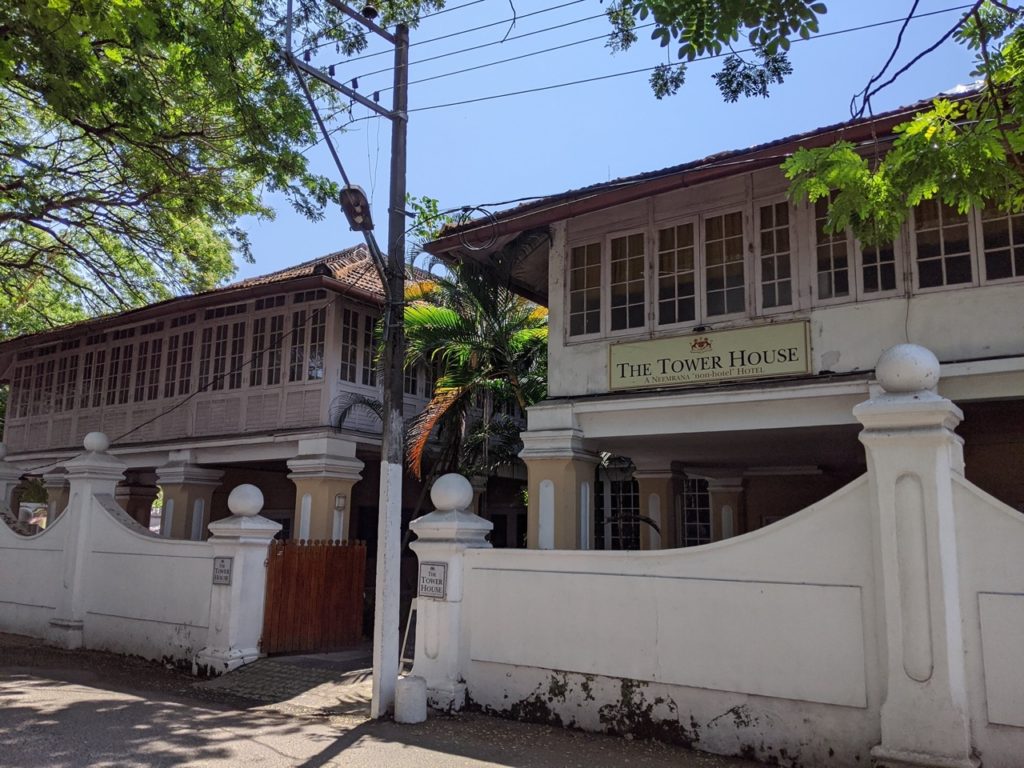

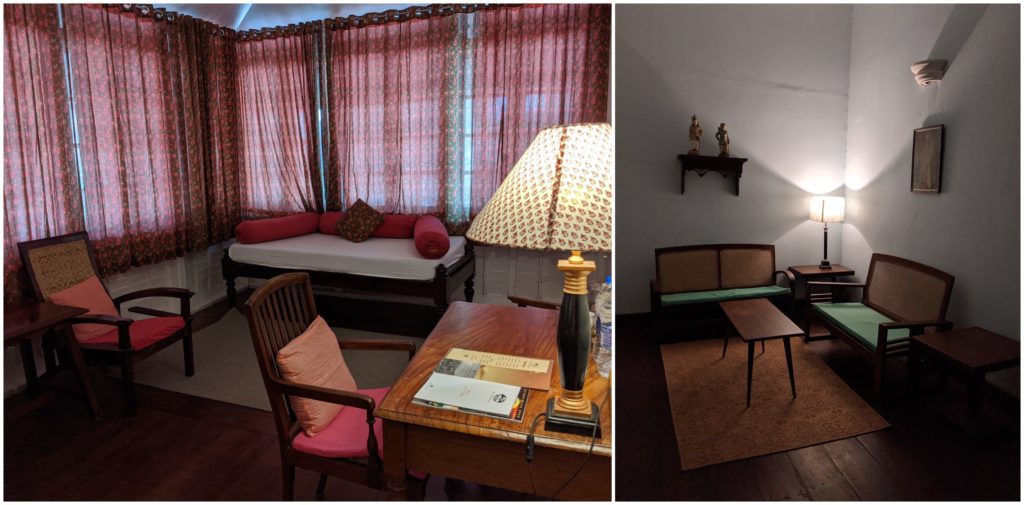
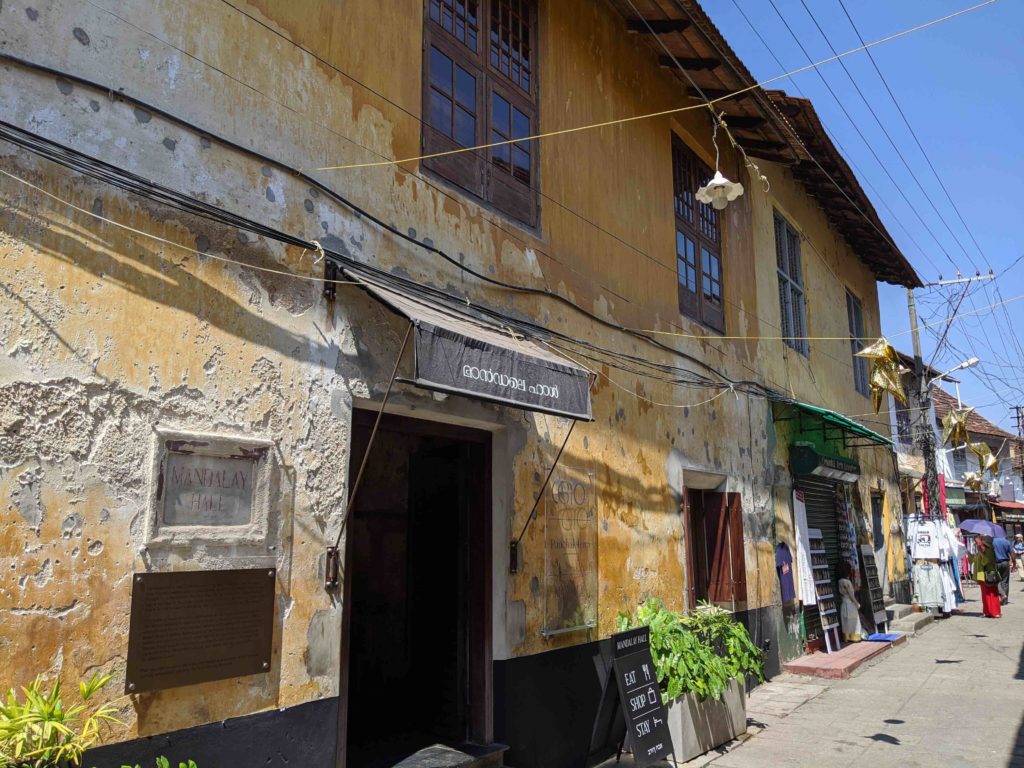
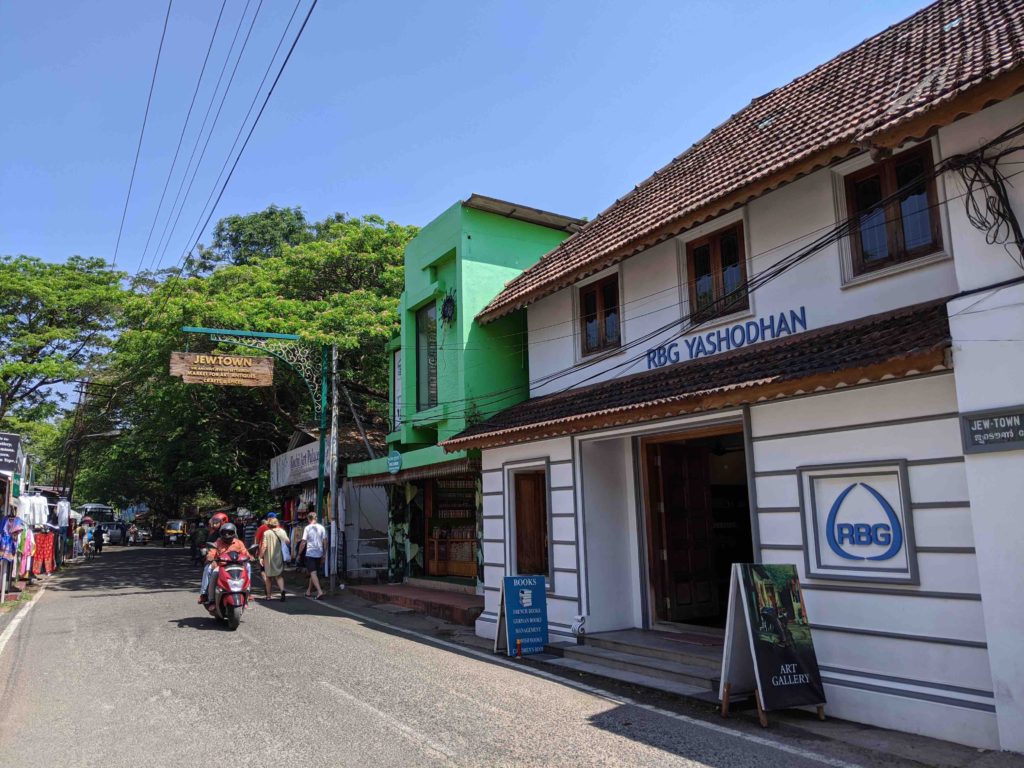

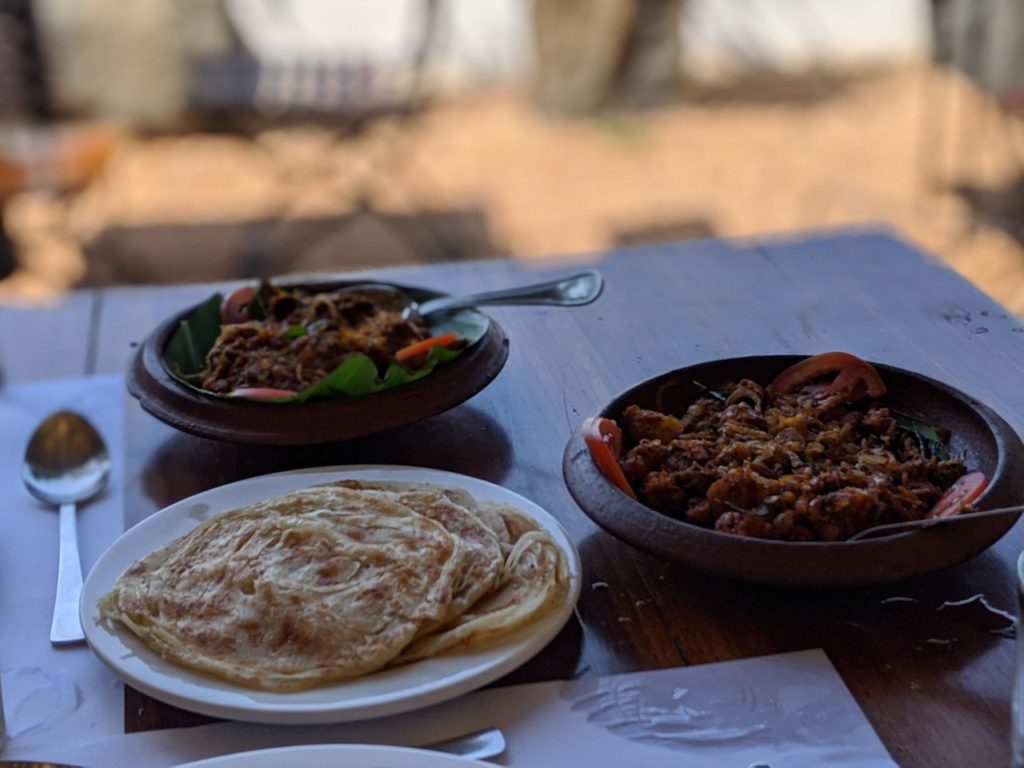
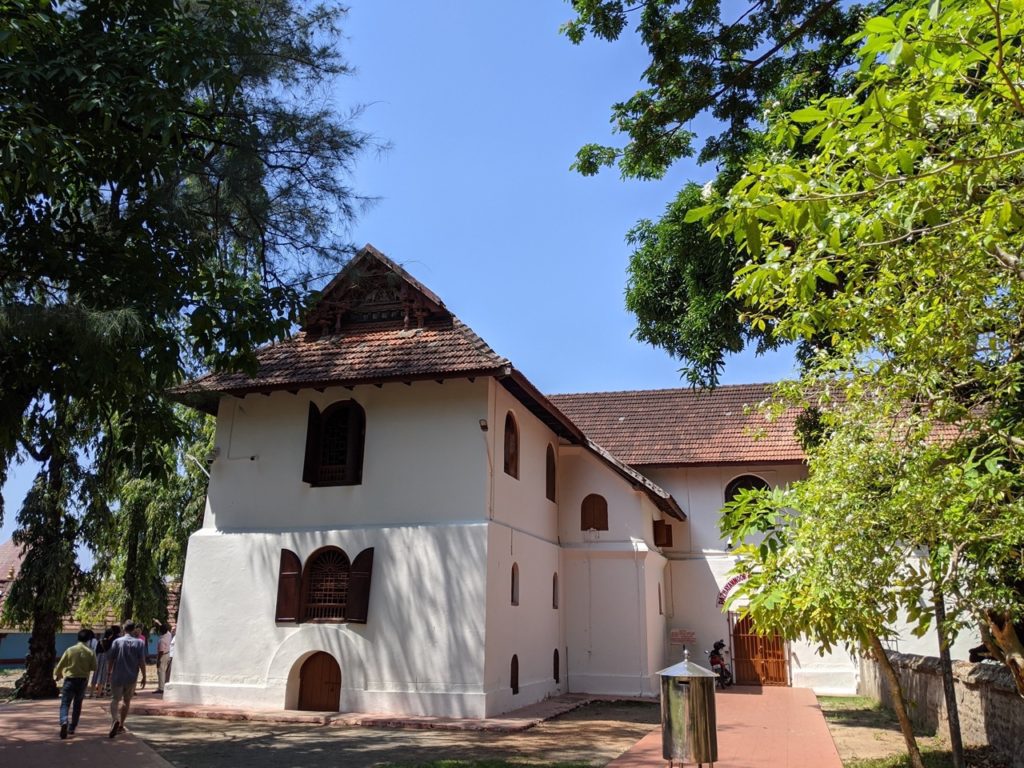
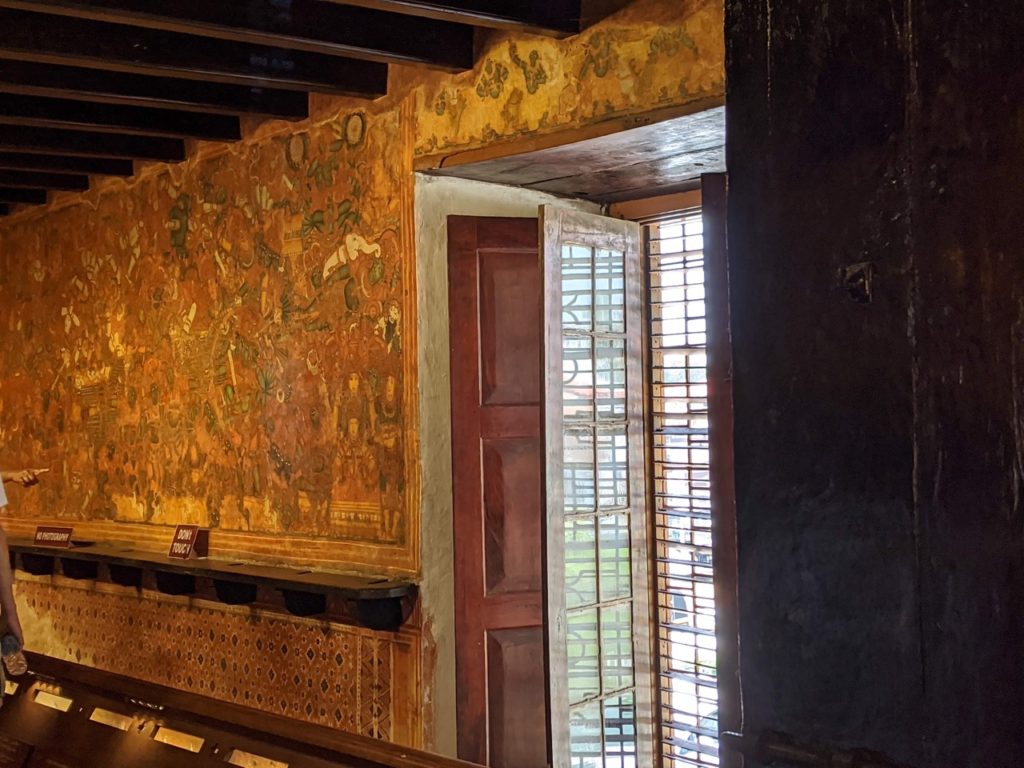
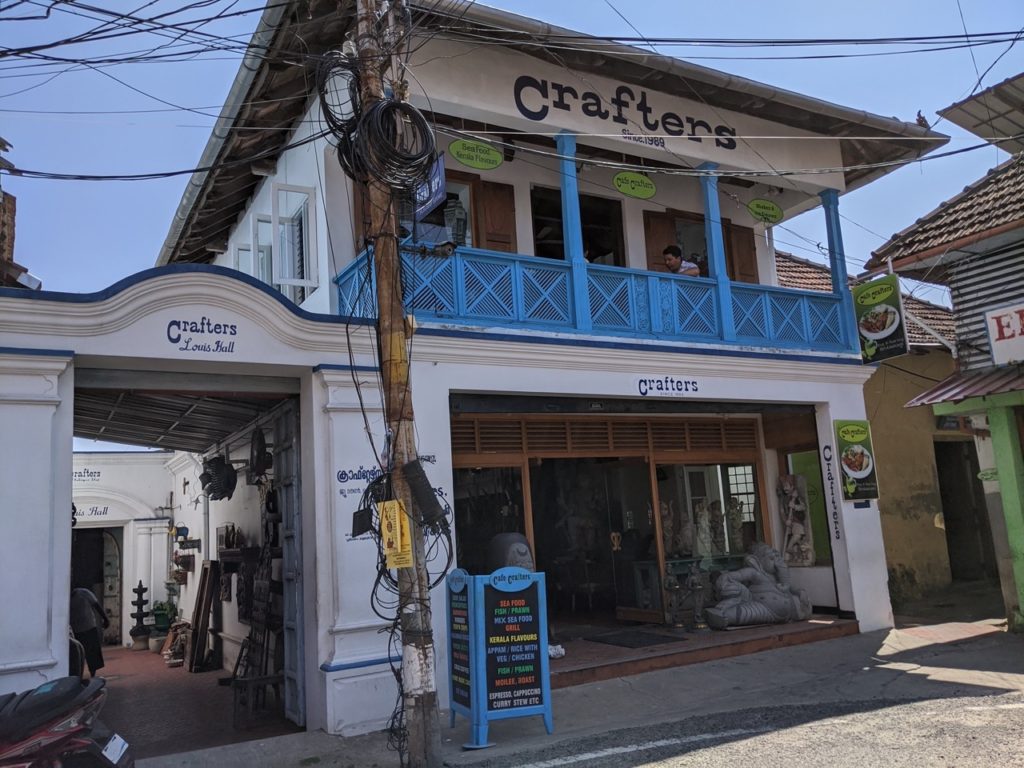
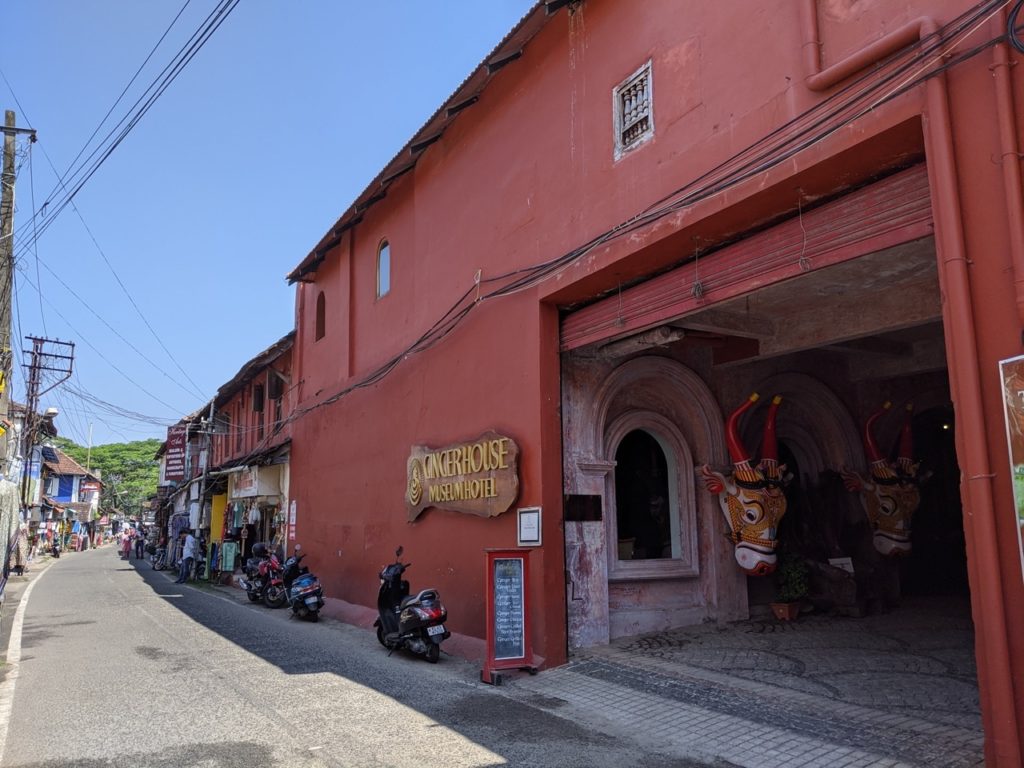
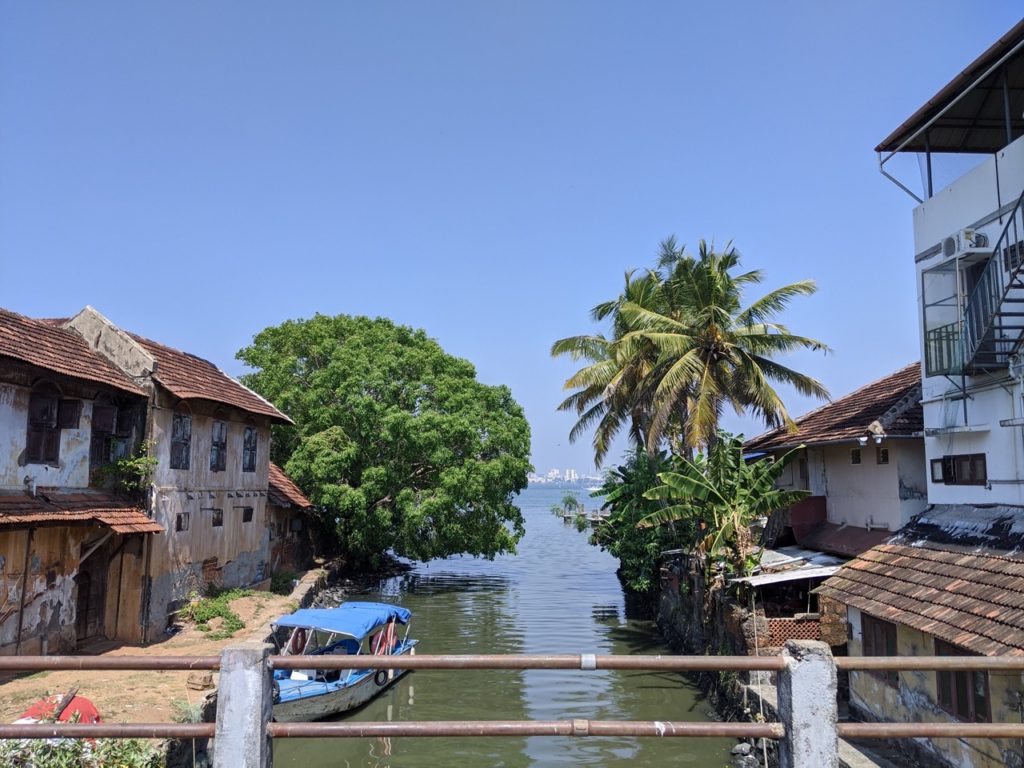
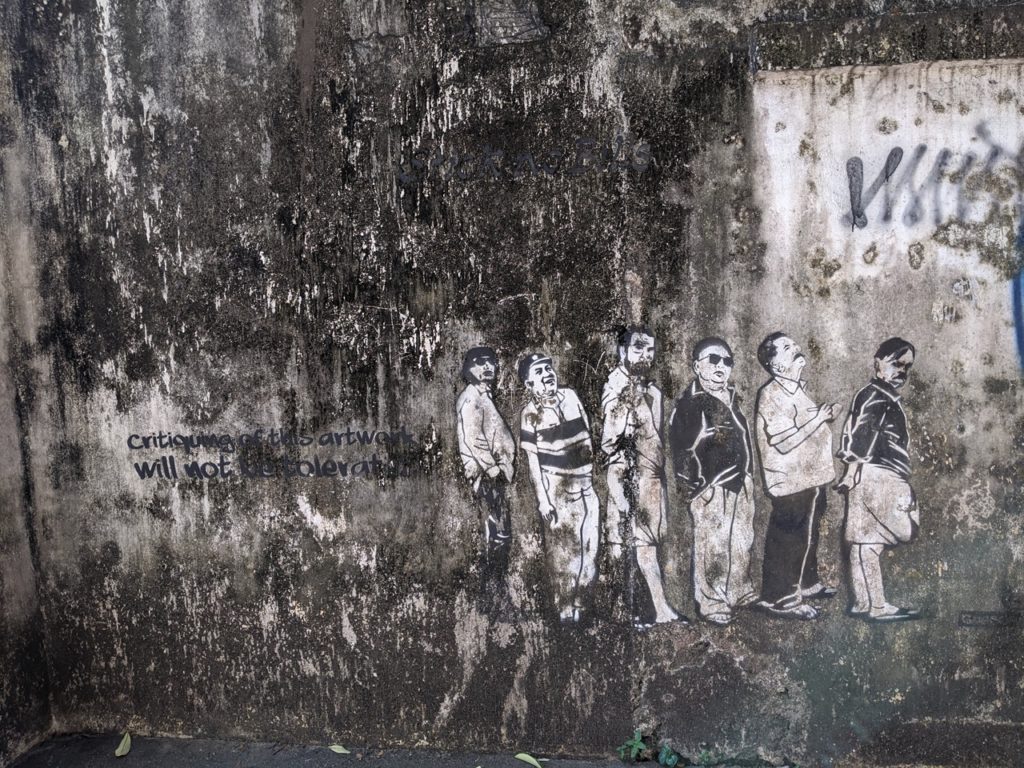
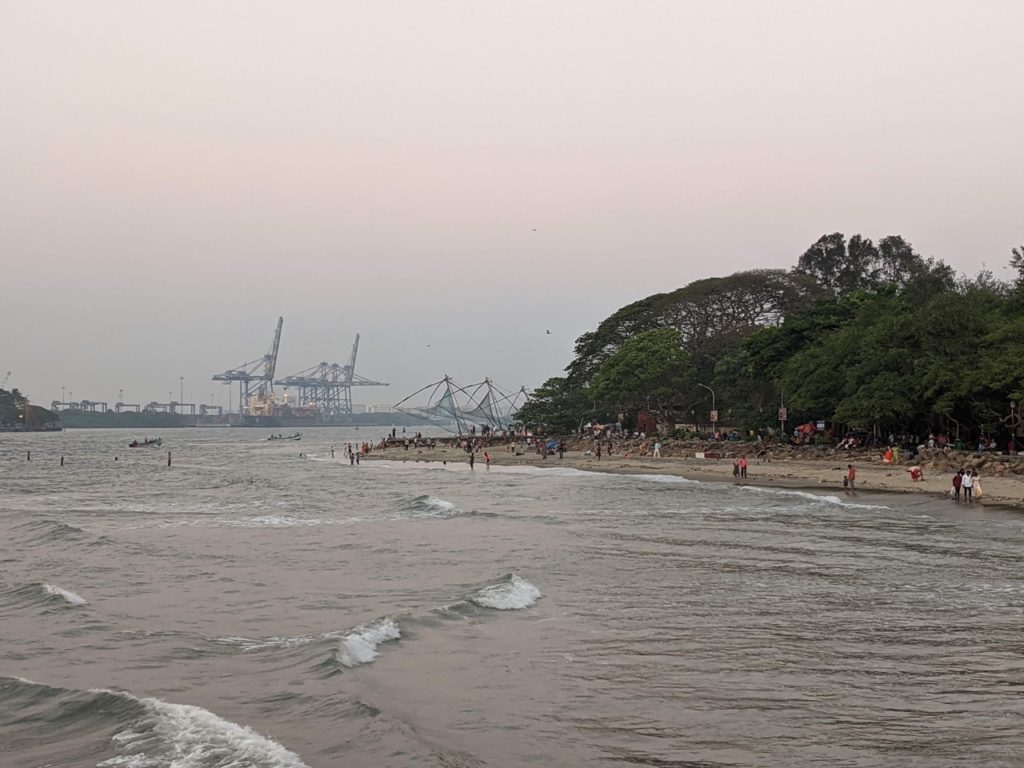
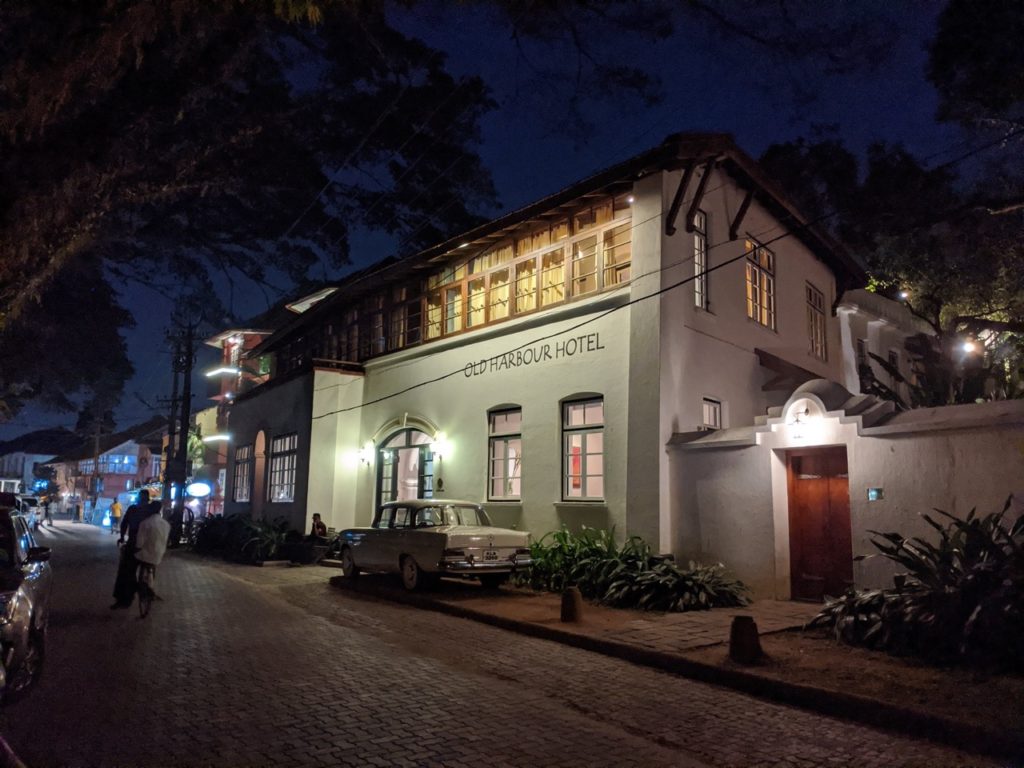

Where we play tourists at home! This is from 2020.
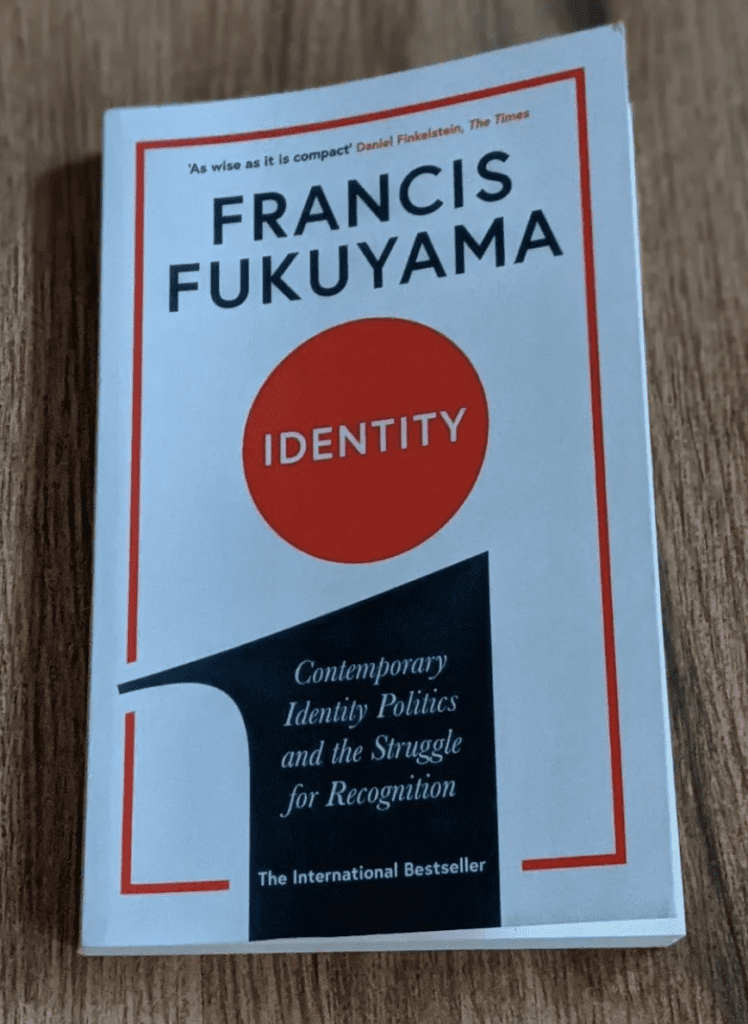
Francis Fukuyama
Francis Fukuyama did a fantastic job of framing the history of geopolitics in the two-part Political Order series. At a very broad level, most people agree that liberal democracies are the best form of governance and are ‘moving towards Denmark’. However, there are critical exceptions, like Russia and China, and there has also been a revival of (hyper)nationalism. A related area is contemporary identity politics. This is what he attempts to unravel in the book.
Early in the book, he points out that liberal democracies have not solved for thymos – ‘the part of the soul that craves recognition of dignity’. Whether it’s a large nation like Russia or China, or smaller segments in US, Britain etc, the common link is an identity that they feel has not been given adequate recognition. The segments could be based on religion, gender, ethnicity, sexual orientation, and so on. In all cases, the conflict is around an inner self whose worth and dignity is not recognised by an external world. With the modern world laying a lot of importance on authenticity, anger and hate are not far away.
The first few chapters are around the evolution of identity – from Plato’s Republic to Luther’s Protestant reformation and capacity for moral choice to which Rousseau added expression of personal experiences and feelings that were suppressed by society at large. As we moved away from agrarian societies with a strict hierarchy to technology-driven societies with multiple social classes, pluralism, diversity, and choice emerged and identity started becoming increasingly complex. By early nineteenth century, there was a fork – universal recognition of individual rights, and collective recognition. Nationalism and religion have been the largest aggregators of the latter, and he offers an excellent perspective on the parallels between Nazism and Islam fundamentalism to show how they’re grounded on the same principles.
The latter led to a narrative of a historic culture being undermined by ‘others’ around. That’s the area that everyone from Modi to Shinzo Abe to Islamic fundamentalists have exploited. Meanwhile, the former led to a ‘therapeutic society’ catering to the emotional requirements of individuals and raising self esteem. The question to any group thus becomes ‘do you want to be treated the same or different’.
The thrust in the rest of the book is about the need for dialogue and discourse and how identity politics could hamper that. There are examples of the US, EU and the solutions to their current problems around identity and politics. The good part is that the story thus far has been viewed through a multidisciplinary lens and is elegantly thought through. But the challenge that Fukuyama faces is that while there are very few arguments one can make on how the path to the current state has been framed, by definition the subject of identity is nuanced, and one could argue that it cannot be attributed to a single factor like thymos. Note, arguable only because it could be that things like economics, caste etc are dimensions of thymos.
The hope is that he writes a second part – a forward-looking one that captures how contemporary phenomena like social media, increasing wealth disparity, gender fluidity etc affects identity and its politics, and what it means to society and culture as we ‘progress’.
Nearly five years ago, when I wrote about the closure of my second (and probably final, given the zero usage now) book of accounts, I had ended it with how the days of our lives have found a rhythm, a familiarity. They actually point to the habits that have become a part of my life. Earlier this year, when I wrote The building blocks of freedom, the ending was again a commentary on habits. As I quoted in it (from a splendid post Routine Maintenance), while habits are indeed a way to off-load cognitive overhead… at their most extreme, habits can slide into addictions and compulsions, patterns that resist our conscious efforts to break them… Ritual dissolved into routine.
Habits, as I wrote, are possibly a micro-version of intentionality. They are are physical, mental and even emotional. But when we don’t review them, it is almost as though they hijack our intentions and make them subservient! It’s almost like the new Batman’s point about scars – Our scars can destroy us, even after the physical wounds have healed. But if we survive them, they can transform us. They can give us the power to endure, and the strength to fight. As I have realised many times recently, it is extremely difficult to be objective about my habits. It is only when I am deeply mindful that I observe some of my habits, and sometimes laugh at their absurdity. But when I go back and understand where it came from, I also give a mental hug to my earlier self. 🙂
Very recently, it also made me review my deep-set approach to retirement. I had mentioned that in my previous post – the third point in Uma Shashikant’s excellent article (below).
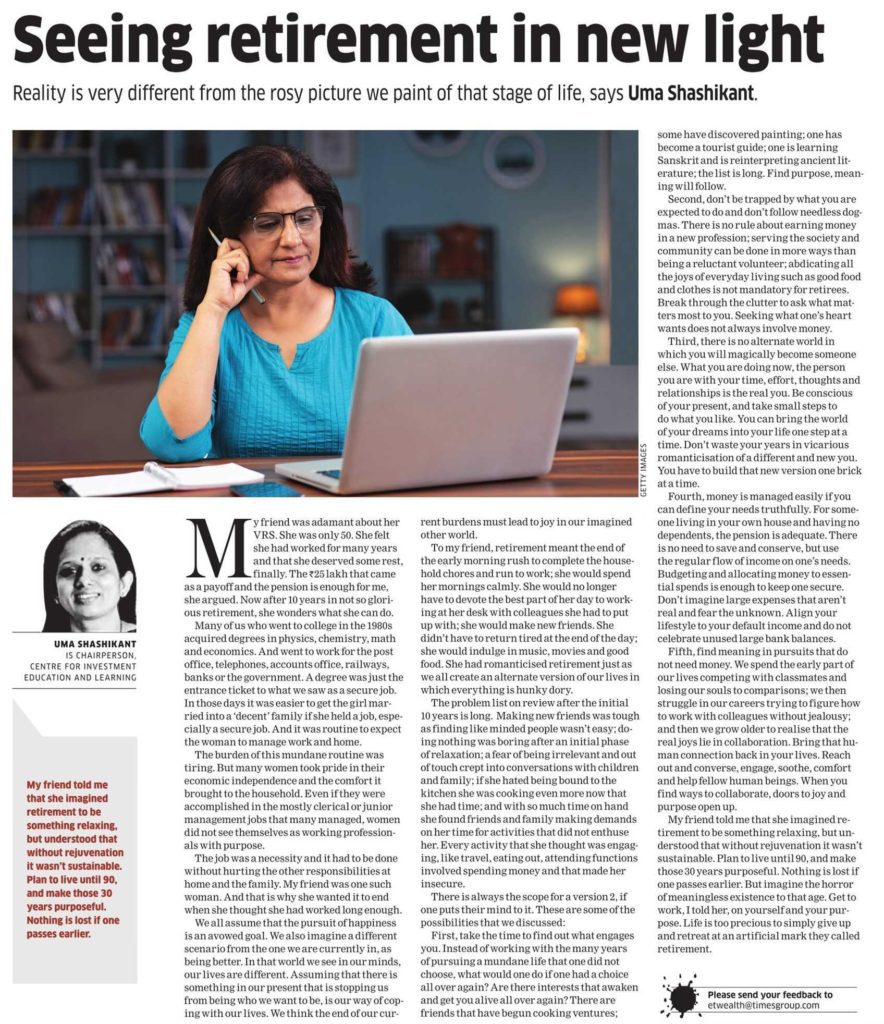
I always assumed that the day I stopped working for a living, I could switch into a ‘different me’. I now see how it’s quite impossible. I will have to start looking at the ‘difference’ right now, and build new habits and junk old ones that can help me move in the direction of the ‘new’ me. The idea is that it won’t seem new. Turns out this isn’t a problem that only I encountered. In a couple of books and articles that I read recently, I came across some very insightful perspectives.
Familiarity and habit impoverishes the way they look at things. They are mostly unable to break away from the past and see things in a fresh way. It doesn’t help that breaking away might mean losing everything that made them great/admired. Lack of interest and curiosity are aggravated by biological conditions, and this intellectual and emotional indifference may cause inertia.
Simone de Beauvoir, The Coming of Age
…Marcel wrote of the human tendency to become stuck in habits, received ideas, and a narrow-minded attachment to possessions and familiar scenes. Instead he urged his readers to develop a capacity for remaining “available” to situations as they arise. Similar ideas of disponibilité or availability had been explored by other writers, notably André Gide, but Marcel made it his essential existential imperative. He was aware of how rare and difficult it was. Most people fall into what he calls “crispation”: a tensed, encrusted shape in life — “as though each one of us secreted a kind of shell which gradually hardened and imprisoned him.”
“On the Ontological Mystery,” Gabriel Marcel, via At the Existentialist Café
And while being too lazy to type out the one above, I found someone had already written about ‘crispation’. And found this (below) there. It reminded me of the converging life Amor Towles wrote about.
“We all end up as packaged goods,” Westbrook Pegler remarked a little while before he died. The dreary road to the wrapping and bundling counter is probably inescapable: there is the hunt for the discovery of what works, then the erosion of curiosity about what else might work, then the disappearance of all curiosity about anything unfamiliar, and at last the prison of the safety of one’s own accepted manner. Yeats was a little way off the mark; the peril for the artisan no less than for the artist is not that his circus animals may desert him but that he will let slip past the time when he ought to turn them back to the forest.
via James Mustich
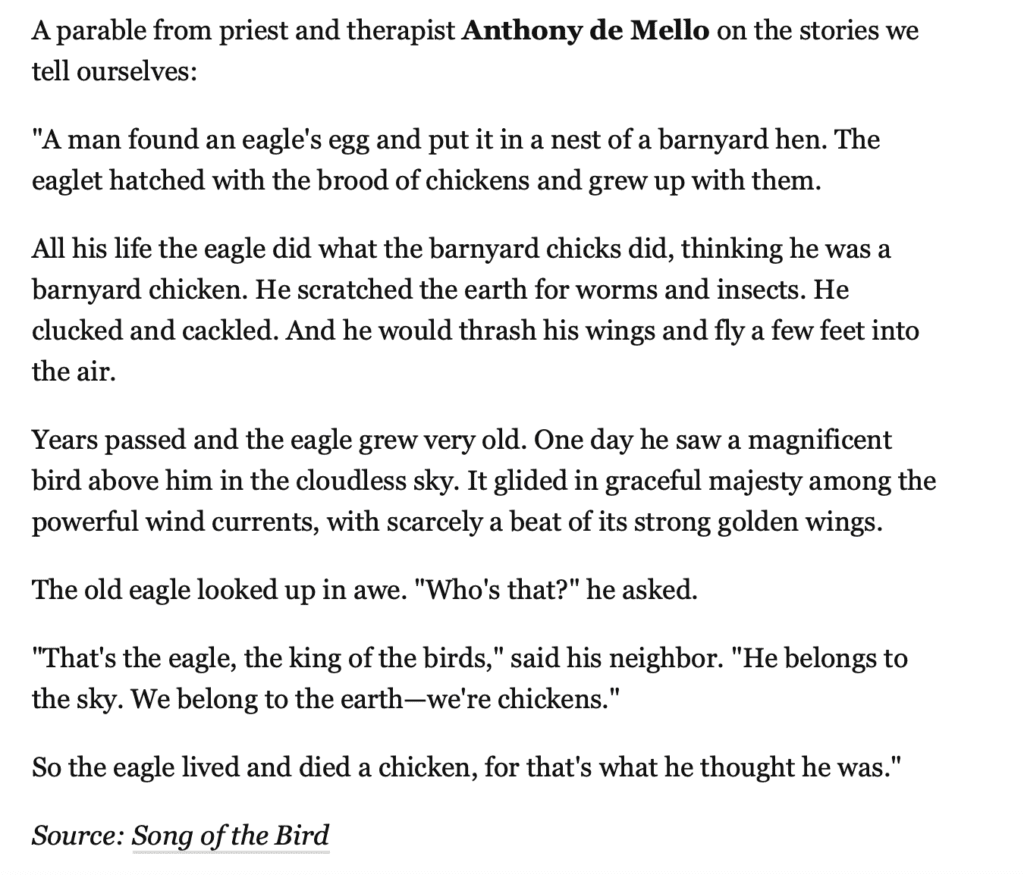
And finally, my favourite story on what habits can do, and where I don’t want to end up. Poignant, hard-hitting, and true.
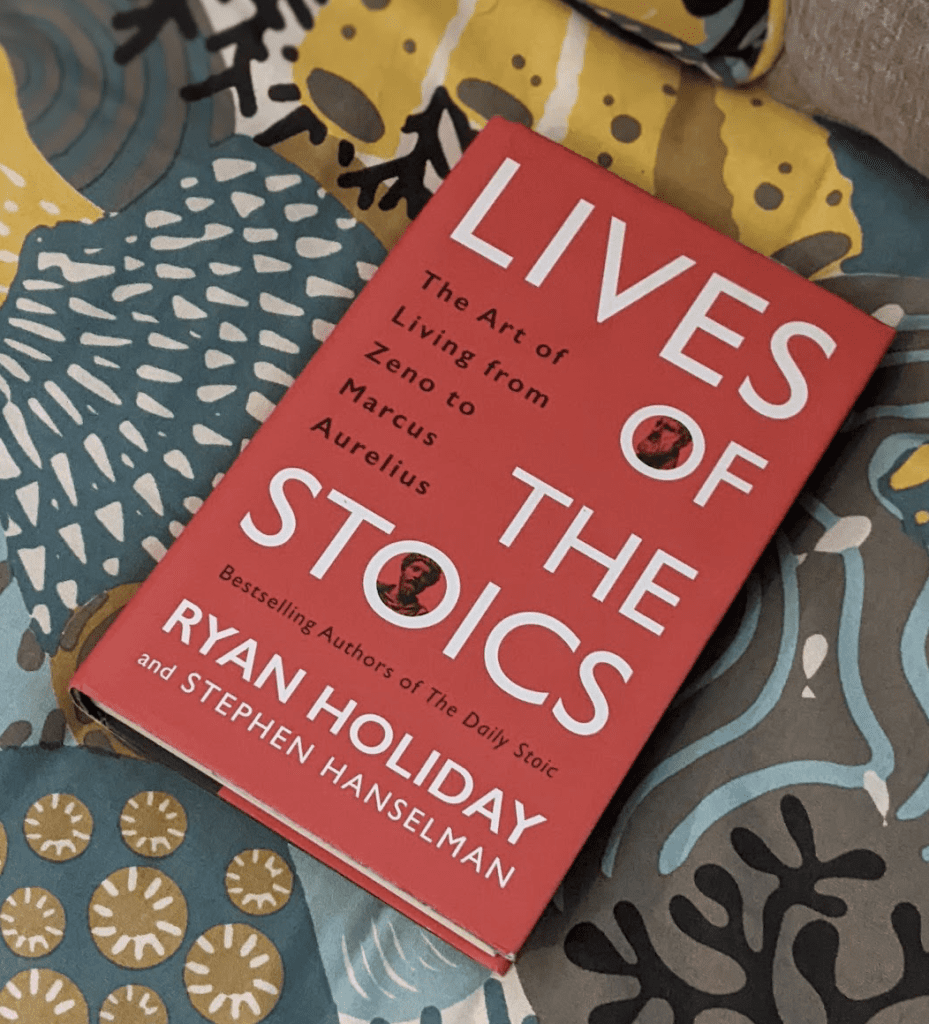
Ryan Holiday , Stephen Hanselman
As almost every philosophy goes, it is a mindset and a way of life. Though we have tons of literature, perhaps the best lessons of Stoicism are offered in the way Stoics led their lives. And that’s what we get from the book – the time and lives of 26 Stoics – 25 men and 1 woman.
Named after the Stoa Poikile (painted porch) where Zeno and his disciples gathered for discussions, we follow the evolution of the philosophy and its practitioners across ancient history – Zeno (334 BC – 262 BC) to Marcus Aurelius (121 CE – 180 CE). While many of them were born in wealthy families, many others were commoners, and for Epictetus, a slave, freedom was not just a metaphor. His is the life I found most inspiring.
The core tenets of Stoicism – courage, temperance, justice, and wisdom – have remained changed, but how they have been interpreted and how much they have been adhered to is where one can draw lessons from. From being philosophers who wanted nothing to do with politics and bureaucracy, to a philosopher king, and from being persecuted by despots to being the persecutors of Christians, the contexts of Stoics changed, but there are lessons in each life.
The world has changed or remained unchanged depending on how we frame a context, but the Stoic’s focus is on self, and how to be a better person. In that sense, the philosophy has much to teach us, and help us navigate our lives.
Having read Meditations and Letters from a Stoic earlier, I can see why this book is a bestseller – it delivers accessibility very well. And thus, it’s a great place to start if you want to get familiar with the philosophy and the people who shaped it.
Quotes
‘To have but not want, to enjoy without needing.’
‘We naturally care what people think of us; we don’t want to seem too different, so we acquire the same tastes as everyone else. We accept what the crowd does so the crowd will accept us. But in doing this, we weaken ourselves. We compromise, often without knowing it; we allow ourselves to be bought – without even the benefit of getting paid for it.’
“If a person gave away your body to some passerby, you’d be furious,”
Epictetus said, yet we so easily hand our mind over to other people, letting them inside our heads or making us feel a certain way.
Srinivas Rao drives me to work on a Monday morning in his WagonR. He is probably in his 50s, there seems to be many more older cab drivers these days. At work, we are busy with the survey we run at this time of the year. We have been doing this for the last three years – asking our customers what financial freedom means to them. Retiring without worries is a common theme, and unfortunately, not something many are prepared for. Mr.Rao would have probably given me a sardonic smile if I had asked for his take. He is the dystopian future my scarcity mindset throws at me – me lasting longer than my money, and thus being forced to work even in old age.
Later in the week, a friend sends me a Shashi Tharoor column from a few years ago, titled “In Praise of Gerontocracy“, in which he makes a case for the years after 60 being the most productive in one’s life.
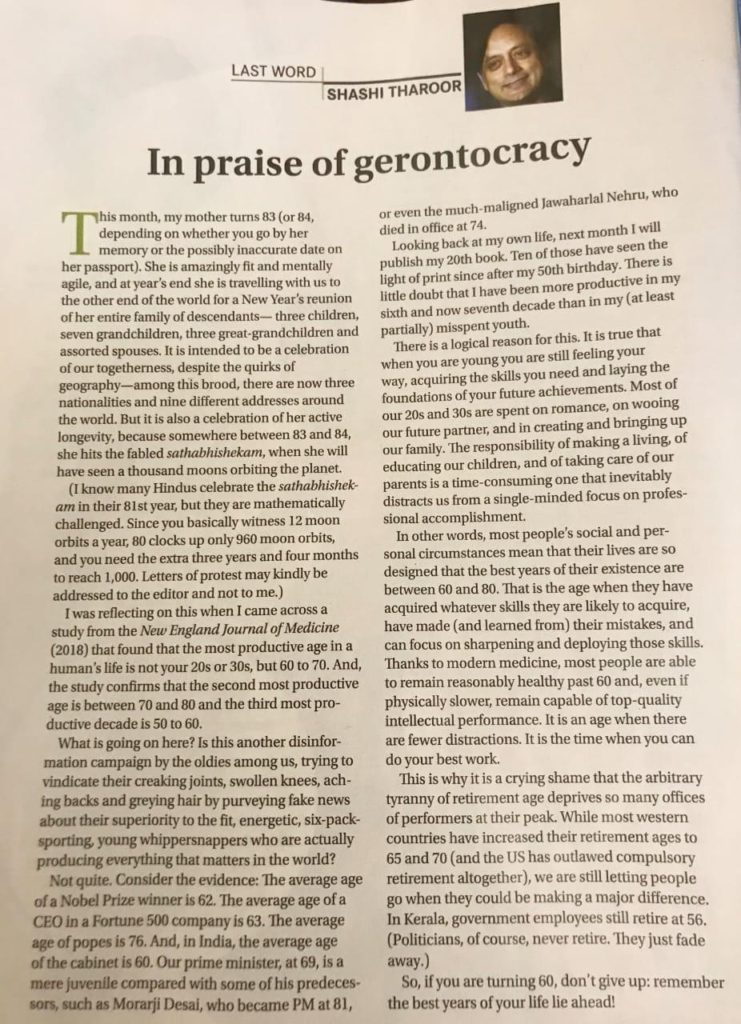
D immediately and rightly pointed out how the privilege is so deeply embedded that it’s not even an afterthought. I also wondered whether the massive changes in physical (diet, exercise, pollution), as well as mental and emotional (social media, work stress) changes that separate the earlier generations from the current ones, have been factored in. There is a limit to what science and medicine can currently accomplish. In real life, we see our own elderly relatives sometimes struggling to even comprehend what is happening to the one person they thought they knew – themselves.
I have been reading Maus, which has had quite an effect on me. It wasn’t just the Holocaust and its horrors, it was also what happened to Vladek, the author’s father, a survivor, on whom the book is based. Old age with all of the baggage of what he had gone through, and no one around who could really understand his mindset and behaviour.
It took me back to something I had read earlier – The Coming of Age (1970). Simone de Beauvoir writes how old age exposes the failure of our entire civilisation. “The sadness of old people is not caused by any particular event or set of circumstances: it merges with their consuming boredom, with their bitter and humiliating sense of uselessness, and their loneliness in the midst of a world that has nothing but indifference for them.” The loss of standing, the fear of illnesses and injury, jealousy, and the resulting seeming selfishness, the grief of losing others whom they considered part of their future, are all poignantly captured in the book. They thus turn back to themes that are emotionally valuable to them, and replay them constantly, they ‘escape from the present and dream of former happiness, exorcise past misfortunes.’
What is in our hands is how we prepare for it – mentally, physically, emotionally, and financially. Uma Shashikant sums that up quite well in her recent article.
There is really no freedom from old age, and I acutely realise that at some point, we will all end up saying “in my time” – about the time we looked upon ourselves as first-class individuals, doing our best work, feeling like we belonged in this world. It is indeed a great time, but that window is bound to close, and those who live long will ‘have that melancholy privilege of remaining alone in a new world‘. (Ninon de Lenclos)