
Compared to the adventurous vacation beginnings we have dealt with, this one was calm and moved like clockwork. The visas had been done much in advance (Thai at VFS, Malaysian through a travel agent and Cambodia on the web) and $ reserves were increased too. On Good Friday, the Meru cab arrived on time, we didn’t forget to pack anything, check ins (real and Foursquare) happened without incident with our bags weighing slightly lesser than the pre-booked 20kg, emigration being a breeze (barring D’s belching officer) and the Air Asia flight departing on time. We were traveling to Siem Reap, Cambodia via Kuala Lumpur as part of an elaborate one week flight plan that also included Bangkok and Krabi, and was primarily driven by a focused ‘cheapest tickets possible’ approach. 😀
It was almost like a Chennai flight and the crowd did make a strong case for renaming the destination Tamilaysia. Air Asia proved to be bright red and cheerful and was helped by a light-haired air hostess who matched it with light-headed giggles which refused to die down during the safety demos. When it came to the seat armrests, it proved to be a cousin of Deccan and on food, a replica of the alpaahaar on Kingfisher, where the focus is on alp – no, not Swiss!
The in-flight magazine’s event list also showed its standards by considering Bieber and F1 in the same class of entertainment. But hey, the flight arrived on time in KL – around midnight, so no complaints. At the KL airport, I pretended nonchalance despite wanting to be wide-eyed at seeing a Starbucks outlet. We had about 6 hours to wait until our flight to Siem Reap. Thank God for that because Immigration went beyond annoying as our line just refused to move and we saw those who’d arrived much later moving on. The waiting area was quite a mess, and again a mini Tamil Nadu. Towards the end of our rather boring wait, there was some excitement when a foreigner claimed that something was missing and blamed a Tamil family sleeping nearby, but nothing came of it and I was too tired to provoke either parties into further action. 😐
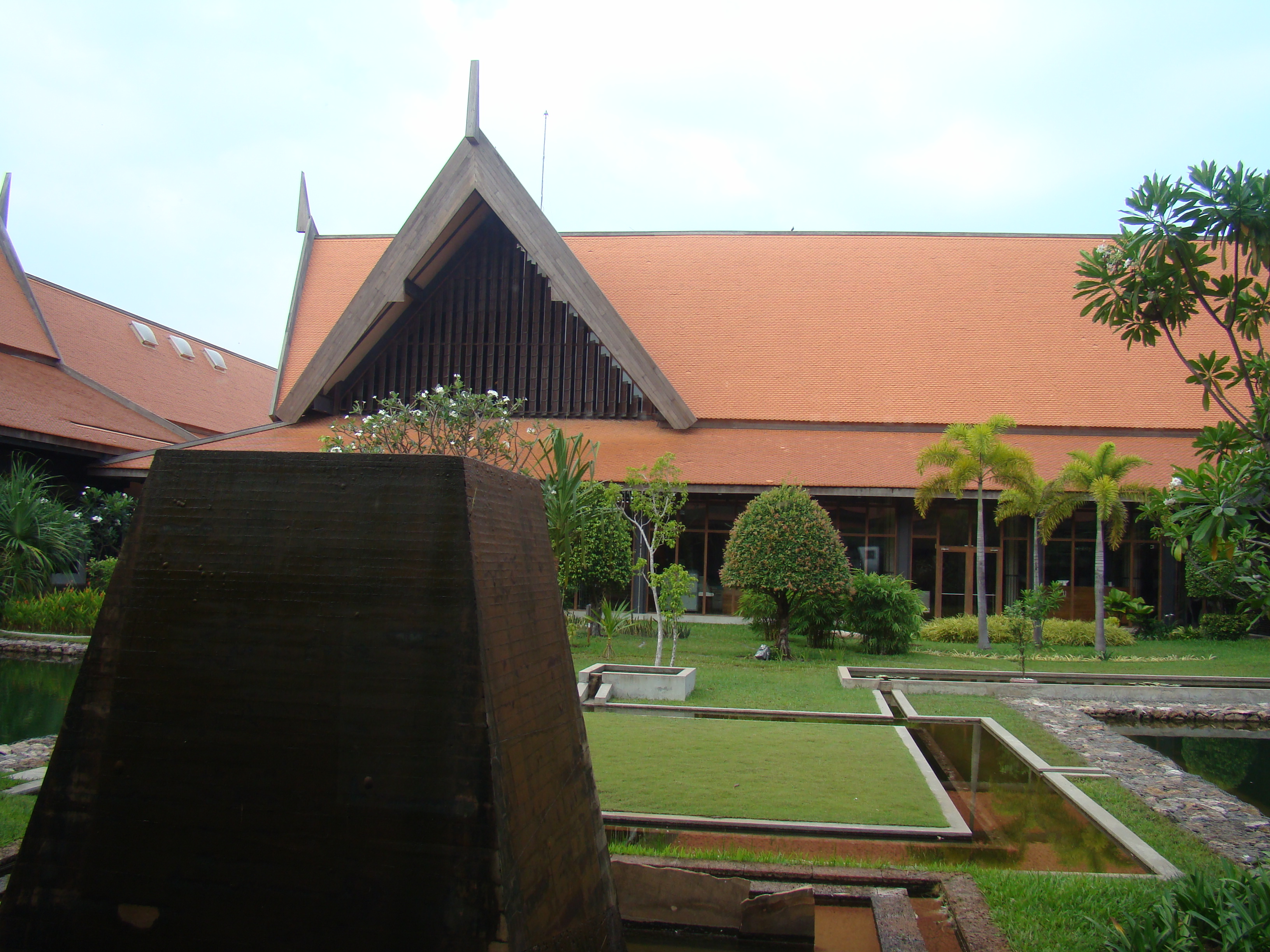
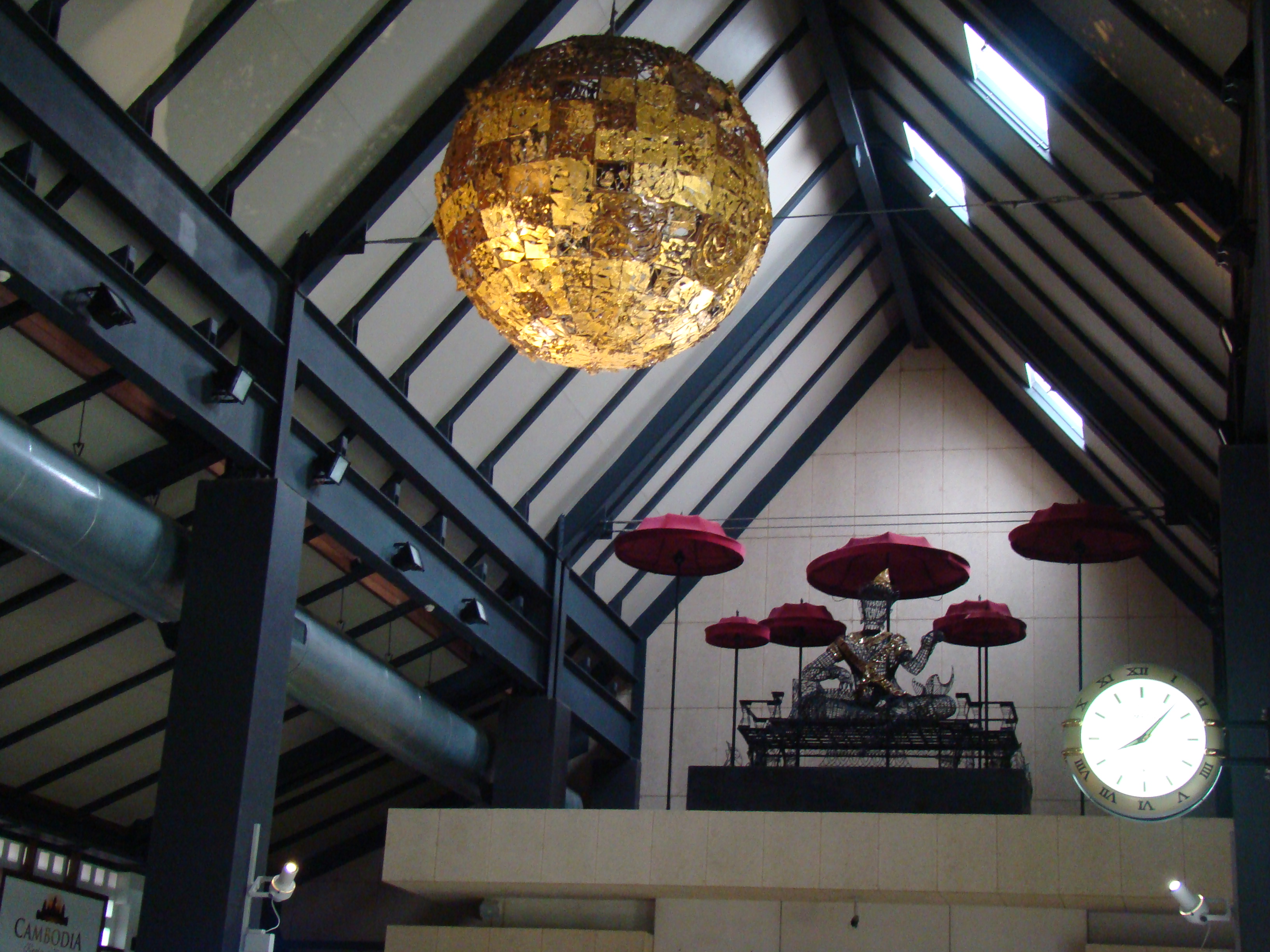 Getting out of KL proved to be a much faster affair. Air Asia continued their punctual nature on the Siem Reap flight too, and we landed in Cambodia just before 8. An amazing little airport that looked more like a resort, and where the visa process was comparable to F1 pit stop times. We had $s stocked so no currencyy exchange was required. The tour operators met us at the gate and were ready to go temple trotting right then, but we really wanted a shower. I raised both my arms and the case was settled. Green and humid like Kerala, but a right-driving country, that was my first impression of Cambodia.
We reached our hotel – The Golden Mango, and were told that there had been no power for the last 12 hours. Though check-in time was noon, we were given a temp room for freshening up. Thanks to the dark, I managed to dismantle the shower faucet and create a mini flood. The adventure had begun. We asked our guide to take us somewhere nearby for a quick meal and thus arrived at Lily’s. I had a beef breakfast to compensate for the trauma earlier. The coffee with milk turned out to be a strange animal though as the latter had only a cameo.
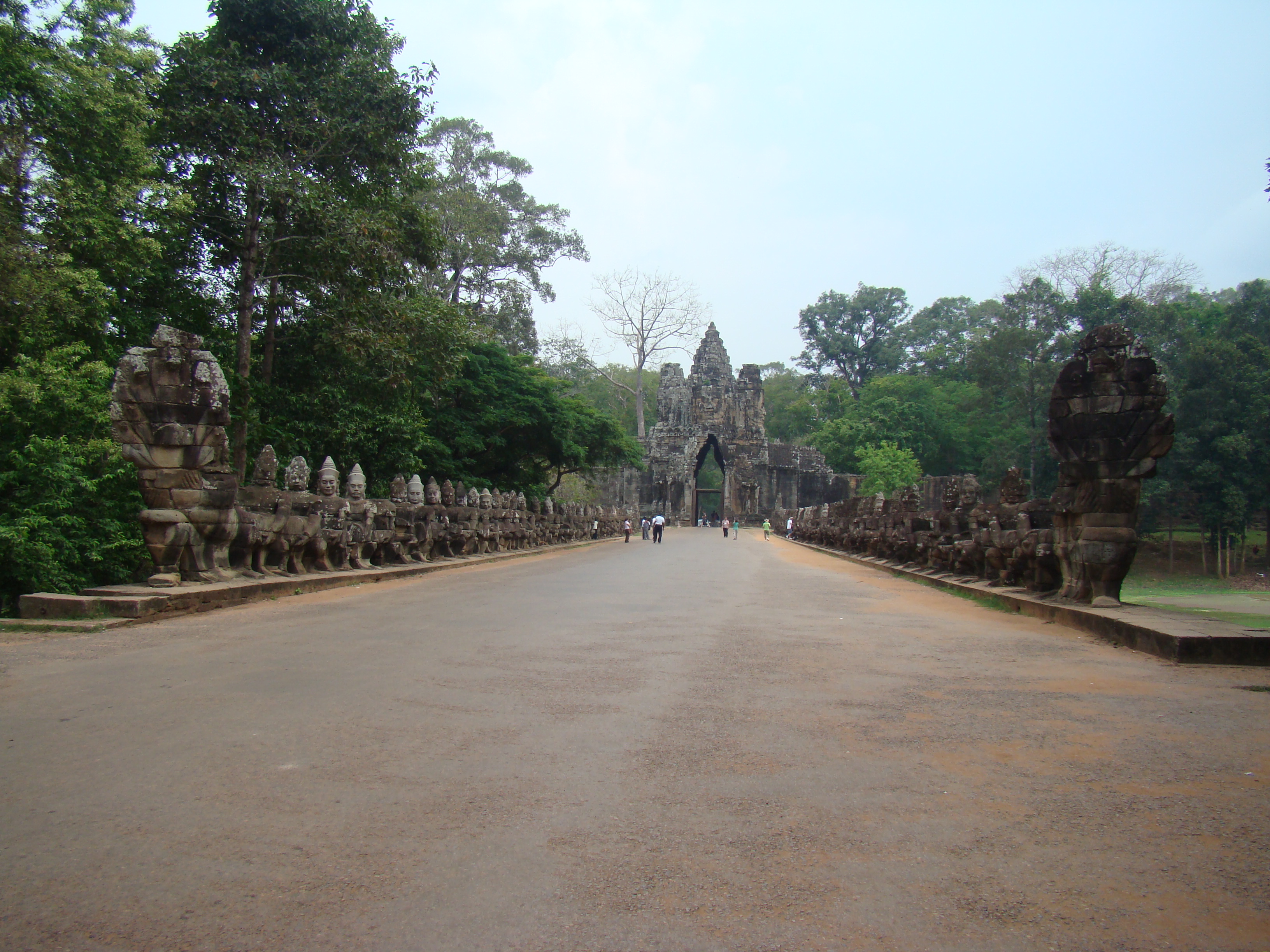
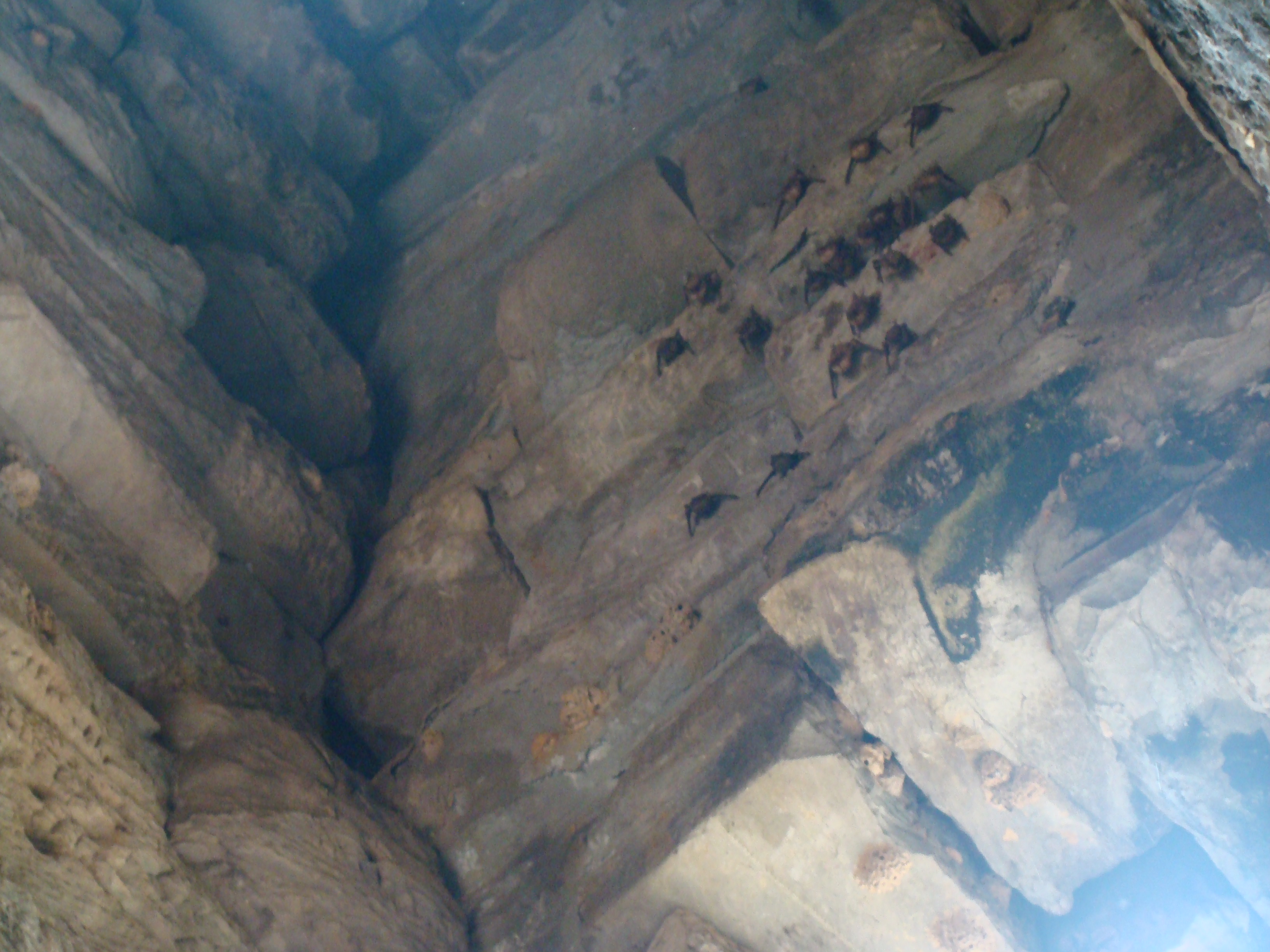
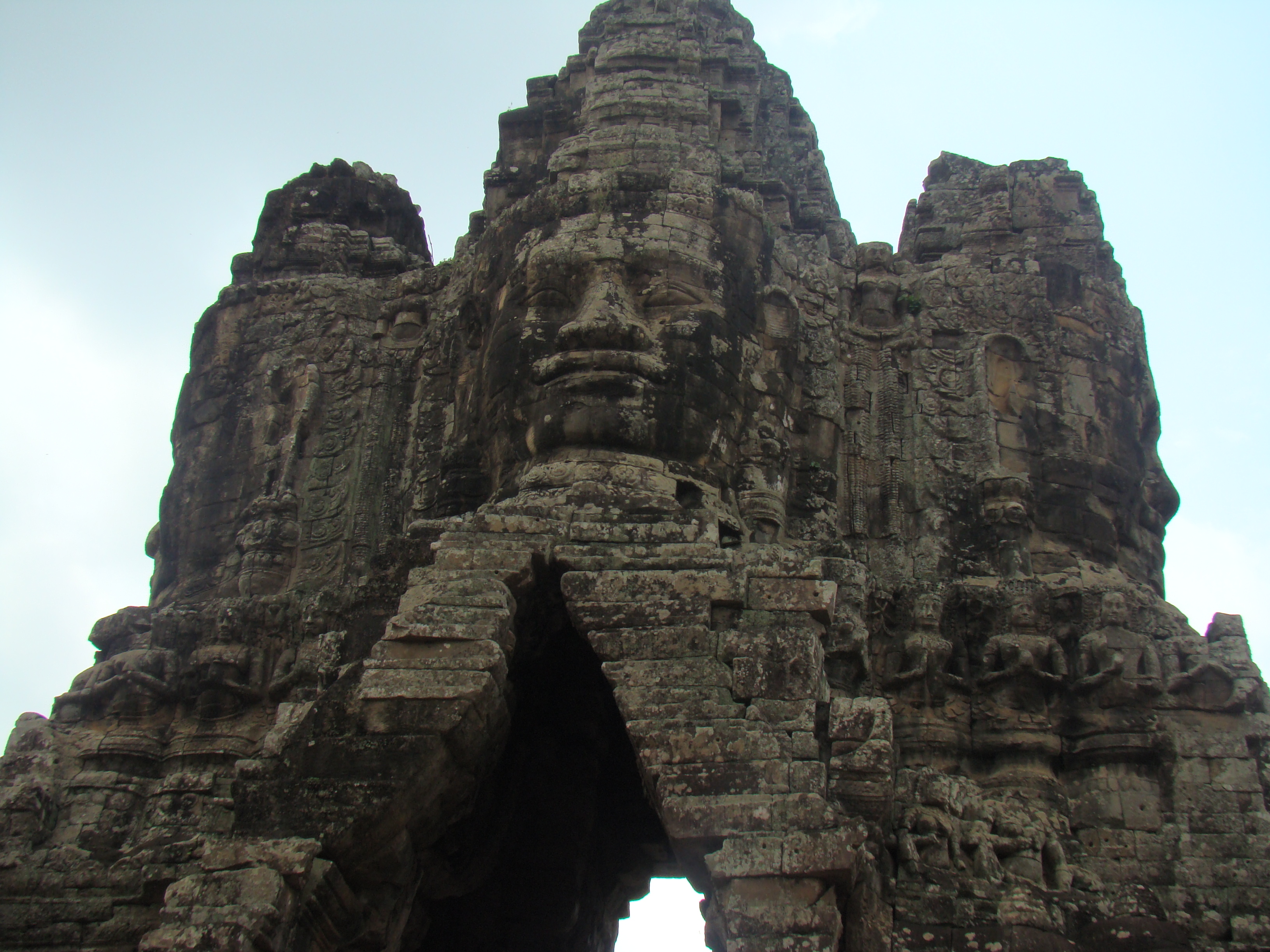 We then drove to the Angkor Thom complex. The guide got us the tickets for the next 2 days and we began with the south gate, where we saw the Cambodian version of the samudra manthan in Hindu mythology, the devas on the left and the asuras on the right. After passing through a version of the Bat Cave, we realised the expanse of the place but still underestimated the walkathon to follow!
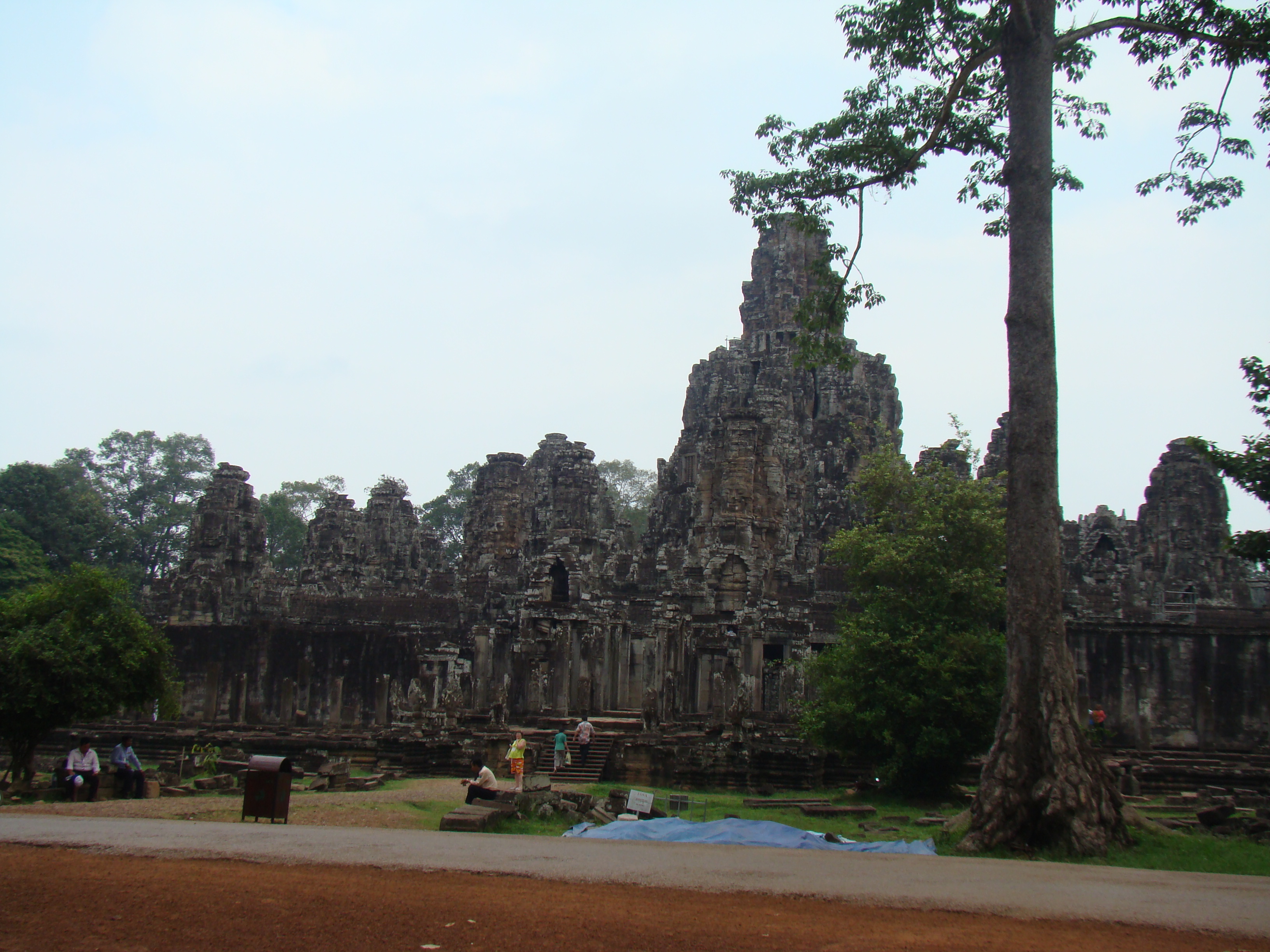
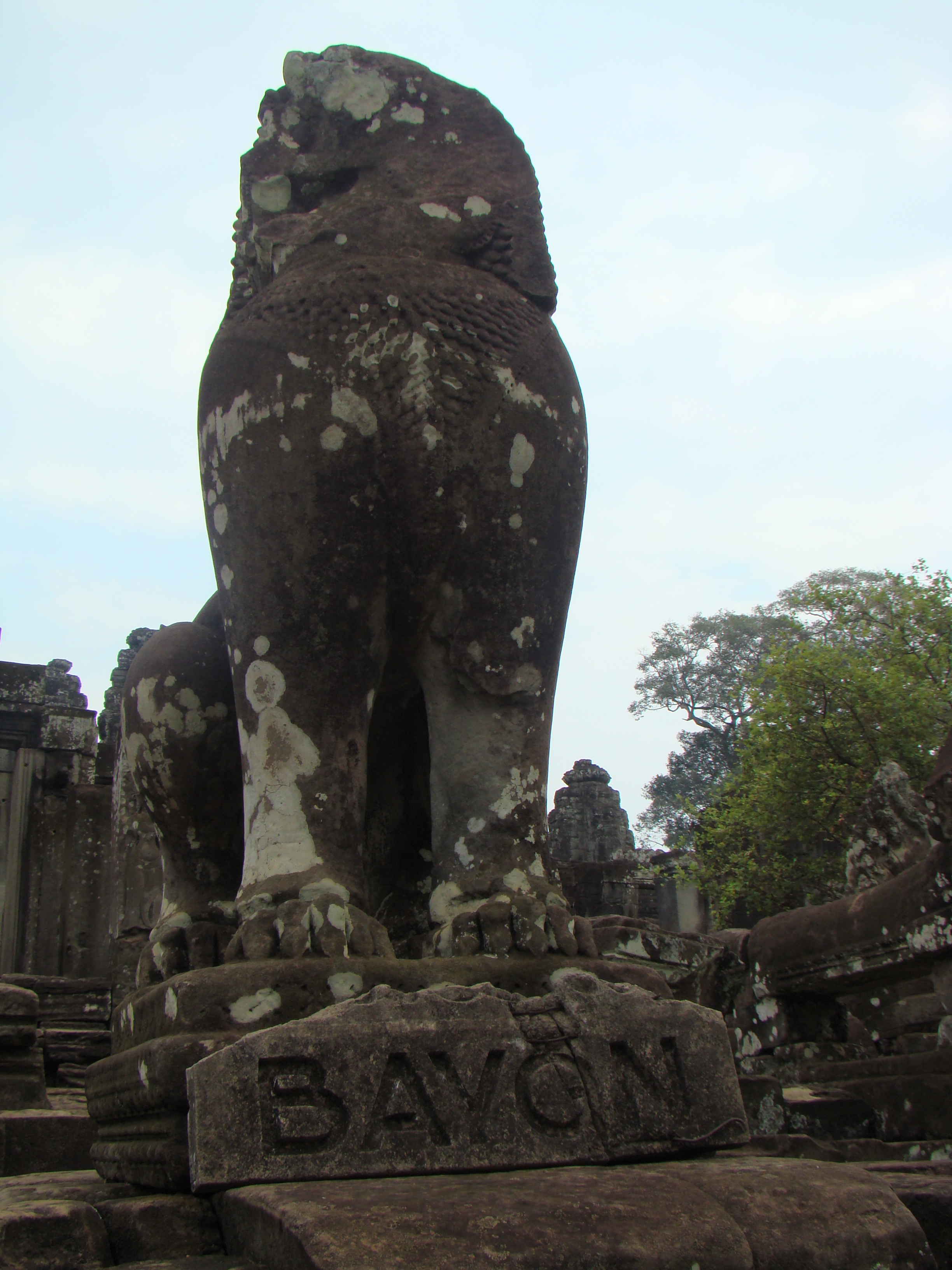
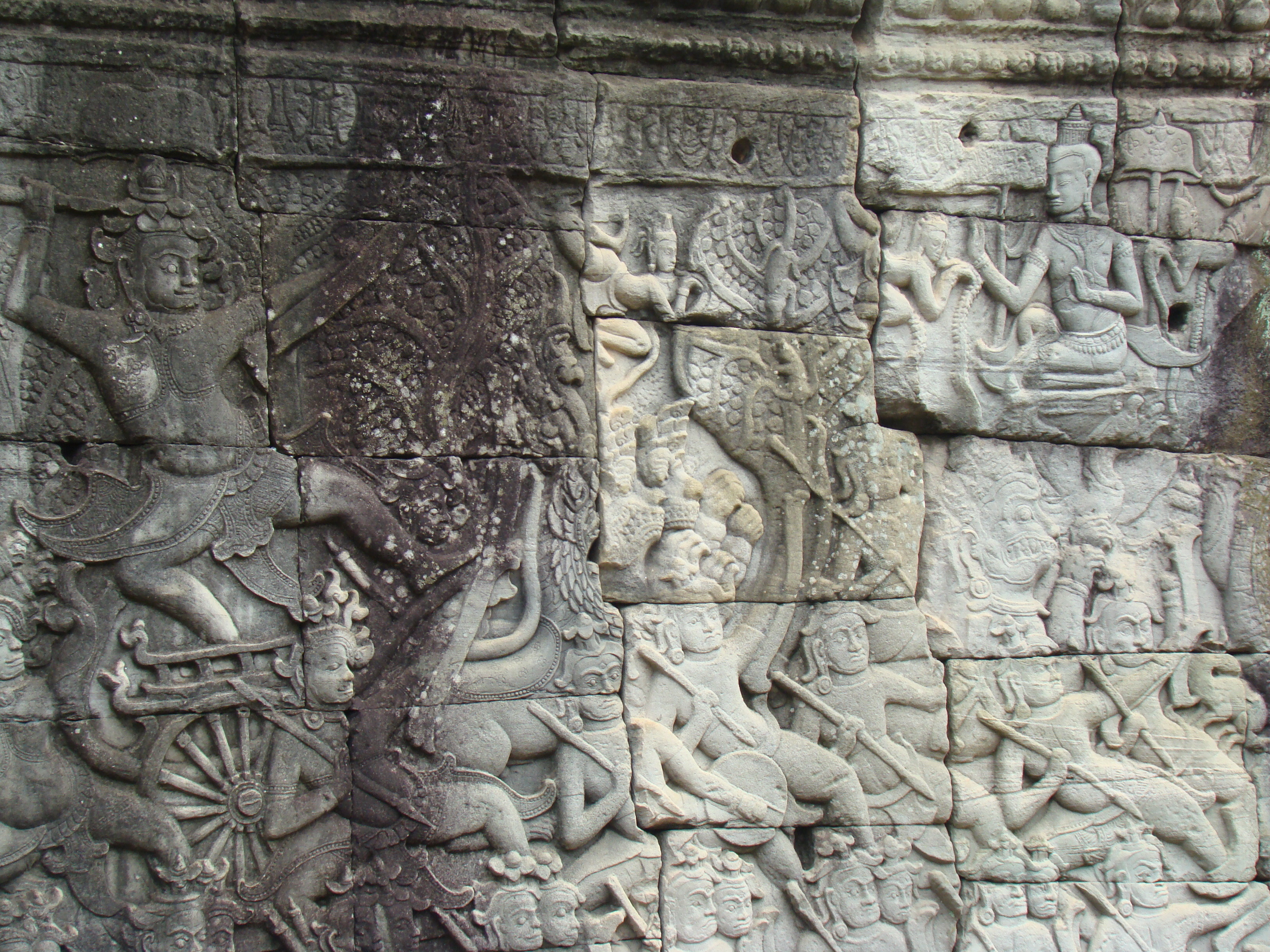
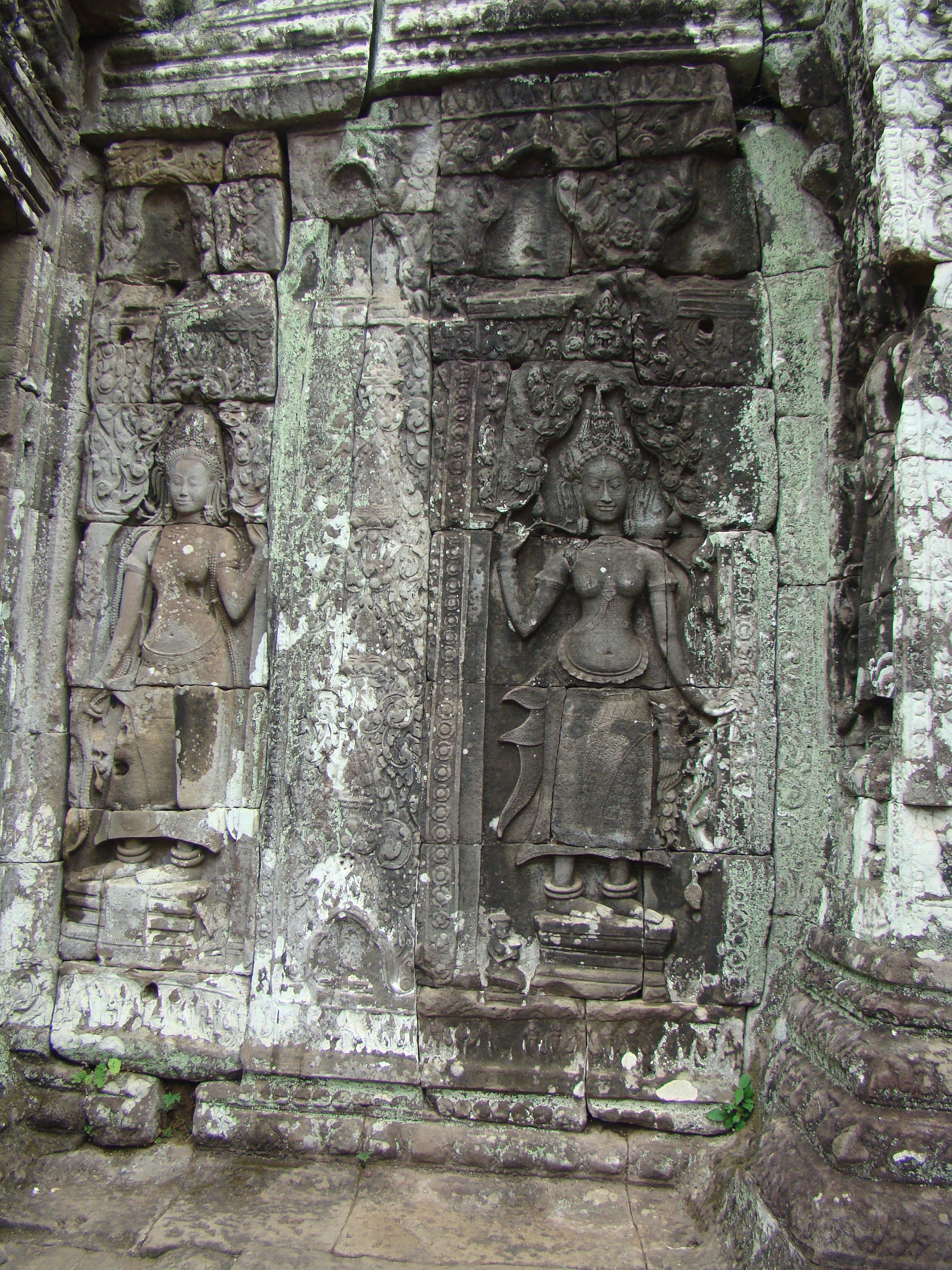
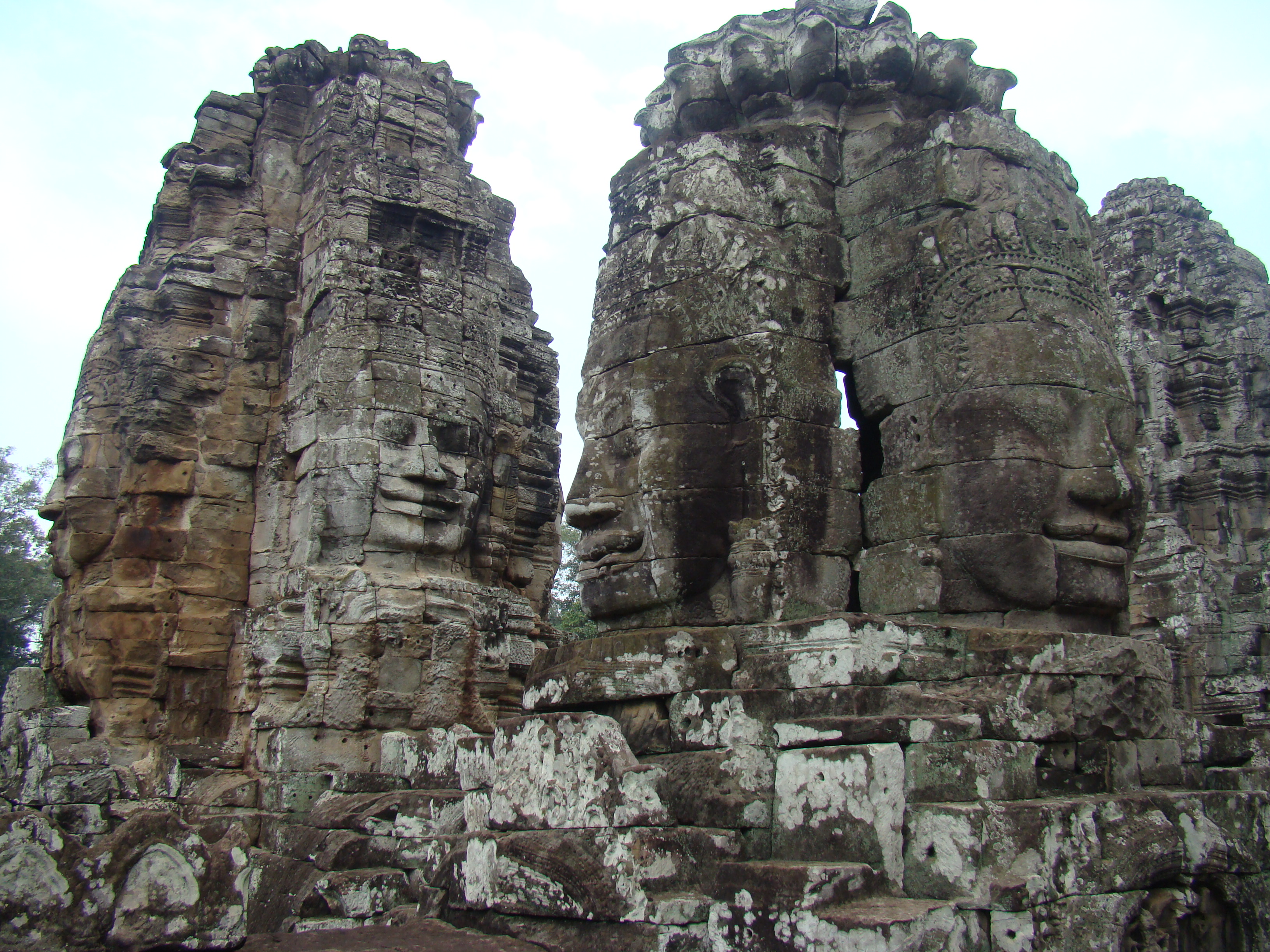 Bayon was our first stop, and there, slowly but surely, you begin to realise that all around you people are making faces. Ok, seriously, when you see it for the first time, they are quite amazing to look at, but after a while, you might find them repetitive, unless you’re the kind who can spot minute differences in architectural styles. The language is not really a communication barrier, but I didn’t see many guides adept at story telling, and that really would have made a difference.
 Tha
Tha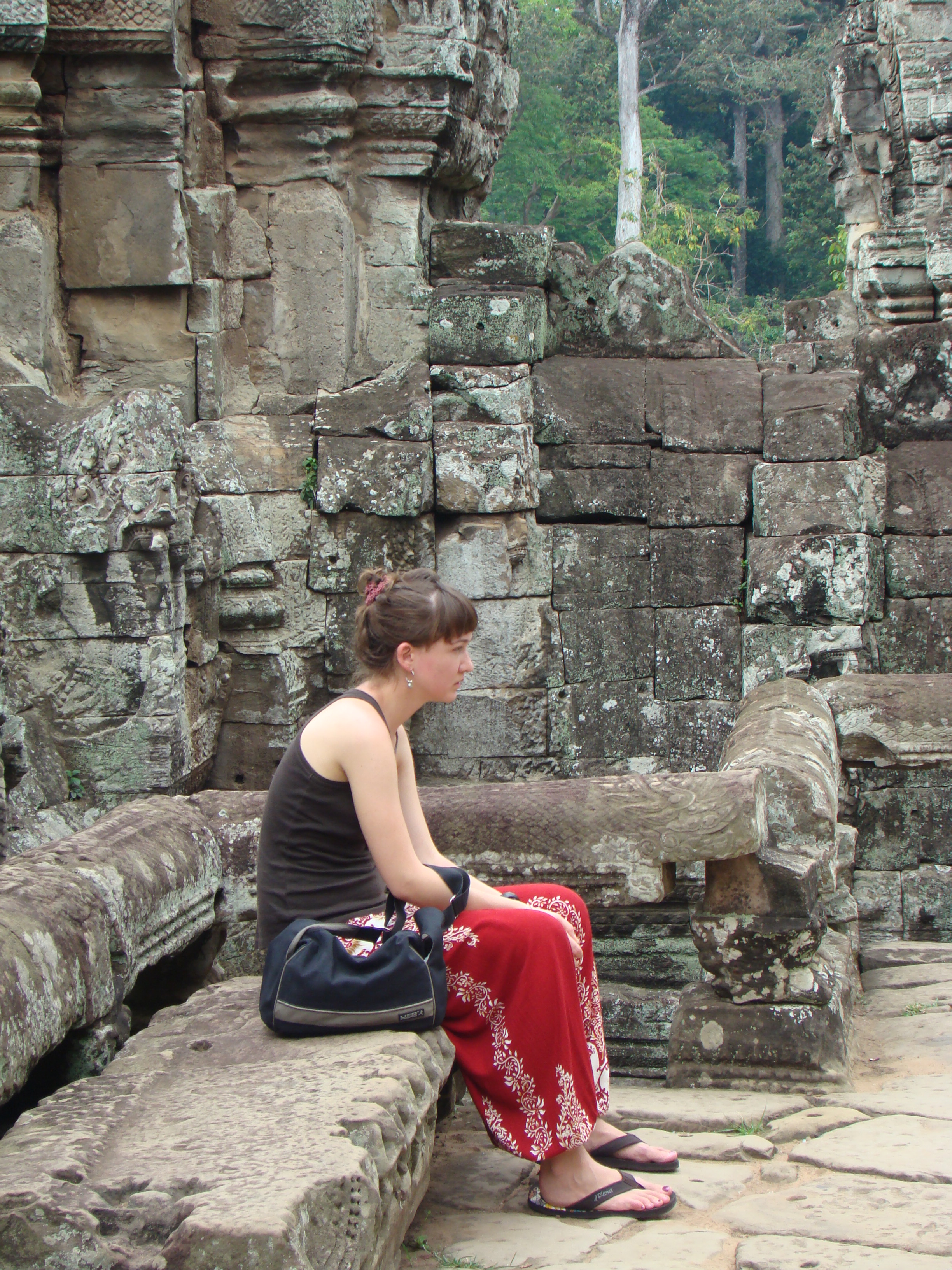 nkfully, there are apsaras – past and present, and bas reliefs to keep you distracted. It’s also fun to watch people posing at various points. 😀 I tried my hand and the results were disastrous.
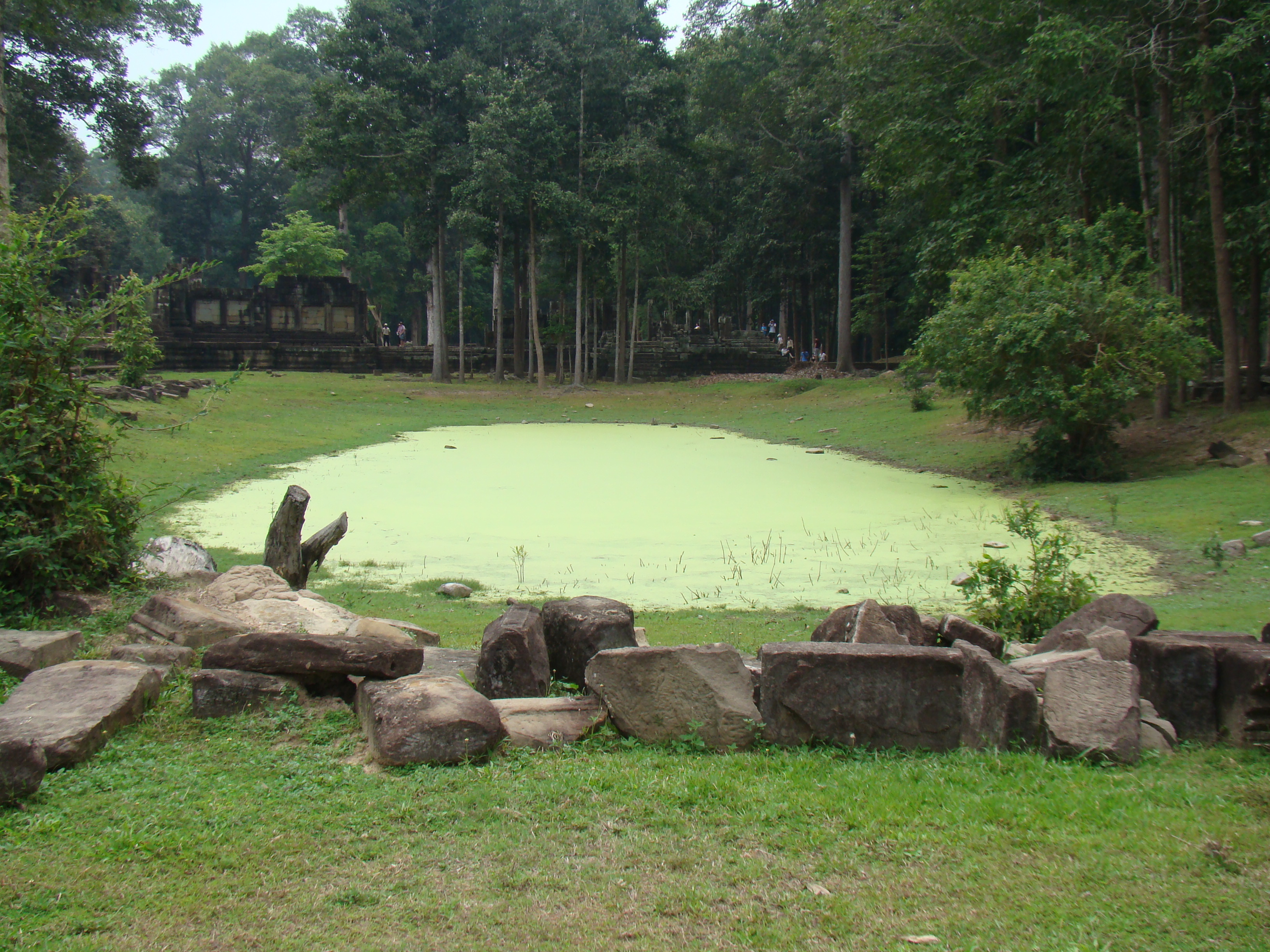
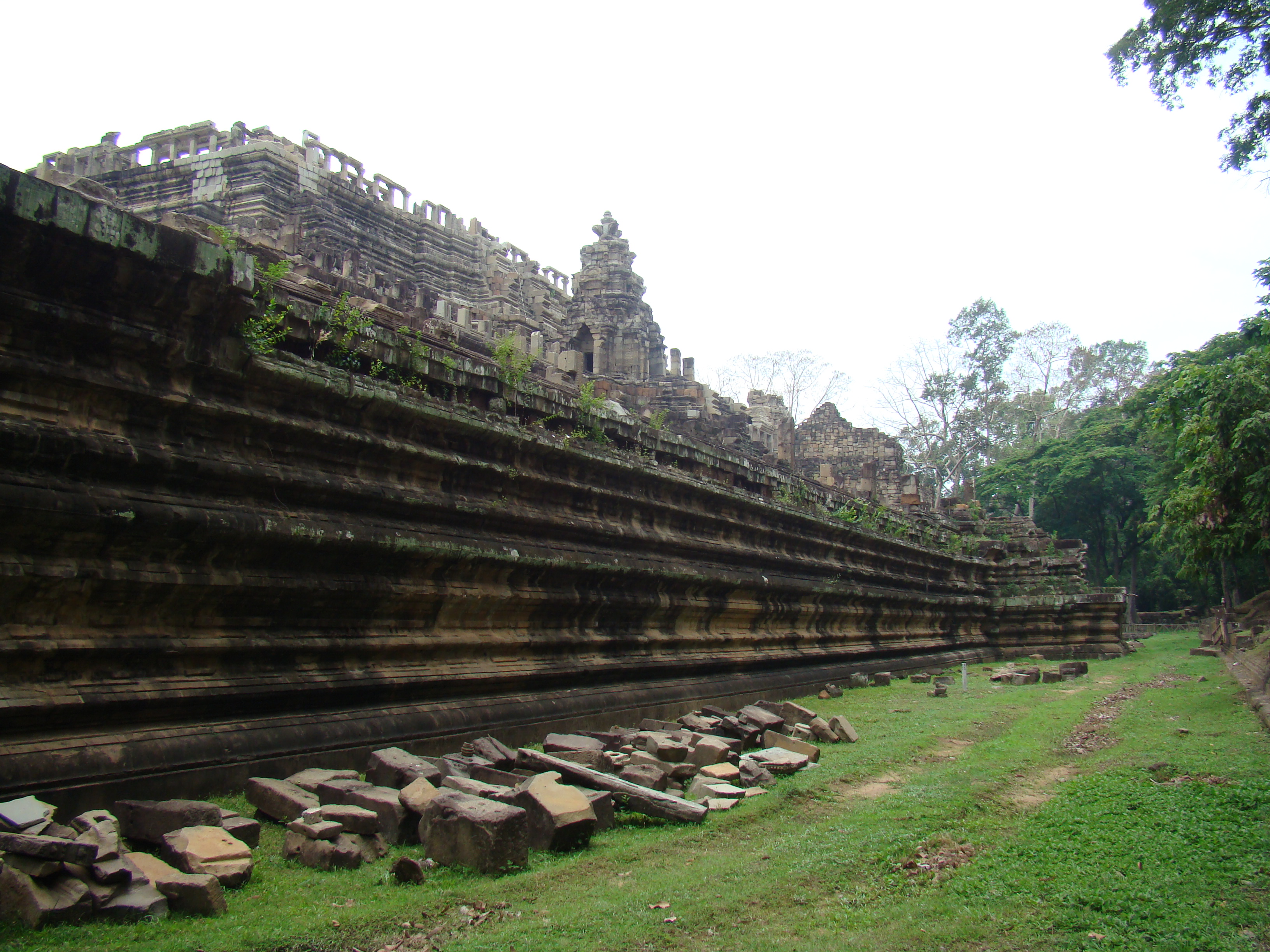
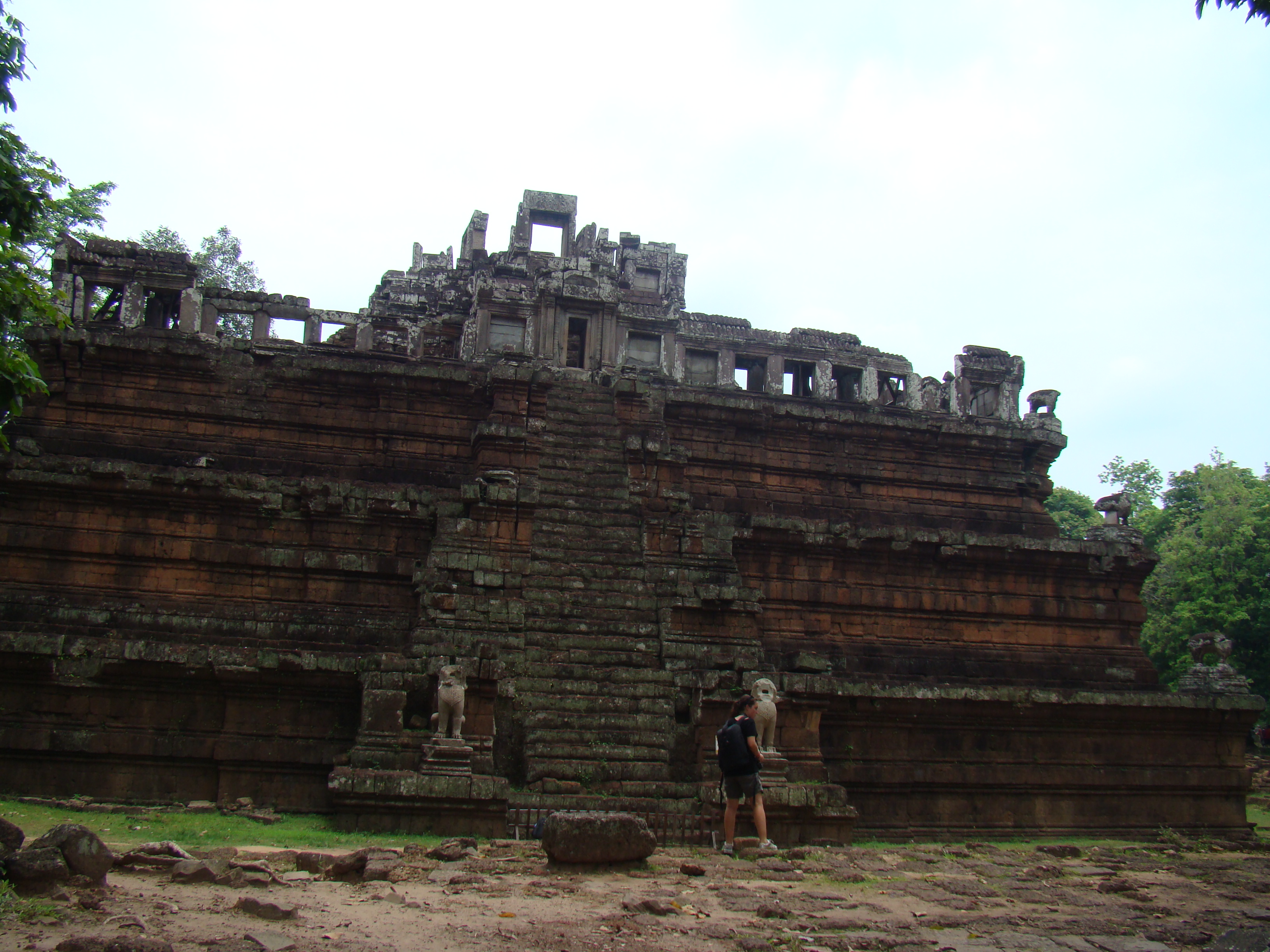 We then w—a—l—k—e—d past minor structures and trees and tiny ponds to Baphuon and the Phimeanakas, and then the Victory Gate with its Elephant and Leper King terraces from where the king watched his armies assembled before they rode for battle.
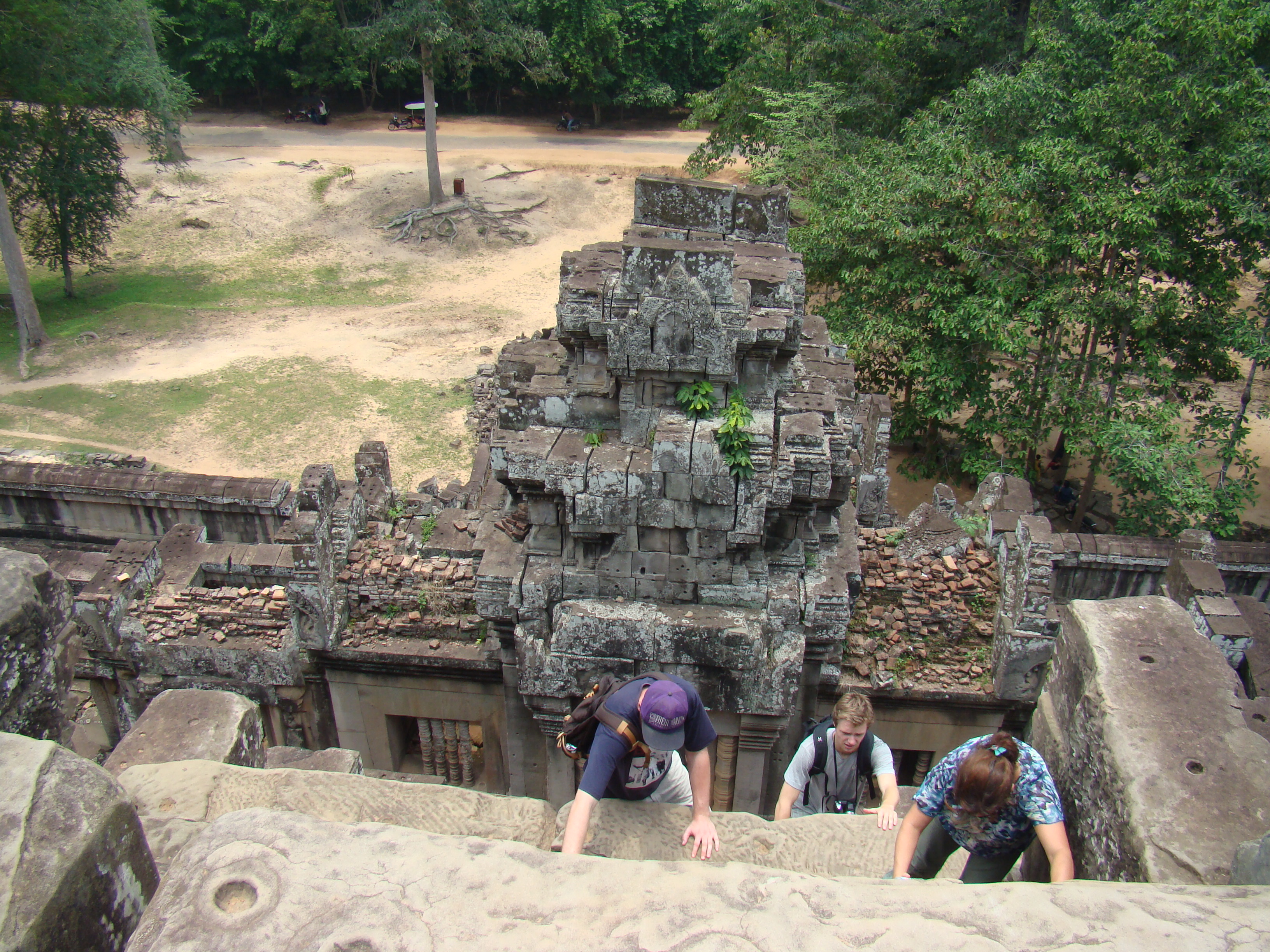
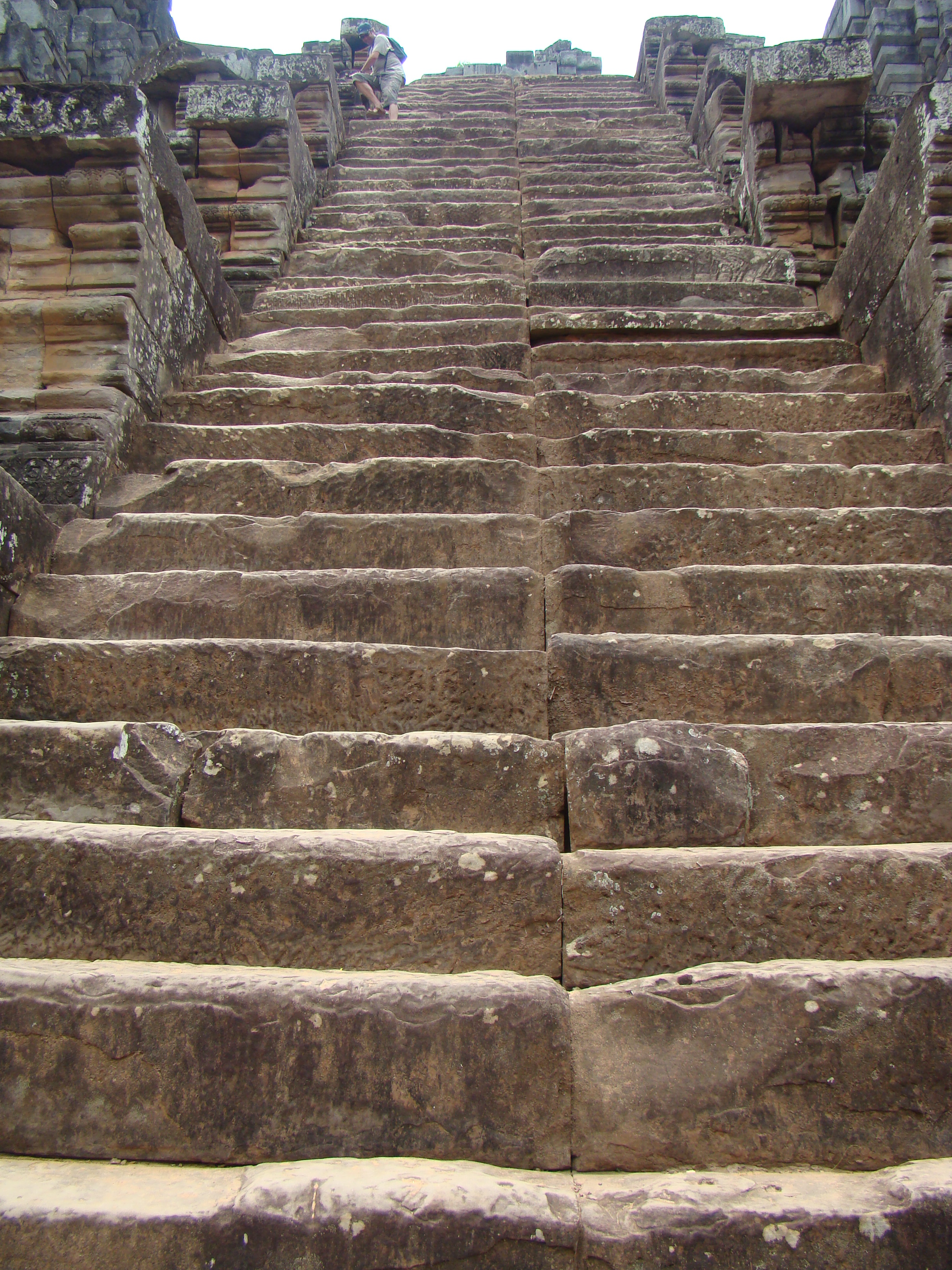
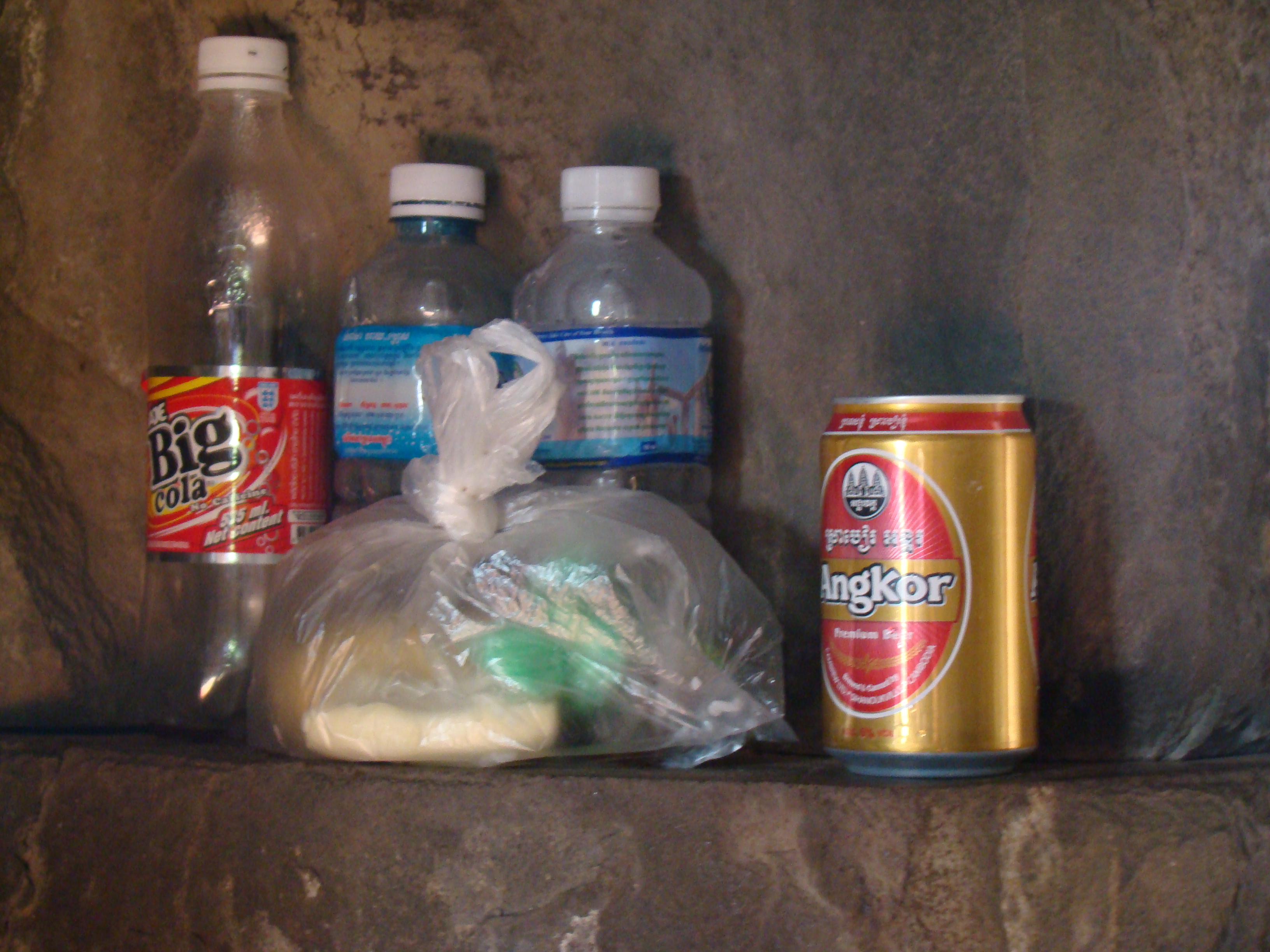 Since we were tired of plain walking, we decided to take a break and do some climbing. Presenting the Ta Keo temple, which gives you rewards for negotiating those :O climbs. Don’t me misled by the can/bottle, they’re for storing the oil, water etc for worship, I was only talking about the view. The search for escalator signs yielded no results.
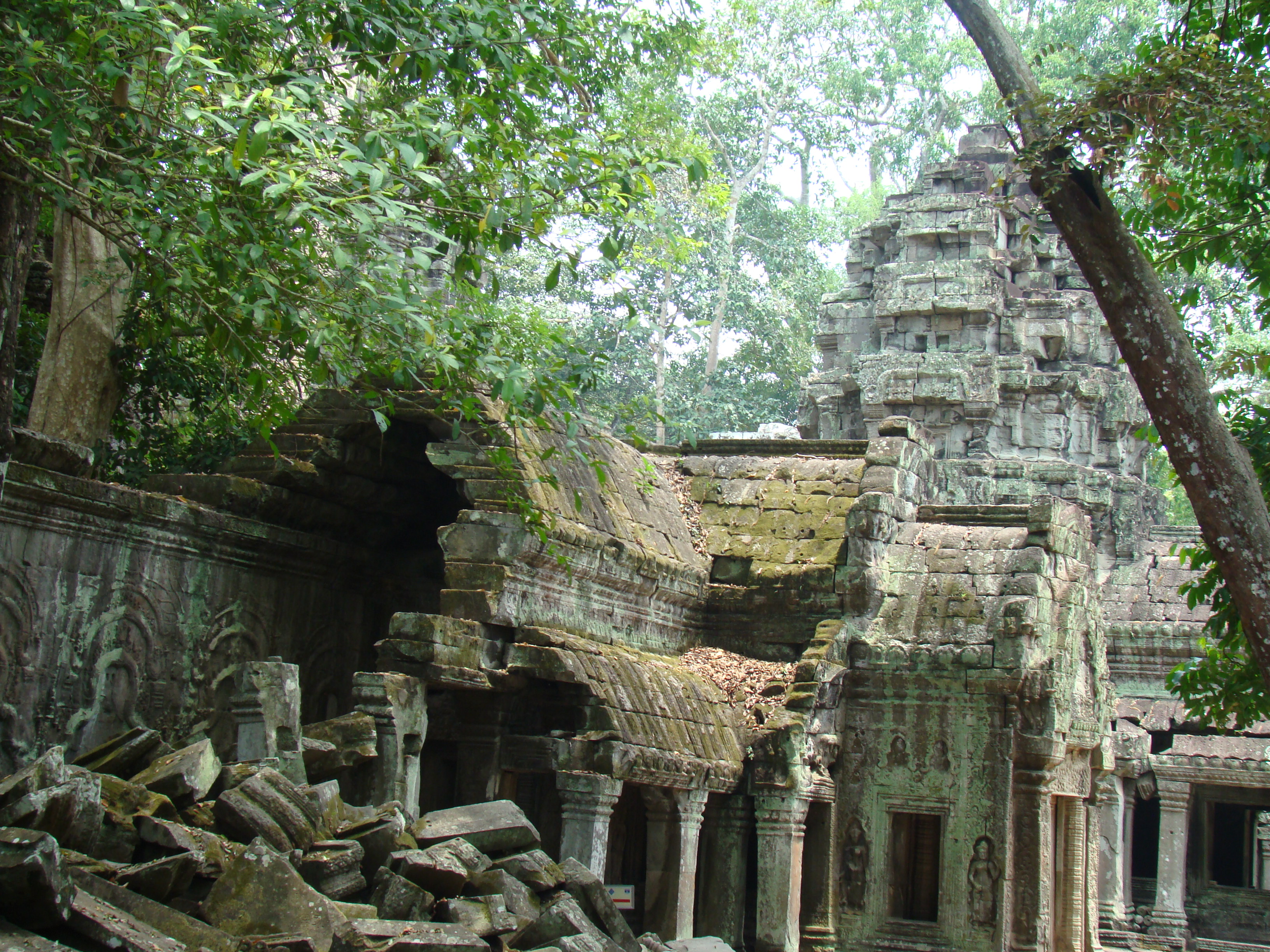
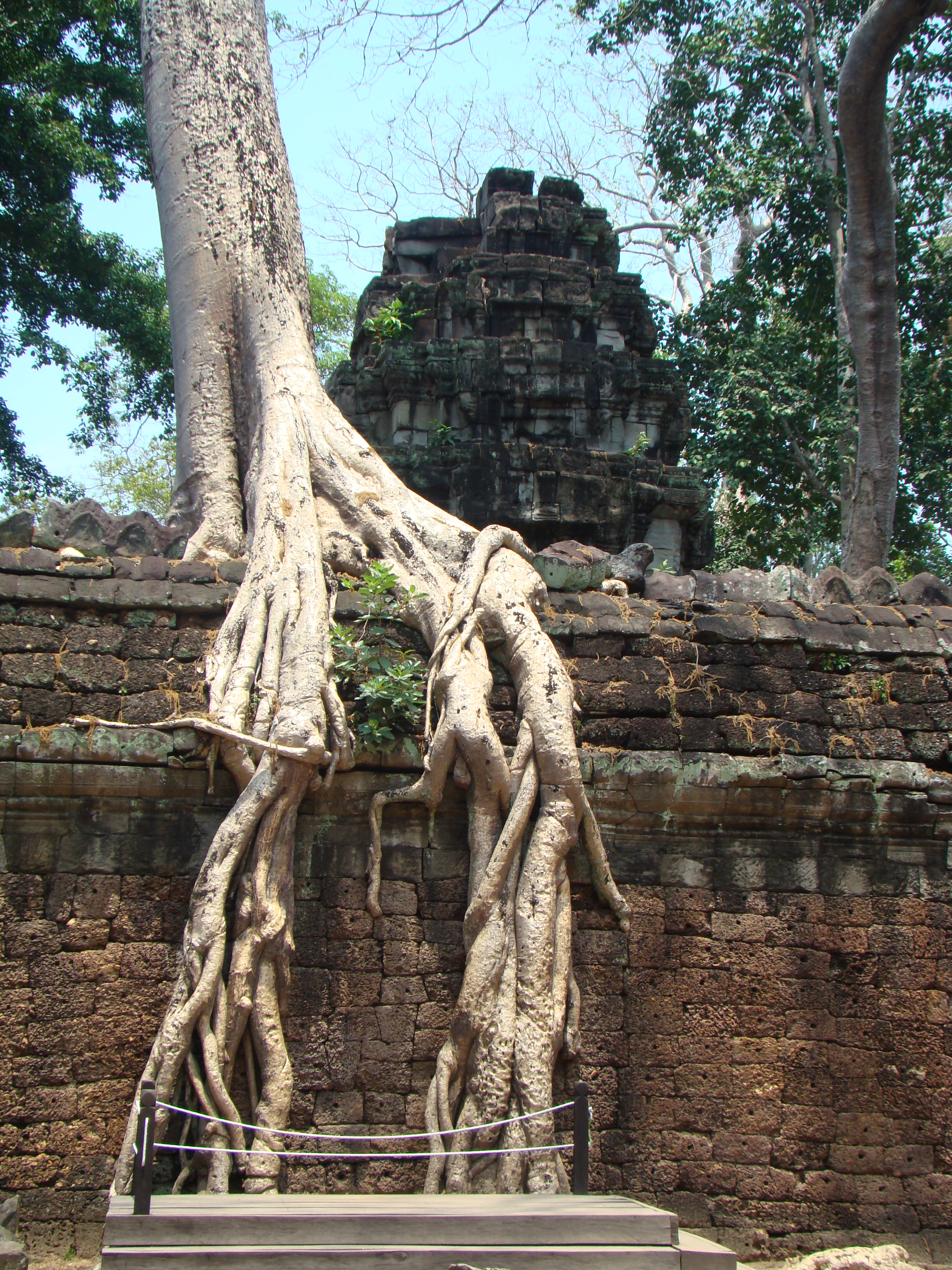
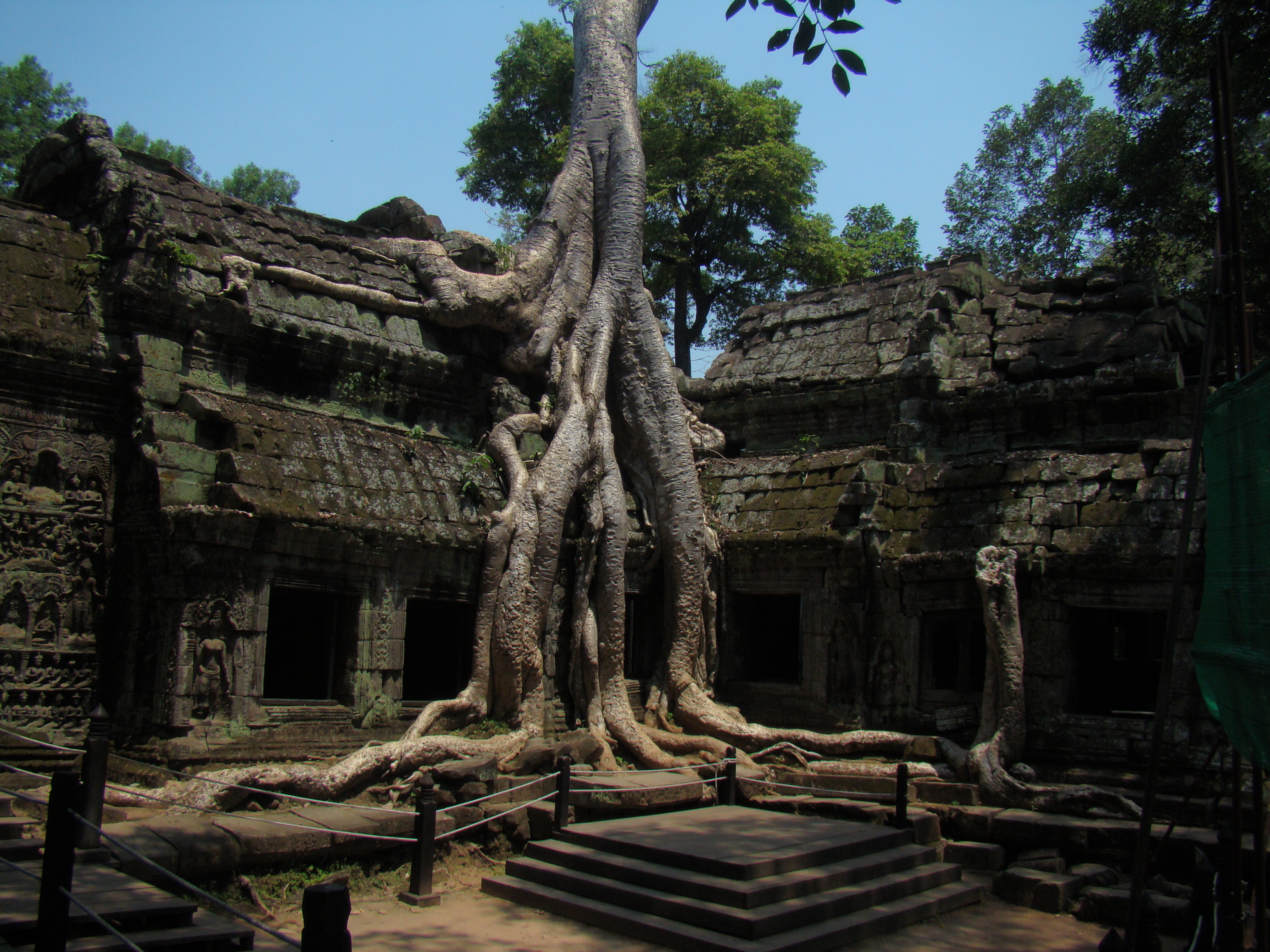 Up (the operative word usually) next was Ta Prohm, where the restoration work is a collaboration between the Cambodian and Indian governments. Amidst cicada sounds and an eerie ambiance, Ta Prohm proved to be different from the rest because the jungle seemed to be winning the fight against man’s construction. It also helped that among these ruins, Anju mol (Angelina Jolie to you) had become Lara Croft.
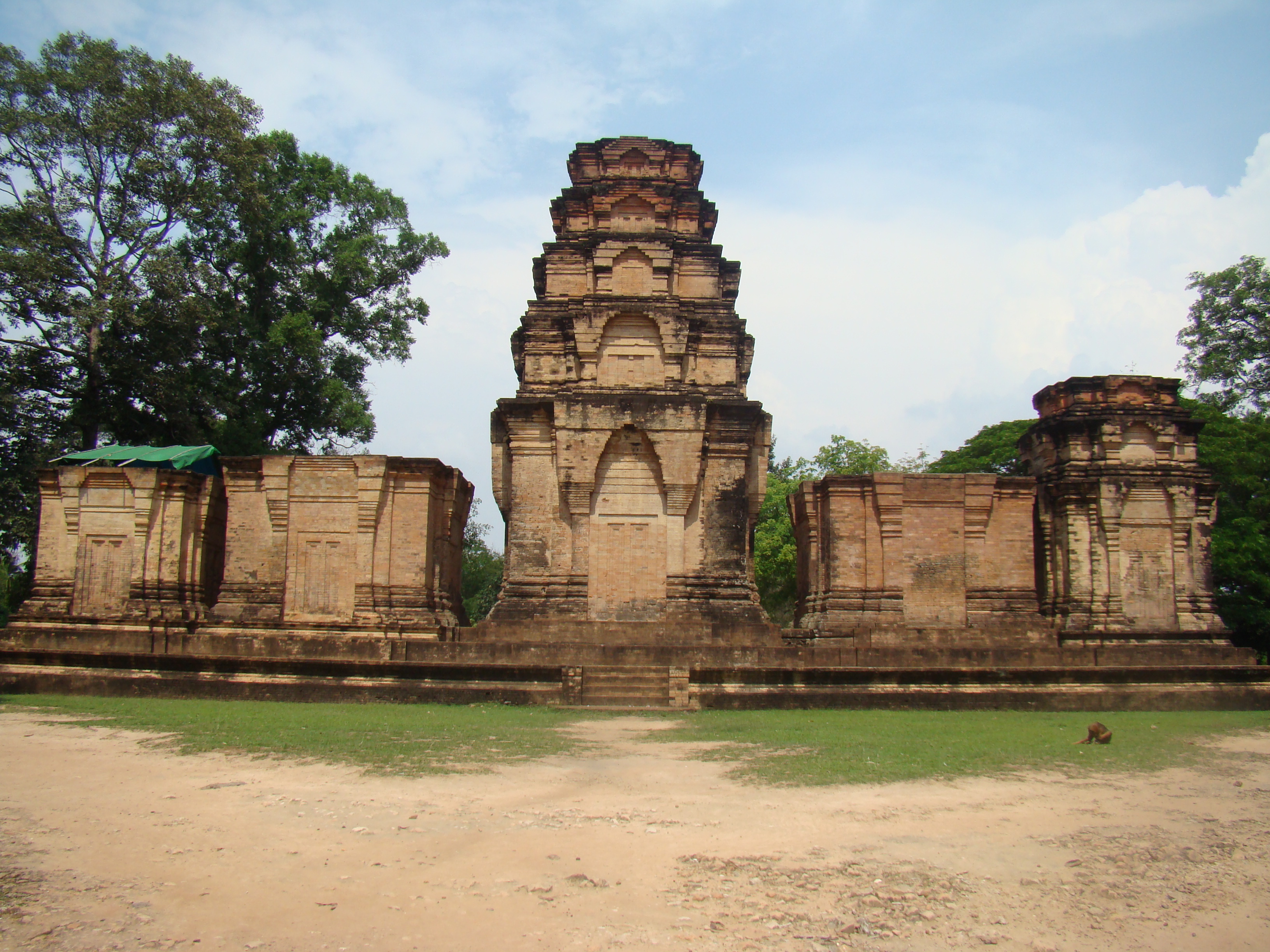 We then set off for lunch to a place suggested by the tour guide, despite our massive eateries-to-check-out preparations, mostly because it was quite past lunchtime. Lunch was decent, washed down with Angkor beer. After the lunch craving was satisfied, we moved to the last tour spot of the day – Prasat Kravan, made of reddish bricks for a change. We got back to the hotel by about 3.30. Power was still not back but was expected by 5. We warned the tour guide that if it wasn’t back by then, we wanted a change of residence. I needed to charge my camera batteries okay? And than at about 4, an unexpected visitor arrived. Rain! Which was only supposed to arrive in the first week of May!! I remembered Sikkim and thought our luck had run out! But thankfully, by 5, the rain had disappeared and the power was back.But it did mean that our plans to see the sunset were washed out. So we asked the driver to drop us off at Pub Street.
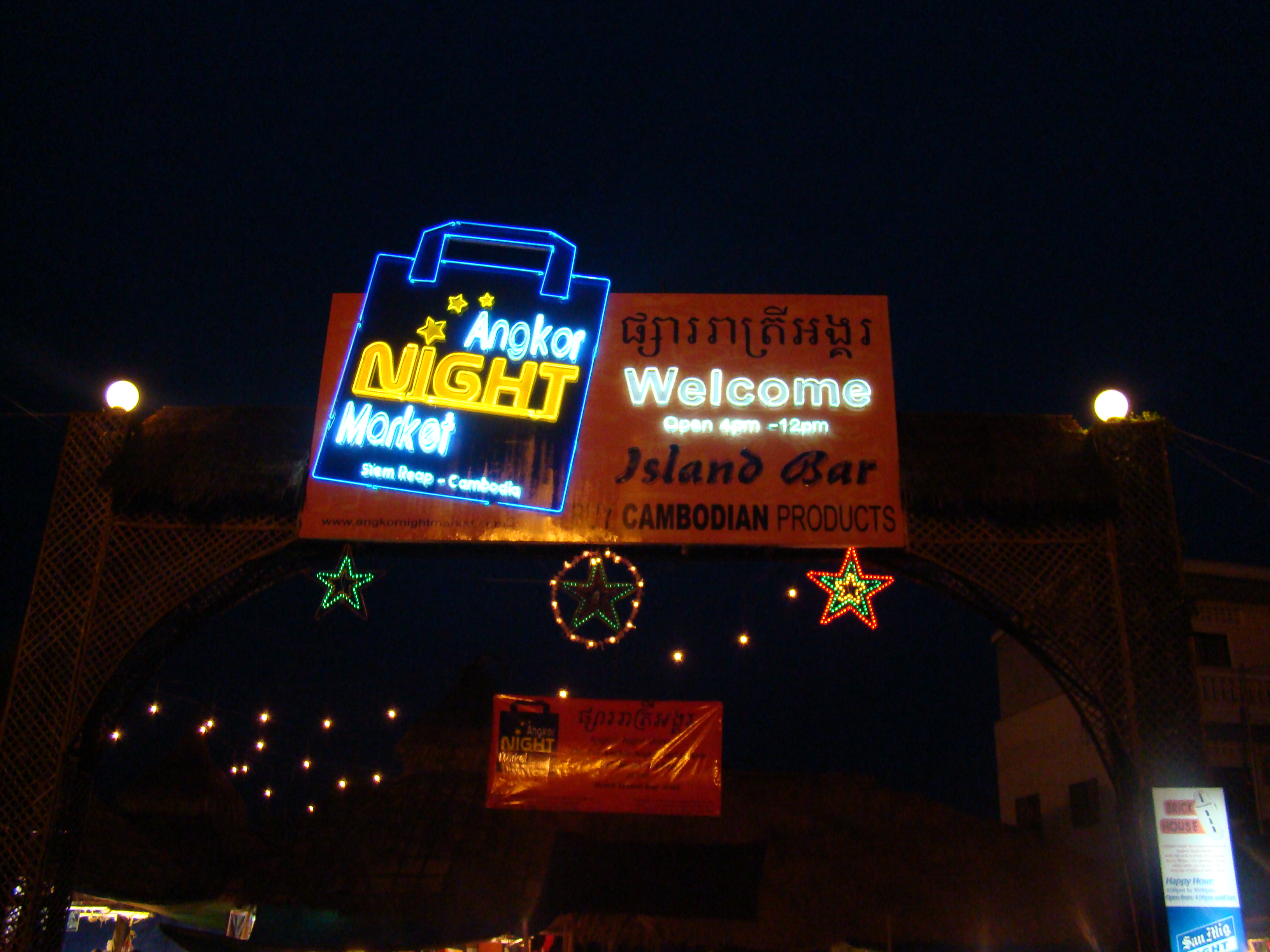
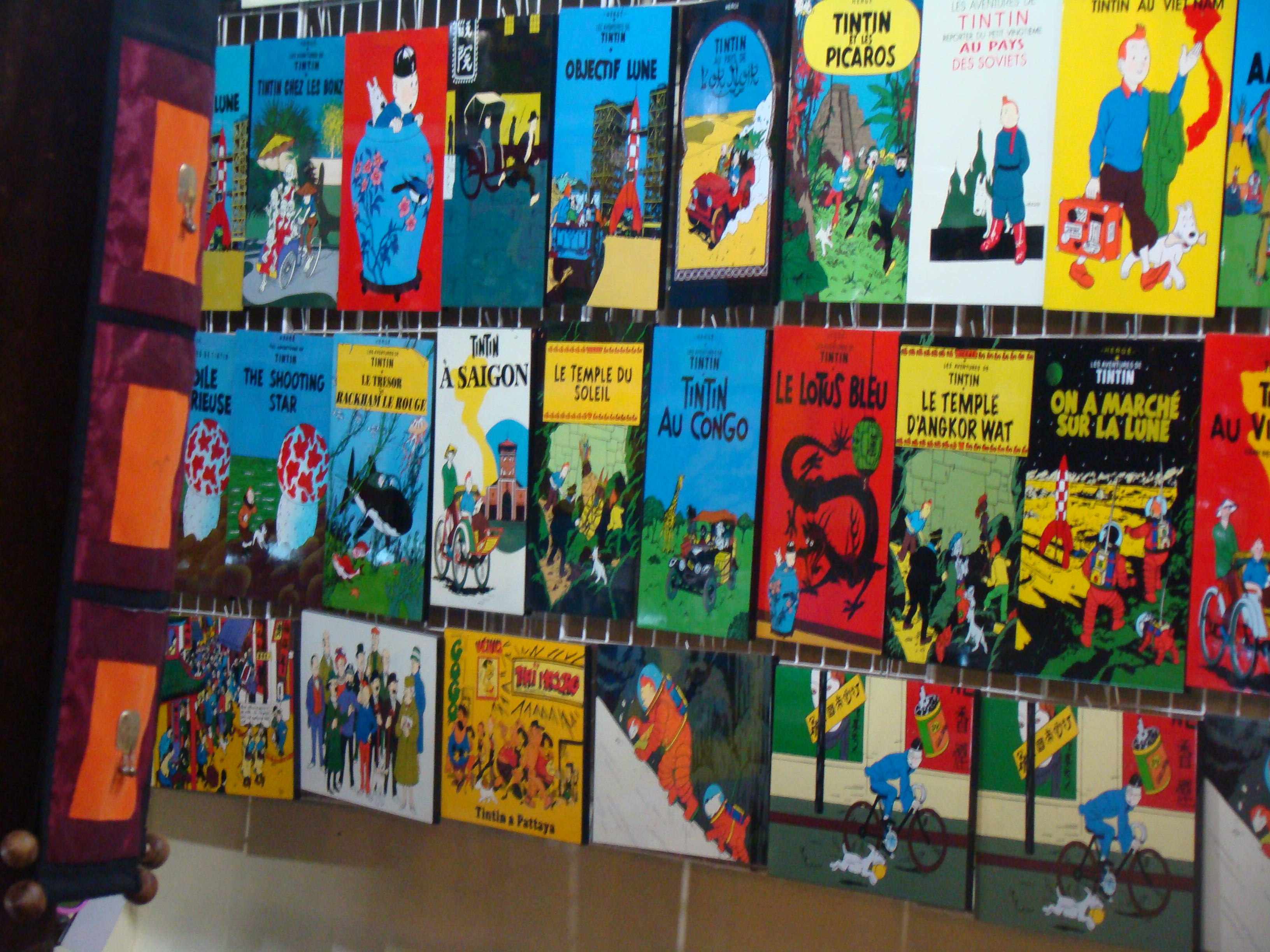
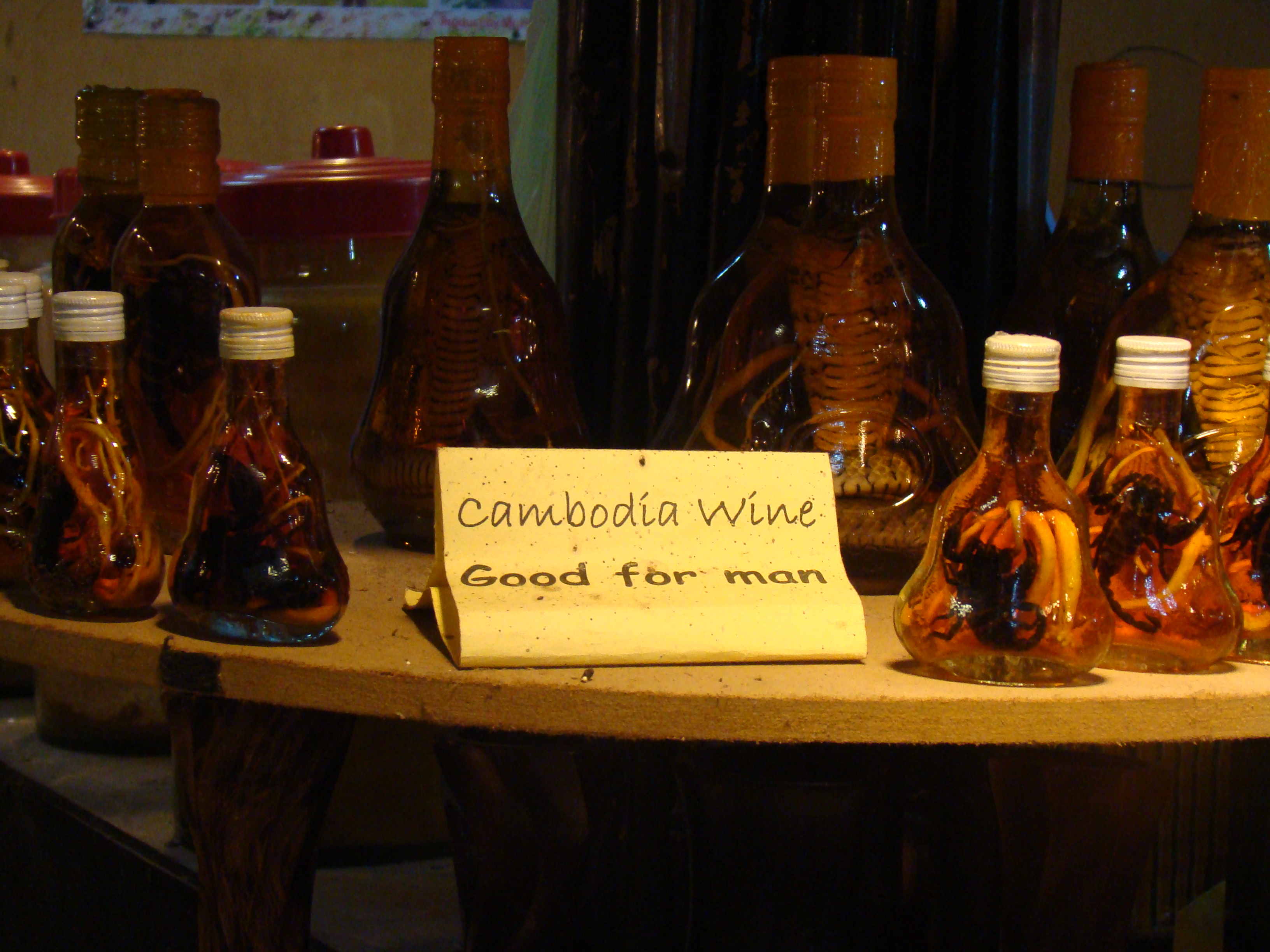 Before we decided on dinner, we decided to take a walk inside the Night Market nearby. Walking for shopping is complaint-free. 😀 This walk was quite some fun as we window shopped and D bargained for items she had no plans of buying.
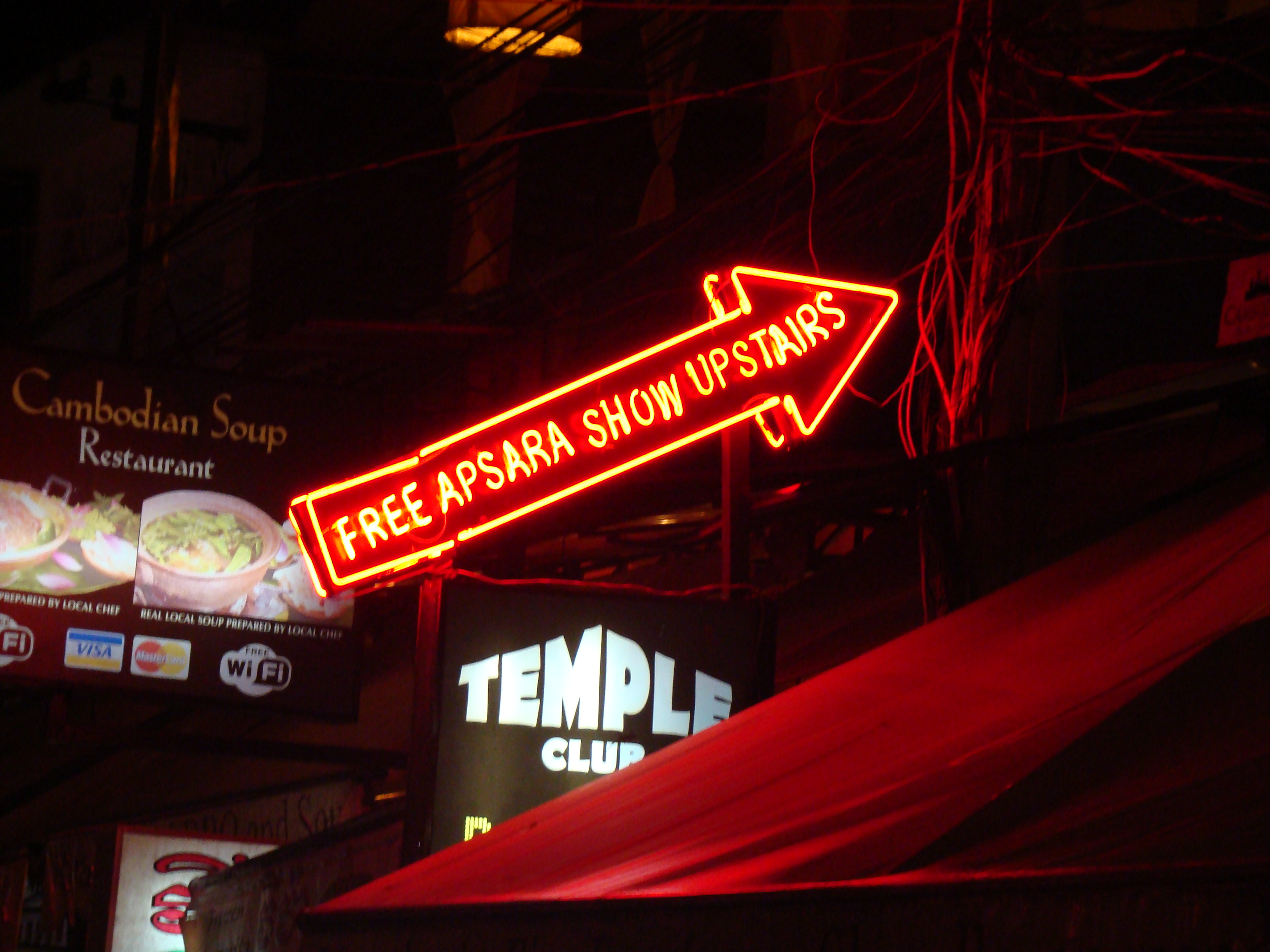
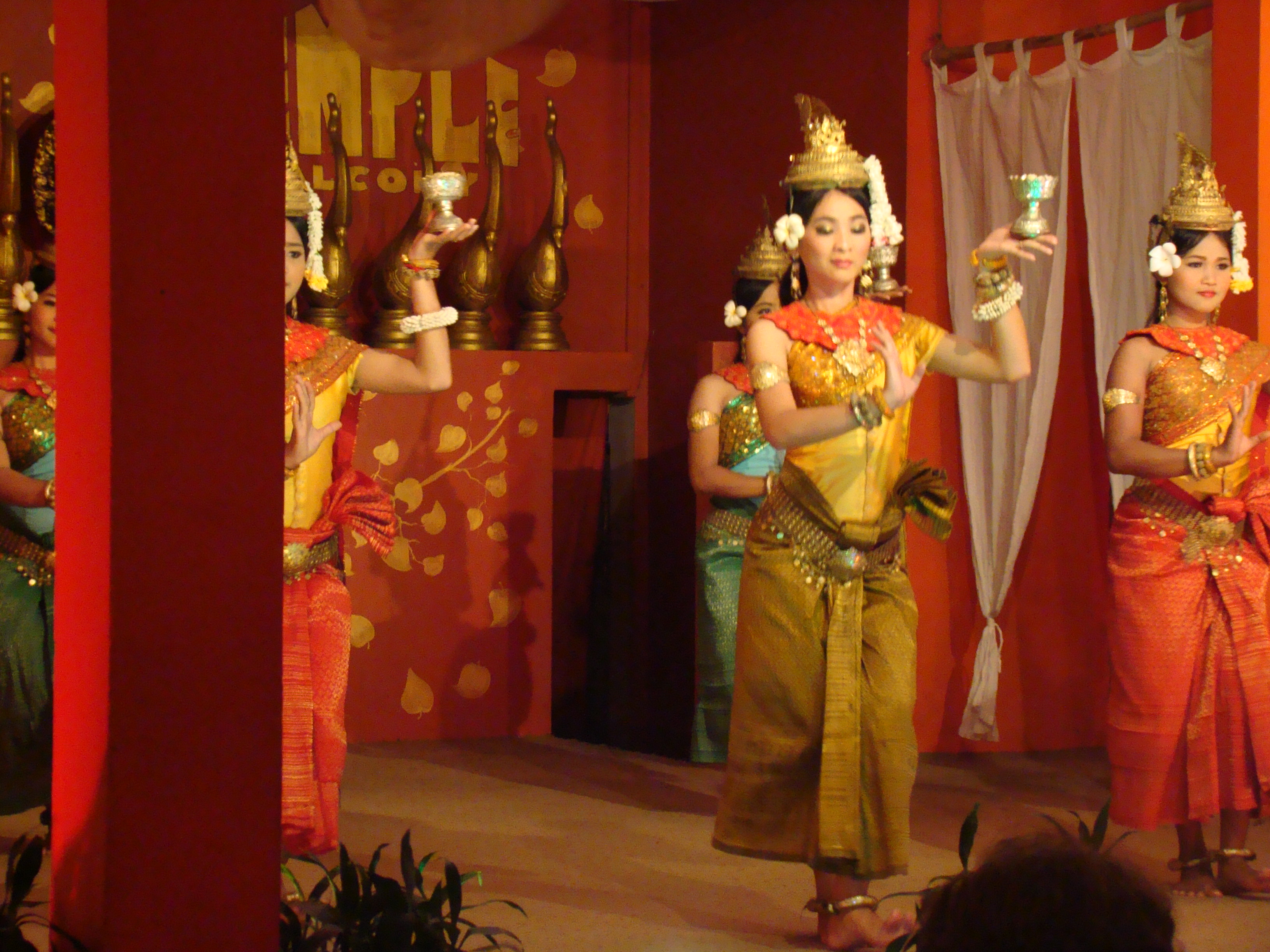
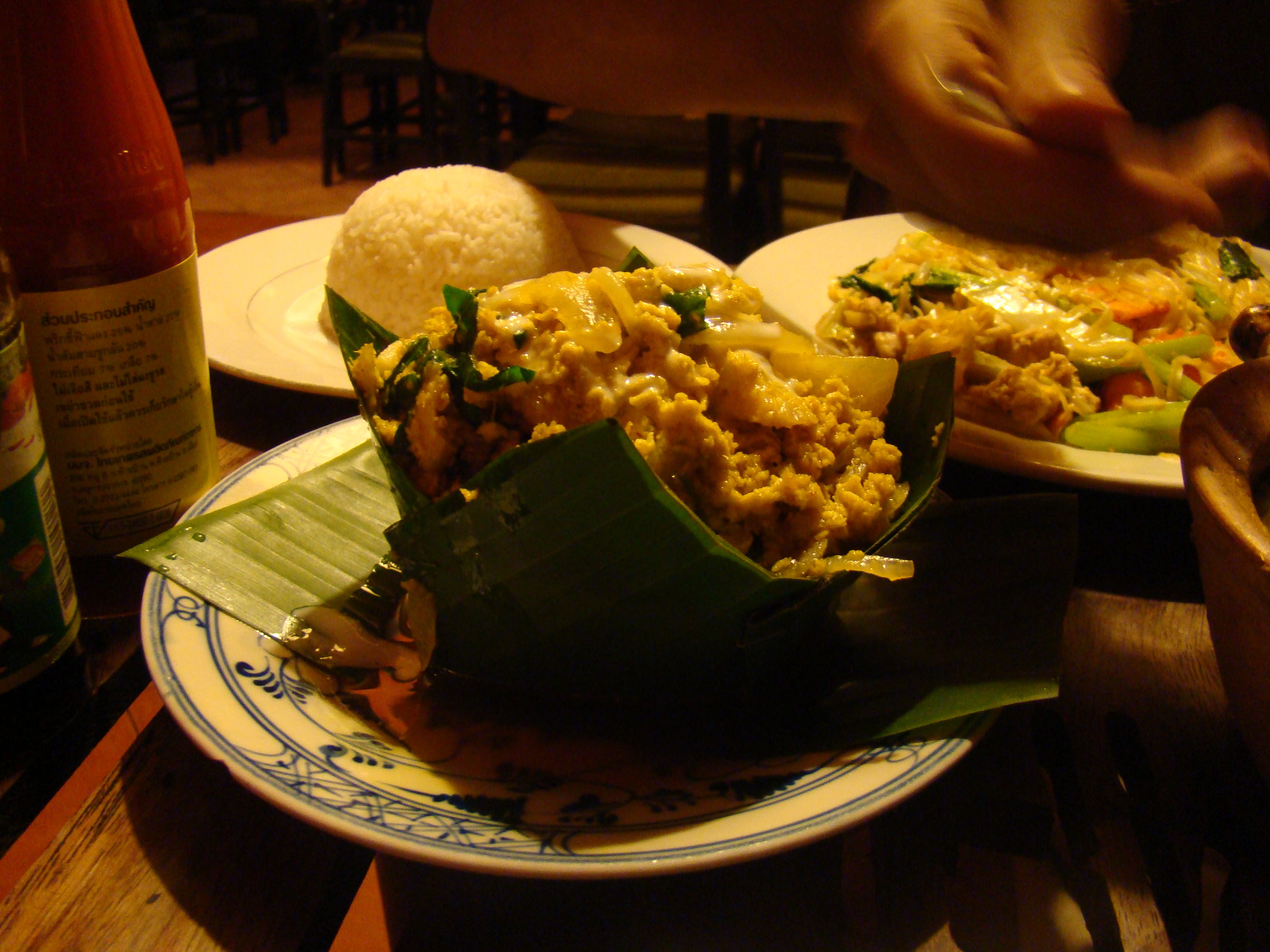 Lured by this sign, I suggested we try out Temple Balcony though it wasn’t featured in our list. Though the apsaras were overdressed (as per Hindu mythology detailing) and slightly different from what I had envisioned, the food was really awesome. The dish shown here is the Amok Fish in Banana leaf, we also had yellow noodles and a Khmer chicken soup. This dinner, watching Pub Street go by, was probably one of the best events of the trip. Yes, there was free Wi fi too.
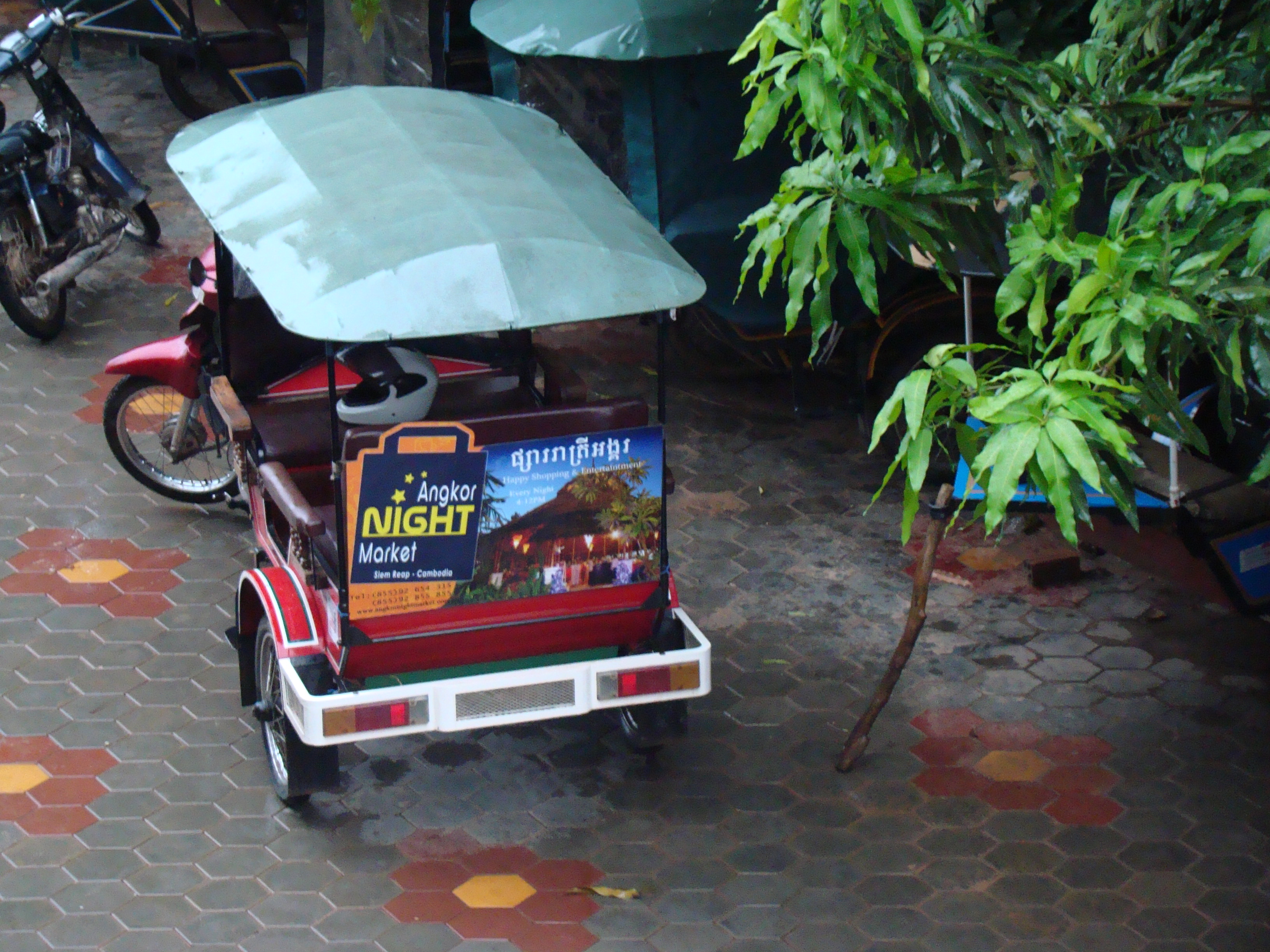
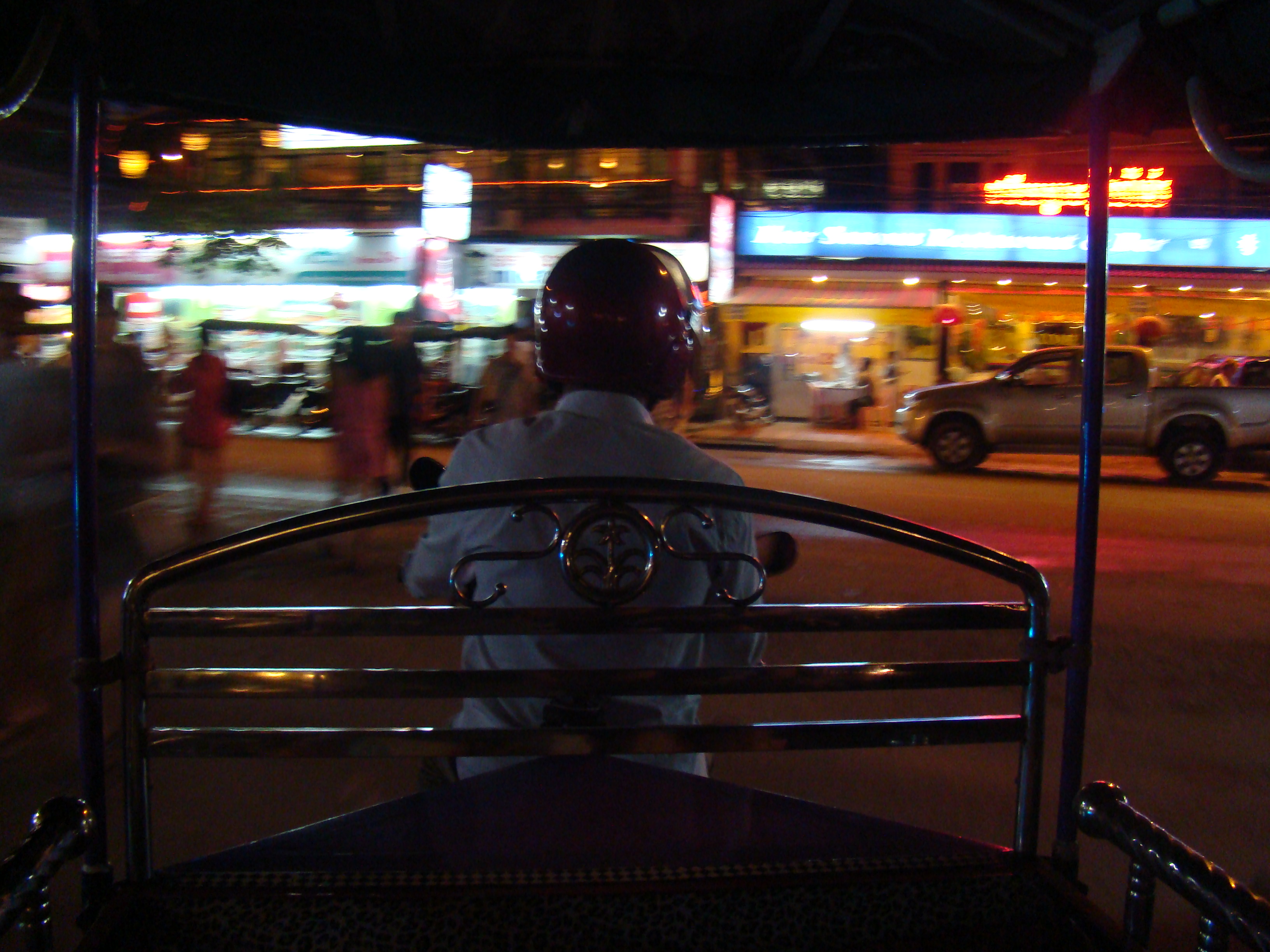 And now it was time to sample the Cambodia version of the autorickshaw – the tuk tuk. A tuk tuk ride at night is something you really must do when you’re there. Depending on where you stay and your negotiating skills, it will cost you about $2-3. An early start awaited us the next day.
until next time, how many roads must a man walk down….
More pics on Facebook