
• Adaa

    Koramangala’s autumn cleaning has meant that we have a new set of restaurants. Adaa is one of them, and has the advantage of already being famous in Marathahalli, one of those recent upstart villages that is trying to give Koramangala’s sheer number of restaurants a run for its money. 😉

    A social visit earlier meant that the tummy was half-full, so we decided to walk to Adaa. This is on one of Koramangala’s food streets, same as Kobe, Empire, Sufi etc. You’ll see it on the left turn (corner) just after the Jyoti Nivas College left, opposite what used to be Paramount. (and now seems to be on its way to becoming Naushad’s The Big Chef) I think Adaa has taken Desmond’s spot. Thanks to the parking lot near Empire, you should be able to easily find a place.
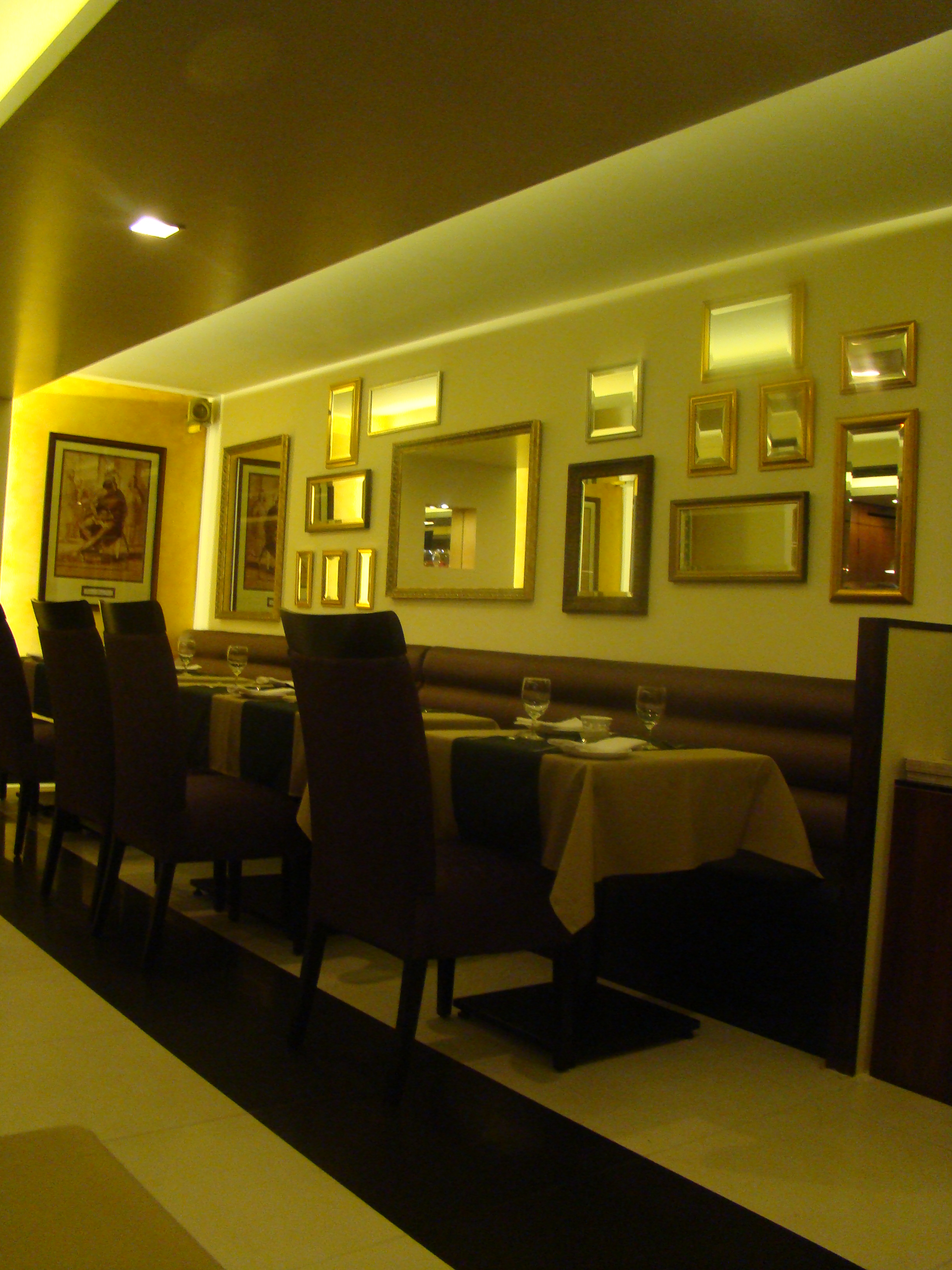
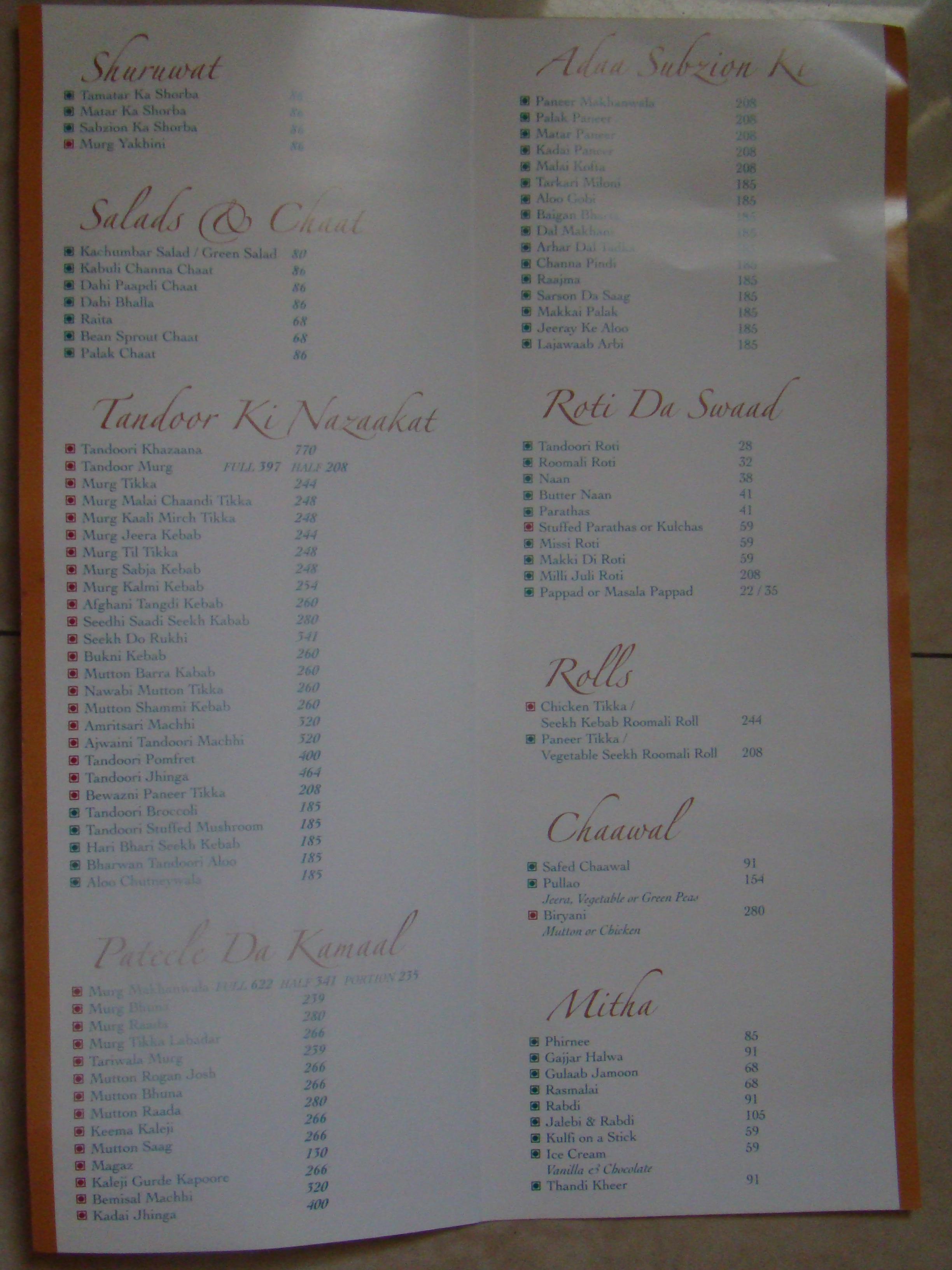
    Adaa is a compact restaurant with a warm yet classy interior, and comfortable seating options. The menu informs you that it is part of the same group that owns Treat in Indiranagar. That used to be one of our favourite haunts during our brief stay in Bangalore East. The usage of green in the menu and logo is also a good hint to the connection, on hindsight.
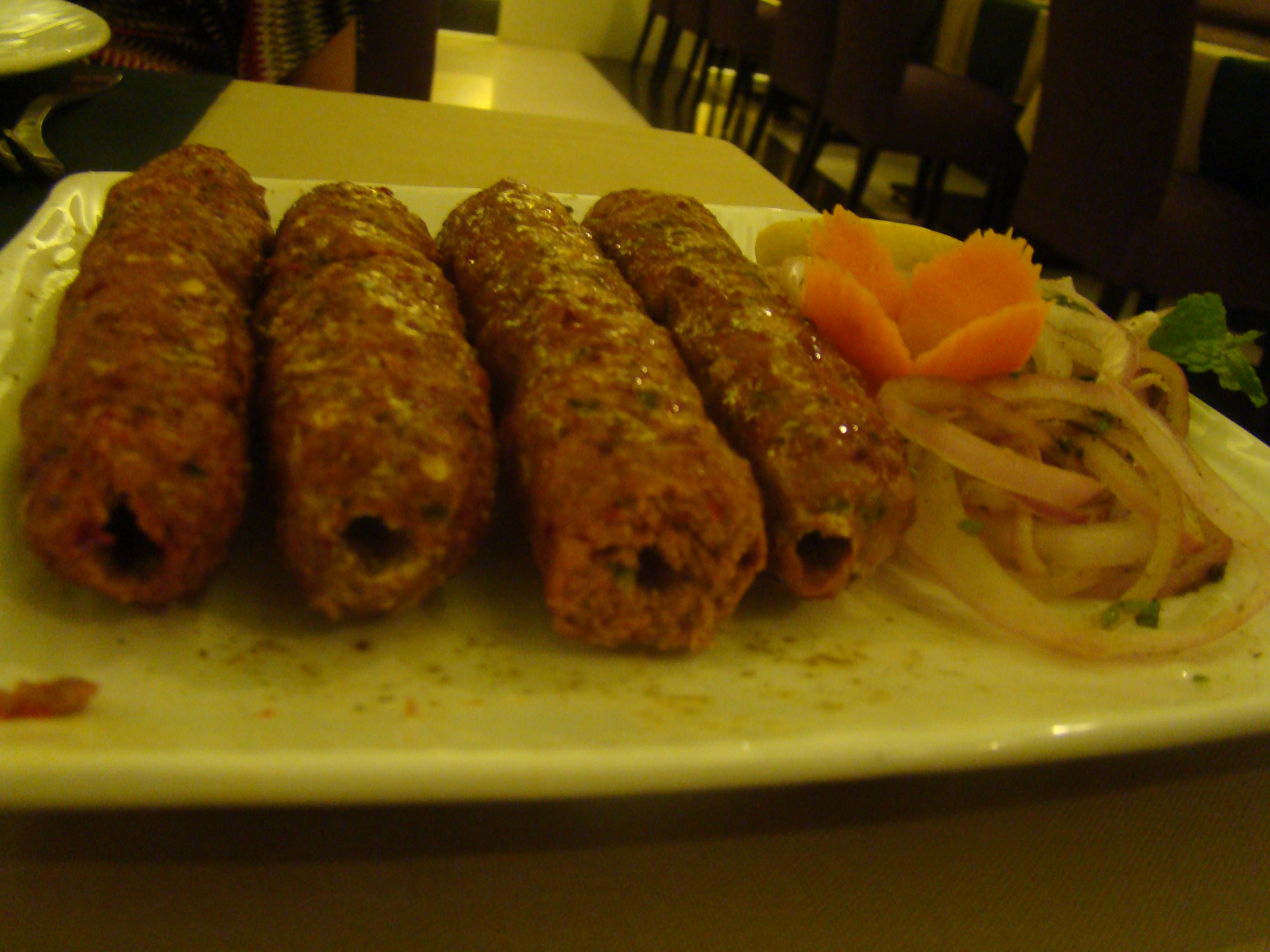
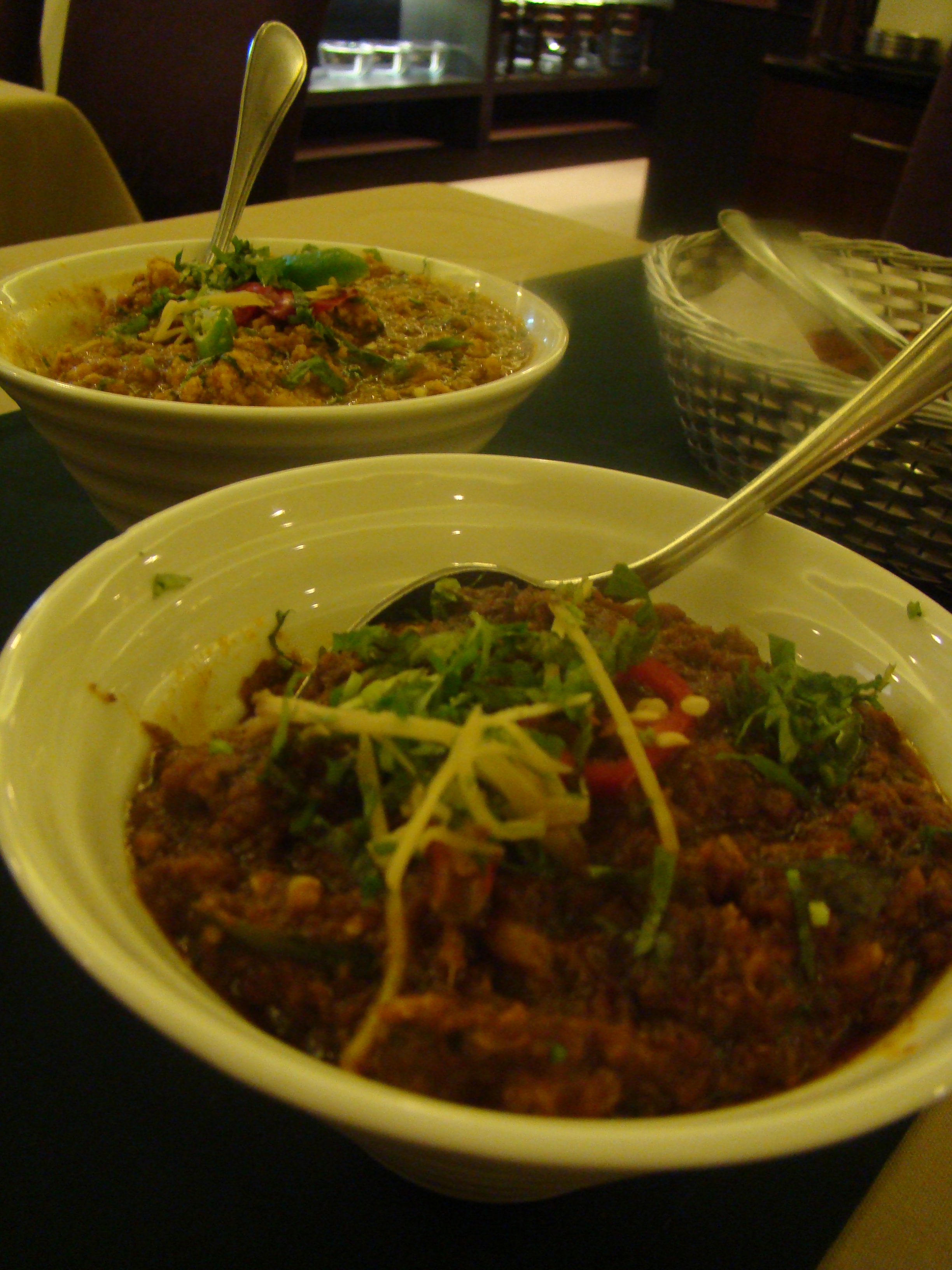
    We started off proceedings with a Bukni Kabab. ‘Bukni’ seems to be a powdered masala with a dominant red chillies flavour. This indeed turned out to be a hot, fiery seekh kabab with an excellent texture, complemented well by the lemony, tangy onions. We washed it down with a thick, sweet lassi, that proved to be a good investment too. For the main course, we ordered a Murg Raada and a Magaz, and to go with that, a Kheema Kulcha, a Lal Mirch Paratha and later a, Hari Mirch Roti.

    The chicken dish seems to have a back story too. Apparently, it was created in a dhaba near the Road Transport Authority in Old Delhi. The mince and meat combo was good but though that made it a thick dish, the gravy itself proved a bit watery and bland. The Magaz, which is goat’s brain in a spiced masala was a much better dish, in spite of being slightly inconsistent with its flavours. There were spikes of salt and tanginess, but that didn’t take away much. The roti, paratha and kulcha did their jobs well, though we expected more spicy versions.
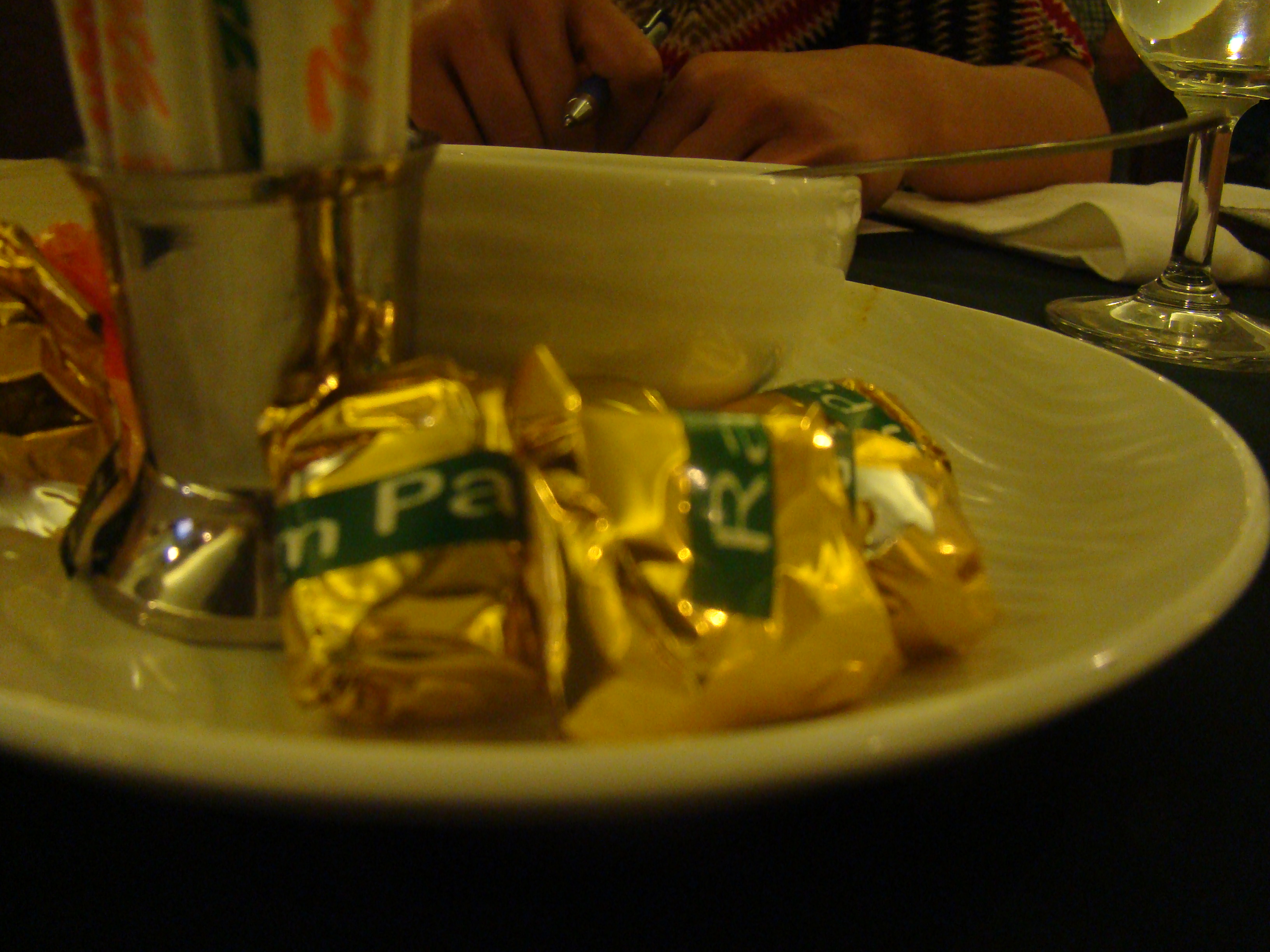
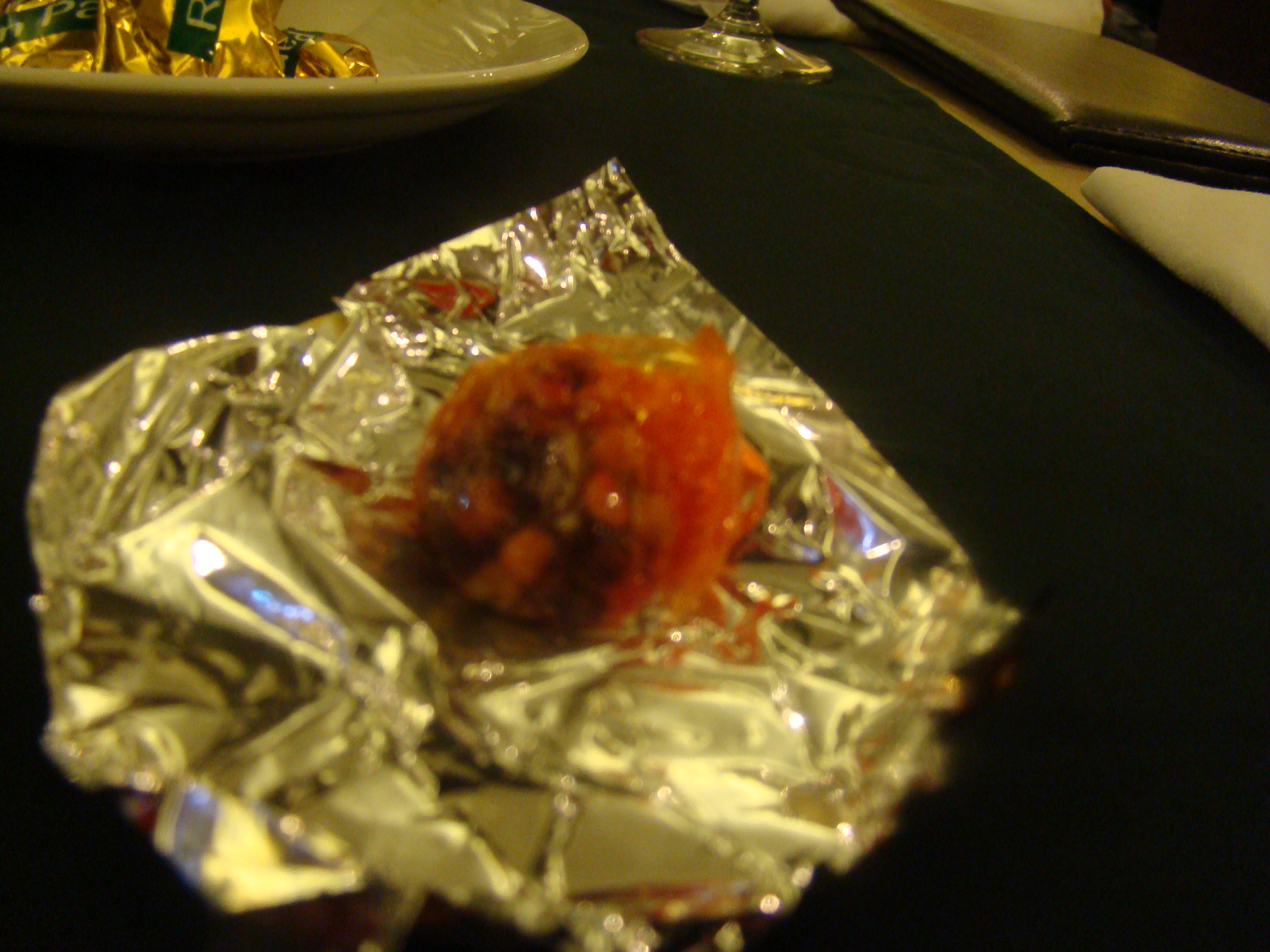
    There were dessert options, but we were too stuffed. There was this cool packaged ‘paan’ that came with the bill. First time I have seen this, and it’s quite good. So good that we ate two each and took the remaining with us. 😀 The bill came to just over Rs.900, including a 10% service charge. The service is courteous and attentive. In short, quite worth a visit, if you’re in Koramangala and would like some North Indian fare.

    Adaa, 48, 4B Cross, 5th Block, Koramangala Ph: 41103144/55

    A review published in Bangalore Mirror later

  • Gamification – Level 2

    I’ve spent quite some in the last week exploring gamification – going through documentation and perspectives that have been shared online. While there’s a simplicity in the basic concept, application is a totally different story. So as with all games, I’m going to navigate step by step, until a larger picture reveals itself over a few posts.

    One of the things that I have thought about is where one would start. Since I’ve operated mostly on consumer brands, my thoughts were skewed in that direction. Most of the white papers outline a fairly simple approach that consists of defining goals, identifying users and rewarding engagement. Of course, it’s only the outline that’s simple, and application design is the real challenge. As games designer Sebastian Deterding (creator of the ‘Gamification and its Discontents’ presentation I shared last week) has written “Games are not fun because they’re games, but when they are well-designed”

    One of my favourite posts on the subject is Kathy Sierra’s “Pixie Dust and the mountain of mediocrity” (this is the original post, for some reason it wasn’t opening, hence the FB link) It underlines the point about putting lipstick on a pig, and is applicable to every buzzword that appears on the horizon. Marketers (I generalise here) have been guilty of taking the easy path and focusing on the what (tools and frills) and not focusing on digging deeper and understanding the why. That probably explains why Kathy is “passionately against ‘gamification’”

    Every brand – consumer or enterprise, serves a purpose for its user. In Kathy’s words, “make people better at something they want to be better at.” If they don’t do that yet, then they might want to get around to doing it. Brands wants users to do certain things, and it invariably boils down to a sale, and repeat sales. Every interaction in a marketing funnel is most likely a step towards pushing the user in this direction. Once upon a time, brands achieved this through one way communication on mass media, and other available means like Direct Mails and Ground promotions. The rise of social platforms allowed brands to listen more closely and gave them an avenue for understanding user motivations, reacting accordingly, having a conversation with consumers and taking word-of-mouth to levels hitherto unexplored. But rewarding this, especially if working on monetary premises, is not likely to be economical. Nor is ‘share with friends’ a great ploy because it does amount to spam. I think what gamification does is help marketers link the brand’s purpose in the life of the user to his journey in getting there, all the while utilising user motivations to create a different ecosystem of rewards that help the brand as well as the user. It then continues to give the marketer means to make the user ‘stick’ – retention.

    Just like the previous season’s buzzword – social media – this too cannot afford a ‘one size fits all’ approach. Nor can it work by adding meaningless points and badges to an ill conceived process/product. Brands would have to align their own purpose, the role it plays in users’ lives, understand personal, group and social motivations and make their own game mechanics, dynamics and aesthetics that accommodates instant gratification as well as long term purposes.

    until next time, level up

  • The window seat….

    …at night. The sight of a person looking into infinity from within the confines of a moving vehicle. What sparked this memory was a single scene from a song in a movie (Malayalam) that I saw recently – Salt N’ Pepper. Not in this song, which is absolute foodpr0n, but in the other melodious song (2:50 – 3:05) You’ll probably not recognise Shwetha Menon. 🙂

    In trains, it works differently for me. The lights are much further away, and flicker, as though desperately trying to get me to imagine their story. In buses, the lights seem much closer, and so are the people outside. Returning from work, knowing they have a night ahead to recoup before they face the daily grind the next day. On their way to meet friends, hoping they’ll have a good time. Rushing home, eager to see a loved one, whom they have missed all day. Stories of hope, stories with a face.

    I don’t get to see this these days, but I remember when I was in engineering college and used to return home on weekends. My usual bus dropped me at home by 6, too early for this, but in case I got delayed, I’d be in a plodding bus, half empty, on a route and through a landscape that looked completely different when seen at night. Before I got the Kiney to Goa, the trip from Panjim to Ribandar at night felt just the same. The Mandovi just made it extra special. In my first job, there was a period during which I used to travel daily from Cochin to Paravur, about 20 km away. That was probably the last time I got the window seat in a bus, at night. Ironically, that was also the time I used to go back to an empty home. One of those times, when the spectator had his own story to tell. 🙂

    There is something about the window-seat-at-night experience – romantic/ nostalgic/ wistful that makes it special. A feeling that I was not alone in the crowd. It used to give me a sense of peace, a feeling that everything would be alright.

    until next time, the bus stops here.

  • Weekly Top 5

    This week’s updates include the completion of Microsoft’s Skype acquisition, Dell and Windows 8 devices, Bing branded deals; Zynga’s IPO, new games, Zynga Direct, Angry Birds and IPO plans; Facebook’s acquisition of friend.ly, association with Walmart; Apple’s pre-orders for 4S, launch of iOS5, Foursquare’s launch of Radar; Google+ userbase, closure of Buzz, and the launch plans of Nexus Prime.

    [scribd id=69160510 key=key-2c90tzczdv8h1hyj1vio mode=list]

  • The Immortals of Meluha

    Amish

    The first of the Shiva trilogy. The book takes a historical view of Hindu mythology and looks at the Hindu God Shiva as a human who through this actions got elevated to the pedestal of Mahadev – the God of Gods. Set from 1900 BC onwards, it tracks Shiva’s journey from Mount Kailash in Tibet to the land of the Sapt Sindhu inhabited by the Meluhans, who see him as ‘Neelkanth’, the incarnation that will help them triumph over evil. ‘Evil’ to them are their neighbours, the people of ‘Swadeep’.

    The book is very fast paced and tells a good story. It also has a sprinkling of philosophy, especially towards the end that lends it some (relative) gravitas. Though the book shows no dearth of imagination in bringing a reality perspective to a lot of things we consider myth, what I felt it lacked was a certain finesse of prose, a factor that made it seem corny at regular intervals. But that won’t stop me from picking up the other two books, and that sense of intrigue is what makes the book a good read.