The review was first published in Bangalore Mirror.
Thanks to HSR Layout’s proximity to Koeramangala, some would say that it is one of the first areas that have been earmarked for expansion in the Mallu global domination plans. So it’s no surprise that Kumarakom, after opening outlets in Chennai and the international Malayali homeland Dubai, chose to set up shop here. Kumarakom is better known as a tourist destination in Kerala, located near Kottayam, and with the Vembanad Lake as its backdrop.
Kumarakom in HSR has a the BDA complex as the backdrop, but makes it up with an ambience that immediately transports you to Kerala – a décor that includes a few mural paintings, a charupadi in some areas, a chuttuvilakku, and even right down to the boat-shaped salt’n’pepper holder on the table. The music, though, moved from Malayalam movie soundtracks to 90s pop and then lounge music in the space of two hours.
The menu does provide a range of options from traditional Kerala cuisine, and if for some reason, those fail to impress you much, there are some Tandoori and Chinese options! Here’s the Kerala cuisine part

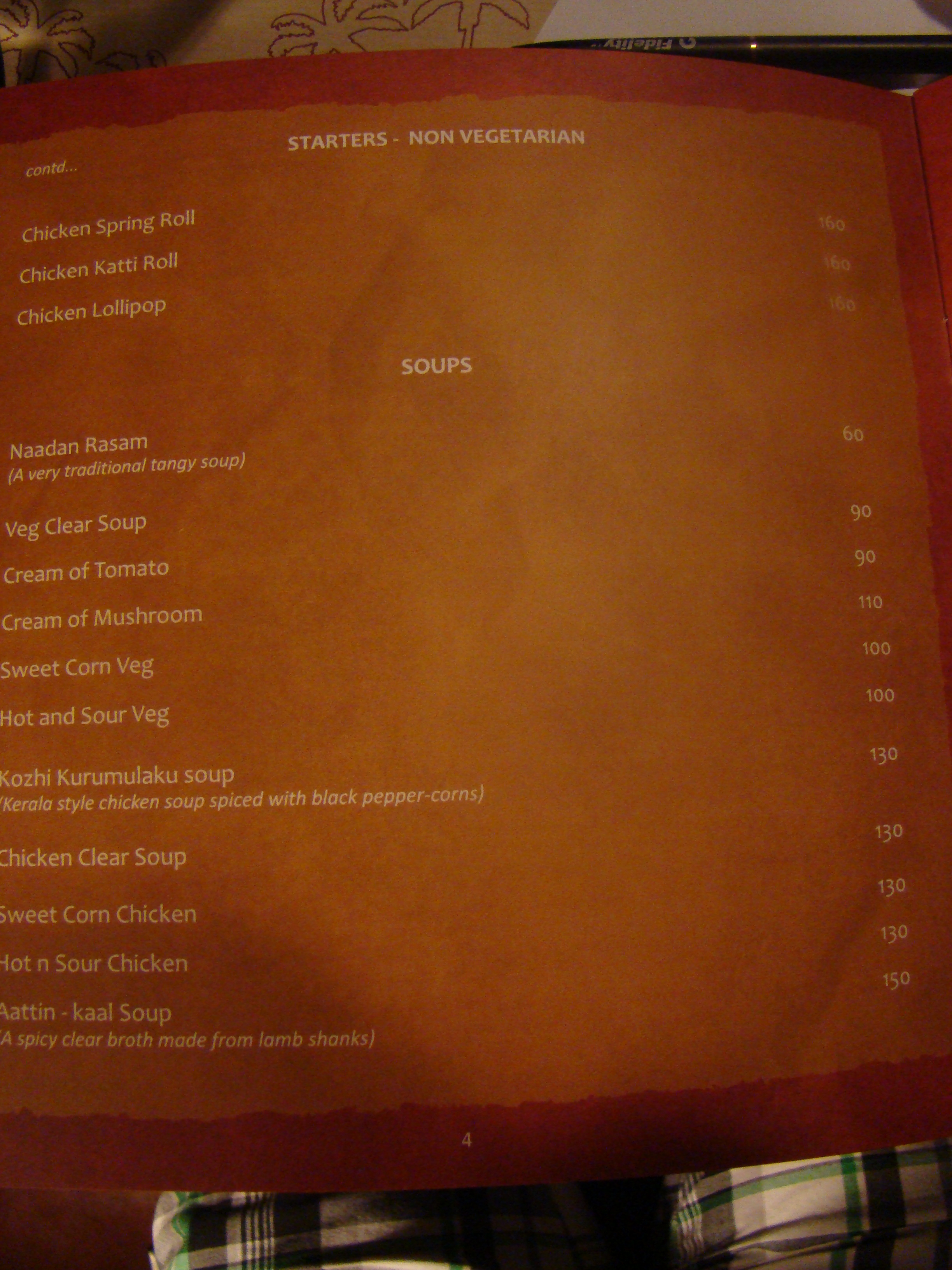
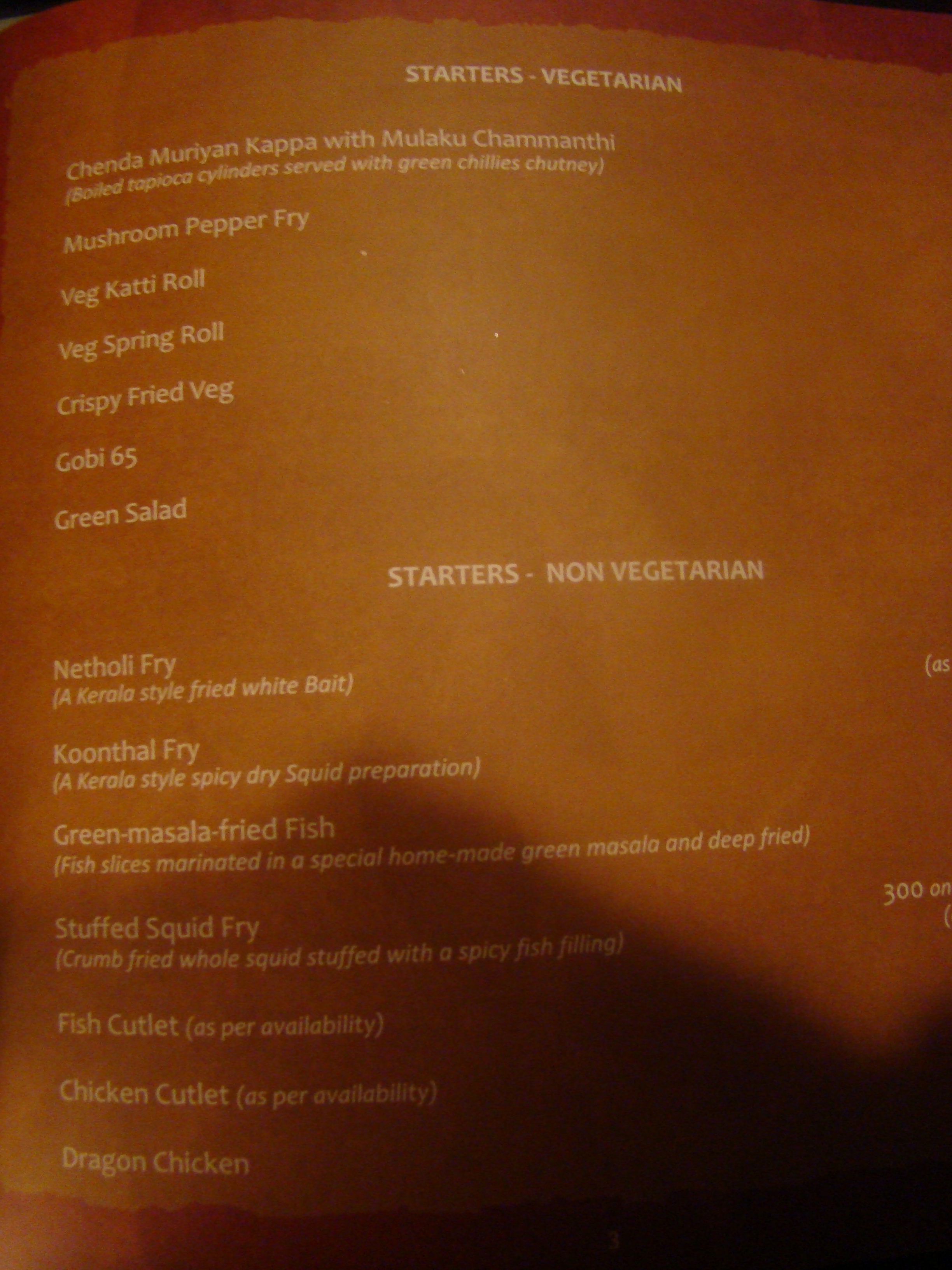
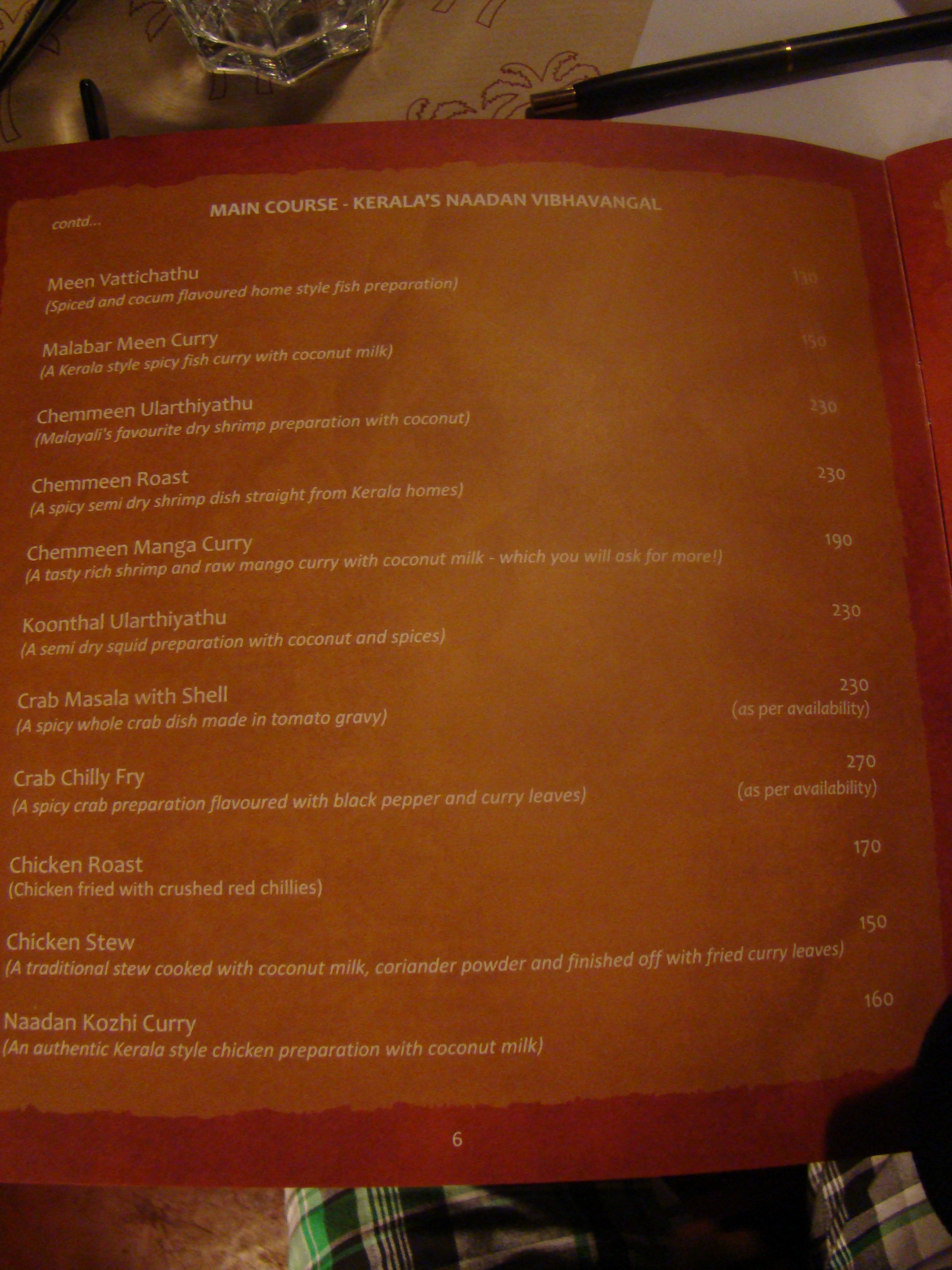
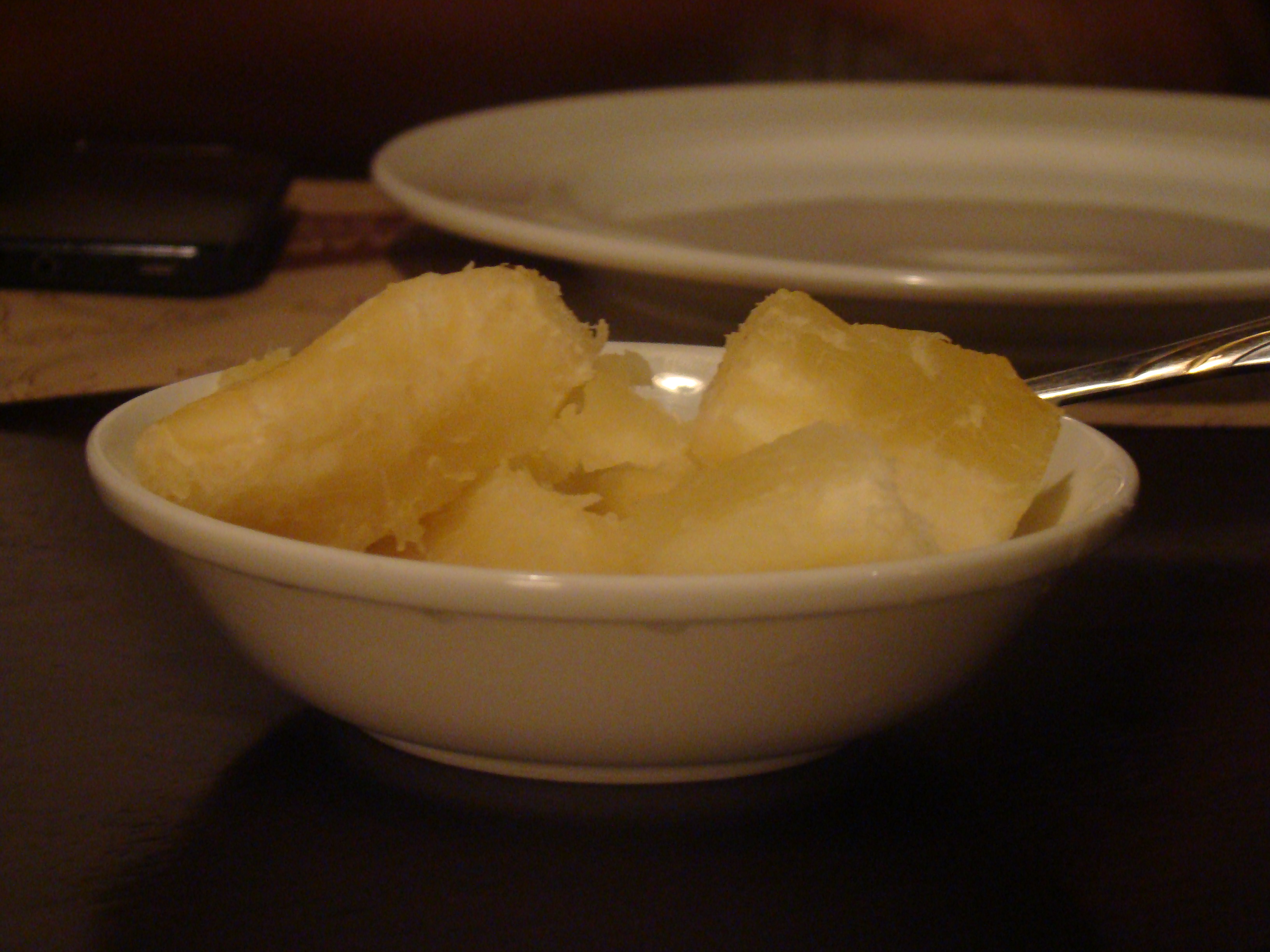
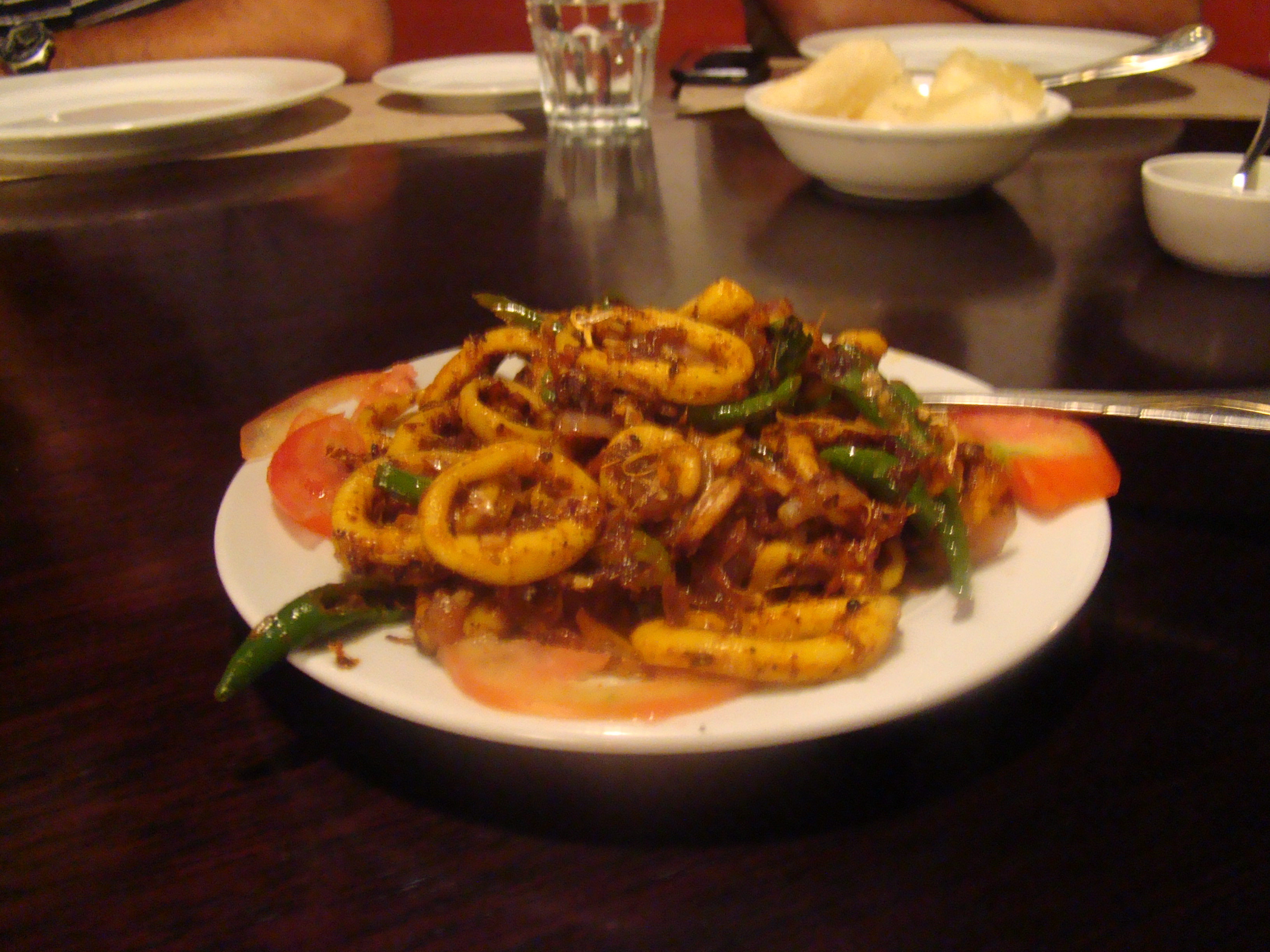
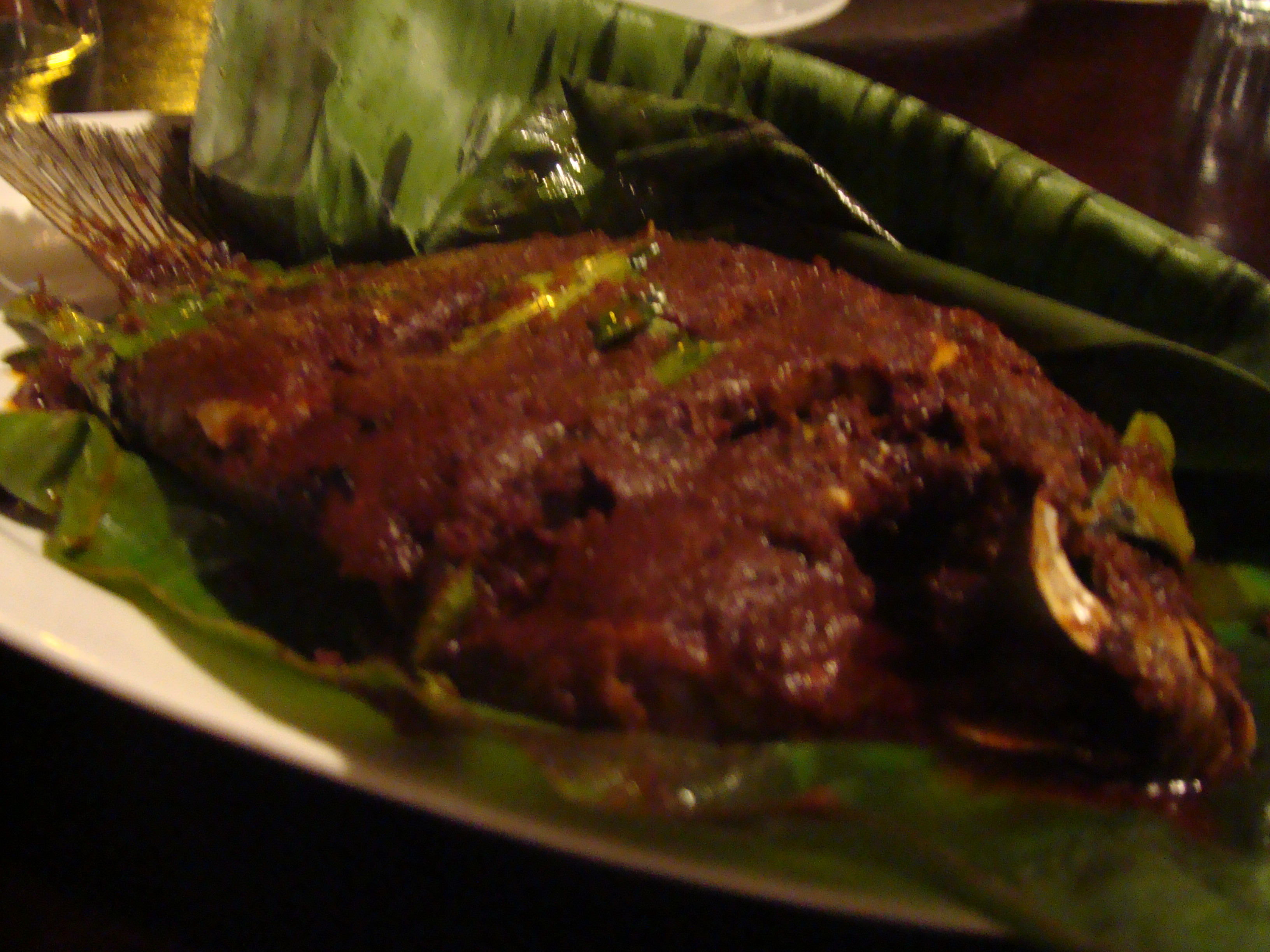
In case soups work better for you, the mildly spicy Kozhi Kurumulaku soup (chicken and black pepper corn respectively) would be a good bet. We ignored the Veg Spring Rolls, Chicken Lollipops and Katti Rolls and decided to go for the ‘Chenda Muriyan Kappa with Mulaku Chammanthi’ (tapioca with chutney in case you are Malayalam challenged), Stuffed Squid Fry and Green-masala-fried fish. The last two items were not available, so we switched to the more standard Koonthal (squid) Fry and promoted a main course dish ‘Karimeen Pollichathu’ to opener status. I was initially quite dismayed on account of the minuscule Chammanthi (chutney) provided with the Kappa, but soon found that they had perfectly nailed the spicy green chilli-salt flavour, a small quantity of which can last several rounds of Kappa. The tapiocas too had been boiled to perfection. The Karimeen Pollichathu is priced according to size (so ask beforehand) and cost us Rs 400, but the Pearlspot fish grilled perfectly, with a banana leaf wrap, and a spicy sweet and tangy ‘secret masala’ was totally worth it. The squids in the Koonthal Fry were perfectly fried and the masala had permeated enough to make the dish wholesomely flavourful.
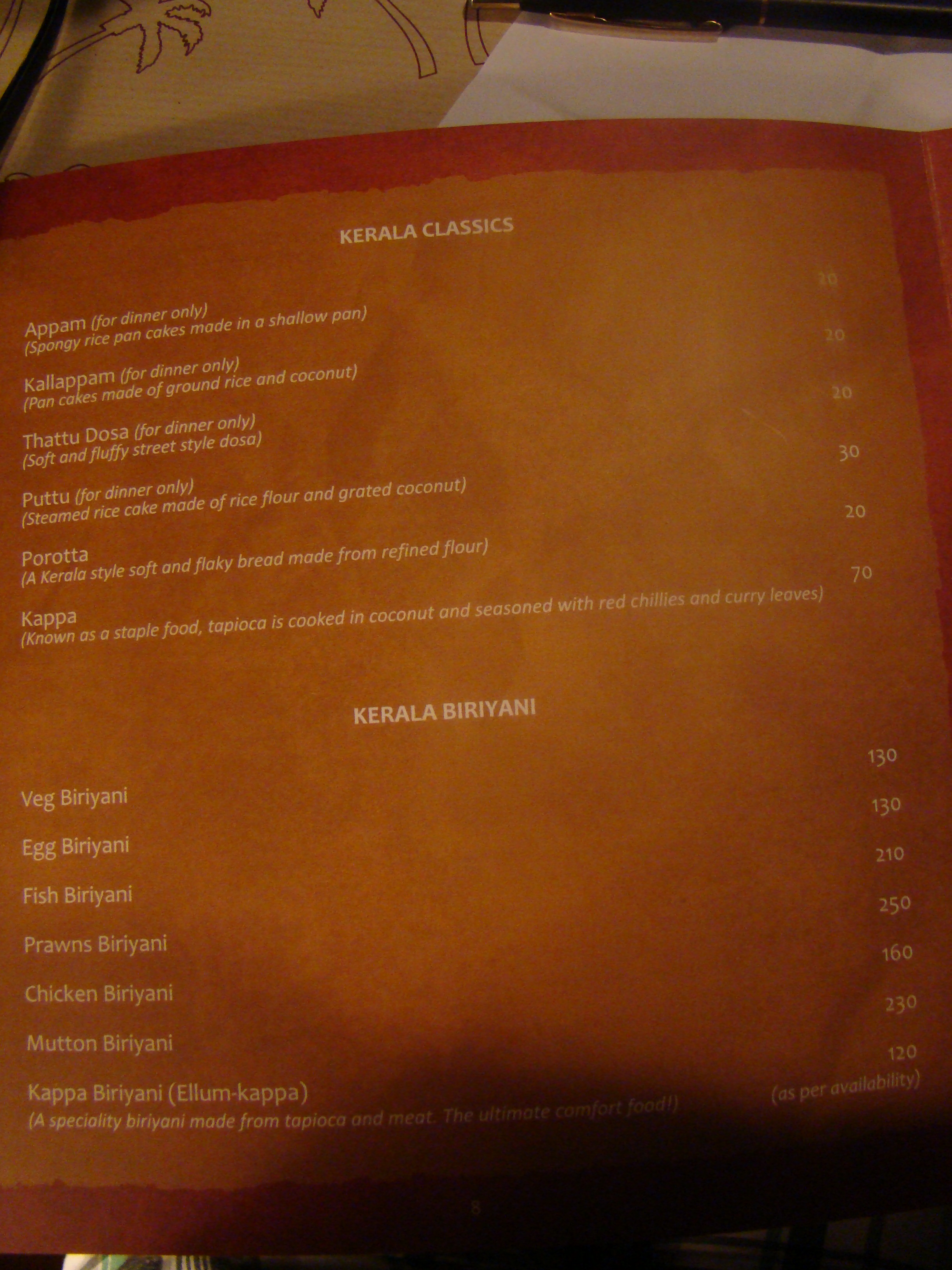
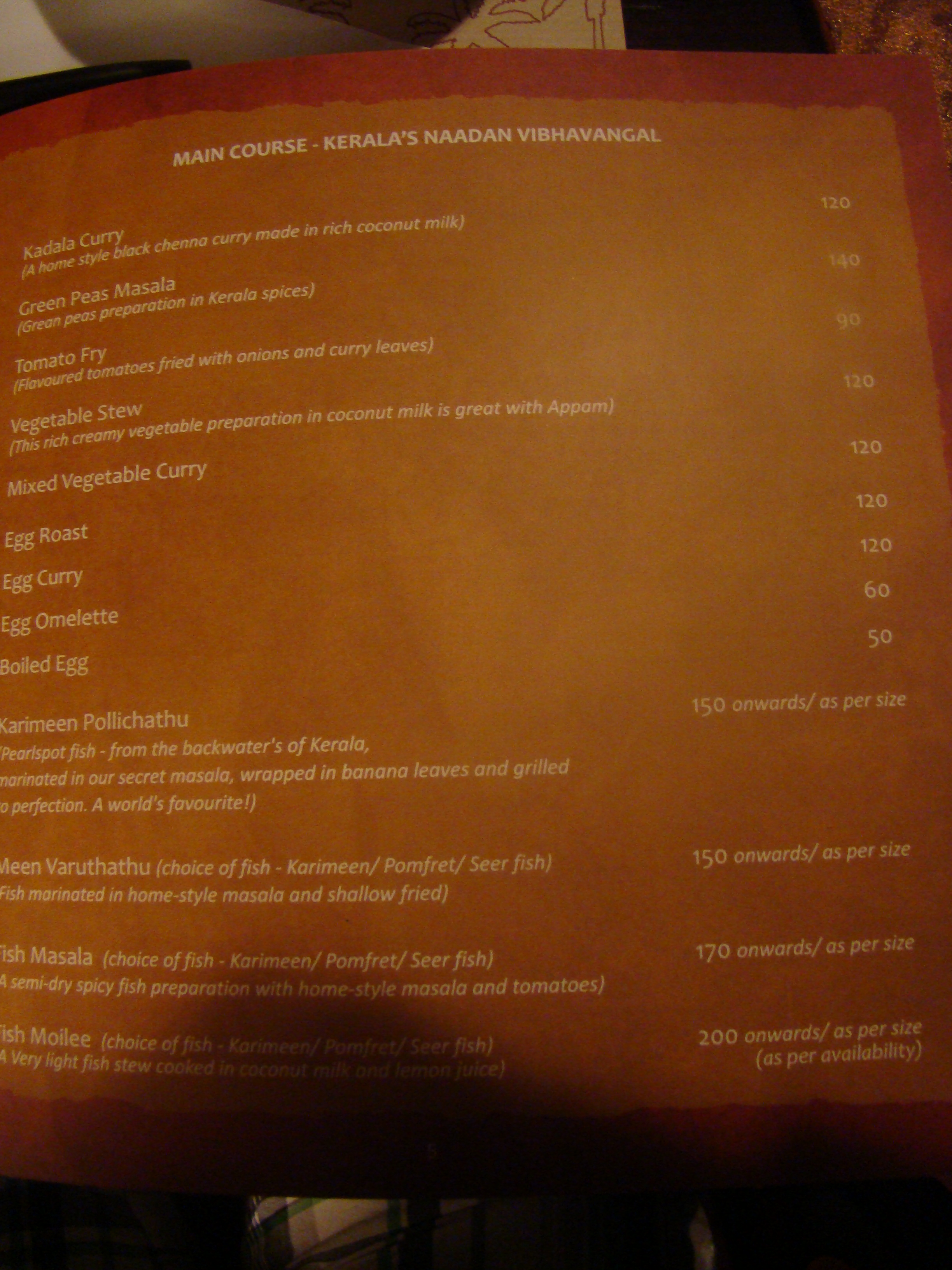
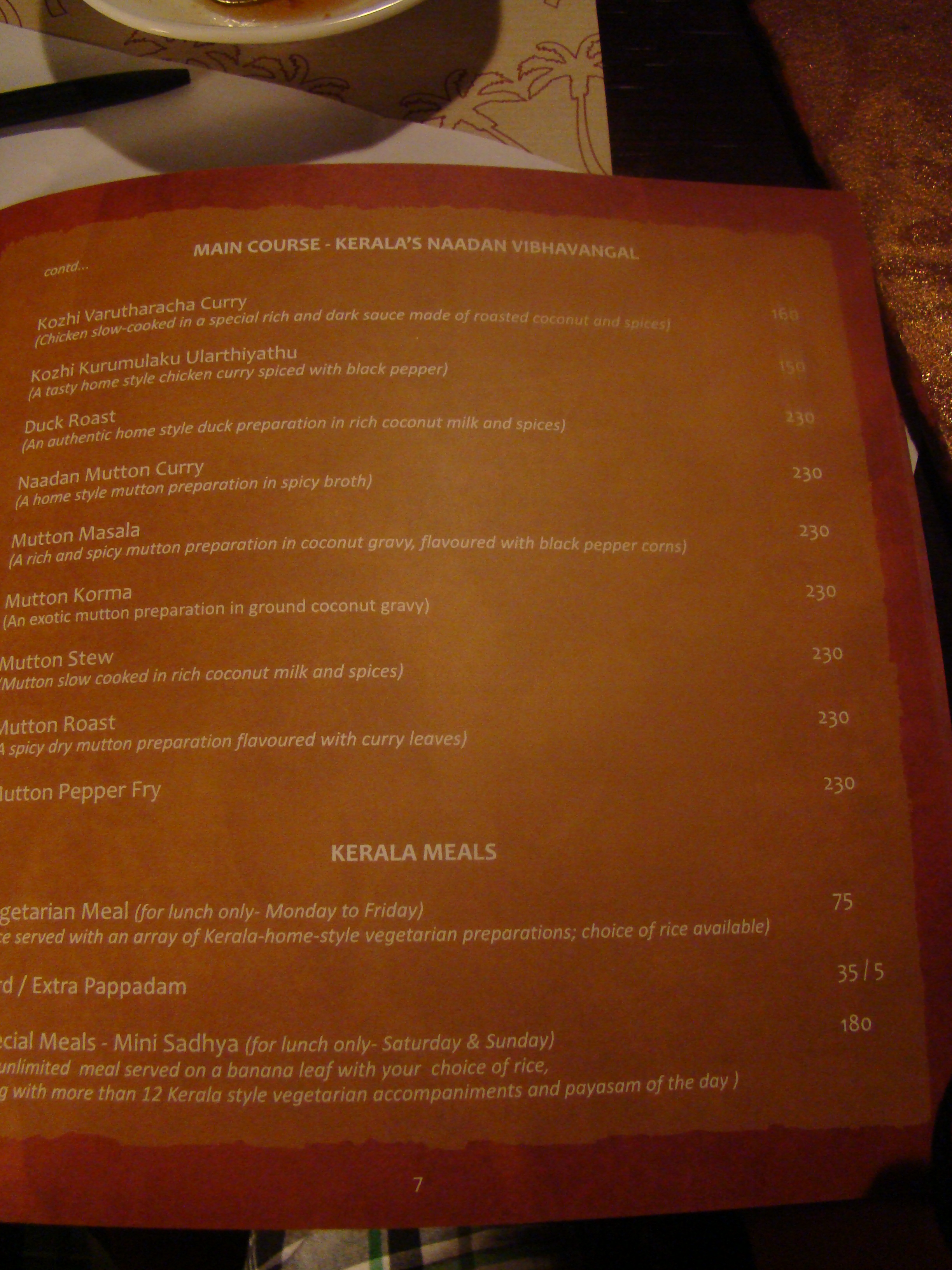
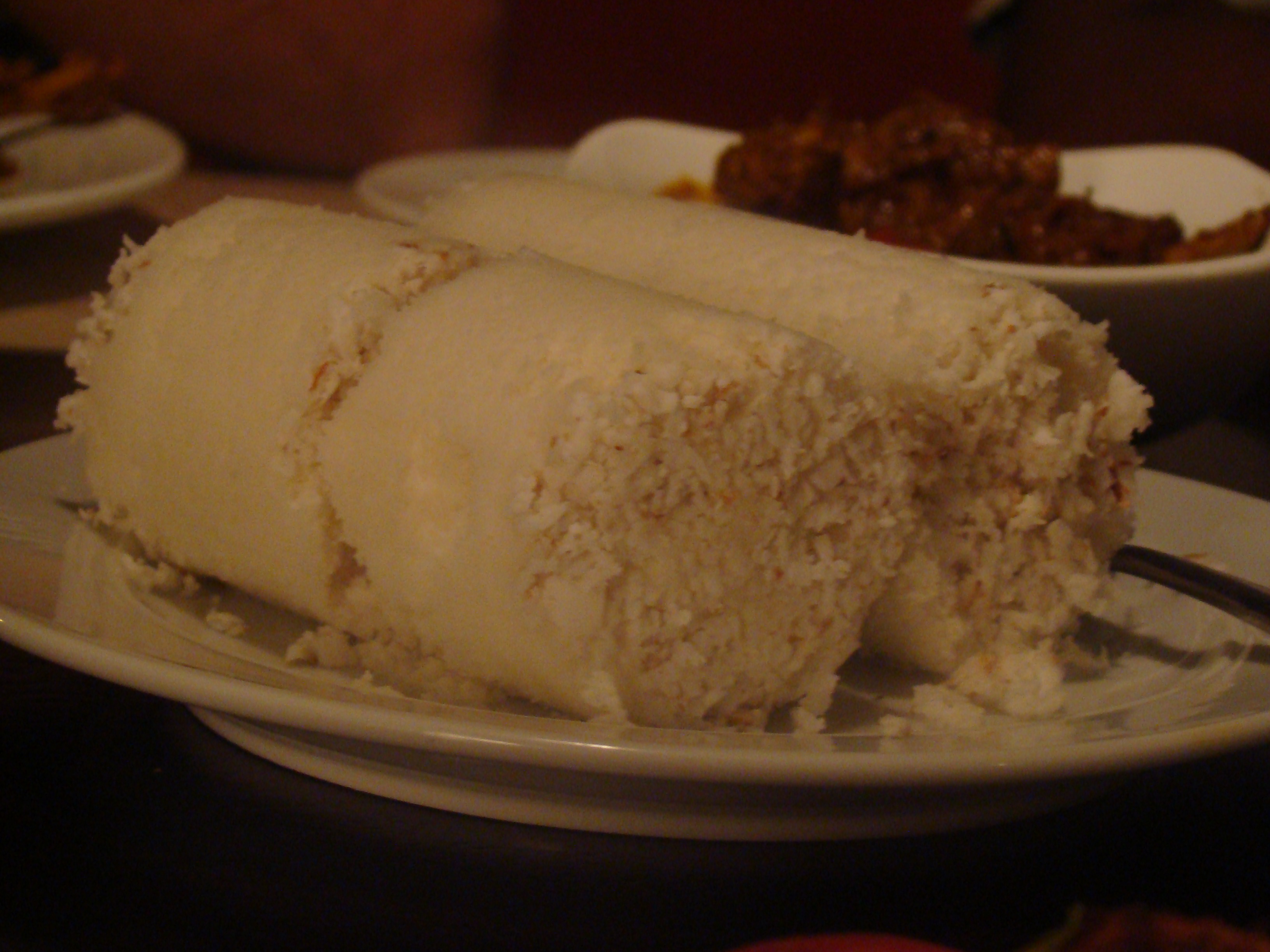
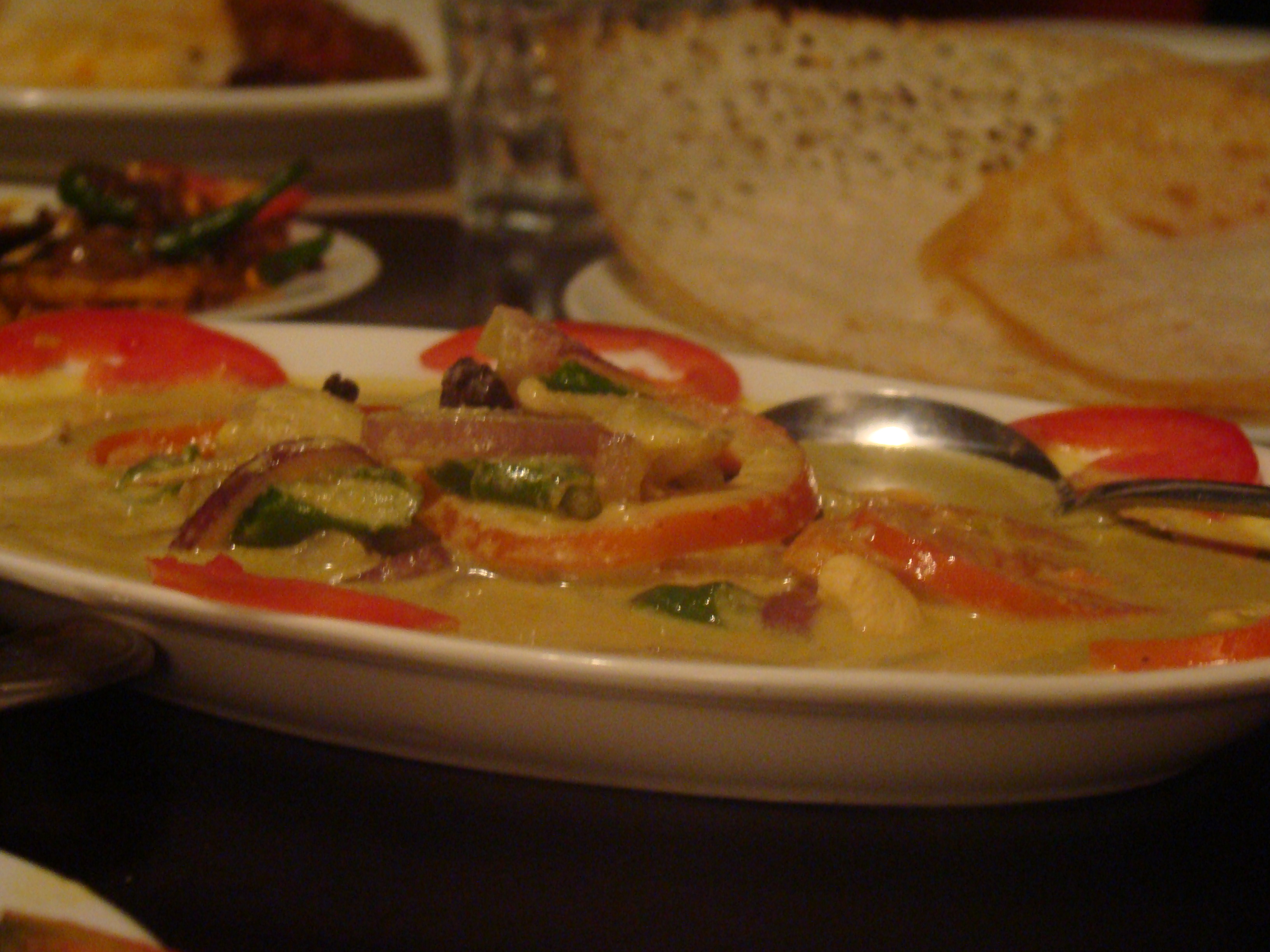
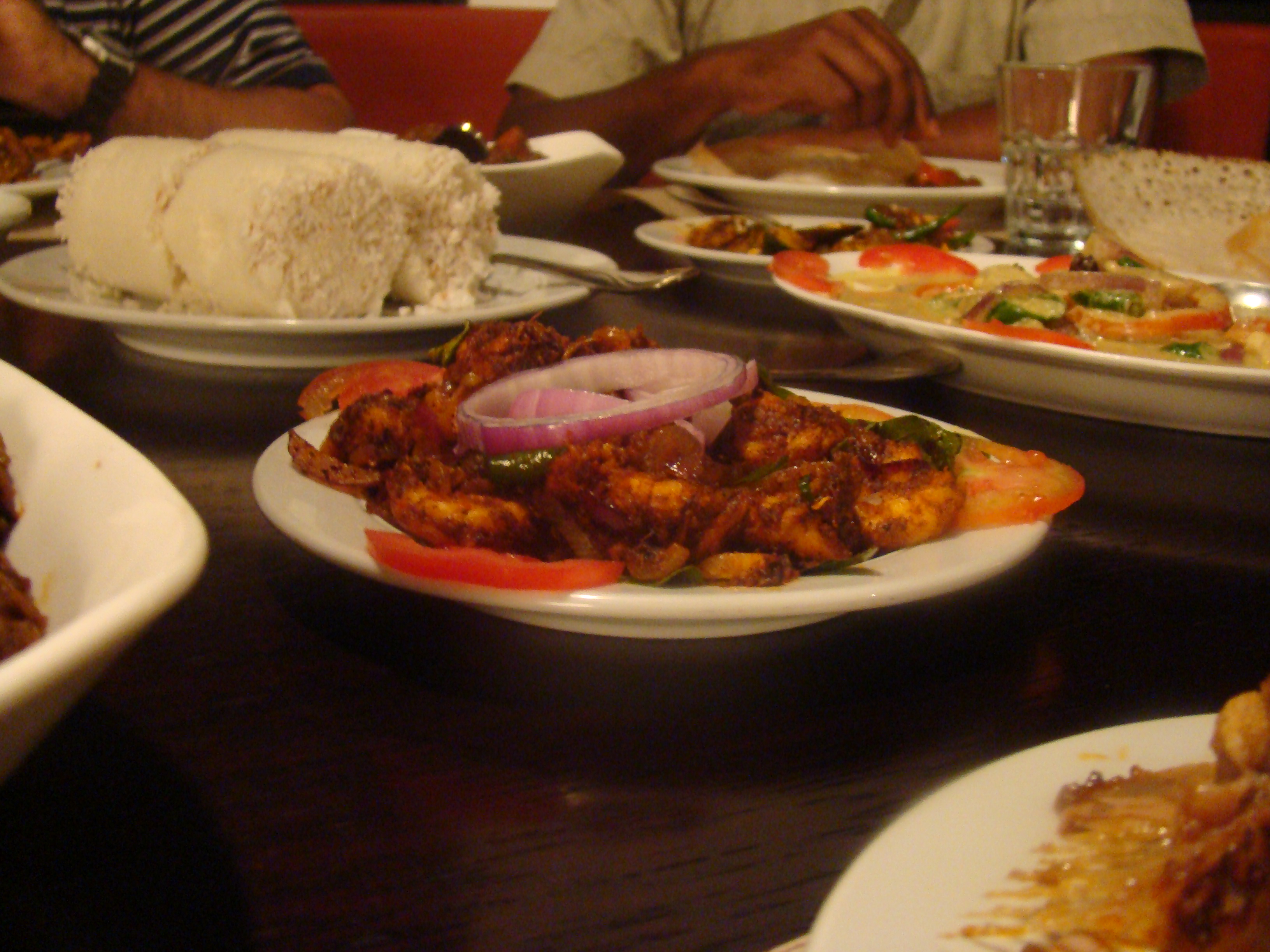
The main course is easily skewed towards non-vegetarians, though the creamy, coconut milk-based Vegetable Stew would find favour with all. It is difficult to identify a favourite among the non-veg main course dishes, because the masalas involved were only separated by fine nuances. I would pick the Duck Roast, for its coconut milk-based mildly spicy, thick gravy, and meat that was tender. The Mutton Roast, a dry dish with a tasty curry leaves flavour, would be a close second. The Naadan Kozhi curry is also a coconut milk-based preparation and is a thinner version of the Duck Roast. The Meat Roast could’ve been better, as the masala was more fluid than usual, and missed the generous coconut sliver presence that makes the dish special. The Prawns Fry got the frying part right, but lacked the zing that the squid’s masala had provided. The Fish Moilee was a bit of a disappointment on account of its blandness. The soft appams with crispy edges proved to be a favourite, and the amazing pace at which they appeared at the table was only matched by the speed with which they disappeared soon after. The ‘alcoholic’ version – Kallappam (Kallu = toddy) managed to get the flavour, albeit mildly. The Porotta was also perfect with just the right amount of flakiness. The Puttu was a mild disappointment as it was a tad too powdery. The Thattu Dosa was unavailable for comment.
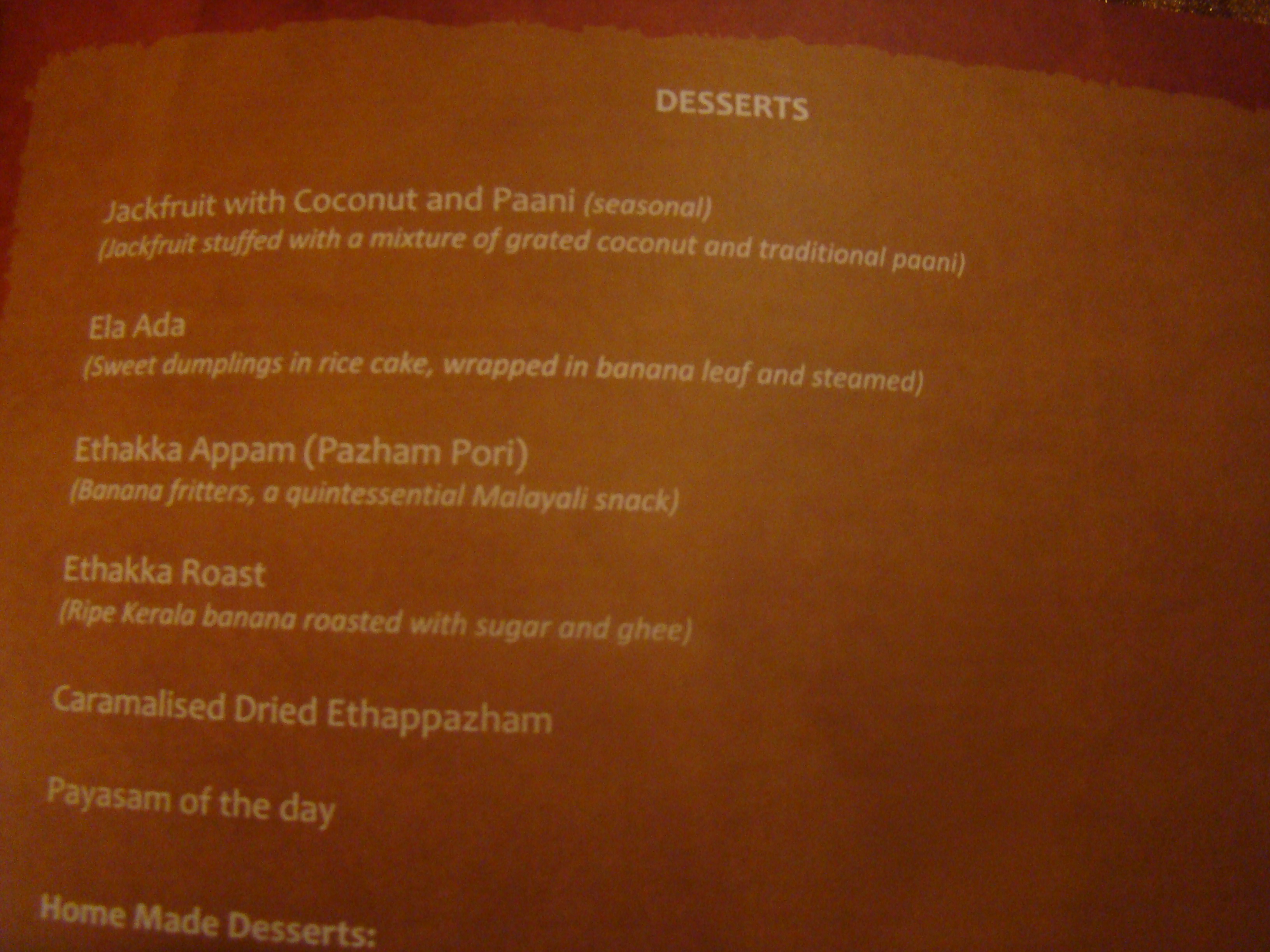
On paper, the dessert options would make you salivate in anticipation – Ela Ada, Ethakka Appam, Ethakka Roast, Jackfruit with Coconut and Paani, and so on. But we were brought back to earth with the now familiar ‘Unavailable’. The Caramelised Dried Ethappazham turned out to be a bit too syrupy and had less-than-ripe bananas and the Ada Pradhaman was quite insipid too.
Kumarakom does quite a good job of delivering authentic Kerala cuisine, and considering the portion sizes, the pricing is also just right – Rs.900-1000 for two. The non availability of certain dishes is thankfully compensated by the tastiness of those that made it to the table.