• Huckleberry

    First published in Bangalore Mirror.

    The original Adventures of Huckleberry Finn begins after Tom Sawyer and Huck come into a fortune. In the modern day Bangalore retelling, an investment banker couple build a brick oven on the terrace of their parents’ house; the pizzas become a rage, the idea of a wood fired pizzeria is born; their friends get involved in the décor – painting all the chairs- and the rest, is a restaurant! Located on 100 feet Road, Indiranagar, after the CMH road junction when coming from Koramangala, and right next to TOIT, on the first floor. (map) Yes, valet parking is available, and two wheelers can encroach upon the wide pavement!

    In addition to the Tom Sawyer-ish paint job above, the place also owes its name to a berry that has a second degree connection to the kind of cheesecakes it specialises in, and managed to fit in well as the fun, whimsy name the owners wanted.

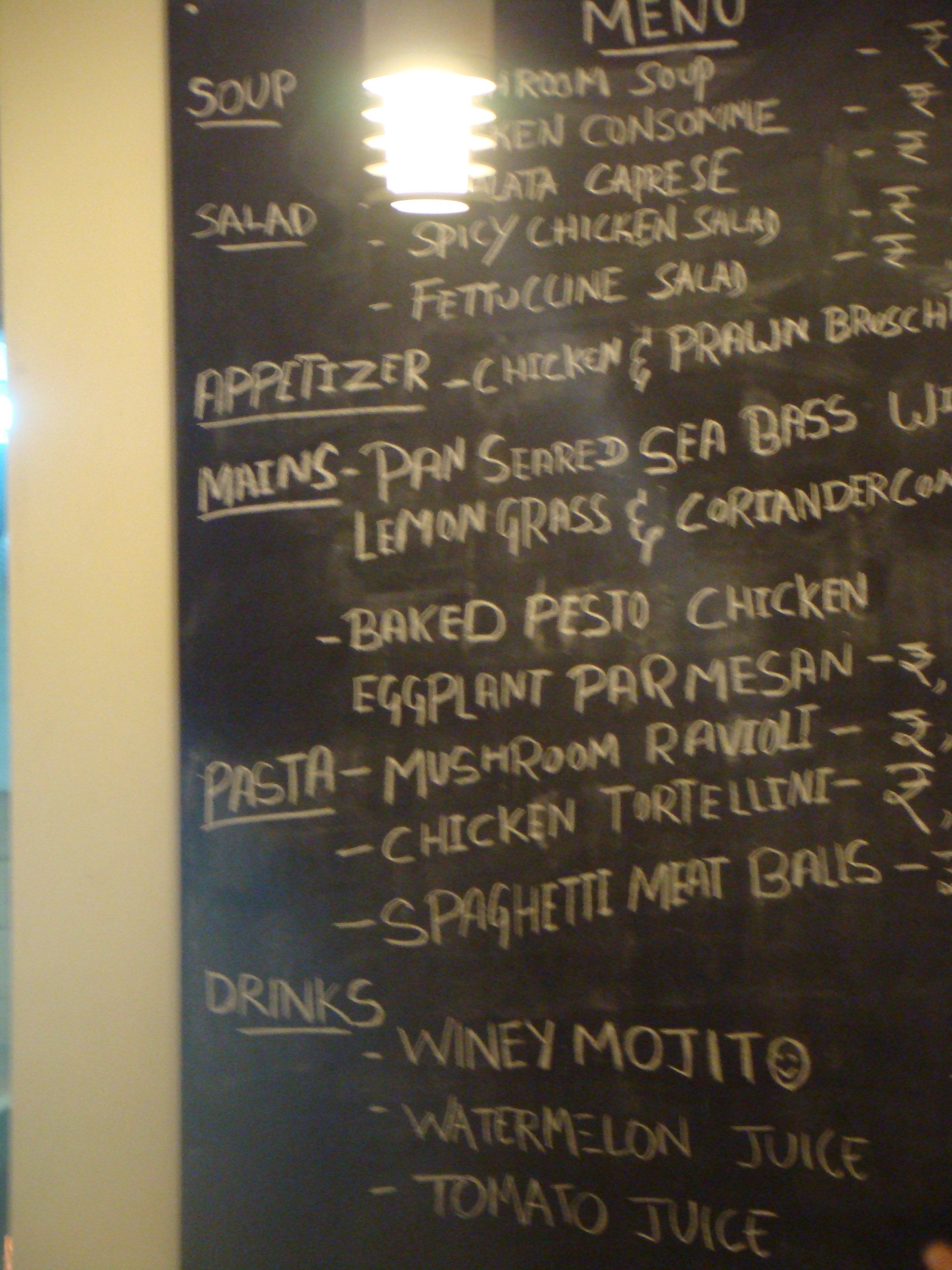
    The best tribute that one can give to any original work is to ensure that the character remains alive. And character is something Huckleberry has oodles of. From the tree that nonchalantly makes its way up through the restaurant, to the painted chairs, the funky graphics and the wooden fireplace, the place somehow manages to mix a lively, vibrant ambiance with a warm, laidback feel. Peppy music at just the right volume adds to this. Tom Petty seems to be a favourite. But that’s enough about the place, and on to the menu before you start yawning! The printed menu only has a few pages and focuses on pizzas, drinks and desserts, but they augment it with a weekly special menu on the blackboard.

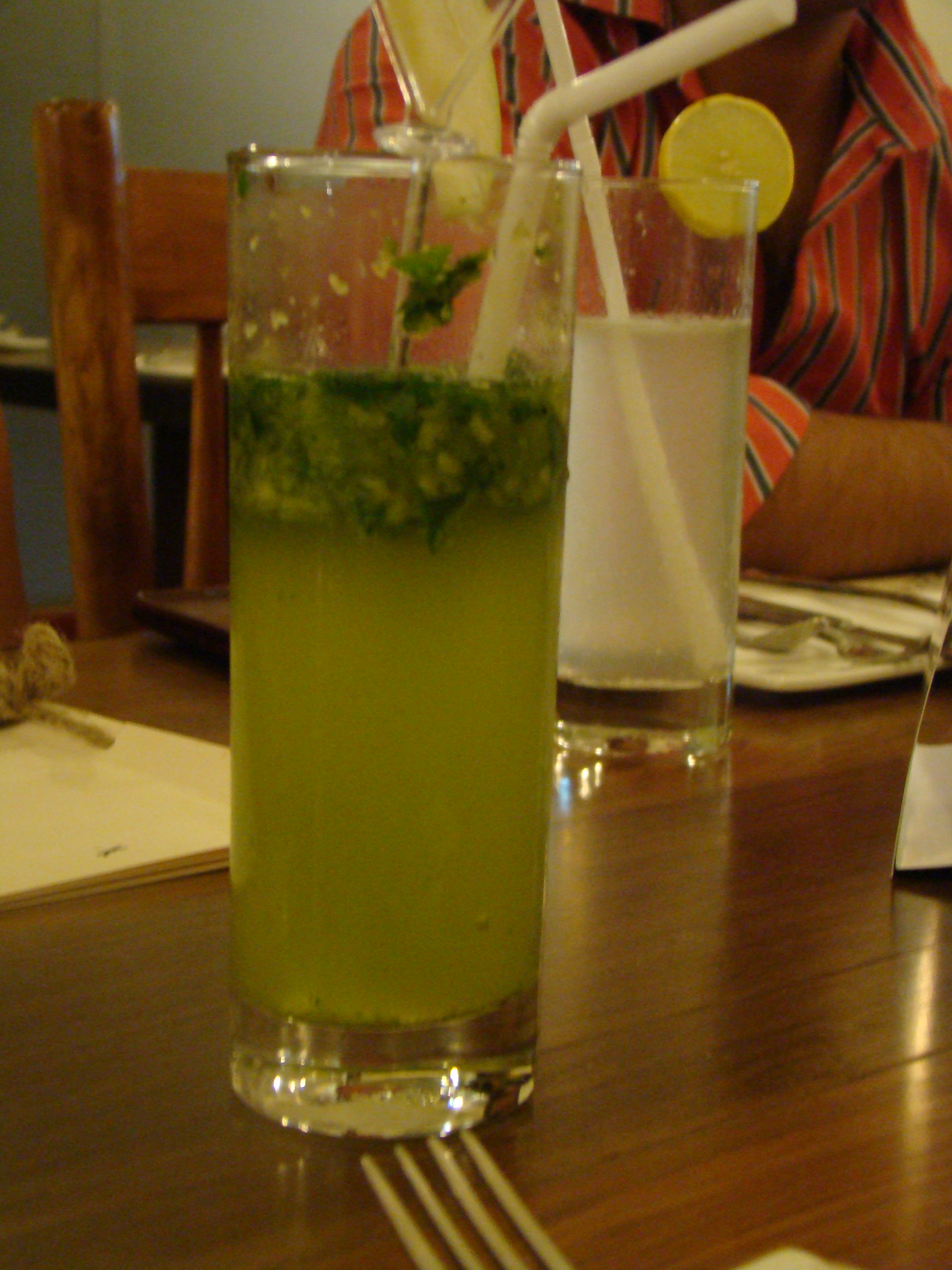
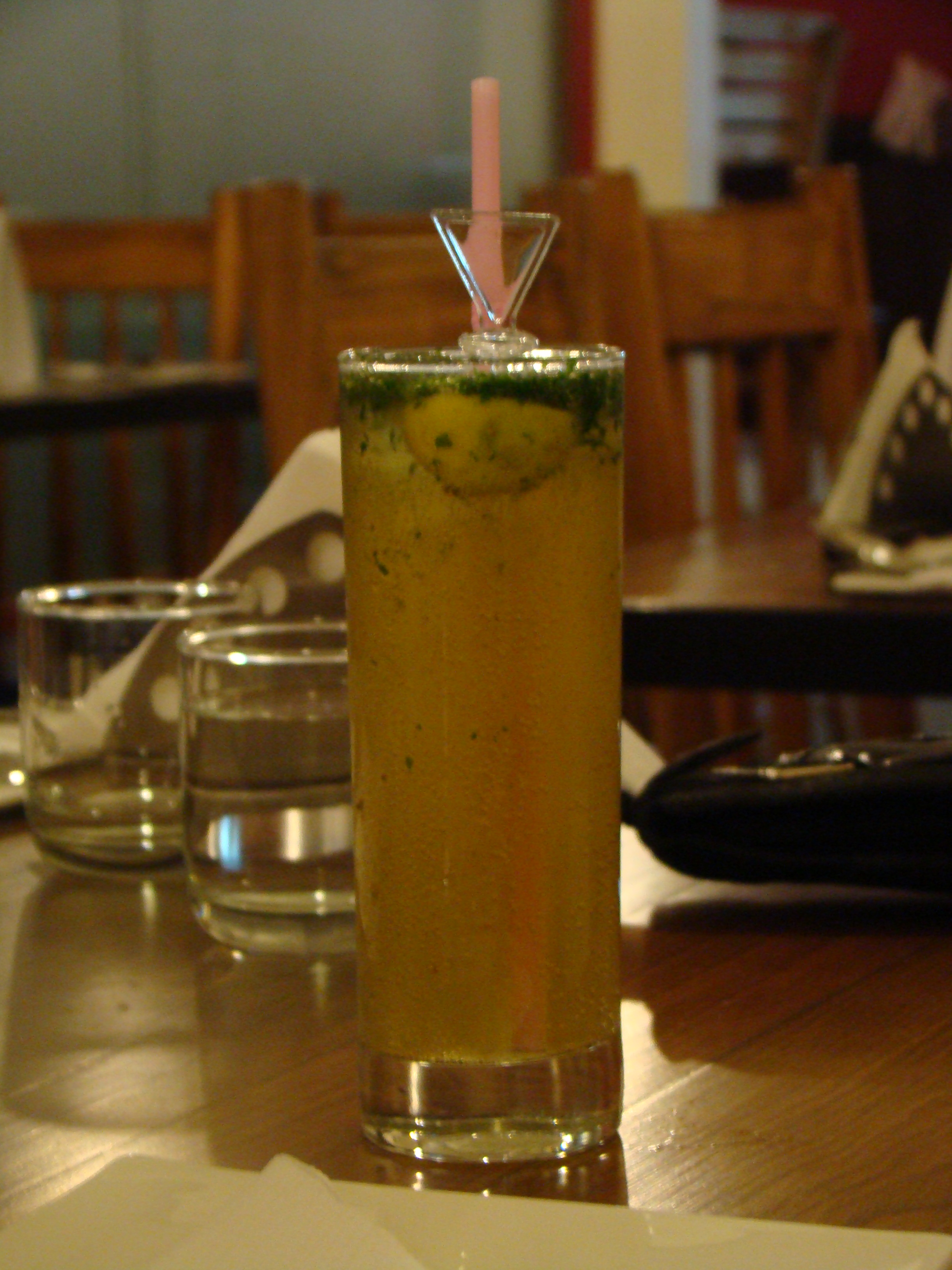
    When pizza’s on the mind, starters might seem a bit of a distraction, but a few things on the menu looked interesting. The Herbed Lemonade, in which basil, lemongrass and green apple vied for attention, had basil emerging as the clear winner and also did a good job of whetting the appetite. The Berry Happy was a mix of cranberry, strawberry, grape and lemon juice, but what it really did was to take us back a few years – to the time we consumed Poppins by the dozen! The only drink that disappointed was the Virgin Mojito. In case you’d like to experiment with wines, or wine based cocktails, there are a few options available too.

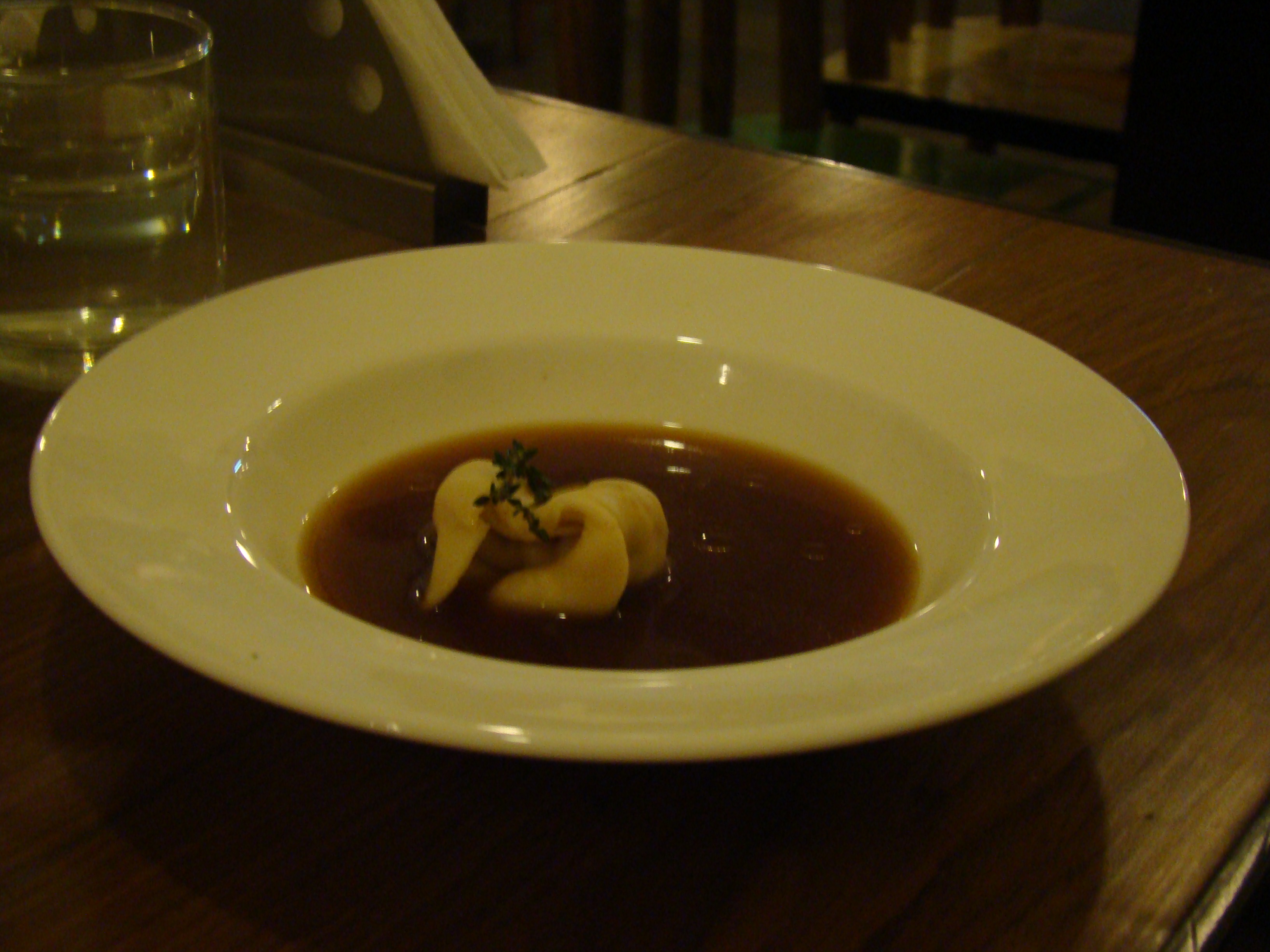
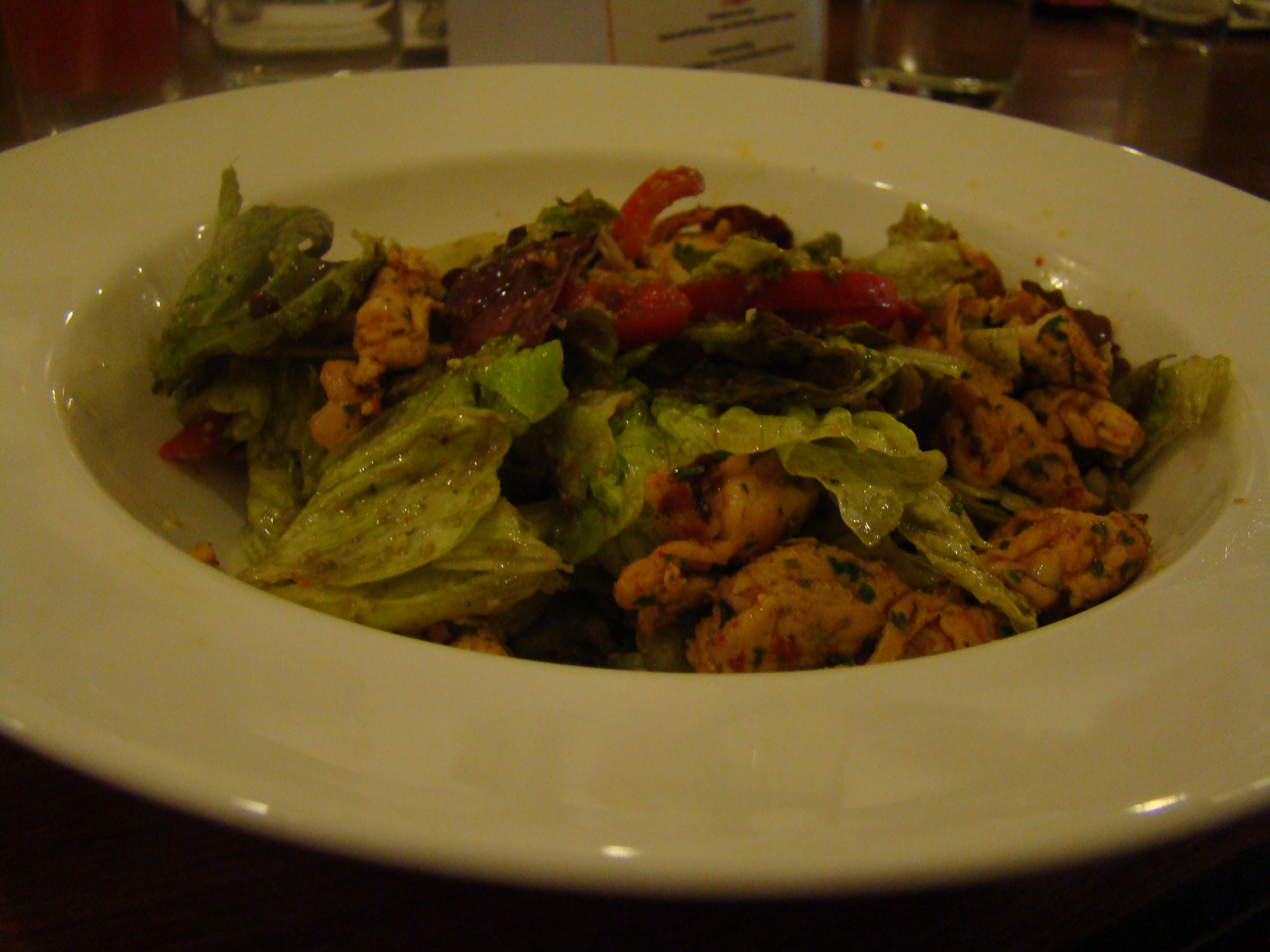
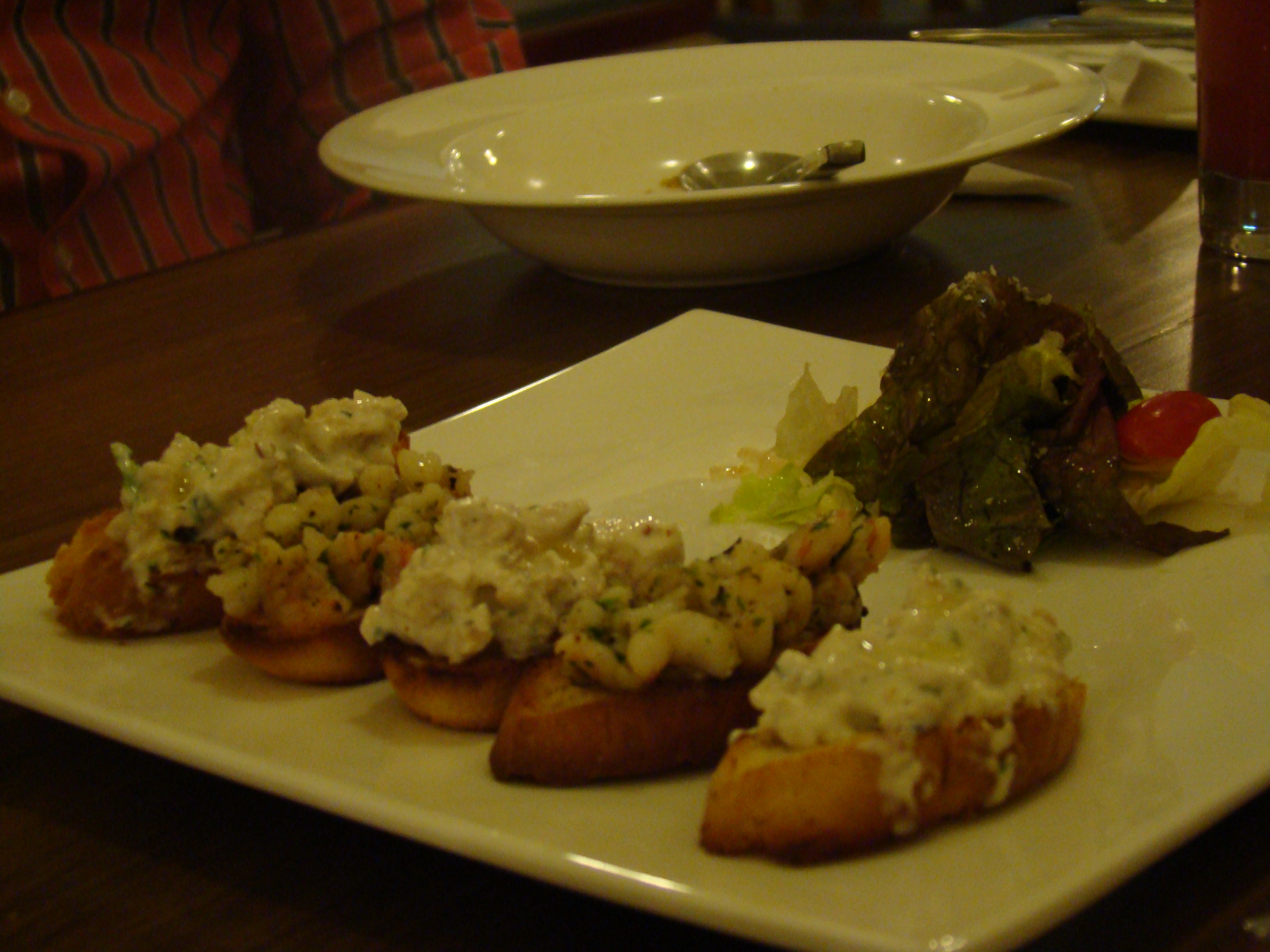
    The Chicken Consommé soup came with its own dumpling but the mild chicken and caramelised onion flavours didn’t really impress. The Chicken and Prawn Bruschetta was a much better dish – crispy bread with the chicken version being helped by a creamy cheese presence and the prawns aided by herbs. The pick of the starters was the colourful Spicy Chicken Salad, which actually lived up to its name and didn’t take advantage of the ‘salad’ – the chicken wasn’t just a token presence.

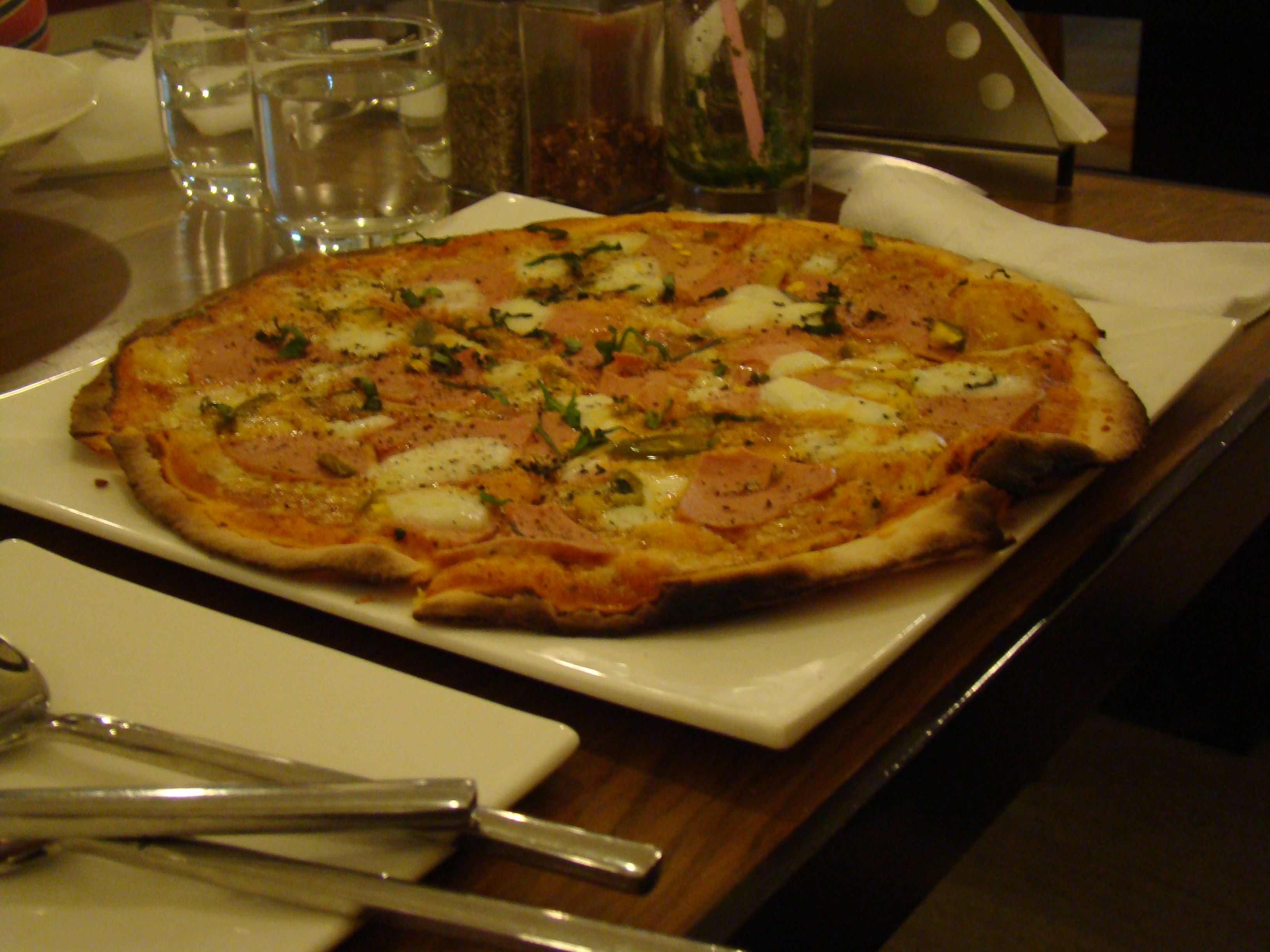
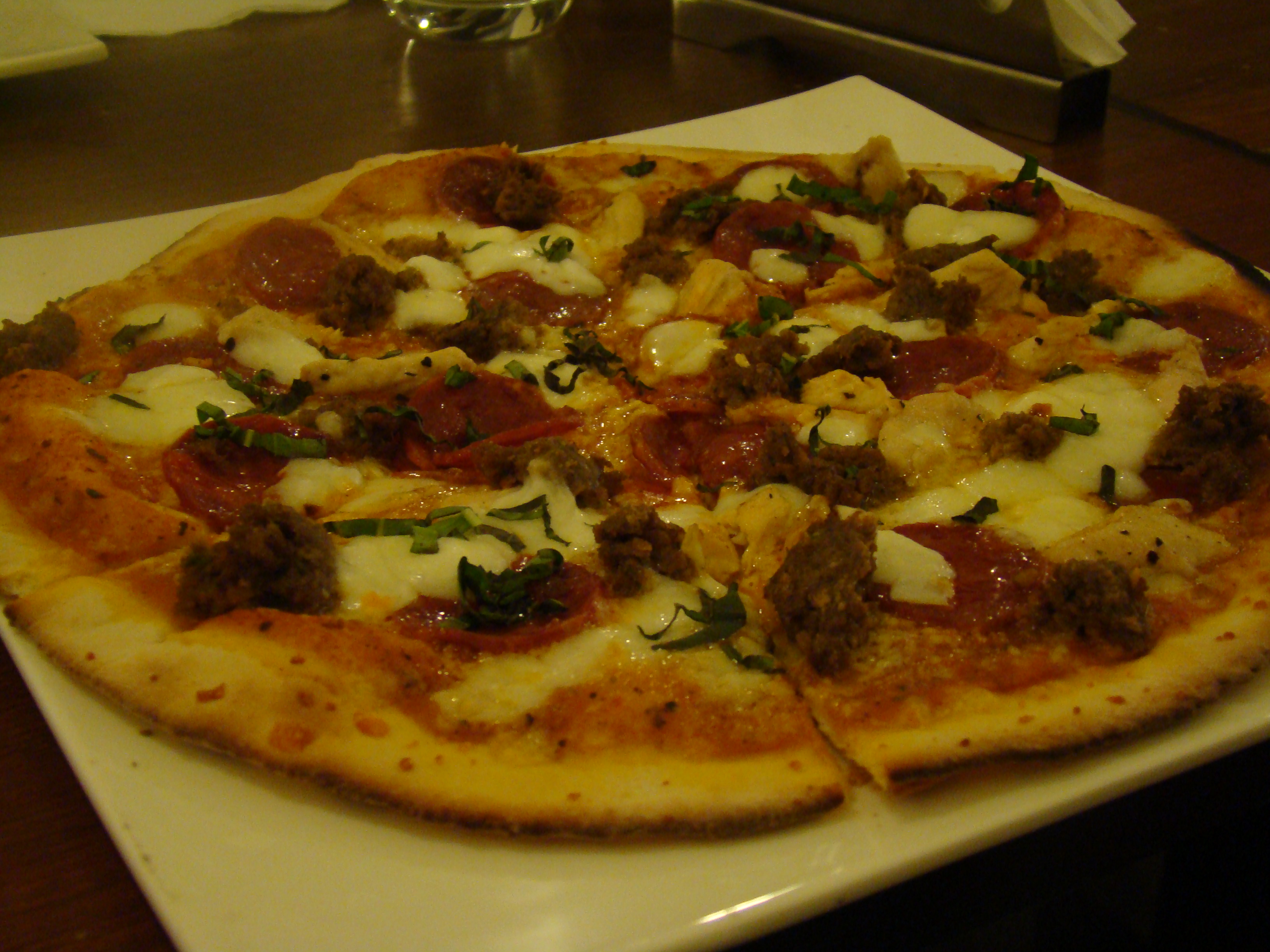
    The Smoked Turkey pizza was an automatic choice and Rithika (the co-owner, who helps out at the restaurant after her day job!) suggested that we add a jalapeno topping. It worked brilliantly with the cold cuts and the herbs and made it our favourite main course dish. The Meat Feast had a stellar cast including lamb and pepperoni but lost its pizzazz a bit with a slightly burnt thin crust and its disproportionately high contribution to the bill.

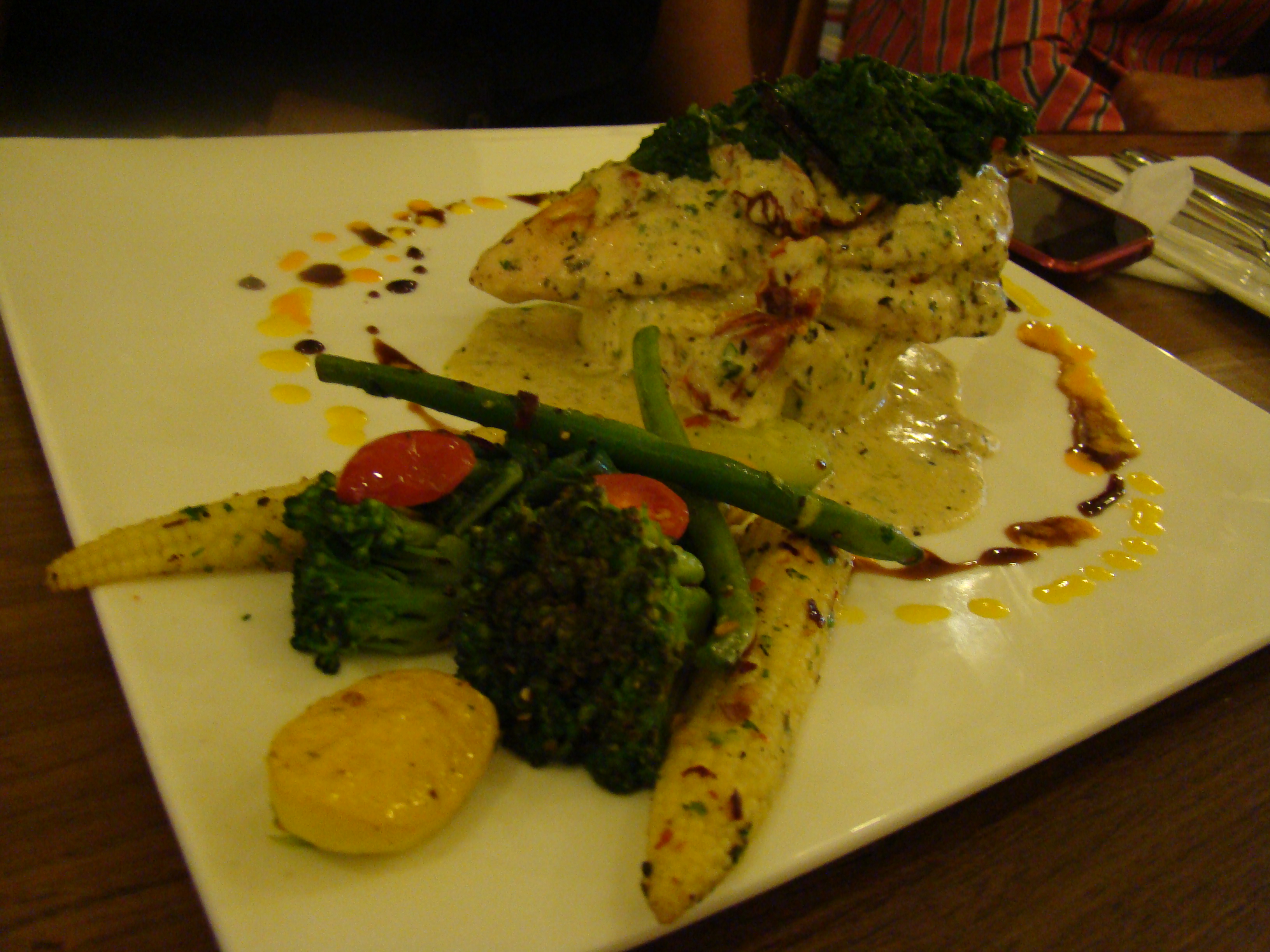
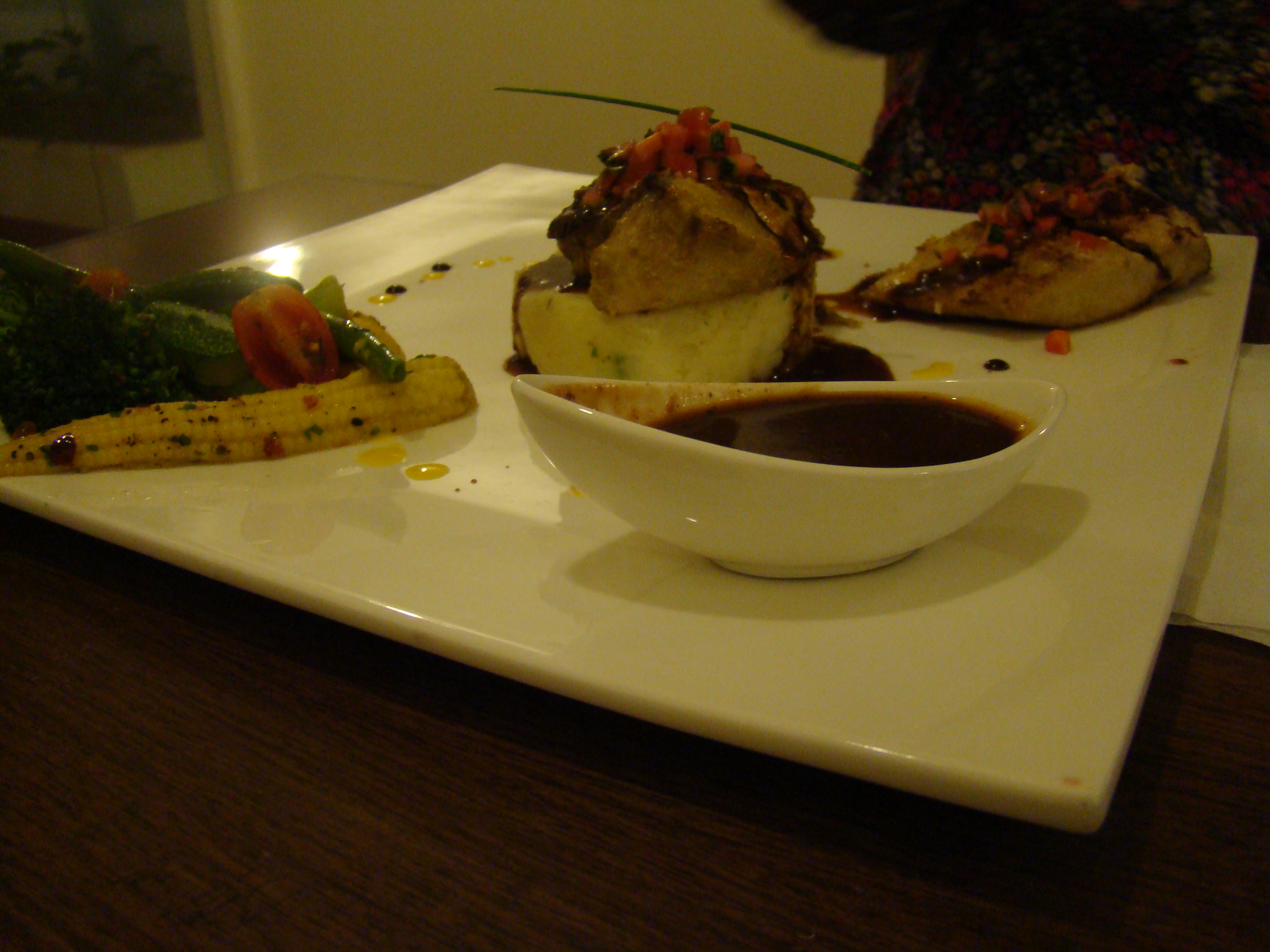
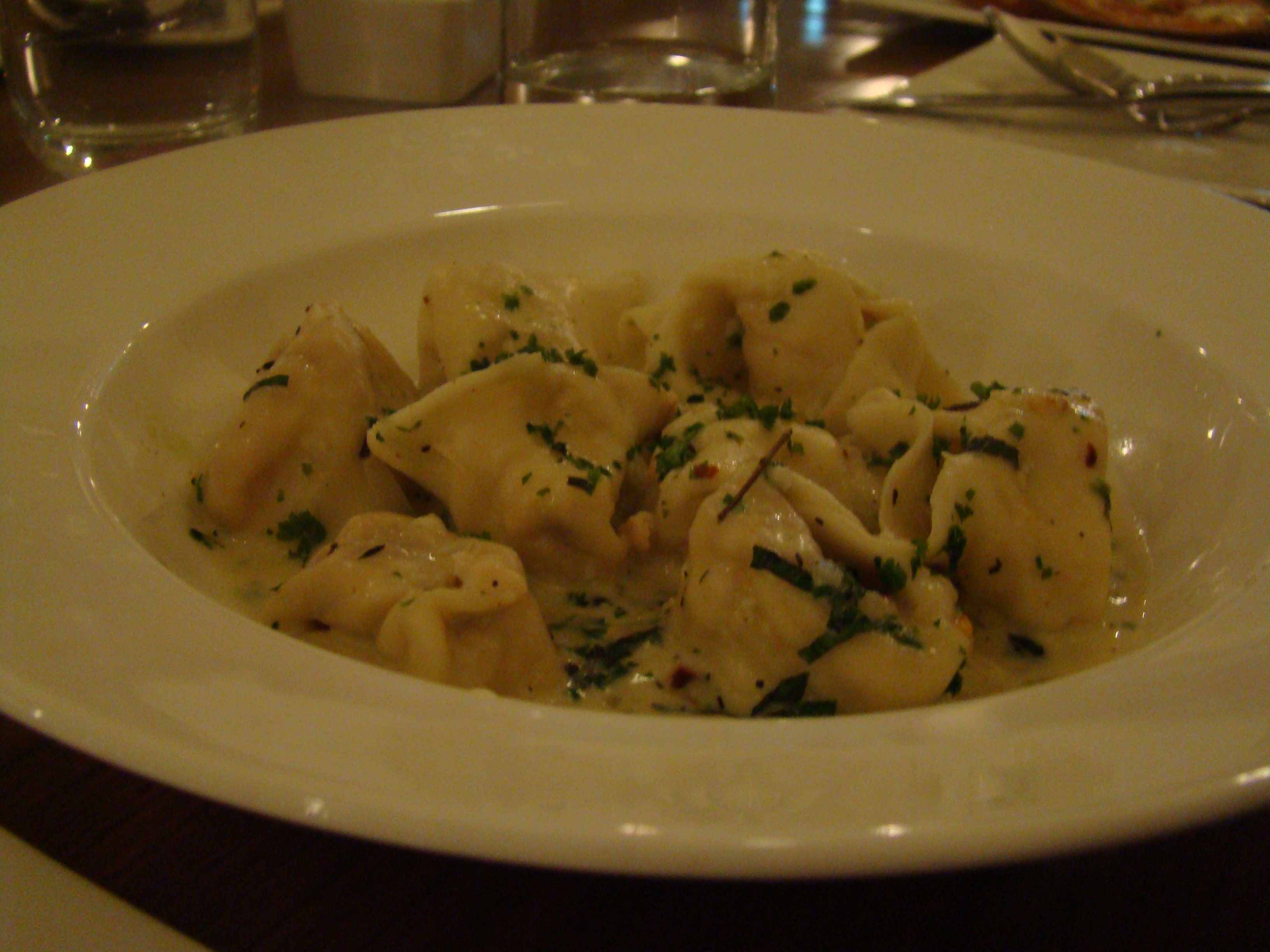
    The Baked Pesto Chicken was the most photogenic of the dishes and the creamy pesto sauce was ample proof that it wasn’t just a pretty face. But the Pan Seared Sea Bass with Lemongrass and Coriander was unfortunately just that. Though the fish seemed fresh, it was also quite bland and the rest of the ingredients were just titular. The Chicken Tortellini was reasonably good, but could’ve been made better with a thicker, creamier sauce.

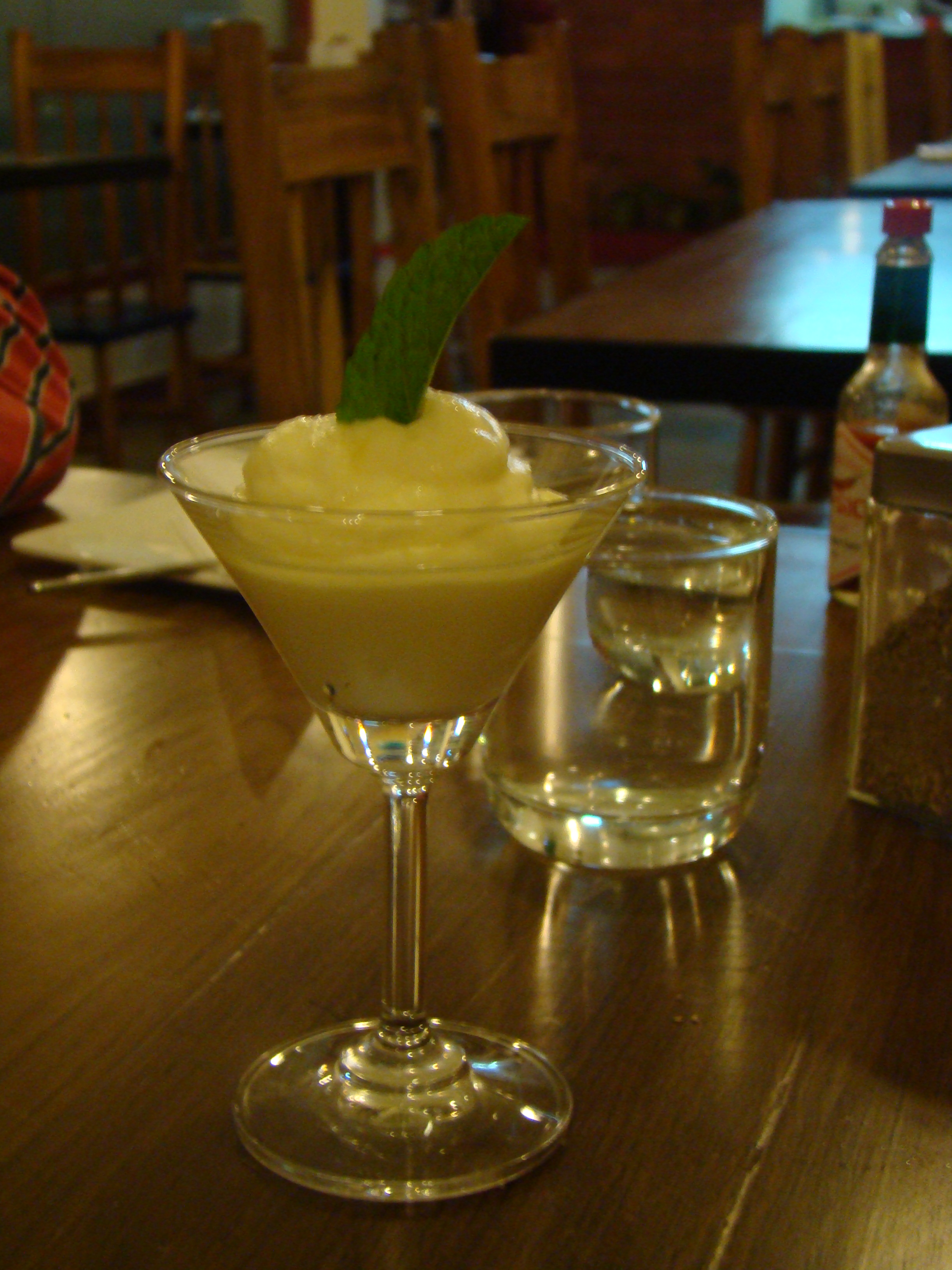
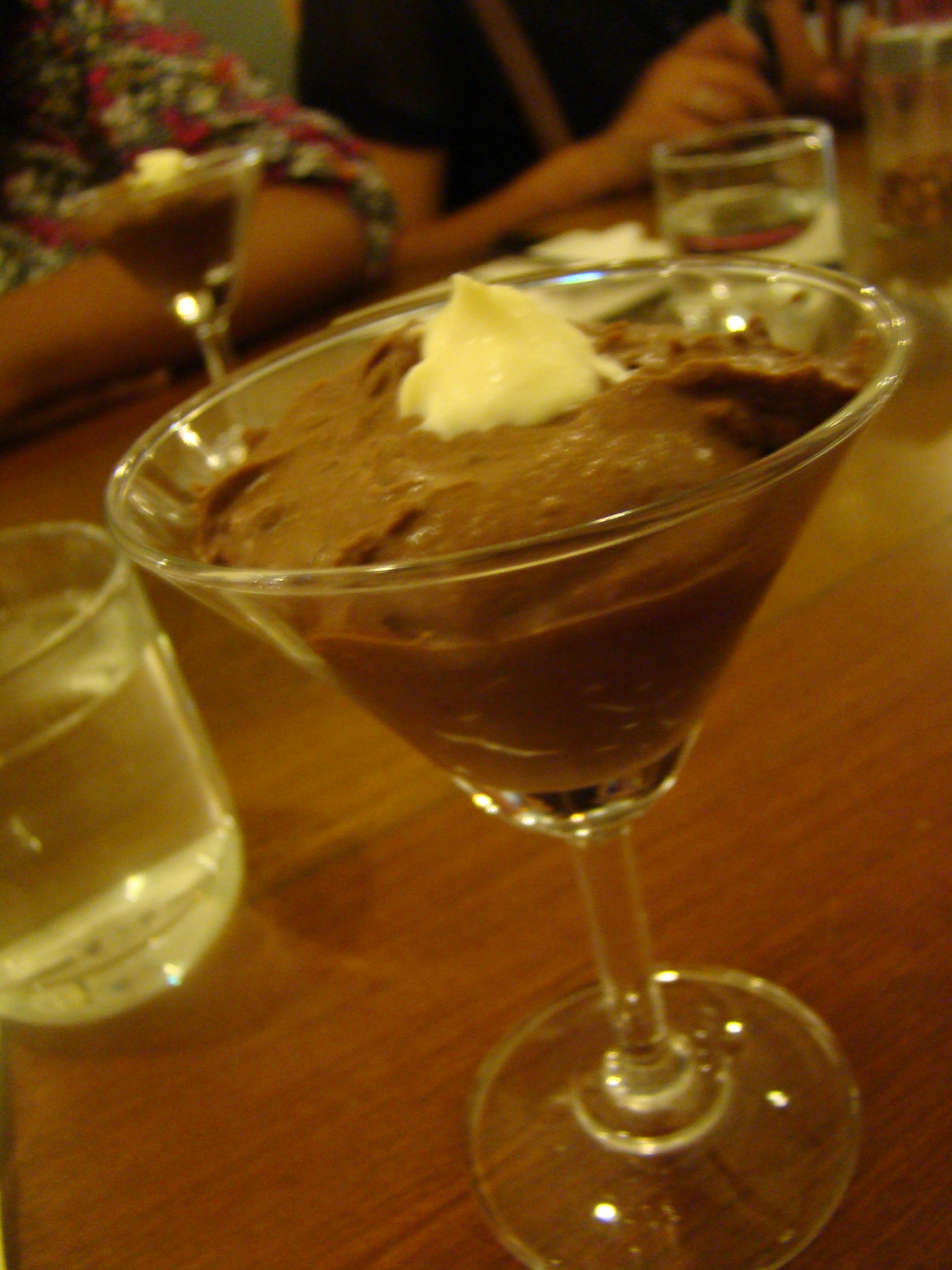
    There is a significant chance that when I visit this place next, I’d start with the desserts. I’m usually quite racist when it comes to chocolate and prefer dark over white, but the White Chocolate Mousse (with lime) easily won the desserts crown. The Dark Chocolate Mousse tried valiantly, but though it kept its status as a reliable favourite, it was an unfair fight from the time we tasted the other. If you don’t mind a strong cinnamon flavour, the Huckleberry Special is something you might want to try. The Blueberry Cheesecake got the texture right, but I missed the tart flavour and the cheese presence was underwhelming.

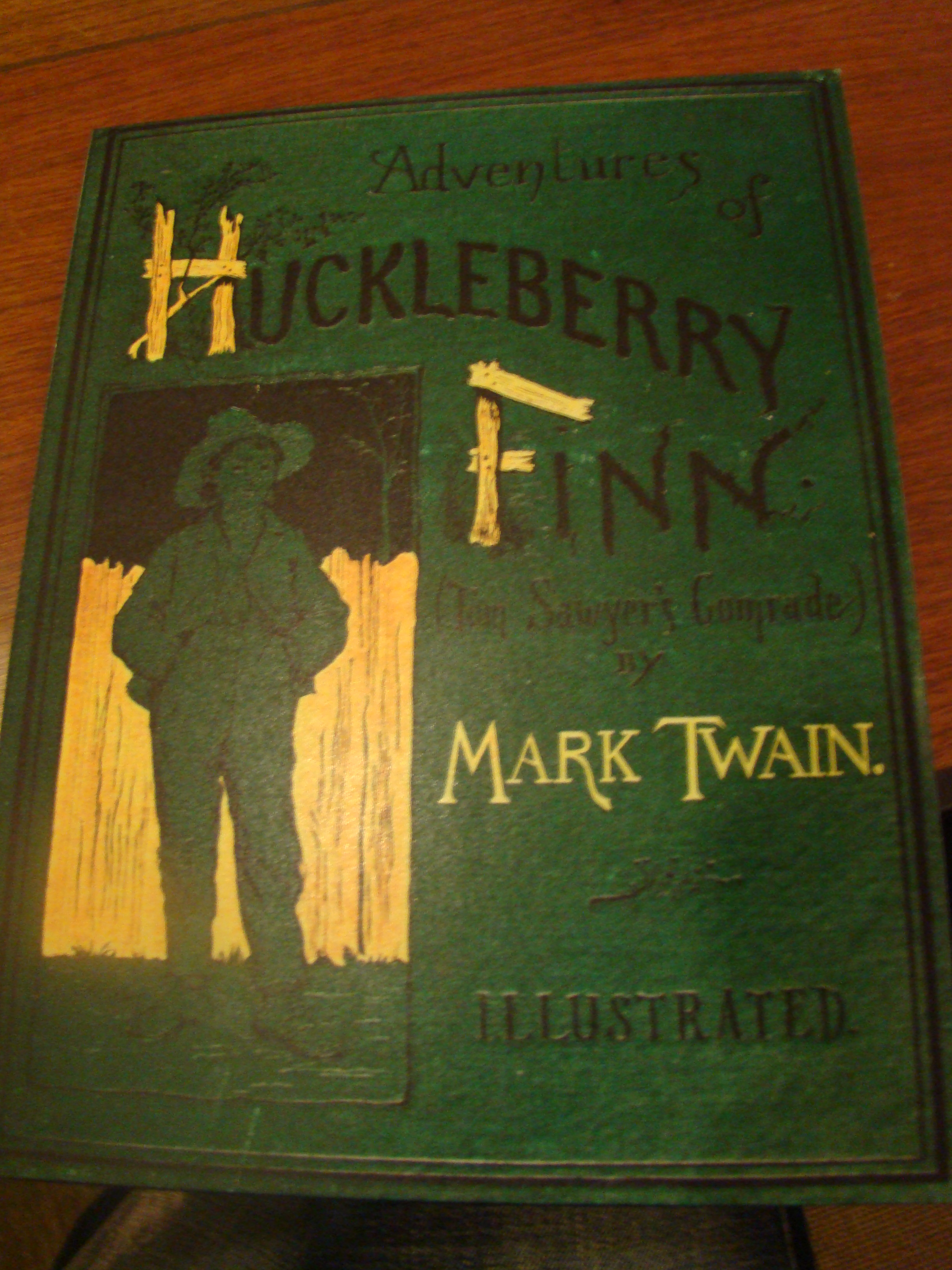
    A meal for two here would cost about about Rs.800, with which you could share a non alcoholic drink, a non veg starter, a non veg pizza and a dessert. You’ll get that bill in a folder that has an image of the first edition book cover of the Adventures of Huckleberry Finn. With a unique identity based on its food and ambiance, Huckleberry is probably a place that you’d like to visit more than once, for its homely charm and lively atmosphere. Mark Twain’s has said “Part of the secret of success in life is to eat what you like and let the food fight it out inside.”  So don’t be afraid to try out the pastas, pizzas, wine and desserts all at one go. 🙂

    Huckleberry, No: 298, 100 feet Road, Indiranagar, Ph: 8040917416

    PS: Huckleberry takes an off on Monday.

  • Book My Trainings

    BookMyTrainings.com connects end users and corporates to training programmes and e-learning modules.  In conversation with co-founder L A BalaMurugan.


    [scribd id=82701785 key=key-2cs7xtnw866v8ii4stwy mode=list]

  • Brand Timelines

    So it looks like Facebook will start releasing the Timeline feature to brands very soon. Though it is still unknown how this will turn out, there are already what-to pieces across the web. As a page admin, I’ve already given the brief for a cover photo. 🙂

    It’s something I’m looking forward to, since, if I have to go by the options the feature has given to individual users, there might be some interesting opportunities for brands. This is not just to do with my interest in brandstreams or the potential for collaboration that I hope FB would unleash some day, but also because it allows brands a new storytelling avenue, especially through apps like say, Pinterest.

    This is despite not knowing how apps will feature in the new Pages, and in spite of (sometimes damaging) consumer voices floating in between the rosy picture the brand might paint, thought the latter is something most page admins are now used to since the official Reviews, Discussions tabs disappeared.

    But these changes also offer a cautionary note to not brands be too dependent on any single platform. As consumer data becomes more of a discussion point and individuals take their identity and information more seriously, this is a good time for a brand to start thinking about setting up a direct line with its consumers and their information.

    until next time, information timelines

  • Irascible

    In Nayantara Sahgal’s “This Time of Morning” (review later), there is an episode (p 247- 250) where one of the characters recollects the first time he had seen the British’s Divide and Rule policy in action, in the context of religion.

    To summarise, towards the end of 1919, a Swami Satyanand, who had a reputation for his protests and fiery speeches against the British, and was a hero figure in all communities, once began a speech on the steps of the Juma Mosque in Allahabad. He said he had chosen the location because he wanted to emphasise that the name of the faith didn’t matter. With the mullah standing behind him, he began to speak of the messages in the Bhagvad Gita as a rapt crowd listened. The policemen arrived suddenly, and even as the Swami kept saying that the police were ‘our’ brothers and the crowd should stand still, he was attacked, finally collapsing beneath the arch. The mullah wept as he was carried inside, and later, when he came out to announce that the swami was dead.

    The next day, the English dailies carried the news that the Swami had died at the Juma Mosque and insinuated that the Swami had deliberately tried to incite the Muslim community and had died as a result. It also chose to emphasise that mutual seclusion was the only way to peace among the communities, and this was what the government was trying to do. The regional dailies were warned against carrying the news at all. And though Muslims and Hindus joined the procession which ended with the Swami’s pyre being lit by the mullah, none of the dailies covered it.

    The book is a work of fiction though historical figures also play minor roles. But many incidents and scenarios are based on real events, and the above incident seems highly possible. It made me realise that the only perspective we can derive of the events that happened then are from newspaper reports and in some cases, journals/books written by people who lived then. But the latter is not so easy to find, and we mostly rely on the former.

    I read this book during the time that Mr.Sibal was making his infamous censorship statements, and the internet began its #outrage. (Yes, I did 2) The above episode gave me a glimpse of what the internet has achieved in terms of documenting data and what we, and the generations to follow, would be missing out, if censorship came to life. Thankfully, even George W Bush has said “You can’t put democracy and freedom back into a box” 🙂

    until next time, Jaise Har Ek Baat Pe Democracy Me Lagne Lag Gaya Ban 🙂

  • The Inheritance of Loss

    Kiran Desai

    With two main narratives set in Kalimpong and New York, Kiran Desai’s second book is an excellent read which can be viewed from many prisms – the effect of a contact with the ‘west’ on a person used to his Indian-ness, the mess we make of our relationships, our inner conflicts, the way we see ourselves and the reality we choose to accept for ourselves.

    One of the narratives is of Sai, a teen-aged orphan who comes to live with a grandfather who barely knew of her existence, but manages to uncharacteristically accept her presence in his life. The author manages to describe situations and behaviour as seen by her, in a very convincing manner, and I found that a very endearing characteristic of the book. Sai’s grandfather is a retired judge, who after his education in England, developed a contempt for everything Indian, and became a ‘stranger to himself’. His sole companion is Mutt, a dog for whom he has a great affection. The last resident of the household is the cook, whose existence revolves around his son, Biju, who he believes to be in a ‘very good job’ in America.

    The second narrative is of Biju – an illegal alien in New York, forced to move jobs, and live in the worst conditions possible, a far cry from the rosy picture his father imagines. He fights his own conflicts – from cooking beef to interacting with Pakistanis and has a yearning to go back home, where he feels, he can belong. In between, there is also a smaller narrative of the judge’s life before retirement.

    Kiran Desai has an amazing way words – from the way she describes routine household jobs to the view of Kanchenjunga and the mountain foliage, and most importantly, human feelings. She moves seamlessly between places, and even time, and shows a deep understanding of human emotions. Her prose is such that it somehow evokes vivid visuals, and characters you can identify with at a fundamental level. The best part is how she manages to keep the prose flexible enough to accommodate its view from the character involved.

    The book is still and dynamic at the same time, as though mirroring its characters, and it seems as though the author is trying to make a point of the importance of things we choose to disregard as mundane. It is about journeys and our notion of destinations.

    Mixing a backdrop of Gorkhaland militancy with hopeful teen infatuation and managing to convey the facile nature of how we view ourselves – through the main characters, as well as the lives and perceived realities of minor characters like Lola, Noni and Father Booty, and the desperation in them due to the events that surround them, this book seems seeped in misery and unacknowledged yearning, but still manages to give some vague notion of hope, as though there is a basic version of the self that connects all of us, and keeps us ticking.