Actwitty.com allows you to integrate your footprints from across the social web and present your complete identity in one place. In conversation with co-founder Alok Srivastava.
[scribd id=101237290 key=key-12zumrn4jpacpf8usniz mode=list]

Speaking of trust, between a corporation and consumers, one of the earliest controlled version of ‘outsourcing’ it was celebrity endorsements. I use ‘controlled’ because organic WOM is not really in the corporation’s control. Though it is still in vogue, the credibility is possibly dented thanks to abuse by the endorser, the endorsed and a media that creates more ways to make an a$$ of the end consumer. eg. passing off ads as content.
In the era of social networks and lightweight interactions, the beneficiaries of this decline would be micro celebrities (MC from now) who have created their own circles of influence in specific domains. I remember writing about that – over 3 years back, and following it up later with influence cycles and the tool based influence calculations being used by brands for promotions. The platforms used by these celebrities could be any – twitter, blogs, Pinterest etc and it does allow the brand to customise their interactions basis the medium itself and with help from the MC, use the strengths of the medium to the hilt.
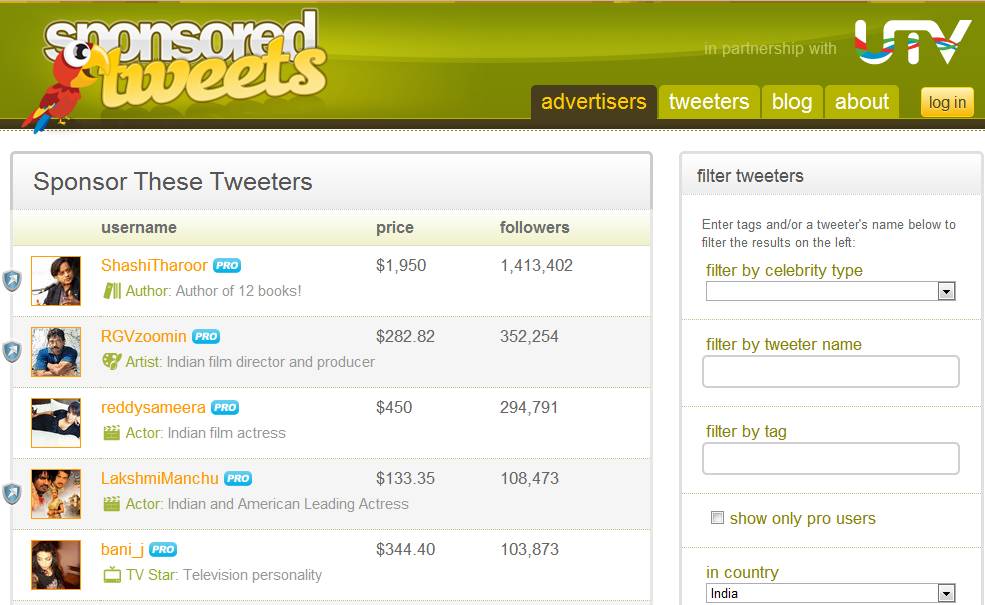 I was hoping that it would evolve such that brands would identify MCs who would be connected to their own category and therefore would wield their influence among people interested in that category. But judging by the directions the platforms are taking, the equations seem to be becoming closer to the earlier forms of media, and ignoring the social aspect. When Vijay shared this and pinky-swore that he wasn’t playing an April Fool prank, I was even more convinced of the direction. Full circle. Hopefully the lessons will be fast, and the new cycle will begin soon. 🙂
until next time, influenced?
It is difficult to make the last part of a trilogy when the first two have set sky-high expectations and one managed to create a larger than life character that would probably have to be one of the best in films, ever, if not THE best. But it had to me made, and 99% would like it. And there would be a 1% hating it – either because they hate crowds, or because their stance would stand out amidst the idol worship. This also includes the .01% for whom this film – objectively and for genuine reasons known to them – didn’t work. I haven’t seen any reviews in this category yet.
So this is just a thank you note to Nolan and his team, for scripting a trilogy that took Batman out of the “Holy atomic pile, Batman!” and the more recent caricature versions to a status deserving of years of comics. For making an intelligent movie with neat hat tips to earlier villains. For wonderful visuals that let me ignore the small doses of incredulousness in the plot. For providing an awesome closure even while throwing a line of hope.
But most importantly, for putting together a perspective on morality and the idea of justice, pursuing these themes consistently across the three movies, using characters with different worldviews, backgrounds and thinking as well as modern issues such as economic crisis and terrorism to add layers to it – the affluent Wayne/Batman can afford a moral compass and changes his path from revenge to justice, Selena/Catwoman doesn’t have that luxury but also seeks a more just balance, Bane is radical and seeks an entire wipe out, the Joker was unpredictable with seemingly no plans except chaos and showing the moral decline of society – even the white knight Harvey Dent, Ra’s-Al-Ghul abhors any sort of weakness in the delivery of justice. All have their own notions of justice, fairness and the institutions of society, institutions we have chosen but whose tools have been subverted, whose rules we try to live by have slowly become unfair and shackles those who desire justice. And thus, for the idea of the Batman as a symbol for those good people who restore our faith in humanity with their actions – “Anyone can be a hero. Even a man who put a coat around a young boy’s shoulders to let him know the world hadn’t ended”, and as an ideal.
until next time, thus spake a fanboy 🙂
Bonus read: Nolan’s goodbye letter to Batman
We decided to give Keramangala a break and limit our weekend outings to Indiranagar in May, considering that the latter had suddenly begun aping the former in terms of restaurants popping up all over the place. That’s how we landed up at California Pizza Kitchen, located in that stretch between 12th Main and CMH Road junctions on 100 feet Road, where it seems all the action is happening. (map) There’s valet parking and enough place for 2 wheelers too.
The ambiance is very pizzeria like, and not really fine dining. But it’s neat, classy and was actually near-full when we got there at about 7.30. A little later, we could see people waiting too. But the service is fast, so even if you don’t reserve, you probably wouldn’t have to wait long.
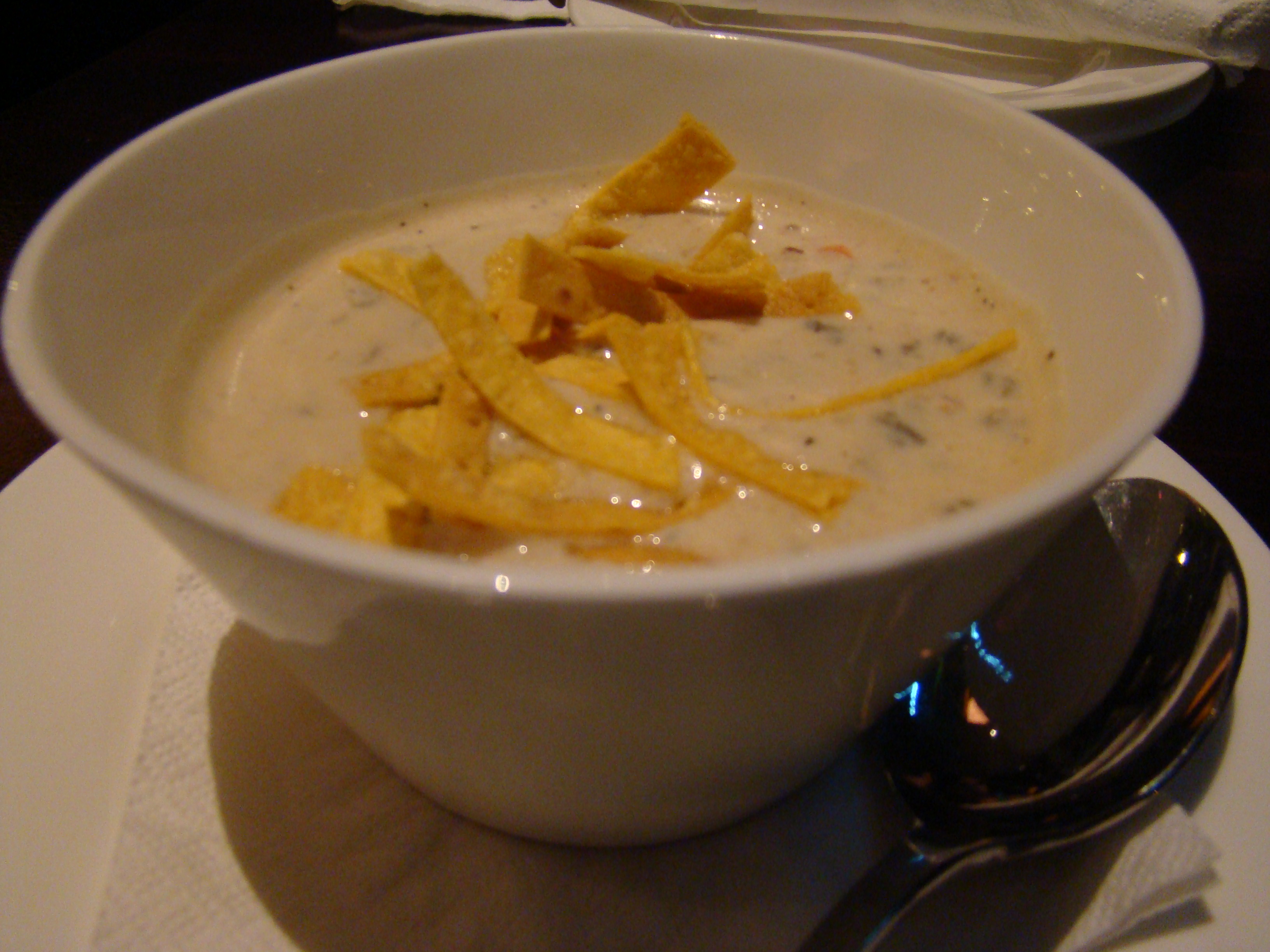 The menu at Zomato is almost complete – the only thing it’s missing is the smoothies section. We started with an Adobe Chicken Chowder, that came to us almost as soon as we ordered it! The tortilla strips added excellent texture to the thick creamy soup, which which was quite awesome – wild rice, cilantro, corn, though we did miss the green chillies. But the pepper on the table made up for that very well.
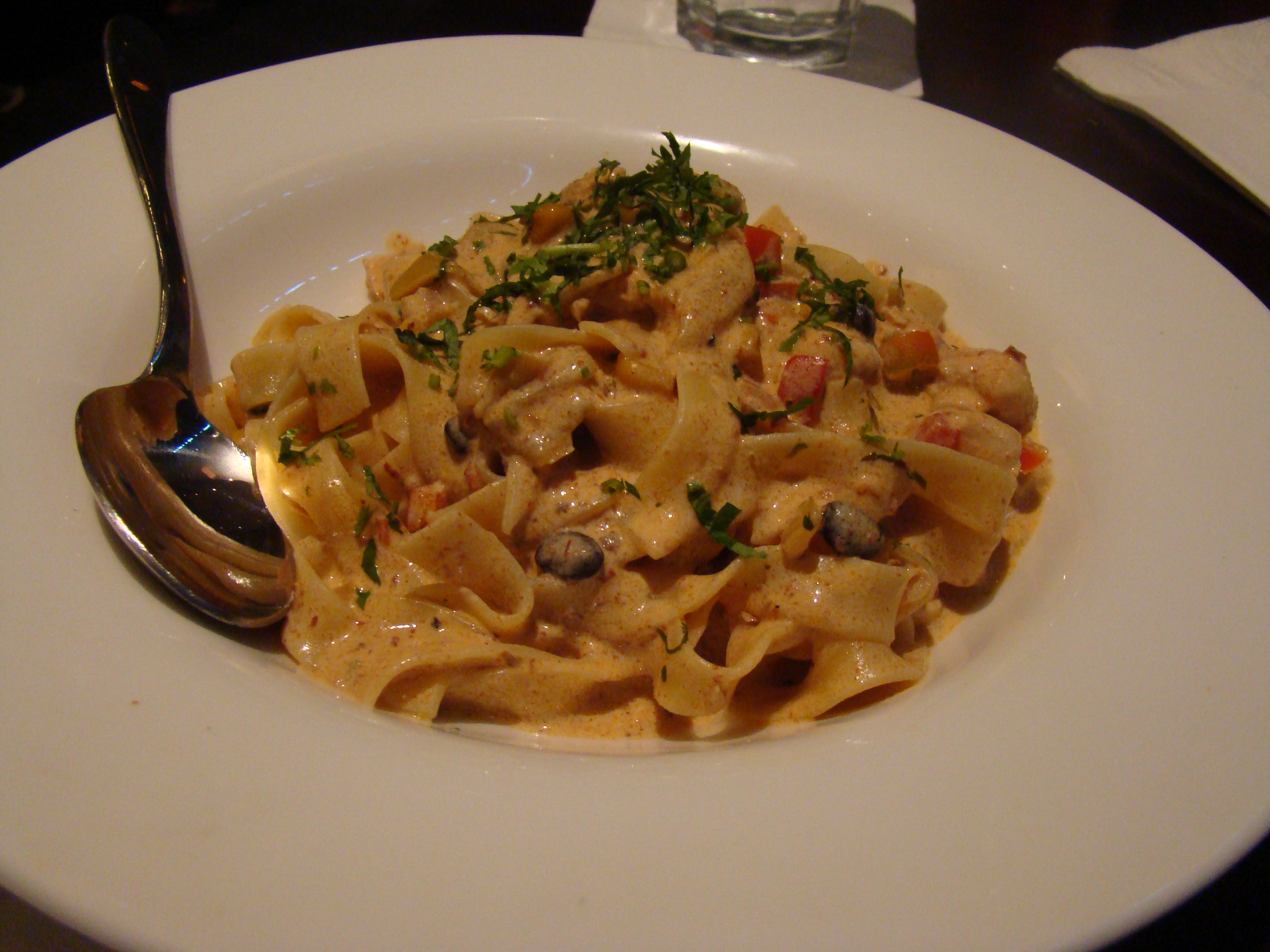
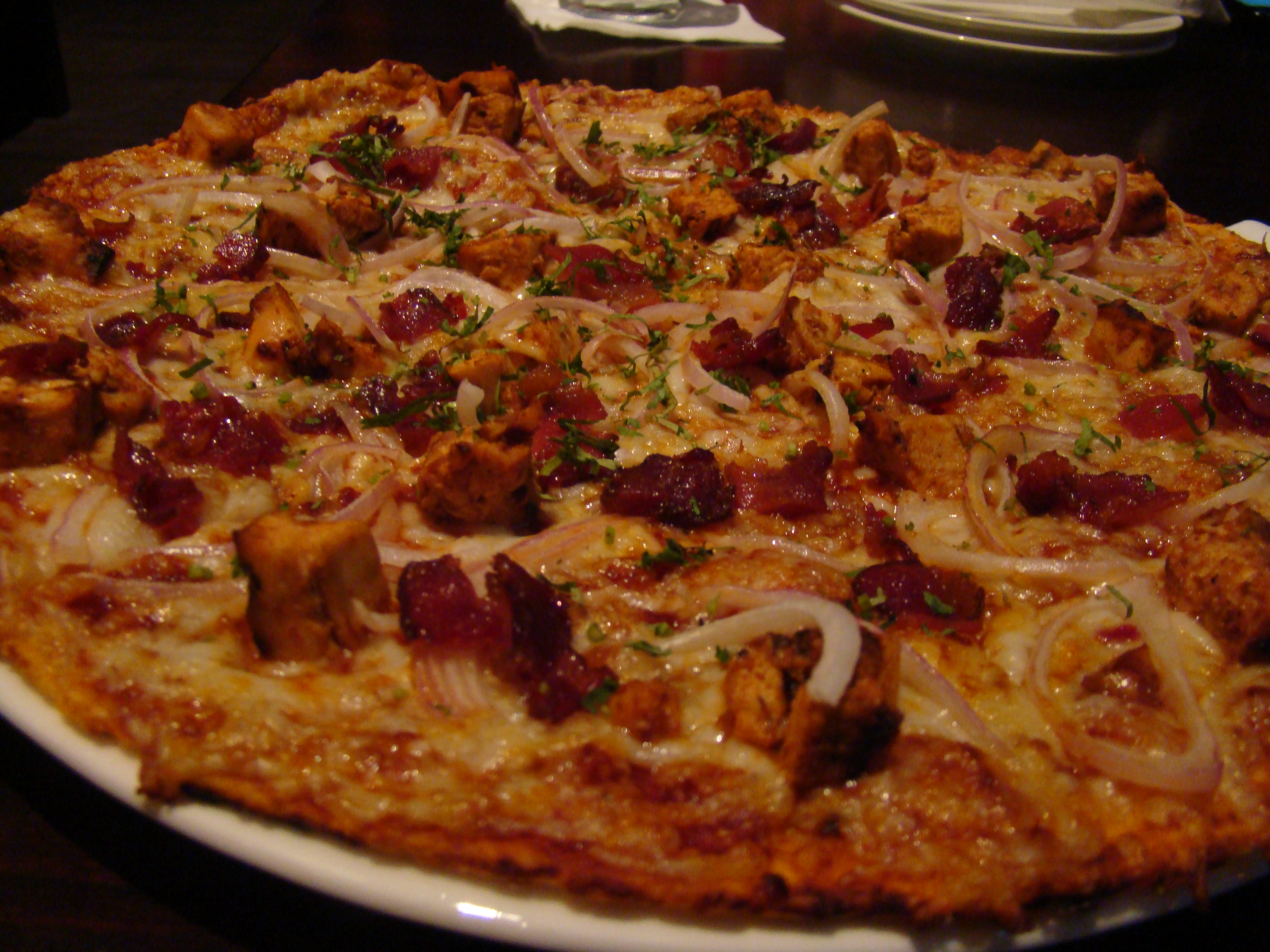
For the main course, we ordered the Original BBQ Chicken, with a smoked bacon add-on and a thin crust, which costs Rs.20 more. I would’ve liked the BBQ sauce to be more dominant, specially because the onion and the unevenly spread cilantro are all-too familiar flavours. But it was a reasonably good pizza. The other dish we tried was the Southwestern Chipotle Fettuccine. A wonderful spicy, creamy dish, from which the only thing we’d have like to remove would be the black beans, which seemed to stick out like a sore thumb. We had just enough space to accommodate the Chocolate Banana Smoothie, which used regular cream that added a unique flavour to the mix.
Overall, the experience was quite good, though pricing is definitely on the higher side – all the above with service charges and taxes came to over Rs.1600, not exactly what you’d expect from the friendly neighbourhood pizza joint. So long as you keep that in mind, and are fine with moderate portion sizes, you should be fine.
California Pizza Kitchen, 284, Ground Floor, 100 feet Road, Indiranagar Ph: 64048888
YourCabs aims to build a car rental portal with a national footprint connecting consumers and cab vendors. In conversation with co-founder Rajath Kedilaya.
[scribd id=100612349 key=key-2inx3ahzp704adumxioe mode=list]