• To be a content brand

    I had a bit of an epiphany when I read this superbly written post on Snapchat and the nuances of storytelling. In my last post on the utility of a brand, I had pretty much glossed over ‘delivery’ because it was one part of a larger framework. (and a post that kept getting longer after I began writing!) While determining the larger purpose of the brand and its ‘job’ in a consumer’s life is important, it is also equally necessary to ‘deliver’ this to the consumer in relevant contexts, especially because we live in a world which has not fully learnt to combat  ‘filter failure’. I think ‘content’ strategy has a large role to play in this.

    The corporate narrative, referred to in the last post, is a constant work in progress and I fully agree that over a period of time, it will deliver all the advantages that the post mentions, but I do have a couple of different perspectives on the ‘narrative vs stories’ points in it. One, I think stories contribute to the larger narrative (either by collectively forming one or adding to an existing one) and probably don’t deserve to be separated from it. Two, I believe that stories are the devices which make the corporate narrative relevant to the consumer by adding context. This is even more pertinent because narratives are rarely linear in the way they are consumed now. Even not advertising is content that would influence perceptions.

    The brand narrative

    A brand’s narrative is no longer one that is broadcast to a user base that the brand considers its audience. In fact, thanks to the internet and then social, only a few contexts are now dictated by the brand, the rest of the narrative (in the consumer’s mind) is built by his/her ‘experiences and the best a brand can do is aim for cohesion. The consumer seeks/finds a need that the brand fills in his/her life. This need can be anything along Maslow’s hierarchy, and more. This, I think, is where stories play a crucial part, because the more the stories- from brands or other users – the more contexts a consumer finds to fit the brand into his/her life stream.

    The narrative of a brand in a consumer’s life is fluid, and it is cohesive stories that will define its evolution. It has probably always been so, but the explosion of self publishing has meant that brands have to not just get heard above competitors, but the user’s stream on various platforms too. The fluid narrative also means that the big idea every quarter (or year) is no longer enough. (or necessary, though that is debatable) It takes a ton of stories to build a perception and get a community to interact with the brand. But when they do, there is potential for magic. (ask Ikea) It also, only takes a whiff of controversy for it to be forgotten. This calls for an adaptive, agile methodology and some solid content structures that the brand can use to frame user contexts.

    Surprisingly, there is good news

    The good news is that social platforms do offer a better way to customise delivery according to a user need. That we still use these to broadcast and target according to pre determined audience segments is the beginning of bad news. But at some point when the race to mould the day’s popular social platforms to the existing paradigms of marketing segmentation ends courtesy saturation, hopefully ad tech will move more solidly towards delivering content and experiences that are an answer to the user’s needs. IBM’s trait tattoo based on tweets is a start. Further good news is that thanks to Facebook and Twitter, brands are slowly realising the need to create content that goes beyond broadcast. They are being forced to balance business agendas with the user’s needs.

    But, wait

    The bad news for marketers is that platforms are exploding and each has its own milieu. The content objectives and strategy are essentially different because user contexts change between platforms and even within it according to time. Right now reach trumps relevance thanks to the measurement parameters of an earlier era, but I’m guessing that will change soon as everyone begins to do the same thing on Facebook and Twitter. Further bad news is that marketing is not really structured or resourced for the changed communication scenario.

    Probably the worst news is the mindset and I have seen at least a few fundamental challenges to begin with, in addition to a few myths. One, brands still have the communication baggage of an earlier era. This manifests itself in a campaign based approach, the quest for perfection, the endless approval cycles, and a broadcast flavour to every piece of content, among other things. Two, thanks to Red Bull, everyone wants to get wings and start flying on the first day, as if there is a user waiting to hear the banality that is about to be uttered. It takes months to experiment and get a sense of the fitment of the content’s function (business needs with the objective to inform/entertain/inspire/persuade… the user), its form, (blog posts, tweet, FB post, videos, infographic, polls etc) flavour, (tonality) and frequency (timing) that will appeal to various users in various contexts – what is referred to as the ‘voice of the brand’. The last is the application of measurement parameters that were built for an earlier marketing framework.

    (via)

    However, all of this is part of the evolution, and given that the learning curve gets steeper by the day, brands will have no other choice but to catch up. The flip side is to be irrelevant, and no brand can afford it.

    until next time, discontentment

    P.S. function, form, flavour, frequency make 4 Fs. One more for F5. (refresh)
  • The Last Mughal: The Fall of a Dynasty, Delhi, 1857

    William Dalrymple

    Once, during a trip to Delhi, seeing the way history seemed to come ‘alive’ in the old city at various corners, I asked my friend whether anyone had tracked what had happened to the descendants of the Mughals, and how they saw their legacy . In this book, William Dalrymple does shed some light on it, though a sad one. More than the last Mughal emperor, the book belongs to the First War of Indian Independence to which he was unwittingly bound. Bahadur Shah 2 or Bahadur Shah Zafar as we were taught in history classes, born in 1775, whose pen name meant ‘Victory’, and was depicted as the face of the revolution that almost threw out the British. A hapless man who was pulled by a desire to ensure that he did justice to his legacy, when all he wanted to do was write his poetry and live in the company of like-minded souls. A spiritual man who was even considered a sufi saint, and still is, at his grave in Rangoon.

    It is now history, but at some point it was the life lived by people like us. 1857 seems like tangible history, an era that can still be felt by its influence, even if minimal. Using records from all kinds of people – common men and chroniclers across Indian and British nationalities, the author creates a vivid portrait of Delhi, before, during, and after the uprising. Characters such as Ghalib sometimes add philosophical layers to this narration, and help us understand the cultural high point that was regained in Zafar’s court. It also shows Zafar as a normal human being of his era – with his own superstitions and insecurities, a subject of court intrigue courtesy his wife Zinat Mahal, his son Mirza Mughaal, Hakim Ahsanullah Khan, General Bakht Khan and others, despite being hailed as Padshah, the Lord of the World.

    The book also makes a point to showcase the relationship between religious communities before the event, and as the author reinforces many a time, Zafar deserves quite some credit in understanding the fabric that held his city together and maintaining the harmony there. He also points out that the real reason for the uprising was not political, but religious. What started as a fight between Hindu sepoys and the British ended as a fight between a rebel force that was made mostly of Muslim jehadis and British mercenaries made of Sikh, Muslim Punjabi, and Pathans. And it was a war that could have gone wither way.

    Late in the book, there is also a mention of a royal survivor – Zafar Sultan, Zafar’s brother’s son, who refused government pension, and made his living with a brick cart. Once, many years later, in his old age, he was abused and beaten up by a businessman. After quietly taking the first few blows, he hit the businessman hard enough to break his nose. He told the court that sixty years earlier, the man’s forefathers would have been his slaves and that he had not forgotten his lineage. Dressed in dirty suits, made to get up and salaam the British (when he used to consider it an insult for anyone to sit in his presence), and verbally abused regularly, Zafar himself was the recipient of several injustices at the hands of the British, who did not even give any consideration for his old age after they ‘captured’ him.

    What remains with me, and this is something I went back to, almost every time I picked up the book to continue, is the photo of Zafar, lying with his face to the camera – the face of a broken old man who through his life saw the dominion of his ancestors taken away from him until all he had was his city and an empty title, who had just been made to undergo a trial and many humiliations before it, eyes expressing melancholy, and resigned to his destiny.

  • The currency of relationships

    Clipboard02

    Some people know me way too well! 🙂

    A few days ago, I received a message that gave a jolt to my perception of how I deal with other people and what they make of it. I had written this post sometime back on taking friends for granted, and while that was in the specific context of friendship, this is an approach I extend to all relationships, be it transactional or emotional. I like to think that I’m fair in my approach and try to give back more than I get. But apparently, at least according to one person, I am not, and am “Mr.Use and Throw”. It hurt because I have always acknowledged the help that I’d received, to that person and others. I have not had an opportunity to repay it in kind, but whenever I have felt that my presence would bring happiness, I have made it a point to be there. I did reply with my perspective on the accusation, but it led me to think of the subject and how our actions are perceived by others.

    In this case, for instance, there were possibly expectations from me that I had not known of – not of a monetary kind, I think, but some other kind of help or acknowledgement. (Generalising) We live in an increasingly transactional world, where we are able to quantify all sorts of things and are also able to throw money at issues/problems/situations to resolve them. In scenarios where that is not applicable, we use our judgment to repay a gesture of kindness/affection/love. Over a period of time, I have dealt with the latter by acknowledgment and thanks in word and deed, and by paying it forward. But there is no standard currency in relationships, and my lesson from this experience is to not to take for granted that my approach is the one that works for people at the receiving end. I should spend some time first in understanding expectations, and then meeting them. When the price and currency are not agreed upon at the outset, you will need to keep paying until both parties have agreed that there are no dues.

    20131117_163614

    until next time, emotional monthly installments

    P.S. and a happy Thanksgiving 😉

  • Troika

    originally published at Bangalore Mirror

    ‘Troika’, to me, immediately brings Russia to mind, and though the resto-bar itself does not show any red colour preferences, the Staples signboard right below makes up for it! (map) They do have valet parking. But it is to be noted that the restaurant is to your left once you get out of the elevator. Actually, the name is more a function of ‘three’. The logo shows three elements – fire, water, and air. The décor is classy and functional with three kinds of seating – high stools near the island bar, a semi-open lounge area, and an air-conditioned space. The ambiance is classy and comfortable. But we were there mostly for the food, and the menu is also a mix of three primary culinary influences – Mediterranean, Oriental, and Coastal. If you’ve been keeping track, that’s three times that the theme of three had manifested itself, and I was increasingly reminded of “The Number 23”, in which Jim Carrey sees all events and incidents being connected to 23. See?

    I decided to distract myself with the menu (reading the font in the dim light is quite a pain) as we waited for the third couple to join us, and as soon as I opened the beverages menu, among the cocktails, I noticed the drink Awesome Threesome! Avoiding that, we tried the Cin-Fully Yours and the James Bond Martini (shaken not stirred) and both were quite good. The chef has done an excellent job of creating intrigue around the dishes long before they are served – the fusion combinations are unique and many a dish would sell solely because of the description! Take for example, the Lemon Grass scented Pineapple and Parupu Rasam! We missed the scent, and it was more sambar than rasam courtesy the lentils, but none of that could take away from the super soup! We began solid food consumption with the Crispy Fish Coconut Chilli and though the coconut didn’t really feature much, the dish was spicy with some flavourful seasoning. The Rochaedo chicken dumplings are very un-dumpling-like in their appearance, but the Goan masala and the sweet and sour flavour didn’t disappoint. The chargrilled Lamb Souvlaki was quite bland and despite a valiant effort by the Tzatziki dip, and the well cooked meat, the dish was not really a favourite. We’d been ignoring the vegetarians and their revenge did turn out to be a dish best served cold – the Sweet & Sour Glass Noodle Rolls. A surprise hit, with a Vietnamese salad inside a rice paper sheet, and flavours that hit all the right notes!

    collage1

    In the main course, the Tai Chi chicken was supposed to have a chili pepper sauce but actually turned out to be quite bland! The Kingfish Darne Kodampulli was served with coconut and spinach rice and it fondly reminded us of traditional fish curry meals! The Curd Roast Lamb Casserole had a very bland marinade and the Oozi (sic) rice didn’t really thrill either. The Chicken Roulade, with garlic, mushroom and ricotta stuffing was excellent, and would’ve been the favourite if not for the Potato & Red Onion Roesti, with its lime and parmesan dressing. Yes, vegetarian again, and it must be mentioned that the menu does provide some excellent options for them. The other vegetarian dish we tried – Grilled Cottage Cheese and Garlic Roast Spinach mille-feuille, Tomato Provencal Sauce – was only average. The main course portions are sized just right, and one would easily feel confident about ordering desserts!

    collage2

    There are just about half a dozen dessert options, but each of them is unique! The Coconut, Honey and Green Lime Panna Cotta turned out to be quite a win, and the Banoffee pie was a delight to look at and consume. The Chocolate crostata didn’t really fulfil its chocolate potential and we’ve had had better blueberry cheesecakes. The Cannoli Kaapi yogurt was the biggest disappointment both in terms of texture and flavour.

    collage3

    Troika creates some fabulous adventures from different cuisines. For about Rs.1800, you could share a drink, a non veg starter, a veg and non veg main course dish and a dessert. (Inclusive of taxes and service charge) A few dishes didn’t live up to the textual expectations they created, but there were others which made up for it. Add to that the classy décor and the peppy ambiance, and there’s really no reason to raise a red flag. Well worth a visit.

    Troika, 100 feet Road (above Staples) Indiranagar, Ph: 080 41511155

  • The utility of a brand

    After the ‘social product‘ post, the brand guy in me wanted to reconcile this evolution of the product with the brand story. After all, ‘network effects’, ‘purpose’, ‘community’ etc are essential parts of the brand story as well. But I thought of stepping back a bit before moving forward.

    The ‘tyranny of the big idea‘ is oft discussed here and the more I see platforms evolve, the more I feel the need (for brands) for nuanced strategy and propositions that are relevant in various contexts and take into account the radical change that is two-way communication. (as opposed to broadcast) I think this is an inevitability of consumption fragmentation as well as changes in attitudes/behaviour/expectations, and sustained nuanced propositions is one of the key ways to create ‘network effects’ across platforms.

    In this context, I thought the ‘Moving Forward’ section in this insightful post titled “Killing Big Strategy” captured it perfectly. Also, through it, I came across something that helped link the product-brand stories – “Finding the right job for your product“, a fantastic alternate perspective on traditional market segmentation, and some excellent lessons in defining competition and positioning. Not to forget this gem from Drucker “The customer rarely buys what the company thinks it is selling him.”

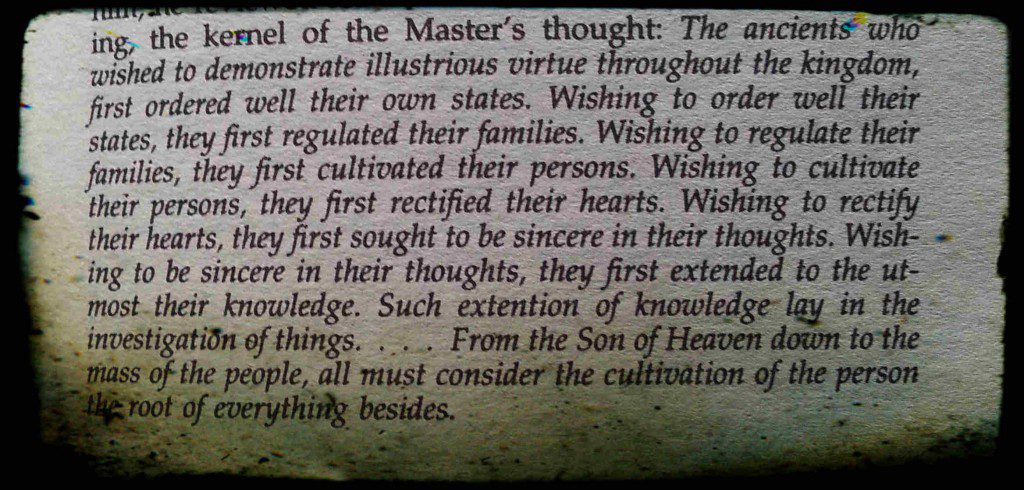
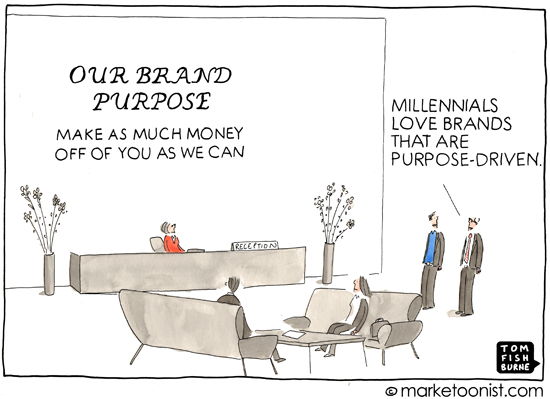
    So where does this all begin? Though ‘purpose’ is increasingly being used as a buzzword  and also espousing a corporate-centric view (unfortunately) I still get to see a lot of relevant literature that does more than lip service. At a broad level, this little framework of Purpose – Delivery – Resonance, for instance, is a good start. There are many needs that brands fulfill and many reasons why they are loved, and these could start as pointers for a brand to figure out its purpose. John Hagel’s “The Untapped Potential of Corporate Narratives” offers some excellent perspective on how user-centric narratives gets several ‘pull’ factors to work in tandem and offer numerous sustainable advantages. The examples include my usual favourite – Nike, and this is a subject I have touched upon earlier as well, (1,2) though not as eloquently. 🙂 If you think about it, this is also another way of ‘finding the right job for your product’.

    brandpurpose

    (via)

    On delivery. Russell Davies’ “Activities not audiences” draws the distinction between users and user needs and calls for focusing on the latter. Again, another rendition of a product doing its ‘job’. This post, titled “Brands: One System Of Touch“, explores the misalignment of brands which view customer experiences in isolation, by channel, whereas customers of course view and grade their experiences cumulatively. This is a good starting point to think about what needs to be changed internally to deliver a cohesive, relevant and useful experience to the consumer.

    In the meanwhile, I came across quite a few examples of brands adopting the ‘product doing a job’ approach even though it might be an isolated exercise at this point –  Hermes’ silk knot app, Volkswagen’s and Audi’s Augmented Reality apps to repair/know the features of their cars. While they might seem too self serving to qualify for the concept under discussion, they’re definitely a step in the direction. Uber’s response to a bus driver strike with free rides might be a more evolved example. Another one might be Ford’s platform to ‘hack’ its car hardware and software. Many more examples of ‘branded utility’ can be seen here. I think that in the looming collaborative economy, platforms like Google Helpouts will help brands become a real time utility in their domains.  Interestingly there are also examples of brands (Citi, Kleenex) which are trying to create value beyond their core purpose/utility. Levi’s’ ‘School of Make our mark‘ is another example.

    The last bit in the framework (though the framework also mentions differentiation, I see it as something that needs to be built into purpose and delivery) I referred to earlier is resonance. I think these above experiments will not only help brands learn what it takes to build sustained resonance in various consumer contexts but also how to amplify this to potential consumers who might share similar needs. This will require learning and application beyond the conventional mass reach tactics employed currently. The corollary is that measurement paradigms would also need to change. I could see this being aligned to all the points mentioned in this superb post –  ‘The Future of Marketing‘ – messages to experiences, rational to passion, adaptive strategy, simulations, brands to platforms.

    To bring it all back to the link between the social product and the brand, I now (again) see technology (including social) as an enabler in the product and marketing road maps – working in tandem to deliver the brand’s purpose and help it augment resonance.

    until next time, utilising brands