• The Social Product

    A few days ago, I read this post that cited studies on consumer sentiment (US, UK) about brands being present on social media. There are plenty of interesting perspectives and nuanced insights but one key takeaway is that consumers feel there is a glut of companies on social media, though it seems the younger age group feel that presence on social media adds to trust. Around the same time, I also came across the theory of peak advertising which begins with the decreasing effectiveness of online advertising and moves through various stages to suggest alternatives to the current business models that sustain the internet.  Collectively, it would seem as though the (generic) advantage of just being present on social is plateauing, or probably even going down. There are obviously brands that are using these platforms effectively, but increasingly, social is being used as media and this is easily replicated by other brands. At a larger level, the advertising barrage on social is also reducing effectiveness. That led me to think – before the utopia of social business, what opportunities does social have beyond the traditional marketing, advertising media based approach, enterprise collaboration, and social CRM?

    In the second Myntra post, I’d written about how I felt that ‘product’ was best placed to deliver sustainable business advantage. Though it was related to the website/features in that context, I’m now considering if this is applicable across the board – to physical products as well. Also, the more I see social evolving on customer care, marketing, advertising and sales, the more I think these are becoming hygiene. I have omitted marketing because I think there is scope to build a unique brand and thus some business advantage in the long run. However, I also think that this marketing will have to significantly integrated with ‘product’.

    In this context, I found this Forrester post titled “There is no Internet of Things” extremely interesting. Though we’re in the early stages of this phenomenon, I think it’s a good time for her to have raised the point of fragmentation and apps/brands working in silos. There are some excellent examples and scenarios in that post that make it a must-read. The conceptual answer to this is in the title of this HBR post – “The Age of Social Products“, and it makes a great point on ‘shared purpose’. “In an age of social products, competitive advantage comes not from product features but from network effects.” (though at this stage, I do think it’s both and not an either/or) Nike, as mentioned in the post, (and as usual) continues to be on the cutting edge. The common theme in their case is that the product + community (user+developer) offering only uses popular social platforms to augment, and is not dependent on them.

    The current approach to social (media) is either to use $ or influence. I’m not sure there’s enough importance given to the network and the effect that’s created over a period of time. As this superb post states on the subject of disruption and diffusion states, “It’s not the nodes, it’s the network” In that light, I feel social products might be able to do more justice to the promise of ‘social’ than its current avatars, especially social media. I did think the same way about social platforms earlier, but we live in hope!

    IoT

    (via)

    until next time, objectifying social 🙂

    P.S. I was reminded of a term coined much earlier – social objects. In that context, it was anything that could be a conversation starter, and the focus was more on its ability to connect people around a subject of common interest. Social products have the ability to take that connection and give it a platform where even people who are not in the same time and place can be part of the conversation. This is beyond its ‘utility’ not just as a product but also as a device that talks to other devices and makes itself more useful. I’m actually thinking of that ‘bottle of memories’ I mentioned in an earlier post, probably in a smarter avatar – like this or this – but also ‘tagged’ (say, using an augmented reality app) with the people who are part of the stories associated with it. Now, at some point, when I see the bottle, and get particularly nostalgic, I could use the same app to see what those people are up to, and quickly ping them to start a conversation about the good old times. In the collaborative and sharing economy, think of the possibilities! (If you’re interested in this sort of thing, you should like this post) When I think about it, what we probably need to accelerate this is a browser (what it does for the web) equivalent.

  • The Non Fiction Collection: Twenty Years Of Penguin India

    Celebrating Penguin’s twenty years in India, this book has a collection of 46 non-fiction works, (chapters from published works) and since there’s no specific theme that links every one of them, I’ll just list my favourites. Devdutt Pattanaik’s Myth = Mithya is probably the best way to begin the book with its premise of creation (as per Hindu mythology) and its take on the complementary forces at play in the universe. Gita Piramal’s “the old fox” gives us the ringside view of the Ambani – Goenka war that played out in the eighties. Humra Quraishi’s “from Kashmir” offers us a glimpse of today’s Kashmir, and the life of the people there, a far cry from the times when Kashmir was described as heaven on earth. Vikram Seth’s “From Heaven Lake”, in addition to its vivid description of travel in China, shows in its last page a snapshot of the human condition that remains unchanged across the globe. Amrita Shah’s “Launching Into Space” is one of those reads that take across time, and space, with its chronicling of the early days of India’s space research programme. Khushwant Singh’s “Village in the Desert” is a very personal recollection of the author’s own childhood in a village that now stands in Pakistan, and shows how people across the line really can go beyond the lines drawn on a map. Sanjay Suri’s “Near Mrs.” (that title is a good example of the humour involved) is a brilliantly funny respite from the serious content in the rest of the book, involving a bride-search in London.

    Roopa Swaminathan’s “Extras” is a poignant piece of writing on the life of extras who come to Mumbai/Chennai with the hopes of becoming the next star, but who find that their life has passed them by even as they clung on to hope. Giles Tillotson’s Jaipur Nama has an account of the East India Company’s activities in the context of Rajasthan. Even as Mark Tully’s “No Full Stops in India” gives an excellent perspective on ‘development’ in India, Pavan K Varma’s “Being Indian” has a fantastic take on how India’s own way of getting things done still survives. Abraham Verghese’ “My Own Country”, while set in the US, touches upon, among other things, the idea of a home.

    Pinki Virani’s “Home as hell” informs us about sickening cases of child abuse in India. John Wright’s “Indian Summers” gives us a behind-the-scenes look as well as a non-Indian’s perspective on the game that unites India, even as S. Hussain Zaidi’s “Black Friday” shows how communal forces and the merchants of terrorism try to break this unity.

    There are also very interesting pieces like the Veerappan based “Face to Face” by Sunaad Raghuram, former PM Narasimha’s Rao’s version of what happened at Ayodhya in 1992.

    The book also had quite a few excerpts from works that are already my favouries – Mishi Saran’s “Chasing the Monk’s Shadow”, Shashi Tharoor’s “India: from Midnight to the Millennium” and Arundhati Roy’s “The Algebra of Infinite Justice”.

    The book is a few years old, and some of the works, even more so, but they are in some ways, timeless pieces too. I read them because they not only give me clues on interesting books to read, but also offer me a glimpse of worlds that I probably might not travel to in the course of my normal reading journey.

  • Guided by fear

    live1

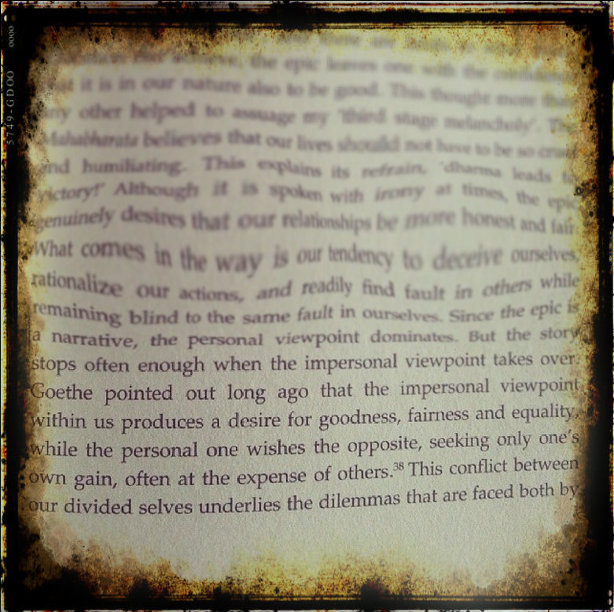
    I have this habit of adding a bookmark fold at the bottom of the page when I want to refer to it again. It is quite a task when I have to figure out much later what line in the page I’d originally bookmarked for! These days, Instagram solves it. At some point, I’m sure I can search my feed with a #quote hashtag and retrieve all the ‘bookmarks’ easily. Yay!

    “And the Mountains Echoed” had many such bookmarks. (still an unconscious habit despite the Instagram method) But this one has to be my favourite – “..but most people have it backward. They think they live by what they want. But really what guides them is what they are afraid of. What they don’t want.” I can easily confess that a large share of my actions is to preclude some dystopian version of my old age. (one) Many a time, this leads me to choose cautious paths over (what I think might be) more emotionally fulfilling ones, and even ones that I think might be leading me to my purpose.

    But when I thought about it a bit more, I realised that it can be read positively too – after all I am afraid of being switched off without knowing why I was here, and that’s what makes it an obsession! Also, the ‘afraid-don’t want’ factor often drives me to do things that are out of my comfort zone, so it’s possibly even pushing me towards my purpose, albeit from a different direction. Just a form of reduction? 🙂 It’s probably not a coincidence that my second favourite quote from the book is “When you have lived as long as I have, you find that cruelty and benevolence are but shades of the same colour

    until next time, fear off

  • Smokehouse Deli

    First Delivered on Bangalore Mirror

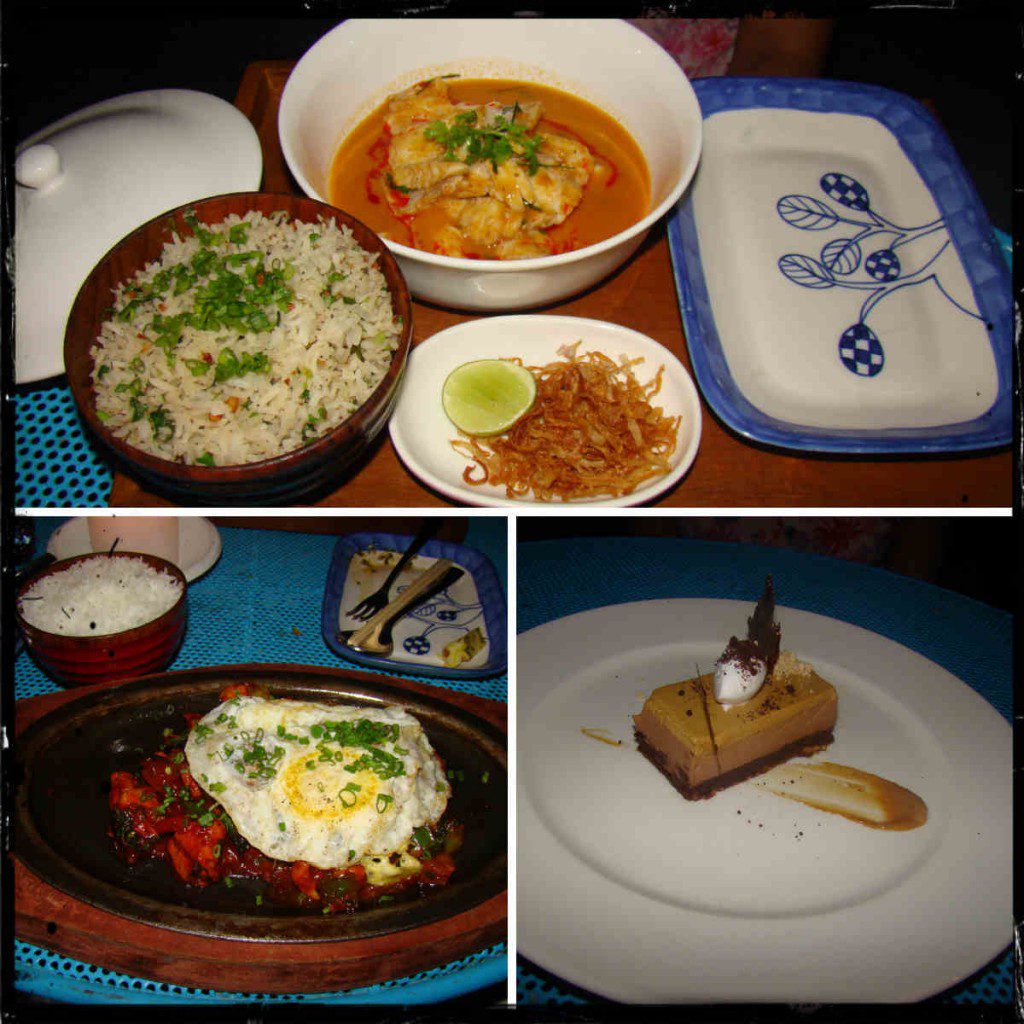
    There was quite some buzz in my glutton fraternity and among Bangalore’s restaurant watchers in general when the glass façade on 100 feet Road, Indiranagar sent out smoke signals that a much-awaited launch was imminent. That was back in February and since then I’ve heard several people raving about Smokehouse Deli. In fact, this one, (whose recipes are a hit among my friends) practically salivates when talking about the place! Adding salt-to-taste is usually recommended in culinary matters, so I took these with a pinch of salt and decided to pay a visit to check things out myself. The glowing white building, the picket fence, the pretty-as-a-picture outdoor seating – all contribute to the elegance that’s evident as soon as one lays eyes on the establishment. Yes, there’s valet parking as well. There is a deli section and functional but comfortable seating as well on the ground floor, and upstairs, a long bar and seats that offer a view of the busy roads outside. But I’d say the real magic begins as you take in the illustrations that are a hallmark of the chain. Lal Bagh to Sankey to Lord Cubbon to the city’s music bands and aero history, this is a rich tribute to Bangalore’s timeline, with quirky nuggets like the famous ‘haunted house’! So much to take in, and we hadn’t even started on the food! Thanks to all that, you really must reserve a table, unless you want to stand outside- smoking – for a while.

    At the very outset, I must admit to a little bias in this review because they fed me some really good bacon all through the meal! From the exhaustive beverages menu, we tried the Melon Freeze, fresh, not too sweet and blended really with the alcohol. The Bellini had a subtle fruity flavour that meshed well with the champagne. In the Bourbon Freeze, the Kahlua managed to dominate, and again, the sweetness and the blend of chocolate and bourbon was just right. The spiced- pineapple infusions worked beautifully with the Jose Cuervo based drink as well.

    collage1

    If the Grilled Mushroom + Bearnaise Crostini had to win the starters round when it had a Sausage Plate for competition, you can imagine how good it must have been. Perfectly sized with a crispy, crunchy base and loaded with mushrooms and cheese. The Peri Peri Spiced Squid Rings were a close second – perfectly cooked squid, crunchy batter and a superb dip. Two kinds of pork sausages (one with a bacon wrap) and a portion of chicken sausages, and yet, the Sausage Plate could only manage a place below these two, despite the sausages being really good! A testament to the quality of the food served!

    collage2

    In the main course, we were served a splendid Smoked Chicken Caesar Salad – fresh vegetables and well cooked meat, and we topped it with Oak Smoked Bacon. The”My Boss’s style Spaghetti” had an olive oil dressing with seasoning. It was basic but flavourful and the red onions and field mushrooms added to the dish’s appeal. The House Spiced Smoked Chicken with Five Spiced Jus turned out to be our favourite dish though, and despite the double spice in the name, it was only mildly spicy with well cooked chicken. We also tried the Bacon Wrapped Tenderloin with Burnt Butter Hollandaise. The ‘medium’ could have done with just a tad more cooking, but it was quite succulent and I wouldn’t really complain.

    collage3

    We wanted to try at least half a dozen desserts but the portion sizes of both earlier courses meant that it took much negotiating before we settled on half of that. The Hazelnut Mousse Flan was a unanimous choice and turned out to be deservedly so. Smooooth mousse with a textured base, you must leave space for this! We wanted an Espresso Soufflé but since it wasn’t available, asked for a Flourless Chocolate Fudge. This turned out to be quite good too with a mild coffee flavour that added to the dark chocolate. The Philly Plum cheesecake was the only disappointment. You should probably go for the Raspberry + Oreo cheesecake – several drooling people have confirmed its awesomeness.

    collage4

    We had a wonderful time. A unique and superb ambiance, excellent food, and service staff who are confident about the fare they serve. For about Rs.1900, you could share a drink, a non veg starter, a couple of main course dishes and a dessert. (Inclusive of taxes and service charge) It’s definitely on the costly side, but that’s understandable given the location and the factors above. In essence, completely worth all the praise it gets. Only goes to prove the old adage – there’s no smoke without fire!

    Smokehouse Deli, 1209, Ward No: 72, HAL 2nd Stage, Indiranagar Ph: 080 – 25200898/9

    PS: By th e time this is published, I think their Lavelle Road outlet and the Brigade Road Mocha would be up and running.

  • A culture of innovation

    More than four years ago, I’d written a post juxtaposing product and consumer life cycles wondering how products could evolve, yet be relevant to users at various stages of their usage maturity. Personalisation as a theme has advanced much since then, and web based services are definitely closer to cracking this. I also got a perspective from Jeff Bezos in this post All businesses need to be young forever. If your customer base ages with you, you’re Woolworth’s” though I’d take it with a pinch of context.

    But when disruption is the norm and technologies like 3D Printing and themes like the Collaborative Economy (and others) are poised to have an impact on an increasing number of business models, how does a brand pace its innovation? Branding Strategy Insider asked a relevant question on this premise – Can brands innovate too soon? The post quotes Michael Schrage in providing a good perspective “Your own rate of change is determined less by the quality or price/performance of your offerings than the measurable readiness of your customers and clients … Their inertia matters more than your momentum.

    This post I came across cites a research by Forrester which points out that most innovations remain incremental in impact, rather than being radical innovation..Companies often ‘innovate’ things customers don’t even want. The post suggests a simple cyclical framework of Learn (strategy) – Make (technology) – Test. (design) A more nuanced view (and framework) of innovation can be found at Digital Tonto. Bezos once again has a take on it “We innovate by starting with the customer and working backwards. That becomes the touchstone for how we invent.

    Social technologies provide multiple ways for an organisation to simulate scenarios and structure their innovation pathways in ways that will optimise customer benefits and business objectives. In fact, I believe that the responsive organisation (via) will soon become a strategic imperative. As quoted in that post “If the rate of change on the outside exceeds the rate of change on the inside, the end is near.” I also think that the biggest challenge in this entire movement is a mindset-culture lag. In a sense, all the so-termed disruptions happen because incumbents were not agile enough to adapt to a rapidly changing environment. There is some wonderful learning from the founder of Sonar in this post titled “Postmortem of a Venture-backed Startup” One of may favourites is “Think of culture as a cofounder that is present when you are not.” The thing is, it can work both ways! A cultural mindset to experiment, fail, pick yourself up and work harder, and win is probably what will define the winning institutions of the future.

    collage1

    until next time, “It is not the strongest of the species that survives, nor the most intelligent, but the one most responsive to change.” ~ Charles Darwin