• The Art of Live In

    I borrowed the title from a post I wrote nine years ago on live in relationships. We have come quite a way since then, but I am also seeing an evolution in this narrative. I call it the same narrative because fundamentally it challenges the institution of marriage as we know it. The way I see it, marriage was an evolutionary necessity – as a relatively structured process of procreation, and thereby organising society. The words below are from a work of fiction based on the life of the Buddha, it would seem that neither is it far from truth nor have things changed much.

    Sid

    So why is this institution primed for ‘disruption’ now?

    Technology is one factor. The family unit made sense when younger members of the species had to be protected. As AI advances, maybe a family unit will not be necessary for safety or security. Technology also might play a hand in the physiological aspects, more on that in a bit. As I mentioned in an earlier post (Emotion As A Service) marriage is as much a transactional relationship as an emotional one. To paraphrase Scott Adams,  (fromthe internet has allowed us to have a barter economy of relationships….a virtual spouse comprised of a dozen separate relationships

    The second factor – advances in medicine and increasing lifespans. Imagine living up to 150. The ‘life partner’ that you chose when you were a carefree 20 year old may not be the one you’d want to have fireside conversations with in your middle age – 95. Interests, outlook, worldview, personality etc change with time. Maybe you’d be living in different cities at different stages. 

    Another factor I’d consider is depleting resources – these may be natural, (on a larger scale) and economic (on an individual scale) (any thing else you can think of?) These might force the species to rethink the institution, even though it seems hardwired into the brain by now. 

    I can already see several paths diverging from this point. Robots as companions for the aged is a fast developing area, it could be used for young ones in future. In a physiological context,  though we might not be there yet, s3x with robots is a distinct possibility by 2025. There’s bound to be a learning curve, but hey! 

    i130925bb

    (via)

    In a relationship context, The Atlantic had a long article on polyamory, including perspectives on how society sees them, and the challenges involved. I was actually more surprised when Bangalore Times carried an article on the subject on its front page recently. The point here is that it is getting mainstream attention, arguably the first step in societal acceptance of units that are radically different from the traditional family. Even children with DNA from three parents might soon overcome legal hurdles and become an accepted practice.  

    With all these paths, and many more, the institution of marriage might become one of the many options available. Some communities might hold on to it – as a tradition. But as time progresses, both individuals and society will undergo not just transformations on the outside, but in mindset as well.  After all, isn’t evolution just a logical response to a creature’s living environment? If it is, once the evolutionary necessity has passed, even this tradition might just fade away.  

    (The views expressed above are just the author’s attempts at intellectuality, and do not represent his actuality. He hopes he doesn’t have to sleep outside!) 

    until next time, along came poly! 

  • Urban Shots : Bright Lights

    Paritosh Uttam

    29 stories by 21 authors, held together by the premise of urban India. Each story is only about 4-5 pages long, so the chances of boredom are fairly slim. But most of the stories do revisit well trodden paths, and do not really offer a refreshing take. The twists are fairly predictable except in a couple of cases. It really could’ve done with better editing – not just in terms of basic grammar and punctuation but also with the ordering and flow of stories.

    My favourites were ‘The Bengal Tigress’ by Malathi Jaikumar, (for the tender nuances) Saurbh Katiyal’s ‘The Wall’ (mostly because of a setting I could relate to) Paisley Printed Memories by Sneh Thakur (for the superbly poignant portrayal of a terrible human affliction) and ‘Heaven and Hell’ by Shachi Kaul for its empathy and Rashmi Sahi’s ‘The Raincoat’ for a well written, meaningful tale.

    Some stories attempted humour, others were more sober, some were poignant, and many were interesting, and all were indeed interesting to some degree. But what I hoped for and did not find were slices of life that would narrate the human condition that connects all of us. Dissing Chetan Bhagat’s brand of ‘Rs.95 + hint of love in the title’ does not count! 🙂

    Urban Lights

  • We, the storytellers

    The day after Robin Williams died, I had posted this on Facebook

    https://www.facebook.com/manu.prasad/posts/10152632582841798

    This was a man whom (I thought) no one could have any ill feeling towards. He made so many people forget their worries, for at least a while, through his roles. When you saw him, you couldn’t but smile. How could such a man have any troubles? But somewhere inside him, a story was being told, one that would end his life. In a tangential way, I had related it to “Everyone you meet is fighting a battle you know nothing about. Be kind” from the ‘One off a kind rating‘ post in which I had written of self perception, and compassion vs kindness.

    Once upon a time, I used to be very judgmental of people who chose suicide, but I realised over time that people are different. Some have the strength to deal with things, others don’t. But I still wonder about one facet of this decision. Barring the ones who end their life simply because they feel they have nothing/no one left worth living for, do people take this decision because they can’t live with something they have done/not done, or they are afraid of how people would judge them for this? In both cases, the common factor is the perception people have about themselves, and how it would change.

    That makes me think – how much of this self perception is built based on cues from others? I think this is very relevant in the era of social platforms, because these cues could come from a variety of people. Arguably, Facebook is already affecting our thinking and behaviour, in a warped version of the Hawthorne Effect. (a phenomenon whereby workers improve or modify an aspect of their behavior in response to the fact of change in their environment, rather than in response to the nature of the change itself. ) That’s probably why we largely see only happy stories on Facebook – because people know they’re being watched, and judged. How soon before this becomes the guiding principle in lives, their only cue for creating self perception? It can be argued that this was happening even before social platforms, but I think there is a difference in scale. If entire generations are spending more time on social platforms, their behaviour offline would probably soon start reflecting that. To stretch it, their sense of identity would be built online before being taken offline.

    When you connect this to the fact that the internet is also home to the kind of taunting and trolling that can radically alter one’s perception of the self, and one’s feeling of self worth, I see a problem. In the aftermath of Robin Williams’ death, the collective trolling power of the internet forced his daughter off several social platforms, at least for a while. Paul Carr wrote about a generation – born before the 90s – that should count itself lucky to remember a time before such acts became the norm. I think the power each one of us has to influence the stories others tell themselves is massively magnified now, if only we could use that to be less judgmental and more compassionate. Maybe that will also affect the stories we tell ourselves.

    Clipboard1


  • The Boozy Griffin

    First published in Bangalore Mirror

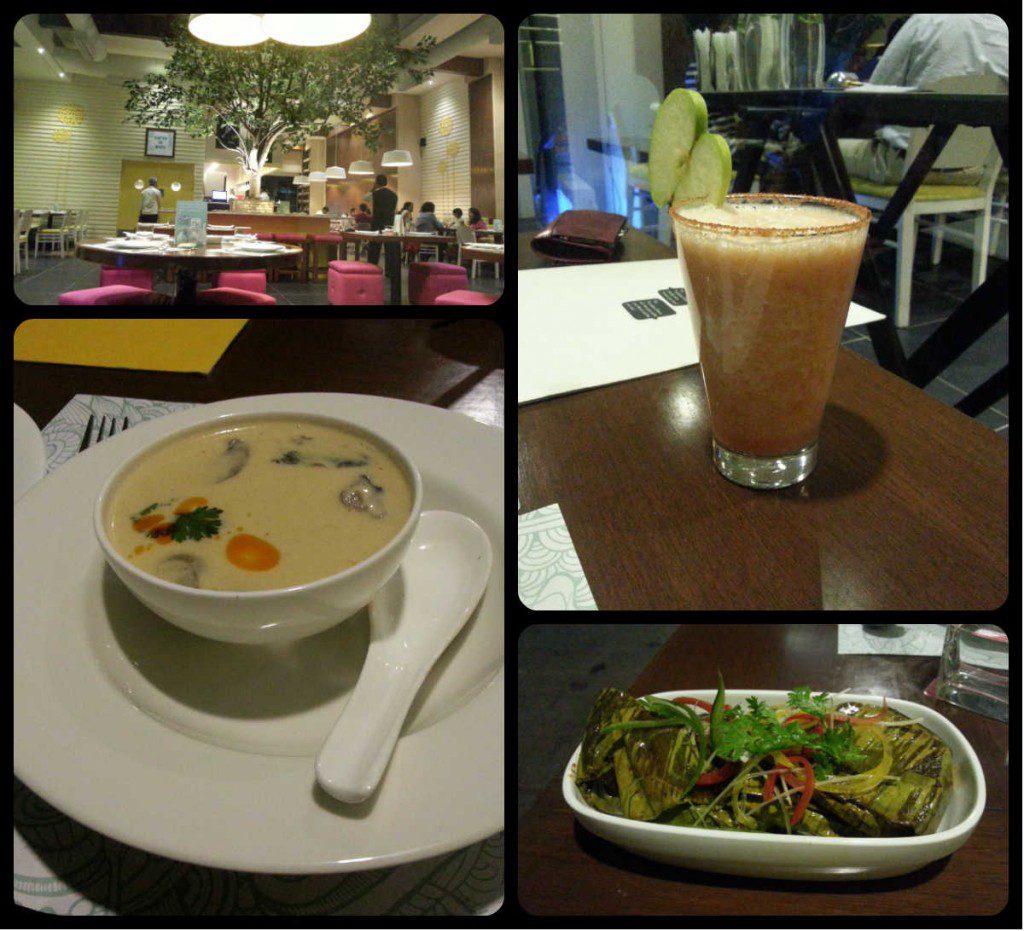
    One would have to wonder at the intelligence in adding alcohol to a mythical creature with the head and wings of an eagle and the body of a lion, but hey, it does make for a fun, quirky name – The Boozy Griffin, and it sits right below a joint named after a pirate ship! (map) Yes, there is valet parking. Welcome to Koramangala, where we have seen it all! Once inside, the plush black sofas, high bar stools, the relatively dim lighting, and the red telephone booth all manage to convey a British pub theme. The smoking section, with its faux fireplace and posters starring Charlie Chaplin, Mr.Bean, Sienna Miller and so on, probably do this theme even more justice considering that the larger non-smoking section features First Blood and Scarface! It’s tough to get the right balance of relaxing and vibrant in terms of ambiance, but this place manages it. There are multiple TV screens placed so that most tables get a clear view, but for some reason they were showing WWE for a while before remembering their British theme and switching to EPL. By the end of the night, there were shouting matches at practically every table, thanks to the really loud music, which had switched from classics earlier in the evening to current hits and remixes of old favourites, all the while increasing in volume as well! So much for the sound, now let’s talk about the bite.

    For a pub, the beer menu is pretty disappointing with just about three options! They do try to make up with a cocktail selection and an otherwise exhaustive bar menu, though we found a couple of missing items there as well. The menu gets a neat British touch with an entire set of James Bond themed cocktails. I tried the ‘From Russia with Love’ from this and though it was potent and delivered on the ingredients – especially the vodka and the chilli – it was loved about as much as Russia is these days! The mocktail we tried – Pear Mojito – was closer to being virgin than pear. The gin based Foxtail, a light drink guaranteed to keep you at ‘that level’ was the best we had. The other gin based cocktail – Tom Collins – also disappointed. It was the Caipiroska (4 for the price of 3) that saved the day.

    collage1

    From the food menu, the interestingly named Son In law Eggs arrived first, and the Thai combination of fried boiled egg and tamarind soya sauce was just fantastic. The Cottage Cheese & Tellicherry Pepper Fry was spicily awesome if you’re fine with curry leaves. The Beer Batter Fried Calamari was a dip in the high standards thus far, an actual dip would have helped! The Chilli Beef Fry wasn’t available, and that proved to be a blessing in disguise because its replacement – sautéed Stir Fried Chilli Pork in soy chilly sauce turned out to be one of the best dishes we had.

    collage2

    The main course has burgers, a few steaks, some pasta and some old school pub grub to be had! Unfortunately none of the beef dishes were available! The Chicken Espetada in Peri Peri arrived first. Served with butter pilaf, and on skewers, with onions, this had superbly spicy and perfectly cooked chicken. But the Angel Hair pasta with its Walnut & Thyme infused cream sauce was the clear winner. A wonderfully nuanced, flavourful dish! The Crispy Chicken Butty (nothing posterior about it, as the coaster explains, it’s just lingo for a buttered sandwich) wasn’t a bummer either, and the mildly spicy dish was well liked. The Deviled Kidneys on Toast (stir fried lamb kidneys) was not bad, and is quite obviously for those who enjoy these body parts.

    There are only four dessert options, and three were unavailable! Let’s just say that the Sticky Toffee pudding is not worth saving stomach space for!

    collage3

    A meal for two would cost around Rs.1450 (Inclusive of taxes and service charge) – a couple of cocktails, a non veg starter, a main course dish and a dessert. The service is friendly, but occasionally tardy.  With a well-crafted ambiance, (barring the sound assault – carry cotton!)  some interesting food, and reasonable pricing, the Boozy Griffin has a lot going for it to hold its own even in the competitive grub landscape of Koramangala. But on the flip side, the unavailability of a lot of menu items could make the griffin seem woozy.

    The Boozy Griffin, #105, 1A Cross Road, Near JNC Road, 5th Block Koramangala, Ph: 08064050000

    P.S. It’s open till 1 AM on Fridays and Staurdays

  • The Open Road: The Global Journey of the Fourteenth Dalai Lama

    Pico Iyer

    One of my favourite authors writing about a human being who has intrigued me from the time I read Siddhartha. It didn’t disappoint at all!

    What is it like to live, practice, preach a faith while facing oppression from one of the most powerful countries in the world? Even as Tibet becomes more of a Chinese province day by day – the Potala Palace is treated as just another tourist attraction and the streets of Lhasa are filled with entertainment and shopping options – and several Tibetans question the wisdom of his approach, he is respected across the globe as a spiritual leader for the universal truths he espouses.

    And yet, he underplays the role of religion, and stresses his own humanity while creating a future for Tibetans that is less dependent on him. He has brought Tibet to the world – a culture that was as hidden as a treasure and also gave the world a brand of Buddhism that is universal in appeal. Pico puts Tibet well in the context of a world that has moved from too little info about itself to too much in a few years.

    Pico also writes well about how even with all the respect, people probably see his images and messages through the ‘keyhole of their own priorities’. He once mentions an instance when the Dalai Lama cried- he was asked ‘what is the quickest, cheapest, easiest way to attain enlightenment’.

    While much of the book deals with His Holiness’ thoughts and perspectives, there are also mentions of his family, his early days including the time he was forced to flee from Tibet, and quite a few pages devoted to Dharmasala. Dharamsala – where foreigners come seeking wisdom, antiquity and mysticism from every Tibetan they see, and some Tibetans play the part to understand and probably even reach the lands of ‘abundance and freedom’. Pico Iyer writes about the confusion faced by young Tibetans – on whether to stay on in Dharmasala or go back to Tibet to either change or be changed. Dharmasala – also the place to which Tibetans flock, braving persecution by the Chinese, just for a glimpse of their leader and their belief that at some point in time, he will solve their problems.
    In addition to all of this, the wonderful quotes, the additional sources of information on the subject, and various perspectives all offer us some thoughts on ‘joyful participation in a world of sorrows’.

    Clipboard02