• Revisiting brand purpose

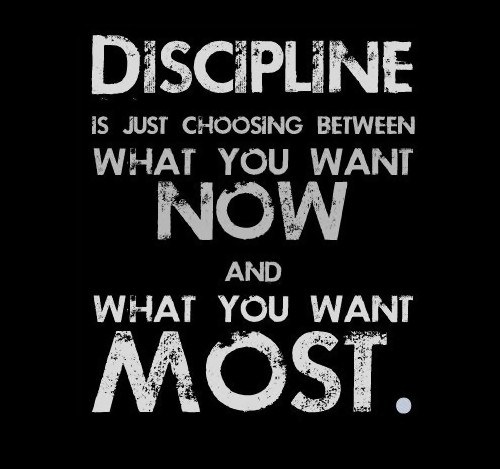
    I had almost completed a post on brand purpose when I came across this.

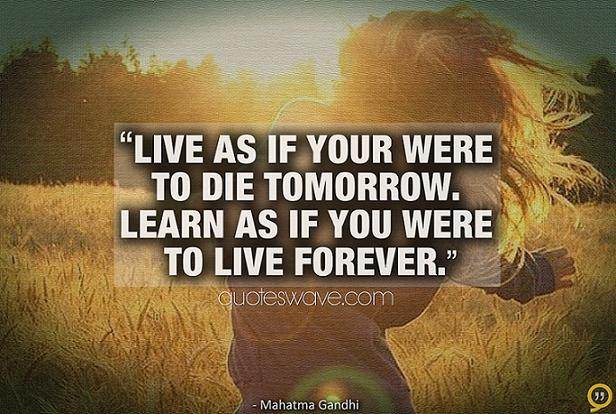
    discipline

    I have realised that in my personal life, even ‘what you want most’ is a dynamic thing. I am not really arguing against discipline – there was a time when it kept the blog going. But what I wanted most was just simply that the blog shouldn’t die. To get back, in a rapidly changing environment, I sometimes feel that ‘living each moment fully’ is a better bet than a disciplined course of action towards a purpose.

    Back to the brand purpose post. In the original draft, I had flipped Maslow’s hierarchy of needs. In the human context, the hierarchy is traveled upwards, as each need is met and reasonably satisfied. But I wondered if, in the brand context, it should be traversed in the reverse direction. I mapped self actualisation (the brand version of ‘what you want most’) to the brand’s purpose, Esteem to confidence in that purpose and finding the first set of people who will help translating that into a working model, Love/Belonging to getting a community in whose individual narratives the brand narrative can play a part, and the last two levels (Safety, Psychological) as bettering the efficacy and efficiency of the brand respectively. Yes, it is fairly rudimentary, but think about it! 🙂

    But the quote and my reaction to it made me think, is it possible/good to define a brand purpose that remains consistent in a rapidly changing business landscape? Maybe it’s cohesion, as opposed to consistency? Is a flexible purpose accompanied by an agile way of operating  the middle path? Are we getting to a point where the only constant in a brand purpose is relevance and value in the consumer narrative and the brand is guided more by a set of unique principles and perspectives that are constantly reshaped by its environment?

    When does a hotel’s brand purpose meet AirBnB or a watch company’s that of wearables, or a bookshop’s that of an online retailer of books/e-books? When it affects business? Is that around the same time as ‘too late’?

  • High Ultra Lounge

    First published in Bangalore Mirror

    Sometimes when you’re high, you begin to brag, and sometimes it really can be justified – like when you’re a lounge on the 31st floor of the World Trade Centre, (map) making you one of the highest located dining points in the country, and when you command a breath-taking view of the city that’s arguably unparalleled. It is very rarely that you can get a sense of the city as a whole (outside of Google Maps) and the 180 degree view that High offers is almost humbling. But that’s enough of a high, let me give you the lowdown on the place itself.

    It’s open from 5.30 -11.30 PM, and reserving in advance is a good idea. There are different kinds of High, each serving a specific purpose – High View is the lounge space, High Dine is more of a fine dining experience, High Mix is the place for a cocktail do, and High Edge is a private dining area. There’s a sense of shifting moods through these sections, brought about by the colours used and the lighting. Yet, despite the individual personas, all of these flow seamlessly into each other. The seating is trendy and comfortable across the spaces, and on a Saturday night, with music in the background, and the bright lights of Bangalore spread out in front of you, it is easy to feel on top of the world!

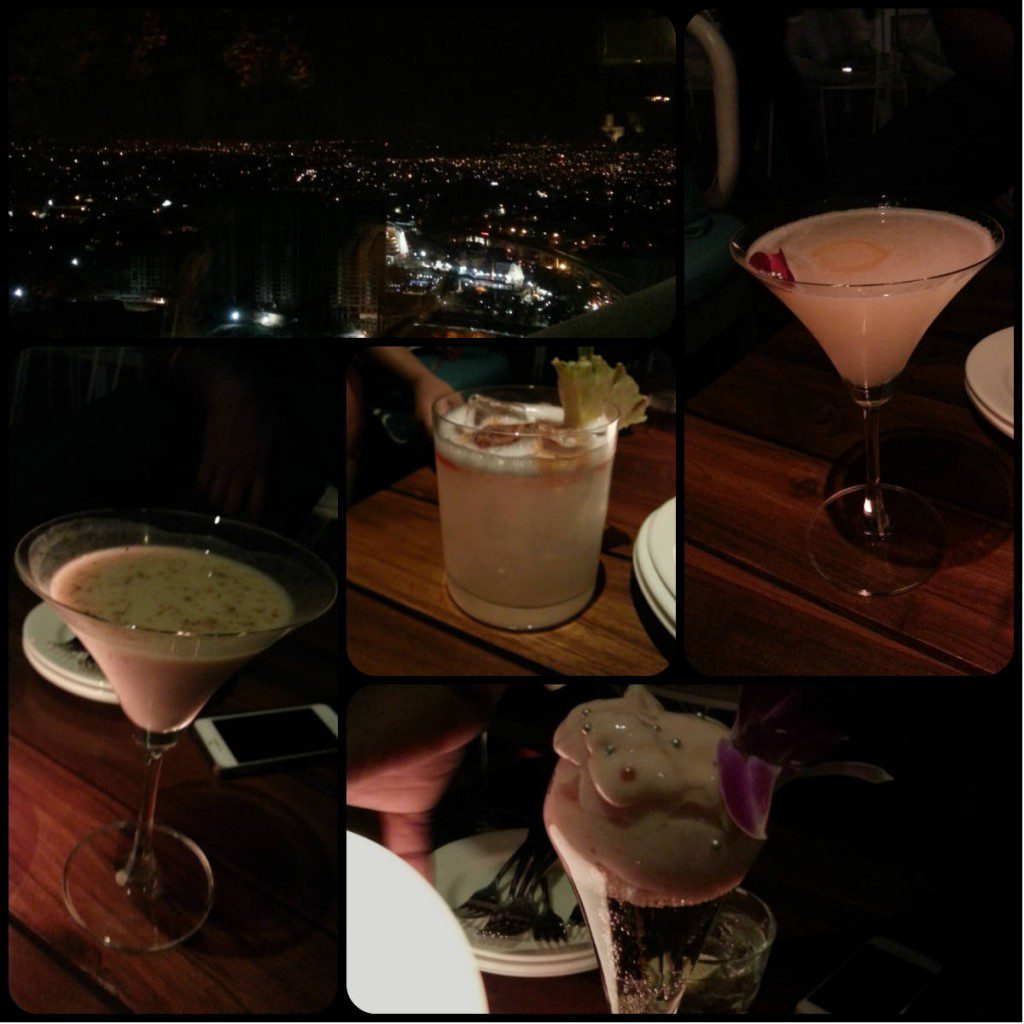
    It didn’t really make sense to leave ourselves high and dry in such a wonderful ambience, so we quickly scanned the drinks menu – a mix of signature cocktails, classic fare, some interesting mocktails and everything else you’d need in a bar! From the signature drinks, we tried the Moon Lighting, the Spell Bound Bellini and The Last Order. I’d asked for the first, and the vodka based pink-orange coloured drink got me a few smirks from the guys, but that was settled by the Bellini, which was completely lady-like in its pink frothy (and tasty) avatar. The Last Order was a more subtle drink in all respects. The one mocktail we tried – Fame of Passion – was peachy and quite refreshing.

    collage1

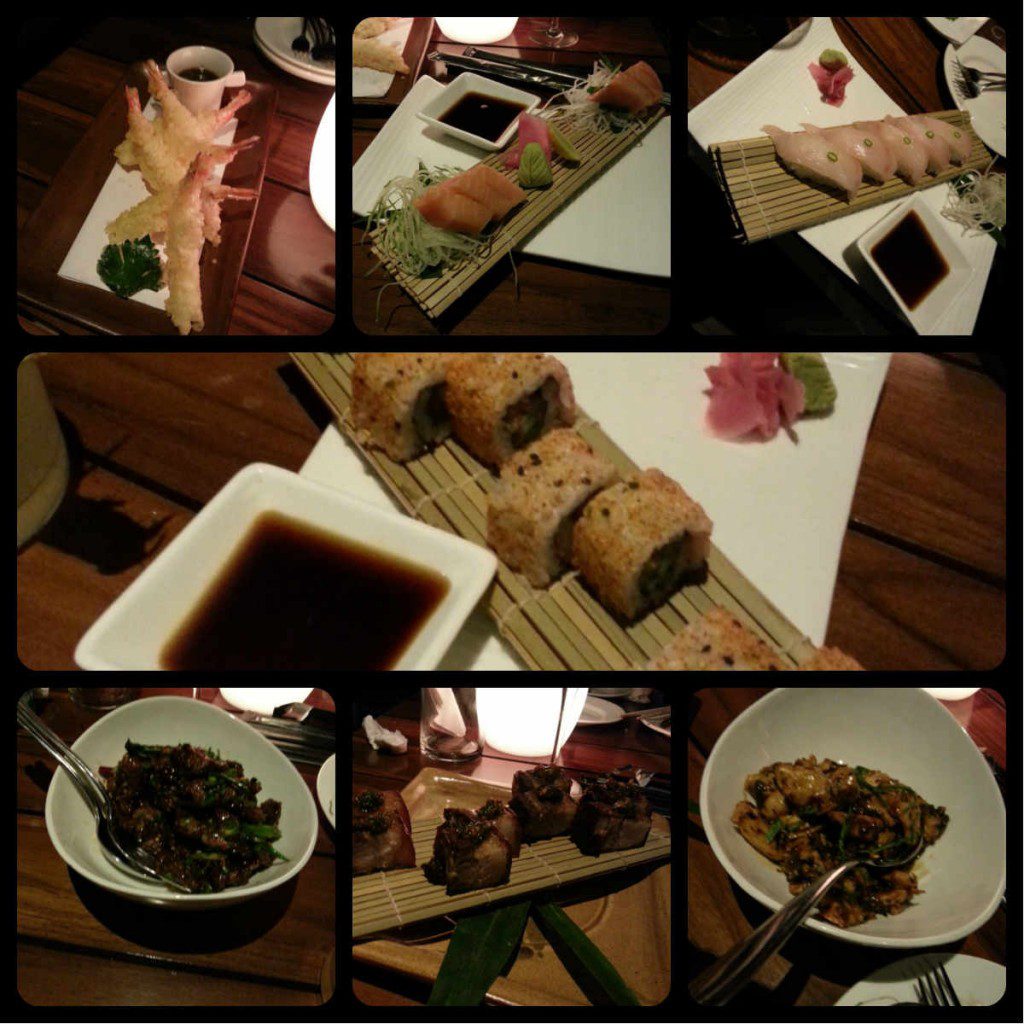
    The food menu, with a lot of focus on appetisers and short eats, is a mix of Asian cuisines – Japanese, Korean and Thai. We began with the salmon sashimi, complemented well by the wasabi and ginger, but preferred the Red Snapper Nigiri over this. Also in good form was the vegetarian dish we tried – the mildly spicy Shichimi-spiced Maki with tenkasu. The Pork Belly was quite good too – well cooked meat with a lime based tangy topping that gave it a flavourful pop. The Prawns Tempura also found a lot of takers – fluffy and crisp batter with succulent meat. The starters ended on a high with the fantastic Chilly Beef Asparagus, spicy enough even for the seasoned palates.

    collage2

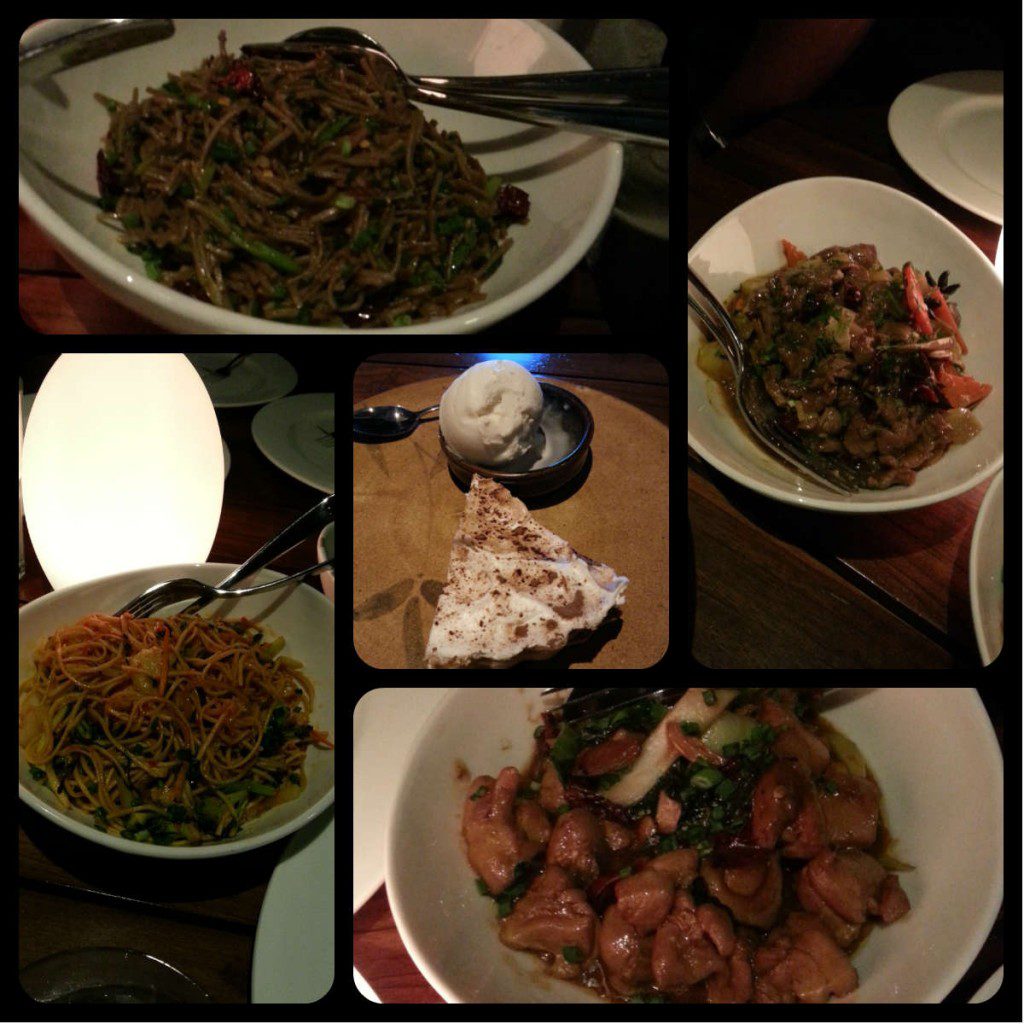
    On a relative scale, there aren’t a lot of choices in the main menu, and a couple of dishes weren’t available, but the remaining did suffice to make a decent meal out of it. The Beef stew was nowhere near what we’d consider a stew, but well cooked meat and mildly spicy flavours meant we didn’t really complain. The San Bei Chicken was a tad too salty for our liking. We had the Soba rice noodles with chilli to go with these and it was liked mainly thanks to its zesty spiciness. The seafood noodles was surprisingly insipid.

    It’s a lounge, so understandably there aren’t many dessert options. To be precise, there are three, and the Banoffee Pie was an easy winner given that the competition was a fruit platter and homemade ice creams. The dessert wasn’t bad, though I can’t claim it was the best I’d eaten.

    collage3

    At a height of over 420 feet and spread across 10000 square feet, High sets the bar high, literally and otherwise. Special thanks to Guru, who in addition to being wonderful at his job as the resident mixologist, also charmed us with his child management skills! An energetic yet relaxing ambiance, good appetisers, superb service, and a view that might remain unmatched for quite a while, High has everything going for it.  A meal for two would cost around Rs.3500 (Inclusive of taxes and service charge) The pricing might make it seem a little for the highborn, but hey, the experience is difficult to top!

    High Ultra Lounge, Roof Top, World Trade Center, 31st Floor, Brigade Gateway Campus, 26/1, Dr. Rajkumar Road, Malleshwaram West, Ph: 08045674567

  • Linking learning & labour

    I’m a huge Asimov fan, and am constantly amazed at how he was able to have a perspective of the future on multiple fronts. I was reminded of two of those recently thanks to their application (of sorts) in contemporary scenarios.

    First, Hari Seldon‘s (pretty much the foundation of Asimov’s Foundation series) psychohistory, which was able to make general predictions on the future behaviour of large populations using history, sociology and statistics. The easy contemporary connection is big data and predictive analytics.

    Second, a short story written by him called ‘Profession‘, (do read) in which every person’s profession is based on an analysis of his/her brain, and no choice is given to the person in this matter! In India, we seem to be already there even without the analysis!

    Collectively, these two made me think of employment, and on a related note, education. The thought was that with so much of data available on education and employment, we should be able to create ‘tests’ to compute the interest and aptitude of individuals at a very early age. What this would aim to do is to eliminate the herd education that currently exists. Instead, children would learn things that help them in a profession for which they have the intent and interest, using say, a combination of traditional classrooms and MOOCs. Also, this would no longer be one part of a life cycle, but a continuous process – helping the individual thrive in a dynamic environment.

    If you remember, LinkedIn was my representative for ‘L’ in the ‘change imperative‘ deck. That was because I felt that it had the data and the vision to be the catalyst for this kind of a change. I was very happy when it underscored this faith with the fantastic ‘future self‘ experiment, in which they identified the future professional self (5 year time frame) of LinkedIn user Kurt Wagner – another user Mussarat Bata – using various data points!

    LinkedIn hasn’t really built this as a public tool, but just imagine the possibilities! A platform that shows people the possibilities which take them closer to their ‘purpose’. (remember ‘The Evolution of Work and the Workplace‘?) I sincerely hope to see this in my lifetime. 🙂

    until next time, live and learn

    Clipboard01

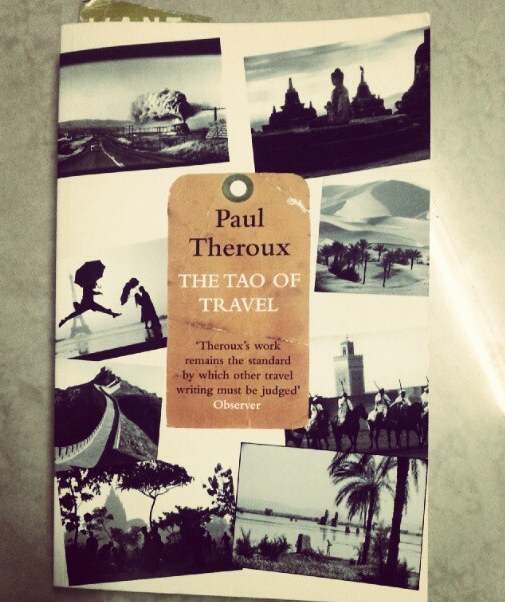
  • The Tao of Travel: Enlightenments from Lives on the Road

    Paul Theroux 

    Whenever I take a vacation, I arrive as a tourist and like to think that I leave at least partly converted into a traveler. I am forever envious of travelers, many of whose journeys serve as a purpose in itself. This book is an excellent little guide to what the author mentions in the preface – paraphrasing the Buddha – “You cannot travel the path before you become the path itself”, and how travel is also a way of living, and thinking.

    In addition to excerpts from various works by different travel writers and adventurers, classified by unique and amazing themes from Railways, time spent in travel to Murphy’s laws, to imaginary journeys, how places are different from what they sound like and so on, the book is peppered with Travel Wisdom from various authors.

    There are gems hidden in the pages – little quotes that somehow tell you that the spirit within each wanderer is essentially the same. The description of places and times by masters are splendid enough to transport you to locales across to world from Alaska to Africa and Russia to South America….And it’s not just the places, but the people who live there, the way they think, and one can sense the cord that invisibly connects humanity.

    In 275 pages, the author manages to indeed provide a Tao of Travel across time and space. Must read.

    Clipboard02

  • Social Nextworks

    The impending death of Orkut (2004-2014) made me think of the evolution of social networking and its transience. Orkut lived ‘only’ for 10.5 years, and this is despite being part of Google, though some would call that a disadvantage. Facebook  has been around for the same time, and the fact that it is a force to reckon with is a testament of its understanding of this transience. It also explains the acquisition of Instagram, Whatsapp and the attempt on Snapchat.

    However, I recently realised that I am probably more active on Whatsapp, Instagram and Pinterest than Facebook and Twitter. I am also reasonably active on Secret. That made me dig a bit deeper.

    Clipboard01

    (via)

    What is changing? From my observations, there are at least two factors that are driving the change.

    Perspectives on connectivity: The early era was fueled by the need to connect. Facebook is soaring well beyond a billion users, and its longevity is (also) because the need still exists. It continues to look for better ways to do this, manifested through front end and back end changes. But despite this, and my own curation of my newsfeed by sending signals to Facebook, I am regularly overwhelmed by the volume. This goes for Twitter too. Personally, I have treated these platforms as a means of self expression. I would also like to choose the people whose perspectives I want, and who are entitled to a judgment, if any. But that’s not so easily done on popular platforms.

    That’s when I start to look at the many ways to handle this – from social networks to messaging apps. I could go to where the crowds are relatively less and/or are more ‘focused’ – by domain or use cases, (LinkedIn, Pinterest, Instagram) I could interact with smaller groups, (WhatsApp) use ephemerality (Snapchat) or be anonymous (Secret) As I mentioned, at least three of these work for me. A wonderful nuance I caught in Mitch Joel ‘s prophetic ‘The Next Big Thing Online Could Well Be Anonymity‘, is that it may not just be ‘something to hide’ that makes some prefer anonymity, but it could also be so that ‘who they are will not become a focal point within that discussion’. Anonymity on the web is not new, but many of its enablers are.

    Devices: The networks of an earlier era (eg.Facebook) were made for desktop and had to adapt for mobile. On the other hand, Instagram, Whatsapp, Secret, Snapchat etc are mobile natives. Given the increasing ubiquity of smartphones, their growth is not surprising.

    What are the possible business models and what’s a brand to do? As more and more users flock to these new platforms, they would need to mature, with business models which could mean associations with brands – the journey from social network to social media.

    Instagram and Pinterest are already social media, making advertising at least one of their revenue sources. WhatsApp does not like advertising and already makes money on downloads. Its competitors like Line, KakaoTalk, WeChat etc, however, have found various other means – virtual items, (stickers, in app purchases in free video games) promotional messages, baby steps in electronic payment handling fees, and interesting tie-ups. Snapchat already has many marketers on it and is likely to offer promotion options too, probably tied to a time bound event.

    Secret has a lot of negativity surrounding it – s3x talk and startup malice and being just a fad – and there are comparisons to Formspring and its demise despite funding. But beyond advertising and in app puchases, maybe, there’s also potential for insights on a brand and its use cases? Things that cannot be found on indexed platforms. Also, Whisper already has a content deal with Buzzfeed.

    Analytics for such platforms haven’t even really begun yet, but it can’t be far away. But more importantly, all of these platforms are potential enablers for a brand to take forward its narrative and become relevant to its users. It continues to be about storytelling, and digital.